What you can do to ease the traffic in your city
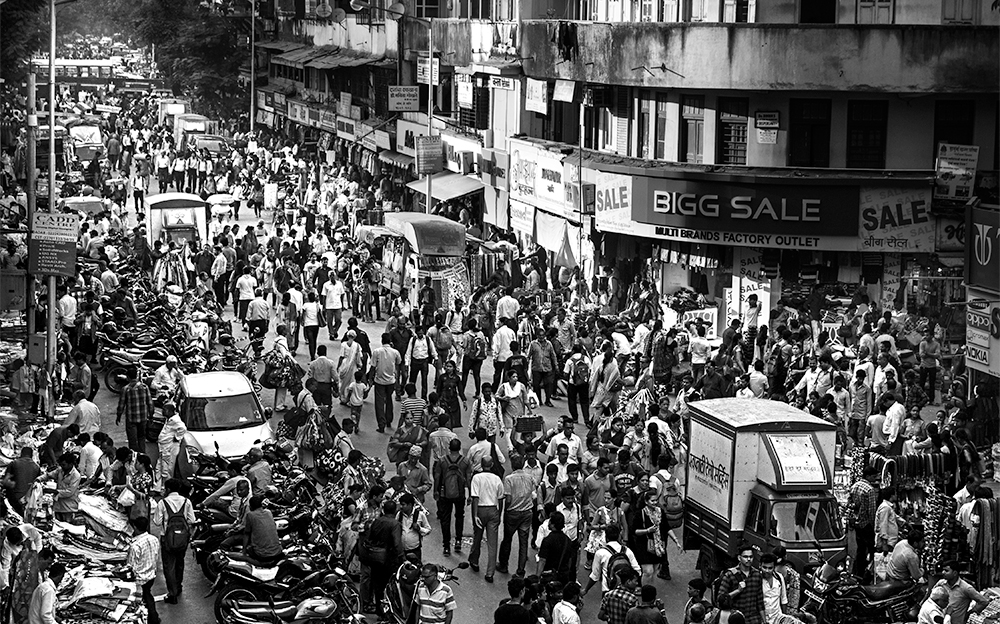
India is notorious for its traffic jams. The insane amount of hours civilians spend on daily commuting is mind boggling.
A quick look at some hard facts -
- A vehicle stuck in a jam tends to consume 20% additional fuel, making traffic an expensive deal.
- Three main metro cities from India have earned a place among the Top 10 cities in the world that have the worst traffic conditions.
- In India's busiest metros, traffic moves at an average speed of 22.7 kmph between 9 am to 12 pm. For eg, the average speed of vehicles plying in Bangalore’s roads during peak hours has dropped to 15 km per hour.
The numbers are hardly surprising. We are more than aware of this dreary situation. And what have we done about it? We bickered long enough about this issue.
Is there anything we can do, as individuals, to make our roads less congested?
We suggest a few ways to counter the traffic problem:
Environment-friendly alternatives
We often forget that we, who complain about traffic, are also a part of the traffic jam. Plenty of environment-friendly options are available to us. For short distances, bicycles, walking, jogging and even rollerblading are excellent ways of commuting. Needless to add, it is cost-effective, boosts your health and reduces the number of vehicles on the road, thereby easing road traffic congestion and pollution.
Park right
Don't park near bus stops, narrow streets, or at points located on the edge of a U-turn. This can block other vehicles from taking a turn, causing a traffic jam. In addition, refrain from parking on narrow lanes or parking just at any random empty spot. Be mindful of your surroundings.
Carpool
Around 16% Indians drive to their workplace on their own and around 67% take their own car. As such, carpooling is the most feasible option. It’s an effective way of reducing traffic on the road, and things can truly turn around if everyone switches to carpooling.
Use the public transport
The backbone of any city, public transport has a big role to play in reducing traffic congestion. Public transport ensures that both people and vehicles are off the road. Besides, we have umpteen options of public transport plying for our benefit - hence utilising the services will only help cities get rid of the mounting traffic issues.
What are the other ways in which we as citizens can help reduce traffic on our roads? Share your views with us on our Facebook and Twitter pages.
Alarm Bajne Se Pehle #JaagoRe!
Sources:
*Ministry of Road Transport and Highway
**NDTV
Live Mint
Quartz
Yourstory
Share this story on

HOW CAN WE PRE-ACTIVATE A SPORTS CULTURE IN INDIA?

“Can I go out and play?
No, finish your homework.”
Sound familiar? How many times did you hear this growing up? How many times do you say it now?
In India, education has always been given precedence over play. I am not against education, in fact, I'm all for it; but there is value in play time too. I have represented India in swimming at the Olympics and also have advanced degrees in the biosciences. My career involves science and technology and also allows me to dedicate my time volunteering and giving back to society. None of this would have been possible if it weren’t for the time invested in both sport and education.
We are all waiting for the day when India is a sporting powerhouse, where sport and play are a part of our daily activities and culture. We talk about pre-activism with respect to social issues in India, but what about for sport? What can we do to pre-activate this culture? Here are a few simple ideas that have the potential to go a long way.
- Go out and play. This is applicable to adults too! Round up your friends and play a game of soccer, badminton, go for a jog, or beat the heat with a dip in the pool, anything! You will come back feeling refreshed and energized to take on your next task.
- Understand the value and merit of learning through sport. Why, you ask? Have you ever seen chapters on confidence, goal setting, and perseverance in your child's school textbook? Probably not. These are just a few skills that active play can help develop.
- Play doesn't always have to mean competitive sport. Some children just want to play, be around their friends, and enjoy the experience. This in itself helps develop social skills and respectful relationships.
Experiencing the benefits of something first hand, allows us to internalize it. If we could get every adult out and playing, even if for a few hours a week, it's only a matter of time before this culture is passed on to the children. The more children that go out and play, the higher the chance of identifying India’s next Olympic medallist.
Alarm Bajne Se Pehle Jaago Re!
More about the Expert:
Share this story on
WHAT PARENTS SHOULD ENCOURAGE THEIR KIDS TO STUDY

For long we have complained about the dismal status of sports in India.
Yet who is to blame here? It is our collective responsibility to restore the fledgling image of Indian sports. Small steps will go a long way.
We have to begin by encouraging children to play sports.
Let it not be about winning or losing. We have to encourage our kids to learn life's lessons through sports.
Let's help nurture a sports culture in India.
Alarm Bajne Se Pehle #JaagoRe!
Share this story on
Labour Day: Understanding laws that protect labourers in India
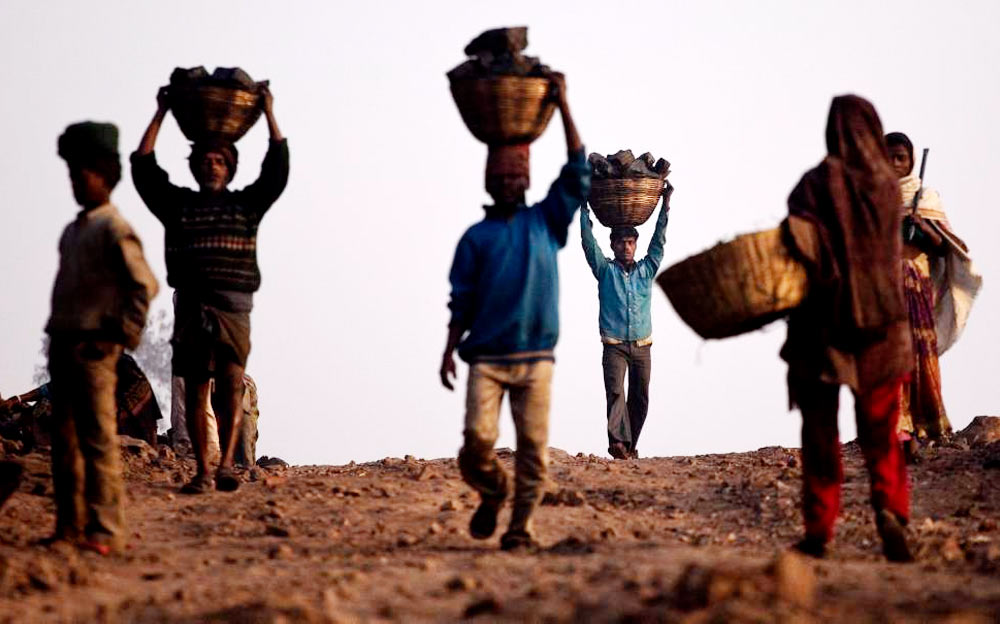
Labour laws in India are a body of laws that address legal rights of working people and their organisations; and the relationship between trade unions, employers and employees. Labour law arose due to the demands of workers for better conditions. At the same time, labour laws also protect employers and keep their costs in check; catering to the interest of both parties.
Generally, labour law covers:
- Industrial relations
- Certification of unions
- Labour-management relations
- Collective bargaining and unfair labour practices
- Workplace health and safety
- Employment standards, including general holidays, annual leave, working hours, unfair dismissals, minimum wage, layoff procedures and severance pay.
The labour movement has been instrumental in the enacting of laws protecting labour rights in the 19th and 20th centuries, since the Industrial Revolution.
Labour laws in India have been intrinsically tied with the British occupation. Amendments have been made from time to time to readjust the policies to the current scenario.
Now the Constitution of India provides detailed provisions for the rights of the citizens. These directives demand that State provides for:
- Securing the health and strength of employees, men and women.
- The tender age of children are not abused.
- Citizens are not forced by economic necessity to enter avocations unsuited to their age or strength.
- Just and humane conditions of work and maternity relief are provided.
- The Government is to “take steps, by suitable legislation or in any other way, to secure the participation of employee in the management of undertakings, establishments or other organisations engaged in any industry.”
Legal awareness or Public Legal Education
Legal awareness, also termed as ‘Public Legal Education’, is aimed at empowering civilians about the law and the justice system. A range of activities are held for public awareness.
Educational courses are undertaken to ensure that workers aren’t subjected to any kind of exploitation. If workers are educated about the country’s laws and their rights, they will not fall prey to mistreatment.
Several organisations in India are catering to providing legal services to everyday civilians. NGOs like MARG (Multiple Action Research Group) conduct research and provide socio-legal services to the poor, the marginalised, women, children and unorganised labour.
Many women have been trained by MARG and are now functioning as paralegals in states like Bihar, Jharkhand, Maharashtra, Madhya Pradesh etc. to assist people that face discrimination and injustice. They spread legal awareness and aid in the use of law for these communities.
HLRN is another great example. Human Rights Law Network (HLRN) is a non-profit legal and educational organisation. They work with human rights groups and on the grassroots to engage in advocacy, protect and challenge exploitation and discrimination against individuals and hold regular public awareness campaigns.
How legal awareness of labour laws can be promoted
- Governments and institutions both arrange for legal literacy events and awareness campaigns in our society.
- For instance, camps, lectures, interactive workshops or crash programmes are very effective in the education of law.
- Road shows, radio talks, street and theatre plays, books, periodicals, posters, charts, distribution of pamphlets, brochures, and stickers, the display of paintings,illustrations in comics are some other ways used to ensure publicity for various legal mobilisation activities.
- Strategically located display boards in public places (railway stations, bus stations, market places, in front of major government offices and police stations) are also used to help government officials, police, and the public to understand the spirit of law.
Get to know your rights at the workplace
Only when everyday citizens are made aware and mobilised, can we expect a fair and just working of the systems in order. This Labour Day, ensure we equip ourselves with the rights and laws that protect us. A certain amount of legal literacy is important for our collective empowerment.
Alarm Bajne Se Pehle #JaagoRe!
SOURCE - NCRB
Share this story on
HOW TO HELP YOUR CHILD MANAGE STRESS AT SCHOOL
With increasing competition and societal and peer pressure, academic stress is getting the better of our children today. Reports of adverse effects on them are commonplace today, with anxiety and depression sometimes leading to extreme steps like suicide.
Parents tend to get frustrated with little know-how on how to cope with the situation. Sometimes they unintentionally discourage them and further drive them to isolation, and over pressurising them.
Here is a good tip that parents can use to help reduce academic related stress on their children
Tell your child it’s okay - tips to help your child get over the stress of being academically stellar
Avoid 'I told you so' cliches
When children are already struggling, these kind of statements do more damage, kids fear disappointing their family. 'Rubbing it in' does more harm than good and parents tend to alienate them from their children instead of offering to be a source of support.
Being too judgmental/lecturing too much rather than simply listening to children
Many parents fall into this trap. The fact is that only children that feel accepted and respected will perform better in school than the kids that feel stifled or controlled. Letting them open up and listening to them non-judgmentally will bring out the best in them, moreover it will nurture your relationship with them.
Understand and support your child’s capacity and interests
It's important for you to acknowledge and give room to your child's interests and let it be nurtured. All children are not the same and every child will have his/her own set of skills or talents. You can help build their confidence by letting them shine in doing what they love.
Help them meditate and relax
Meditating at an early age will set the ground for your child. Include mindfulness and breathing techniques or other tools to help them relax and rejuvenate their thoughts.
Make sure they ask for help
Remind your kids that it's okay to ask for help - be it academics, mental health or stress. Encourage them to seek help. Keep yourself handy with resources for parents on trained specialists, and help your child find counselors at the school campus.
With increased stress levels, children can be very sensitive and retreat into their own shells, which can often be detrimental to them. Burden of studies and expectations can be overwhelming, and the right attitude and support from parents can make all the difference.
Alarm Bajne Se Pehle #JaagoRe!
Share this story on
SEVEN STEPS ARE ALL IT TAKES TO MAKE OUR SOCIETY A BETTER PLACE

When was the last time you travelled within your city without fear, or voiced your opinions publicly without being drowned out? When was the last time you felt safe, comfortable, and secure in your own surroundings? And when did you last not have to care about the length of your skirt, shorts, or even kurta?
The last time we checked, over 79% of India’s women population felt unsafe, insecure, and directly under threat of harassment. How many more uncalled for threats and harassment episodes are we going to wait for to do something about it?
Here’s what men and women from across India’s metropolitan cities have to say about making our society safer for each of us.
Become Aware
Make an attempt to listen, understand, and become aware of the people and their various cultures around you. Ignorance, in this case, is more harmful, than bliss. The more we embrace awareness of people, situations, cultures, and choices, the greater our chances of creating a safer space which we can call ours.
Practice Equality
Whether it’s at home or at work, at a restaurant or during travel, the breaking down of strict gender roles, brick by brick, is the way forward. In a society that is hugely patriarchal, both men and women of today need to work doubly hard to disintegrate these age-old beliefs.
Say Bye-Bye To Stereotypes
When we proactively crush stereotypes, we welcome a change in thought. Men and women who exercise their freedom to dress a certain way, do not need labels. People who indulge in chores different from their gender roles, do not need labels. When we incorporate gender sensitivity, equality, and empathy, are we truly progressing.
NO means NO
Whether it’s in response to a date, a kind of beverage, a type of food or even clothing; whether it’s in response to touch or even “harmless” gossip; NO should mean NO. Being able to say NO without obligation will be our biggest mindful achievement.
Respect Opinions
In the age where social media has taken over numerous other platforms, the information we get today travels fast, and comes from various sources. Understand that opinions differ and that they need to be respected.
Build Trust And Communication
It all starts at home, and it all begins with the family. A well-balanced, loving, nurturing family raises sensitive, empathetic, and progressive-thinking children. Safe homes are the building bricks of a safe society.
Educate Yourself. Educate Each Other.
Progress lies not just in education but in the practice of the education we receive. Let’s teach our children honesty, civility, gratitude, and empathy; characteristics that our society today lacks immensely.
In this rising scare that is our society becoming increasingly unsafe, intolerant, and difficult, it’s time to wake up before another disaster strikes us again.Alarm se pehle jaago, chalo saath mein mil ke kaam karo.
REFERENCES:
United Nations Statistics Division
Huffington Post
powertochange.com
Share this story on
WE’VE HAD ENOUGH OF EVE-TEASING. HAVE YOU?

We don’t need ground-breaking statistics to say that our society has plunged to an all new low when it concerns rapes, molestations, or even eve-teasing for that matter. Rape cases have increased by an average of six cases per day in New Delhi, while eve-teasing and molestation cases tally at over 6,000 cases put together. If this isn’t shocking, we wonder what is.
“What is eve-teasing?” ask people. Does it include “harmless” comments, stalking, staring, etc. or is it only the “serious stuff”? A victim of eve-teasing says “it’s not just about being harassed or stalked, but about not realising one’s boundaries especially in public places. It’s a form of sexual bullying for the world to see”, she says.
So how do we tackle this menace that’s plaguing our sense of security and peace? “If a guy touches you inappropriately, hit him back and run”, says Bollywood megastar Akshay Kumar. Recently, singer Atif Aslam stopped his concert midway to help a girl who was being teased. Taapsee Pannu stopped and stared back at a bunch of guys on bikes who passed comments on her in public. Here’s what some victims, concerned citizens, and authorities had to say about tackling eve-teasing.
Make a mental note of the places you’ll be visiting. This allows you to plan your visit/travel to the concerned place as well as take appropriate precautions to be a step ahead. “Visiting a crowded, local market needs a different mental recce than if you were to visit a mall”, say concerned citizens.
Keep communication lines open. Should you have to travel to different parts of the city and/or country, ensure you keep your phone battery charged, and that you inform your confidante(s) of your plans. “That’s the least one can do in today’s unsafe cities”, says an eye-witness.
If you’ve been targeted, assess the situation and act accordingly. Sometimes an untoward incident happens in a crowded place, which makes it okay to cry out for help, or even, if safe, hit the perpetrator back. However, you would have to act differently if you were in a secluded place – make a dash towards a crowded place and then report the incident.
Know your numbers. Always ask for help using the police, women’s and children’s helpline that are provided to each of us. Most victims choose to remain silent due to fear, which makes it harder for us as authorities to tackle this issue.
Asking for help is not a bad thing. Whether it’s asking for help from a group of strangers or an older person, an authority figure or even local shopkeepers, it’s okay to ask for help and bring the culprit to task.
Use defences. Don’t hesitate to use that pepper spray or that martial art move when targeted.
Be confident and realistically unafraid. “After all, being confident, realistically unafraid, and practical are what can make every single difference to us and the people around us”, says another girl who’s faced the challenge of eve-teasing.
REFERENCES:
NDTV
The Indian Express
Huffington Post
Share this story on
5 everyday heroes that are helping farmers in India
Margaret Mead famously said, “Never doubt that a small group of thoughtful, committed citizens can change the world. Indeed, it is the only thing that ever has.” This statement has resounding relevance in the context of today, characterized by the emergence of a society comprising of ordinary men and women armed with courage that has had the power to change systems.
One aspect of this radical transformation is highly qualified individuals sacrificing their comfortable lives to make an impact on the lives of farmers in India.
The young entrepreneur who helps farmers with low-cost innovations
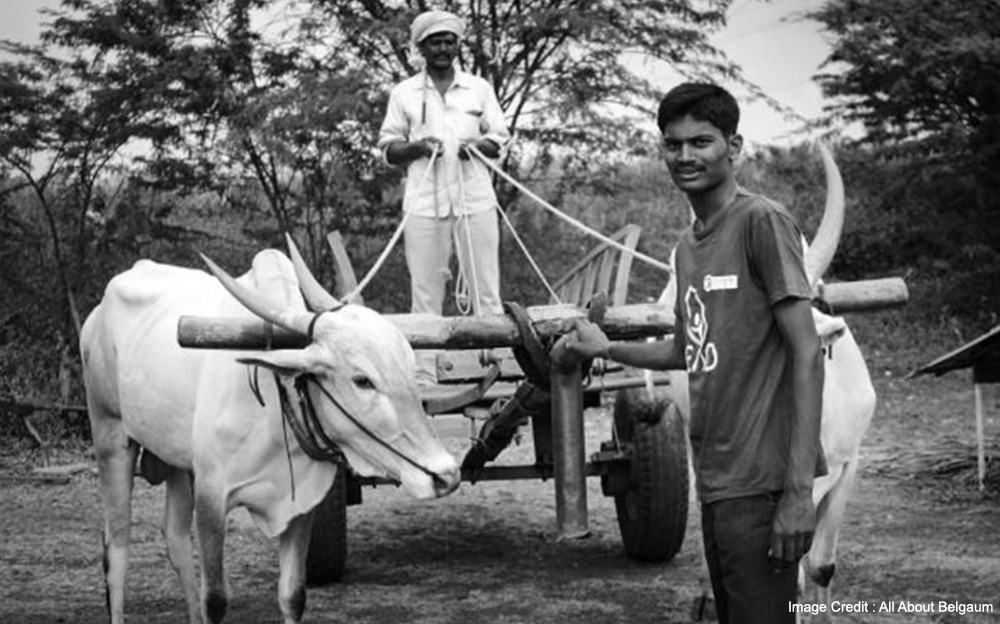
Hot water without geyser? A carrot cleaning machine? A brake system for a bullock cart? These inventions have been borne from the desire of one man to convert problems into opportunity. Santosh Kaveri’s experience working on the farm led him to identify the common problems farmers faced, leading him to come up with low-cost innovations that have saved both time and money for the farmer.
He was awarded the “Best Leader” Award by Ratan Tata in 2013.
A young engineer who is helping farmers in remote villages
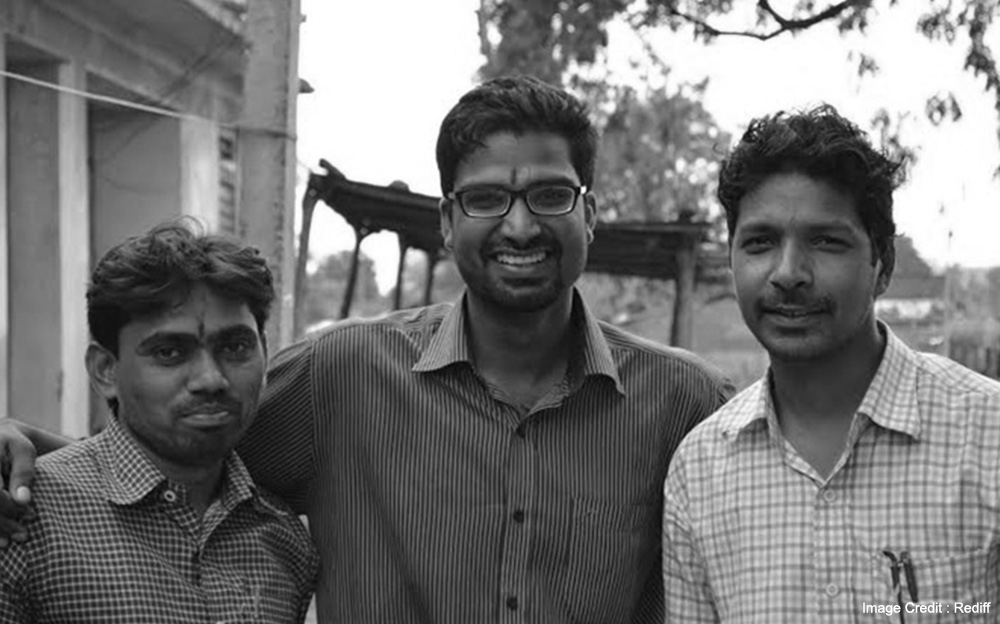
An electrical engineer from BITS Pilani, 25 year old Parth Gupta has created the concept of a cooperative society, selling produce at profitable retail markets, eliminating the need for middlemen. Run by the womenfolk of the villages, they are trained to manage the finances and marketing of this cooperative society.
Currently, this society has farmers from 32 villages across Madhya Pradesh, cultivating and selling their produce directly to retail markets. As a result of this initiative, farmers who were selling their produce at cheap prices are now saving up to 3000-4000 a year.
Techies in Chennai are helping families of farmers in Tamil Nadu
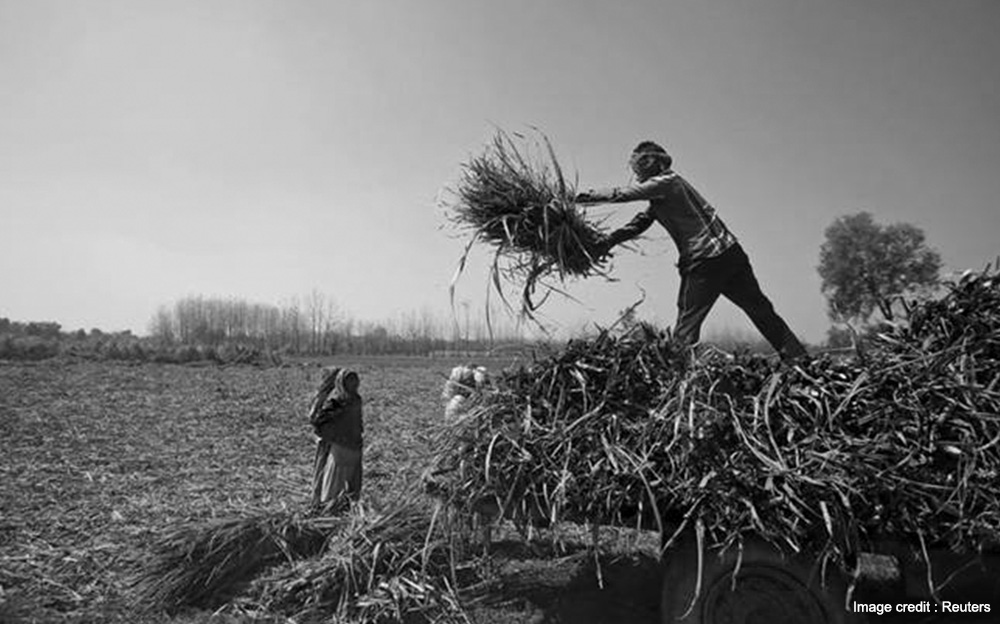
The drought in Tamil Nadu is seen to be one of the worst the state has seen in over 140 years. This has propelled a group of software professionals to come together to start a trust that aims at providing financial assistance to the families of farmers who have committed suicides.
P Vetrivel, the man who started the trust, aims to provide immediate relief assistance to the families, supported by long-term plans of providing them with cattle to start small businesses.
The trust currently supports 10 farmer families in Tamil Nadu.
One man who is helping farmers sell their produce online

27-year-old ShriKrishna Hegde Ullane’s love for farming has inspired him to create an online market place to connect farmers to a wider market. Concentrating on value-adding products like Kokum, honey, squash, as they are ready for the market, he and his team are involved in educating farmers about the benefits of these products and reducing barriers in reaching out to a larger market. Today, they are connected with over 5000 farmers in Karnataka with over 300 of them directly selling on their platform.
Developing irrigation technology to tackle climate change
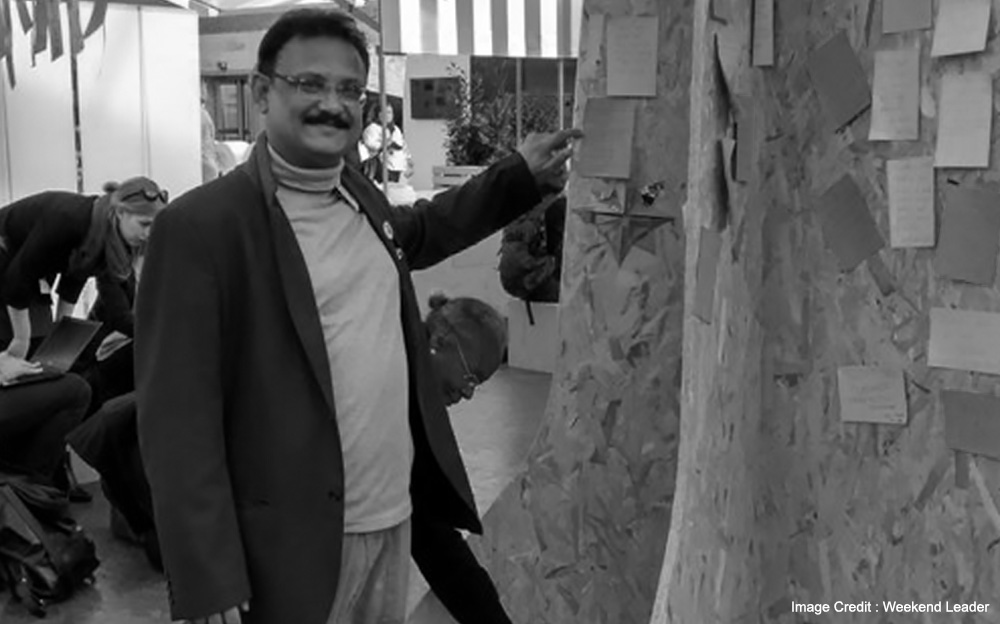
With over 18 years of experience in semi-arid regions of Gujarat, Biplab Paul has designed an indigenous technology that uses harvested rainwater to better tackle both weather phenomena in the form of floods and droughts. This technology ensures rainwater seeps through a straw into a pipe, guaranteeing crop survival without an external irrigation supply. Easy to maintain and on the pocket, this technology has travelled as far as Ghana, Indonesia and Bangladesh with over 100,000 farmers benefitting from this.
These examples are a tribute to those who should serve as an inspiration to all of us. The message is simple- The time for dialogue is over. They show us that nothing can stop us from being the change we would like to see, that in this quest for progress, we can’t afford to leave anyone behind.
Alarm Bajne Se Pehle #JaagoRe!
Share this story on
5 simple ways to save water
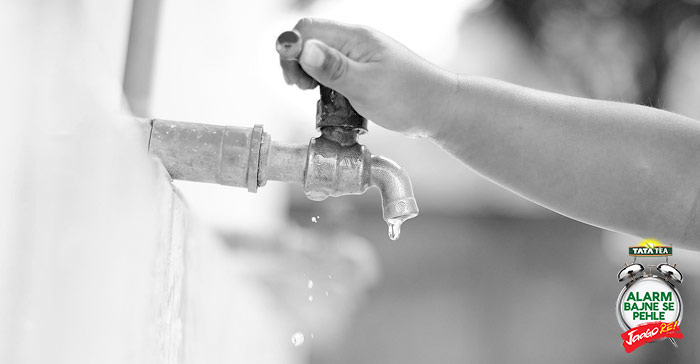
Today is World Water Day. Let's take a moment to acknowledge the existence and the very meaning of water in our lives.
Can you imagine our life without water? Many regions across the planet are in the midst of intense water wars, where accessibility to water has become a pipe dream for most.
Even though 70% of our earth is made up of water, only .4% is available to us. Which means, over 7 billion people are sharing .4 % water.
More than half of India doesn't have access to clean water. As responsible citizens, we need to try every trick in the book to save water. Let's look at some of the simpler ways which we can practice every day:
- Cut your shower time - Cutting 4 minutes of your shower can save 30 gallons of water.
- Fix the leakage - Water leak of one drop per second wastes more than 10,000 liters of water a year
- Washing utensils before stains run dry saves up to 50 % water. Another good practice is to soak the dishes in the sink for a while before washing them - you end up saving more water this way.
- Touch-activated sensor faucters or water-saving regulators fixed to taps is another ingenious solution to saving water
- Reuse the water being drained out of your washing machine to wash your car
- Don’t use running water to thaw out frozen food. Thaw it by defrosting in the refridgerator, or placing it in a bowl of water. You can reuse the water again as deemed fit
These little steps will go a long way in saving water and make a big impact if we all adopt these practices every day. Let’s mend our ways now, before the situation gets criticial for us. Alarm Bajne Se Pehle #JaagoRe
Sources:
http://inhabitat.com
http://wateruseitwisely.com
Share this story on
A piece of paper cannot determine my life
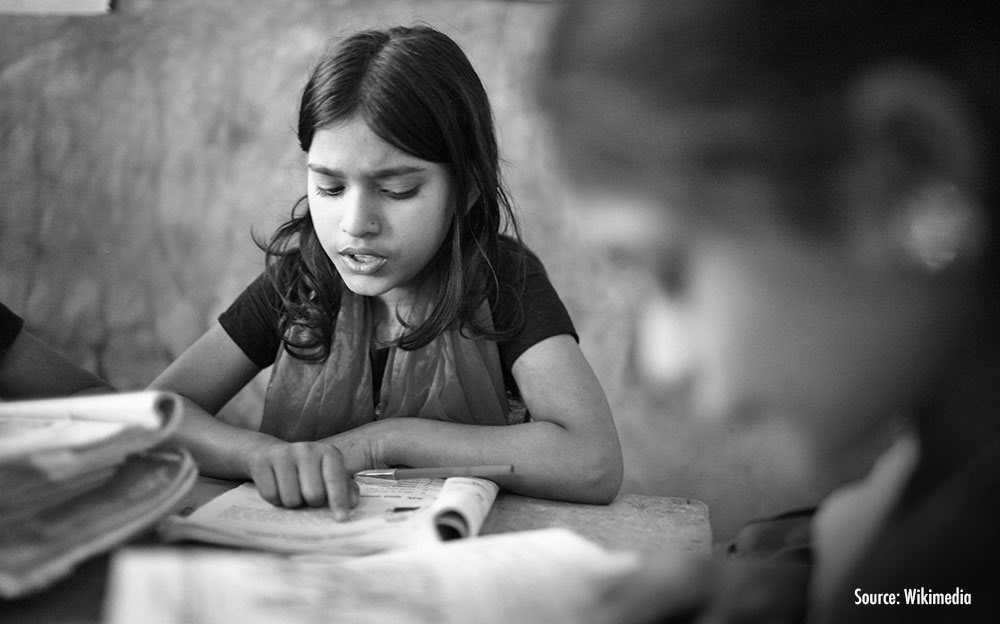 , Said a student of mine, rather confidently, and without a trace of arrogance or defence. “Our lives are ours, our deeds are ours, our efforts are ours, and they should be continuous, fulfilling, and holistically rewarding”, he continued, “so why are we herded on the basis of our marks or academic performances?” His candour struck me instantly, and made me proud to be his teacher almost immediately.
Having studied in an alternate school – spaces which respect and inculcate the realness of education in all its glory – has made every difference to me. From ushering in this enigma of learning, to awakening the desire to explore, question, think, and voice one’s opinions, learning today has incorporated the concept of education in us wholly. The irony is that our school was, and still is a minority in the complex weave that is education in India.
Goaded by unnatural grades (that will never be enough), academic excellence, unreasonably high expectations, coupled with the overwhelming burden that is a mainstream institutional life, students have become exactly what they aren’t supposed to be. “Learn as if you were to live forever,” as a popular quote goes, is far from what we’ve become today. Neither are we studying for a tomorrow beyond exams, nor are we learning for ourselves,” say students unanimously. If this wasn’t enough, we have predisposed children who unfortunately find their solace or answers in extreme measures such as addictions, depressions, social withdrawals, and a general sense of bio-psycho-socio under-development. “If student suicide rates aren’t telling, we wonder what is,” they add.
Let’s learn to learn for tomorrow, be assured in ourselves, have a sense of faith, remember that an exam is just one tomorrow, that we’re greater than the marks we get, and that we are therefore much more talented than a number that labels us as good, average, or a plain failure. In the midst of all this pressure and tension, let’s learn to take a break and unwind, to do the things we like to do, and practice being non-judgmental. If there was ever a more apt statement, it would be this by the glorious Albert Einstein which says:
It’s never too late to wake up, make a difference, and witness the blossoming of actualized human beings making this world a better place. And somewhere in this discussion with my students, my purpose as an academic had taken shape.
Here are few things you, an adult, who has assumed the role of nurturing a child’s well being, can do to help:
- Talk to the kids about discovering their vocation from an early age - this enables a sense of belonging and fulfilment in the child.
- Engage your children in conversation about their studies every day.
- As a parent, go out of your way to maintain a regular dialogue with the teachers about your kid, and vice versa - this helps both you and the teacher to stay updated about your child’s progress and to recognise any tell tale signs of stress.
- During exam periods, let the child know that getting good grades is not as important as learning.
- Understand your child’s aptitude and weaknesses, and inspire confidence in your child to overcome them by mixing games and difficult subjects, with a reward system. This helps the child to associate a subject he or she is weak at with a positive, as opposed to negative sentiment.
Every child is unique, and their perception of success is varied draws cues from us - it is our duty to give the right lessons, so that that being better versions of themselves, will involve a lot more than academic excellence!
This article has been authored by Babushka Chauhan. She is a teacher and a trained counselling psychologist by profession. She has worked with numerous students, young adults, and adults in finding a path towards living a more meaningful, fruitful, and successful life via the use of her counselling and life skills.
Share this story on