What you need to know about the Zika virus infection
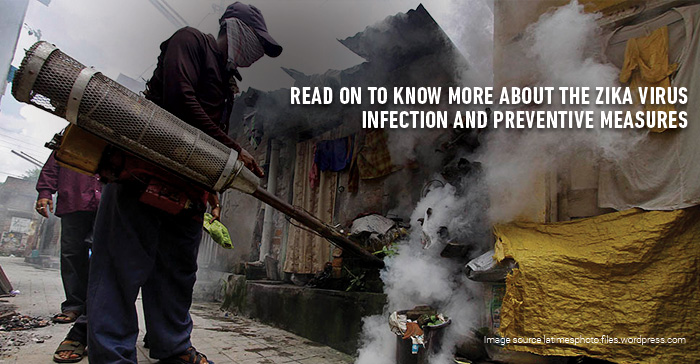
On January 28, 2016, the WHO (World Health Organisation) declared the Zika virus as a global health emergency, and has estimated that around 4 million people in the Americas alone could be infected by the Zika virus in the next year*. The Union health minister JP Nadda has said there have been no Zika cases in India so far**, but we need to incorporate steps to prevent the spread of the Zika virus in India and elsewhere in the world.
Here are a few things all of us should know about the Zika Virus infection:
1. What is the Zika virus infection and how is it transmitted?
Zika virus infection is carried by Aedes mosquitoes which are active in the day-time. It was first detected in the Zika forest in Uganda, and has now spread to more than 24 countries. The Aedes mosquito is also responsible for diseases like dengue and chikungunya. While the Zika virus needs a vector (like a mosquito to carry the disease), there have been cases of the Zika virus being transmitted via sexual intercourse, and also through blood transfusions.
Zika virus affects foetuses when pregnant women are infected by it, and it has known to cause babies being born with abnormally small heads (microcephaly) and damaged brains.
2. What are the symptoms of the Zika virus infection?
The most common symptoms are fever, rash, joint pain, muscle pain, headache, and/or conjunctivitis. These are similar to the symptoms of dengue and chikungunya. The incubation period can vary from a few days to a week. The virus remains in the blood of a person for a few days, but it can be found longer in some people.
3. What is the treatment available for the Zika virus infection?
According to the CDC (Centers for Disease Control and Prevention, USA), there is no vaccine available in the market for the Zika virus infection yet, but the symptoms can be treated. A person with the infection must take rest, drink plenty of fluids to prevent dehydration, take prescribed medicines to relieve fever and pain, ensure that other mosquito-borne diseases are ruled out before starting medication, and make sure that the infected person is not bitten by mosquitoes in the first week of infection, as that is when the mosquito can carry the virus and infect others.
4. How is the Zika virus infection different from Dengue and Chikungunya?
While all three of the diseases are similar and the viruses are carried by the same mosquito, there are certain differences. Dengue presents with high fever and intense muscle pain, and extreme cases lead to bleeding. Chikungunya presents with high fever and incapacitating joint pains, and affects feet, hands, knees and back. Zika infection does not have specific features, but causes skin rashes and conjunctivitis in some cases.
5. What preventive measures can be taken against the Zika virus?
The first priority is the same as that for other mosquito-borne diseases - to make sure that there is no water-logged areas around the house for mosquitoes to breed. Apart from this, governments have warned people against travelling to infested areas of the world (as of now, Barbados, Bolivia, Brazil, Cape Verde, Colombia, Dominican Republic, Ecuador, El Salvador, French Guiana, Guadeloupe, Guatemala, Guyana, Haiti, Honduras, Martinique, Mexico, Panama, Paraguay, Puerto Rico, Saint Martin, Suriname, Samoa, the U.S. Virgin Islands, and Venezuela). (Source: CDC)
If you do have to go to an infested areas, make sure you use medically approved mosquito repellents, wear long clothes that are thick enough to protect from mosquito bites, and stay in rooms with screens to prevent entry of mosquitoes.
It is better to take preventive measures, especially so in the the case of Zika virus as there are no vaccines available in the market. What more do you think we can do to ensure our localities are safe from spread of Zika virus and other similar mosquito-borne diseases? Write to us on our Facebook and Twitter pages, or email us at jaagorein@gmail.com.
Sources:
*The Indian Express
**NDTV
CNN
Center for Diseases Control and Prevention
Pan American Health Organization
New York Times
Share this story on

You DO NOT have the right to remain silent
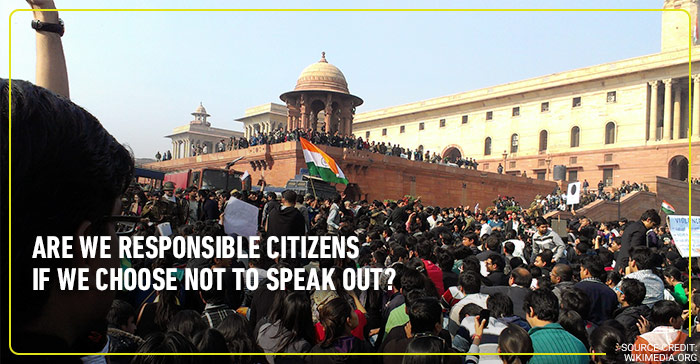
Voting is no longer the only way to make our voices heard. The technology available to us today has revolutionized the ways in which we interact with our government. The government too has created digital options for us, to be an active part of the “system”.
India has close to a billion mobile phone connections and is the 3rd largest internet subscriber base in the world. Once unreachable political figures, government organisations, and NGOs are taking to social media to directly discuss with the people on policy and decisions, opening themselves up to grievances, questions, opinions and debates. Do you think that now we can justify remaining silent about the changes needed in our society?
Here are some good examples of such initiatives that will need you and me to participate, to be able to really shake things up for the better.
Mygov[dot]in is the Indian government’s citizen participation portal. It warmly invites citizens to participate in open discussion forums, send in ideas and inputs for various initiatives, post documents and blogs etc. on issues of national importance such as job creation, digital India, clean Ganga and girl child education. Also, it looks great and is a far cry from the tired looking, uninviting government websites we’re used to!
Safecity, a Delhi-based non-profit allows citizens to report crimes or instances of sexual harassment or abuse in public spaces using a mobile app, and this data gets visualized on a heat map. Once it is known, for example, that 5 others have faced crimes in the area, it becomes a hot spot. This information can then be used by individuals, local communities, local authorities and the police force to make necessary corrections for public safety.
iForIndia (iforindia[dot]org) invites citizens to rate the quality of public services across four categories, and the performance of local elected representatives. They use this to calculate metric specific ratings, category ratings and an overall rating to generate a publicly available report card for the MLA in charge of your Assembly Constituency and the CM of your State.
The above are but a tiny reflection of the hundreds of initiatives that make it possible for governments and elected representatives to really hear from citizens about what is bothering us, what we care about, and how we would like governments to prioritize policies. Every year brings with it newer technological advances, all of which further bridges the gap between citizen and government. With our elected officials a website or Tweet away encouraging us to speak up, and with the power of creating / being a part of online petitions – we do not have the right to remain silent.
What are your views on this article? Share your feedback on our Facebook and Twitter pages, or write to us at jaagorein@gmail.com.
About the Author:


Disclaimer:
Views expressed here are of the expert alone, and do not necessarily represent that of the brand.
Share this story on
The story behind traffic issues in India
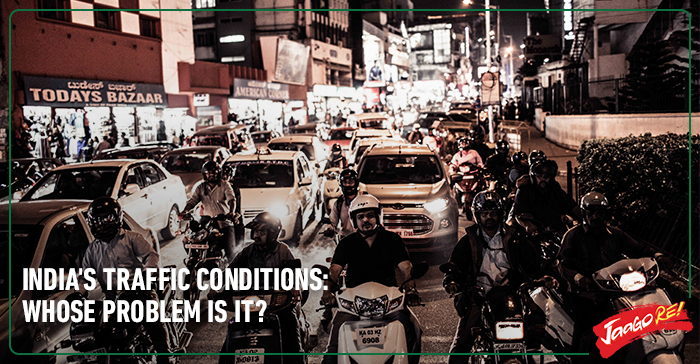
Is traffic a big issue in our cities?
Most of us think it is, but we tend to forget that we are the traffic; that we are the problem, and the solution. We find it easier to blame the traffic police and the infrastructure for the issue, but what does the Traffic Police think?
We interviewed a few traffic police officers to know their perspective on the “traffic issue”, and here’s what they had to say:
What is the most challenging aspect of managing the Traffic?
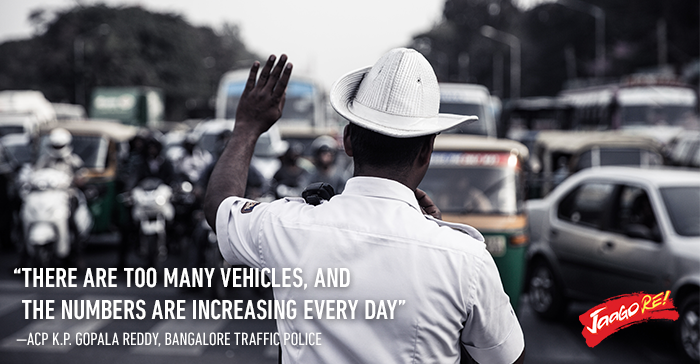
K.P. Gopala Reddy, ACP, Bangalore Traffic Police, said that there are too many vehicles in our cities, and the numbers are increasing every day. This is a big challenge for the traffic police officers, and they need cooperation from the people, the pedestrians, and the motorists, to be able to manage traffic. Our lack of patience and lack of empathy disrupt the balance the traffic police try to maintain on roads. If one person stops, the people behind try to overtake, blocking vehicles coming from the opposite direction. Just because one person decides is impatient, the entire stretch of road gets blocked.
How dependent are we on Traffic Police Personnel, and why?
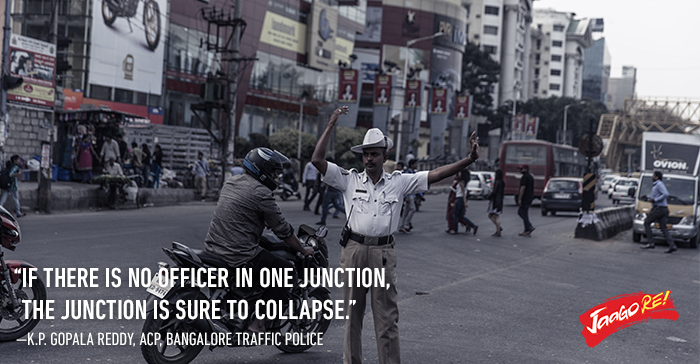
Every junction in our cities need constant monitoring. Our disregard to traffic rules make our roads dependent on the Traffic Police. Mr Gopala Reddy said that if there is no officer in one junction, the junction is sure to collapse. You can imagine the kind of pressure the traffic police officers go through. While a normal person needs a haemoglobin level of 11-16, our traffic police officers have less than 10 because of the constant exposure to both, pollution and natural elements like sun and rain.
Should we have more stringent rules?
We can plan and have rules, but if people do not care about these rules, they are not going to help. Mr Reddy says that we have everything on paper - good plans and good rules, but implementation is extremely difficult, especially because there is no regard for others on road, or for the traffic police. Everybody is in a hurry, or is thinking about themselves, no matter how their actions affect others.
What are the pressures faced by the traffic police?
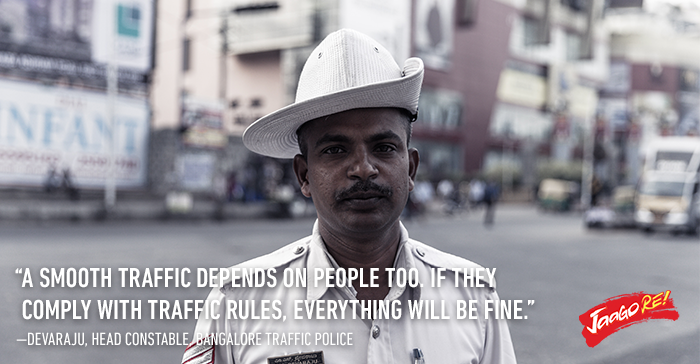
Traffic police departments are understaffed, and there are limited number of personnel even as our cities are expanding. People don’t want to join the traffic police force because of the long and hazardous work hours. Hence, it becomes extremely difficult to manage escalating population on roads. The Department of Traffic Police are ensuring that a minimum educational level of SSLC is required to get a driving license, so that people who drive or ride know the traffic rules and are aware of their responsibilities in traffic, but it is sad to note that even educated people do not obey traffic rules.
What is the one traffic rule that all citizens need to follow?
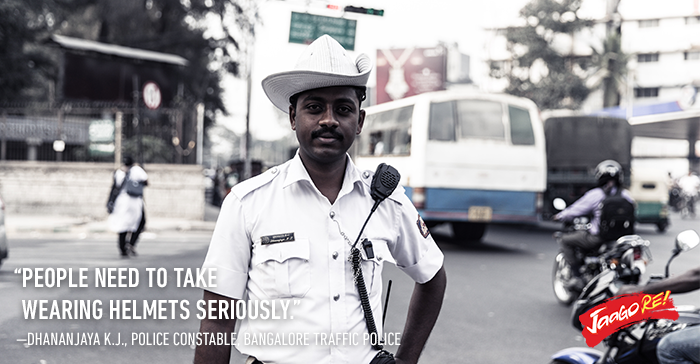
All traffic rules are important, and we need to understand that these rules are in place to ensure our safety. Dhananjaya K.J., Police Constable at Bangalore Traffic Police, pointed out 3 rules that he thinks everyone must follow – wearing helmets, stopping at red and yellow signals, and following lane discipline.
The recent rule enforcing helmet for pillion riders has been put into place after extensive research which pointed out that a large number of pillion riders suffer or succumb to head injuries, hence people must wear helmets while on two-wheelers. Mr Dhananjaya believes that if people start following these simple rules, our traffic conditions could improve manifold.
One thing we learnt from our conversation with the traffic police officers is that they are willing to work extra, to put their lives in danger every day to make sure that we are safe. Don’t you think we need to take steps to help them by following rules and finding ways to pay the traffic police officers their due respect?
Send us your suggestions or views on solutions for traffic issues in our cities, on Facebook or Twitter, or send us an email at jaagorein@gmail.com.
Share this story on
What can an #ActOfLove do?
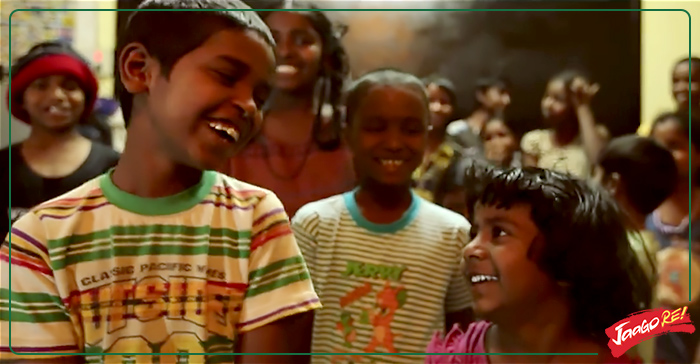
Everyone deserves to be loved, and sharing love with the ones who seldom get it, is a true act of love. We wanted to make our Valentine’s Day special, so we decided to invite our Jaago Re community to join us in an act of love, by sharing their messages to some kids in an orphanage in Bangalore.
We were excited to meet the kids, but we never thought that we would get so much love in return! Take a look at this video which shows how we all shared our love with an act of love.
Do you know of more such acts of love, or have some suggestions on what we as citizen can do to share love with those who need it? Write to us on our Facebook and Twitter pages, or email us at jaagorein@gmail.com.
Share this story on
What is being done to protect India’s domestic workers?
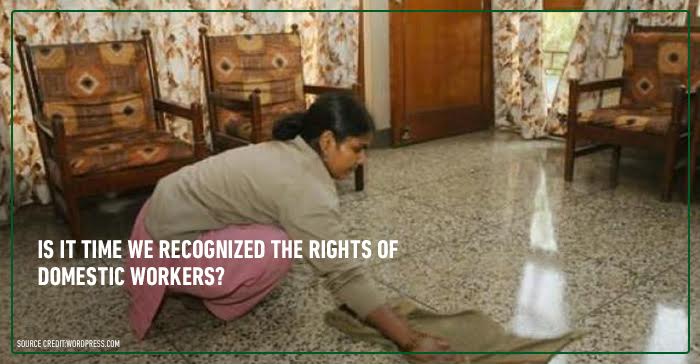
The Rajasthan government has implemented minimum wages and standard working hours for domestic help, starting 1st January 2016. This is a major step in fighting the widespread exploitation of domestic workers not only in Rajasthan, but in India as a whole. Let’s get a better understanding of the need to look at the work conditions of domestic workers in India.
Who are domestic workers?
The National Sample Survey Organization (NSSO) classifies the following occupations as domestic labour: housemaid/servant, cook, gardener, gatekeeper/chowkidar/watchman, governess/baby-sitter, tutor, driver and “others.” India had 4.2 million domestic workers during the year 2004-2005 (National Sample Survey Organization) of which women comprised the majority, and the number of domestic workers in urban areas increased by 68 percent between 1999-2000 and 2009-2010.*
What are their working conditions?
Domestic workers fall under the unorganized sector of the economy therefore their conditions are not regulated or supervised. Since they are not recognised under India’s labour laws, they are marginalized and often exploited. There are no formal employment contracts, leading to poor bargaining power, no legislative protection and inadequate welfare measures and meagre salaries. Domestic help earn as little as Rs.169.32 per day for men and Rs.64.79 for women.**
What has the government done to help them?
There have been efforts by the government to improve the conditions of domestic help. Tamil Nadu has included domestic workers in their Manual Workers Act. Karnataka and Kerala have notified a minimum wage for domestic workers.
Rajasthan has now introduced a more comprehensive notification aimed towards improving the condition of domestic workers.
Here are a few points on the notification issued by the government of Rajasthan:
The work hours for domestic help have been set at 8 hours a day. Anything over that is to be considered as overtime.
The minimum wage for domestic help is now set at Rs.5,642 per month, exclusive of food, accommodation and any other perks. Overtime hours are paid at double the rate.
Domestic help hired only for dishwashing and laundry are to be paid at Rs.705 per month for a household of four members. Above this they are to be paid 10 percent more for every additional household member.
This notification is applicable as of 1 January 2016, and will be enforced through surprise inspections.
This might be a very important step towards improving the conditions of millions of domestic workers in India.
Further, a draft National Policy for Domestic Workers from the Union Labour ministry seeks to provide a minimum wage of Rs.9000 per month, in addition to 15 days paid leave in a year for domestic workers, along with maternity leave.
The Rajasthan notification along with this policy may hopefully pave way towards better, more dignified working conditions for the large population of Indian citizens who comprise the domestic workforce.
While laws can change the situation of the unorganised labourers, we as citizen also need to do our bit towards it. How do you think we can prevent exploitation of workers in the unorganised sector? Share your views on this issue on our Facebook and Twitter pages, or email us at jaagorein@gmail.com.
Sources:
*India Today
Livemint
**United Nations in India
Weigo
Share this story on
Using technology to revolutionize India’s healthcare services
.jpg)
India contributes the largest percentage of maternal (16%) and child (27%) mortality worldwide. Women and children are dying in large numbers, and it’s because we cannot provide them with basic information and resources.
Luckily, there is a solution available.
Telecommunication can help reduce these numbers
As of May 2015, India is the world's second-largest telecommunications market, with over 1 billion telephone subscriptions and 267 million internet subscriptions. The Government’s ‘Digital India Campaign’ plans to provide mobile and broadband connectivity to all villages by the year 2020.
What this means is simple – India can now provide timely, specific, and life-saving medical information to a diverse population at a relatively low cost.
How can technology help?
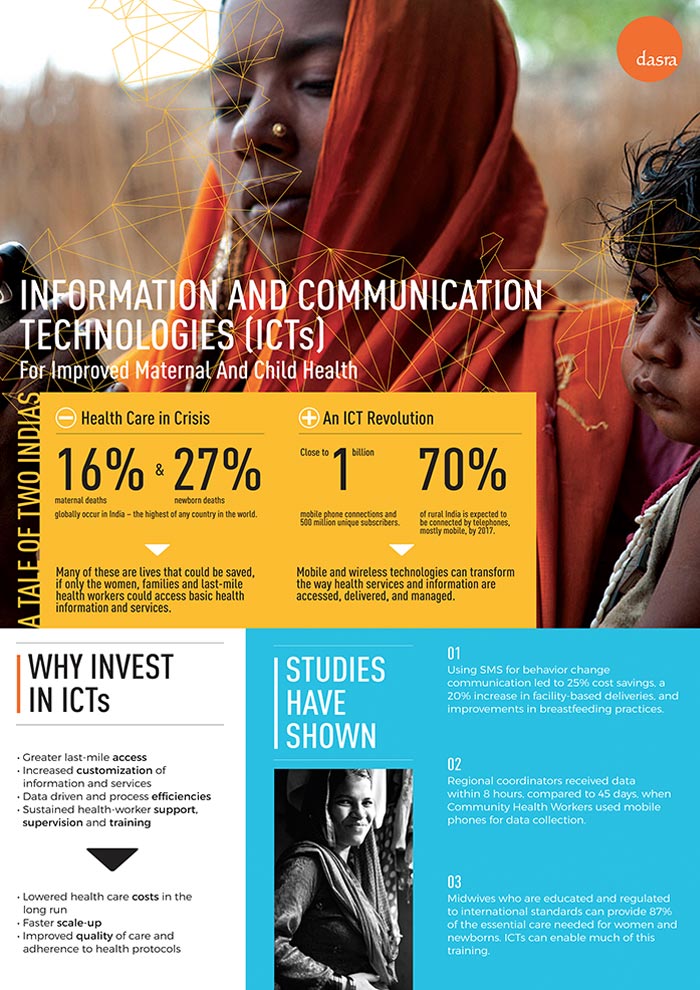
NGOs have begun using voice messaging services (via mobile phones) that provide families in villages with information aiming to develop healthier behavior that work to ensure the wellbeing of both mother and child.
The services work via SMS and voice messages which are timed to match a woman’s stage of pregnancy. Through these messages, themes such as nutrition and newborn care are covered.
These mobile based services overcome a lot of challenges that typically prevent women from receiving medical guidance. The service saves time and money for women because they do not need to travel to health centers that are often far away.What’s more, the information provided is personalized and verified by qualified doctors, who are often city based, i.e. doctors they would not otherwise have access to.
But that’s not all! In addition to SMSs that get delivered to women who need it, technology is being used to train health workers in far-away districts that are usually inaccessible. NGOs are using educational videos, interactive exercises and training via videoconferencing to ensure that health workers have up to date information. Since health workers in small towns and villages usually influence the community at large, this training is crucial and a fast way to bring about a change in mindsets.
What does this mean for India?
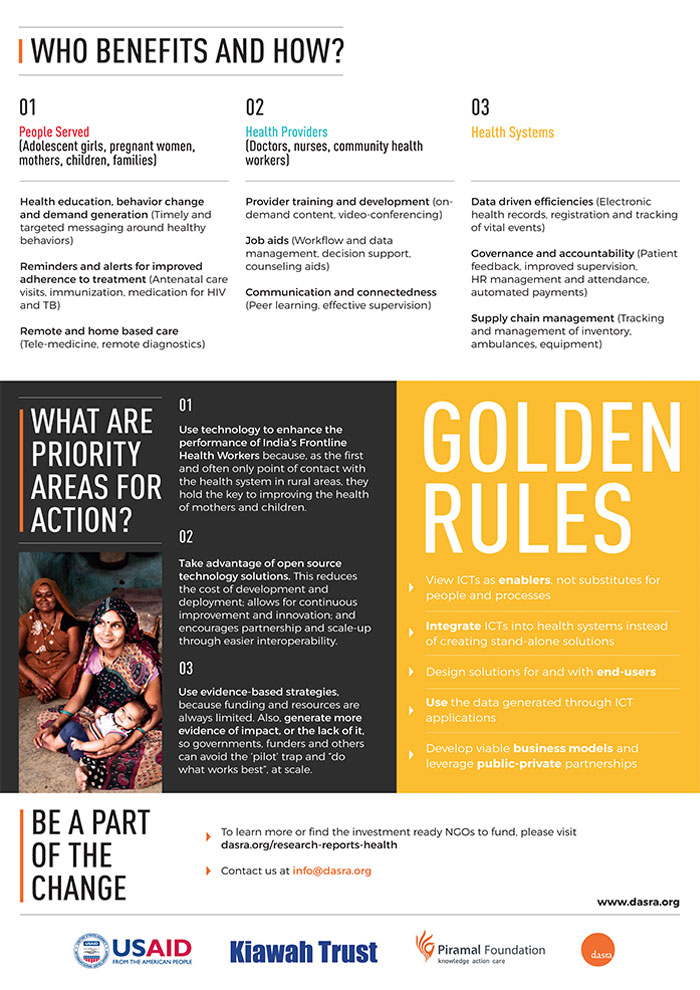
Information and Communication Technologies provide a real opportunity to address India’s problem with maternal and child morbidity and mortality. It can also bridge gaps in health services and systems and reduce inefficiencies.
The integration of technology and healthcare has the potential to revolutionize not only the system, but the country as a whole. Women stand to have their lives saved and their communities transformed – and that’s an outcome which goes beyond statistics.
How can each of us help?
Keep in mind that technology is not the answer to India’s healthcare crisis in and of itself. However, it can be used to find solutions to real problems and it can definitely save lives.
Now that you know more about information and communication technology, help spread the word! Learn more about how technology can be best used where you live, read about the services offered, how they work and talk to your local NGOs about what you know. After all, technology brings change with it, and you can decide how best to be a part of that change.
This article has been co-authored by Harish Sigiriraju and Devanshi Vaid.
Disclaimer:
The views expressed in this article belong to the authors alone, and do not necessarily represent that of the brand.
About the Author:

Share this story on
Responsible journalism: A necessity in India today

Bashing media professionals about their sensationalism has become a habit, but are all these professionals unethical? Media (often termed as the fourth pillar of democracy) plays a pivotal role in influencing mindsets across the country, which makes it essential for us to ensure that we are consuming information from the right channels.
While it’s easy to talk about everything the media is doing wrong, it’s time for us to start paying attention to media outlets that report independently, and by virtue of doing so, aid in maintaining good governance in India.
What is independent media?
Independent media operates free of any influence from both the government and the corporate sector.
Here are a few defining aspects of Independent Media:
Report news in-depth, without opinions
Common interest stories and events
Provide the people with facts and facts alone
Data-driven journalism, that is, use facts and verifiable data
Their stories often take shape of long investigative stories
Offer plurality in diversity in voices
Talk about issues that would otherwise be swept under the rug
When people get information from independent sources, they are encouraged to think critically and form their own opinions, making independent media vital for any democracy.
How does independent media aid in governance?
With independent media around, the government is forced to be more transparent and accountable to the citizens of the country.
Independent media channels function without external influence – this means that they can spread word accurately about government policies and happenings, making them responsible for democratizing access to information and mainstream development issues.
Research has shown that there is a clear link between freedom of independent media, low levels of corruption and overall improved delivery of public services.
How can we identify independent media channels?
Differentiating conventional media channels from independent ones is fairly simple. Here are some pointers to get you started:
Research & Data: Reporting news requires research. Look for graphs and statistics – that’s a sign that the team thoroughly looked into the subject matter.
Opinions: Keep an eye out for personal opinions or a religious/political bias – is the article telling you what to think or encouraging you to think for yourself?
Paid media: Is your media channel usually leaning towards the same political party no matter what the issue? If so, they might have a partnership with the party.
Organizations such as CGNet Swara, Khabar Lahariya and Charkha are some of the best examples of independent media. They strive to reach remote parts of India and cover conflicts and events that nobody else is talking about. What’s more, they work with communities to ensure that the voices of people is heard.
What role can we play?
India is at the cusp of both economic and social change, and it is vital that we, as citizens, remain informed and aware of the happenings in the country. We need to think critically about events and engage with others who are doing the same.
So, begin by paying attention to the source of the information you are consuming – look for independent media channels and share their work. When you consume independent media, you are broadening their circulation and giving them a platform. A platform, that is vital towards sustainable, good governance.
What are your views on the condition of media in India, and how do you think we can encourage responsible journalism? Send your views on jaagorein@gmail.com or write to us on our Facebook and Twitter pages.
About the Author:

Share this story on
HOW CAN WE RECOGNIZE AND PREVENT CHILD SEXUAL ABUSE?
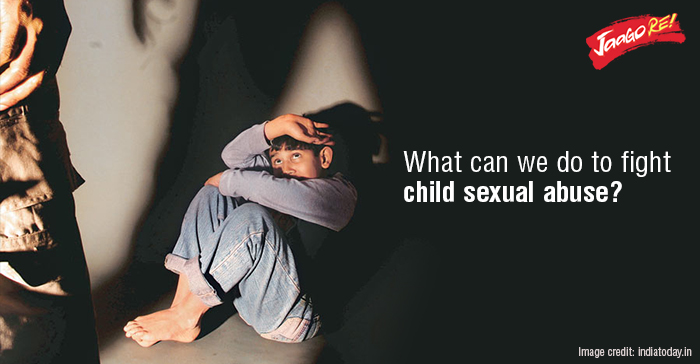
Child sexual abuse is any act that involves using a child for the sexual gratification of a more powerful person. Some forms of child sexual abuse consist of engaging with a child in sexual activities, exposure of body parts to a child or using a child to produce pornography. Abuse can occur anywhere, including home, school, or work. The abusers can be anyone---men, women or even older children. Most often they are known to the children they abuse.
According to the National Child Abuse Study in 2007, every second child has been subjected to one or more forms of sexual abuse. Over 21% of those interviewed said they were subjected to severe forms of sexual abuse. Of these 21%, 57% were boys and 43% were girls.
IMPACT OF CHILD SEXUAL ABUSE
For survivors, the impact of child sexual abuse can be devastating. They may feel major grief and exhibit a wide range of psychological symptoms, both short- and long-term.
In the short-term, children may exhibit regressive behaviors like thumb-sucking and bed-wetting, sleep disturbances, problems in eating, behavior problems at school, and unwillingness to participate in school or social activities.
Longer-term effects may be quite extensive, including anxiety, self-destructive behaviors like alcoholism or drug abuse, insomnia and many more.
Survivors may panic and exhibit symptoms of Post-Traumatic Stress Disorder. They may experience problems in adult relationships and sexual functioning.
Survivors may feel annoyed at the mere mention of the abuser or the incident, at others who failed to guard them, and at themselves for not having been able to stop the abuse.
Some may not have any impact at all.
SPEAK UP!
Child sexual abuse is not an accident and not necessarily a single event in the child’s life. Learn the early warning signs and ways to effectively voice out your concerns. Sexual abuse can be prevented. Adults must take the principal responsibility for protecting children by voicing out any doubtful behavior, which may risk the child’s safety.
Here are a few ways we can ensure child safety:
Show interest in their everyday lives. Get to know the people in your child’s life.
Choose caregivers vigilantly.
Teach children differences between safe and unsafe touches and encourage them to report it if they experience any unsafe touch or situation.
Let the child know that no one has the right to touch them in a way they don’t like or make them feel uncomfortable. Teach your child the names of their body parts. Teaching a child these words gives them the vocabulary to share when something is wrong.
Let them know it is not their fault and they won’t get in trouble if they speak up.
Take active steps NOW and help prevent child sexual abuse.
Arpan teaches personal safety skills to children in schools and provides therapeutic services to children and adult survivors of childhood sexual abuse.
To know more about Arpan and our work, visit arpan [dot] org [dot] in, or drop us a line at communication [at] arpan [dot] org [dot] in.
About the Author:


Share this story on
Celebrating Valentine’s Day with an #ActOfLove

This year, we wanted our Valentine’s Day to be special, and we also wanted people on our Facebook and Twitter community to be a part of our Valentine’s Day celebration. So, we decided to share some love with an #ActOfLove. What happened then?
Watch this video to find out:
What are your views on our Valentine’s Day video? What more do you think we can do as our #ActOfLove to make our society a better place? Write to us on our Facebook and Twitter pages.
Share this story on
HUMAN TRAFFICKING IN INDIA & THE INVISIBLE VICTIMS

Last month, India decided to sign an agreement with Bahrain to prevent human trafficking.* Human trafficking is one of the most rampant crimes in a labour-surplus and developing country like India, but we have not yet managed to tackle this issue, because of our lack of knowledge about it.
What is human trafficking, who are its victims, and what can we do fight it? Here are a few points to help us better understand this menace.
What is human trafficking?
The trade of human beings for exploitative purposes including bonded and forced labour, commercial sexual exploitation and illegal organ-trade is called ‘human trafficking”. Given the nature of the crime, it also involves forceful and illegal migration of the victims who are traded.
Who are the victims of human trafficking?
Victims of human trafficking in India live amidst us, in our day-to-day surroundings. The most common victims are:
1. Children and young women brought from rural areas or sometimes even other states, to be engaged as domestic help in households or various small-scale establishments in urban centres. Many of these people eventually get exploited economically, physically and also sexually.
2. Children and adolescents begging or selling knick-knacks on the streets in towns and cities.
3. Women and children sold into commercial sex trade market
4. People lured to foreign countries by fraudulent recruitment agencies with lucrative job offers, to be employed in menial work involving inhuman working conditions.
5. The victims of the illegal organ trade racket.
How do we identify the victims of human trafficking?
In case of children employed in households or establishments in our neighbourhoods, we can stay alert for signs of oppression which make themselves evident in the form of withdrawn and anxious behaviour of the child, physical marks of assault etc. In such instances, we can lodge a complaint with the local police on behalf of these children. We can also approach Childline, the emergency helpline for children in distress, at 1098.
Read more about child labour here
The Central Bureau of Investigation (CBI) of India has also set up a 24*7 helpline number – 011 2436 8638 – which has been exclusively created for complaints regarding “illegal human trafficking especially trafficking of women and children”.
It is easier to detect cases of oppression and exploitation in familiar neighbourhoods. However, we can also contact these helpline numbers in the event of observing suspicious activities involving children and women outside our neighbourhood – for instance, on noticing a grievously injured child begging on the streets, or in trains, if we chance upon a group of girls, women or children with tell-tale signs of anxiety, fear or assault.
These instances are usually not easy to detect and also not easily verifiable. Hence, despite the high frequency of occurrence, the number of cases reported remains extremely low.
How do you think we as citizens can help tackle human trafficking in India? Share your views with us on our Facebook and Twitter pages.
*Source: The Economic Times
More about the Author:

Share this story on