Understanding drug abuse in India : A conversation with experts
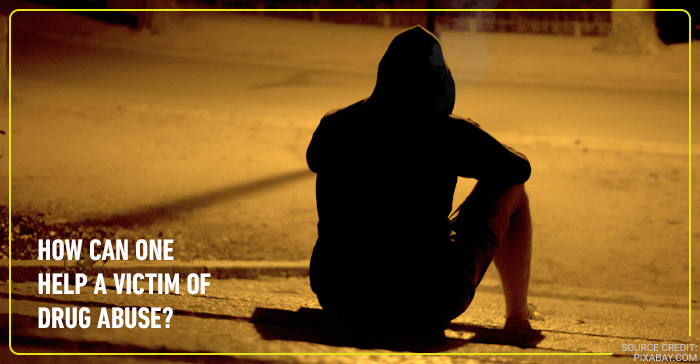
Drug abuse is is one of the most crippling issues in our society today, but unfortunately, we fail to pay much attention to it. While there are victims from a varied age group, youngsters fall easy prey to drugs and substance abuse. The society views an addict more as a criminal and less as a victim who can fight his/her addiction if given the right kind of help and support.
Today, the world observes the International Day against Drug Abuse and Illicit Trafficking, and to know more about how the society can help in the rehabilitation of a drug abuse victim, we spoke to two experts - Dr. Keyur Panchal, a consultant psychiatrist and de-addiction therapist, and Barasat Phoenix Foundation that helps restore recovering addicts to being productive members of their families and society.
Here are few snippets of our conversation –
Define drug abuse
Why youngsters fall prey
Laws to mitigate abuse
Society & family's views
How the society can help
Ordinary citizens too can play a big role in ensuring successful rehabilitation of drug abuse victims. Victims need constant support and acceptance from the society and their families. They need to be told that they are not alone in this battle against drug abuse and are completely capable to leading a good and productive life once they come clean.
Drug abuse victims and their families also need to be educated about the importance of seeking help and incorporating suggestions from de-addiction professionals. Once drug abuse victims are assured that they can beat this evil, the path to recovery will seem easier.
What are your views on possible solutions to drug abuse in India? Share your views with us on our Facebook and Twitter pages.
More about the Experts:


Share this story on

Bystander apathy and possible ways to overcome it – A conversation with experts
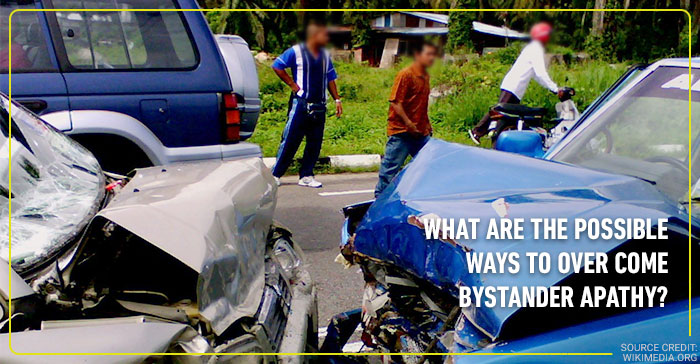
Bystander apathy is one of the biggest evils in our society. When we witness an accident, most of us choose to do nothing to make sure that the person receives immediate help. Statistics show that almost half the lives lost in road accidents could have been saved if bystanders had offered help.
While many of us do not know what to do to help an accident victim or a victim of violence, most of us do not come forward to help because we fear getting involved with the police and the law. Many of us even think that it is none of our business to get involved, especially in cases of violence. This attitude alone results in loss of life and also inhibits people's involvement in building a better society.
So how do we overcome bystander apathy? To get more insight into the issue, we spoke to experts and here’s what they had to say:
Definition of Bystander Apathy
Some important statistics
Why people do nothing
Help for accident victims
For victims of violence
The Golden Hour
The Good Samaritan Law
To involve a bystander
Not knowing what to do should never be an excuse to helping another person - not knowing is our fault. Apart from knowing the steps of first response, we also need to be more aware of laws like Good Samaritan Law to know how to evade unpleasant experiences, and fulfil our duties towards helping a person in need.
What are your views on overcoming bystander apathy in India? Share your views with us on our Facebook and Twitter pages, or email us at jaagorein@gmail.com.
Disclaimer:
Views expressed here are of the experts alone and do not necessarily represent that of the brand.
More about the Experts:



Share this story on
A few stats we need to know about the senior citizens in India
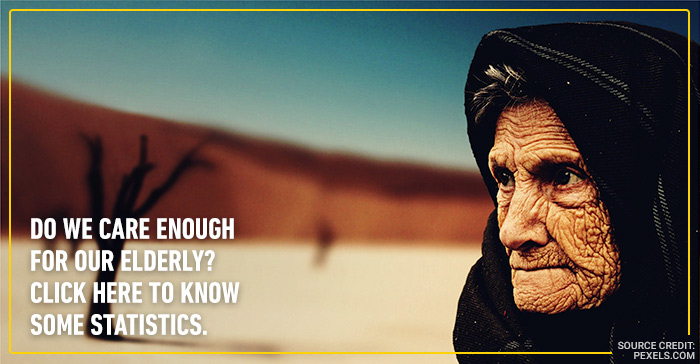
Every fourth Sunday of July is celebrated as ‘Parents Day’ to honour and show gratitude to the sacrifices that parents make to ensure a bright future for their children. However, the statistics about the conditions of the elderly in India look quite grim. While on one hand we take pride in our culture of respecting our parents, on the other hand we fail to take care of them when they need us the most.
As we approach Parents Day, here is an article with a few statistics about the condition of the elderly in India.
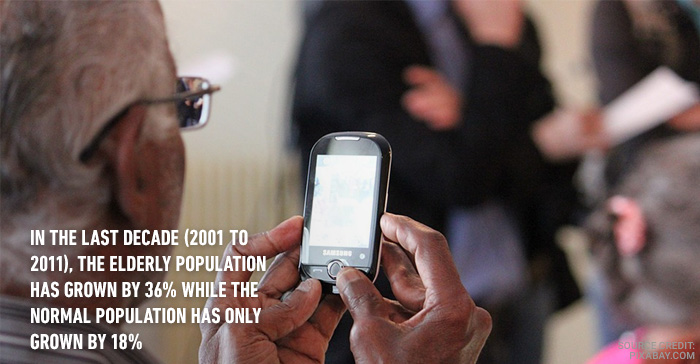
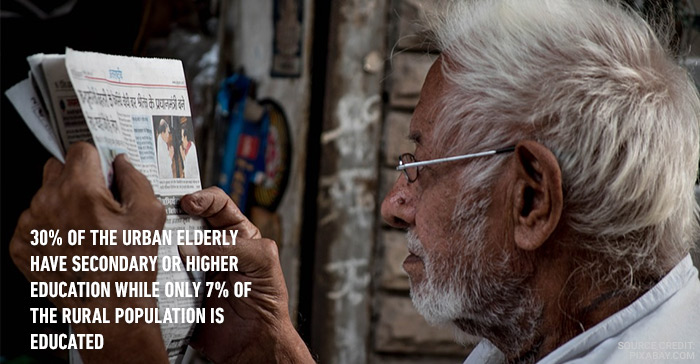
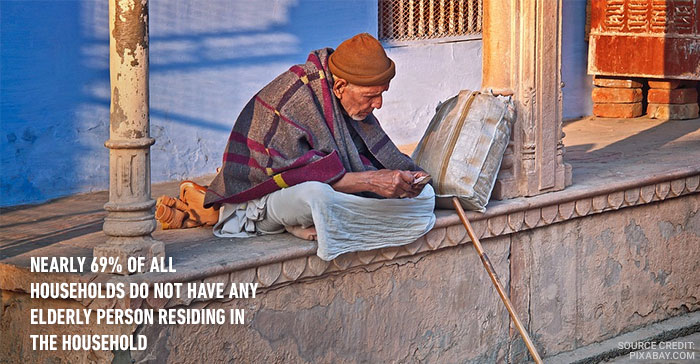
The elderly population is growing decade-by-decade, but the same cannot be said about the number of economically independent or educated senior citizens.
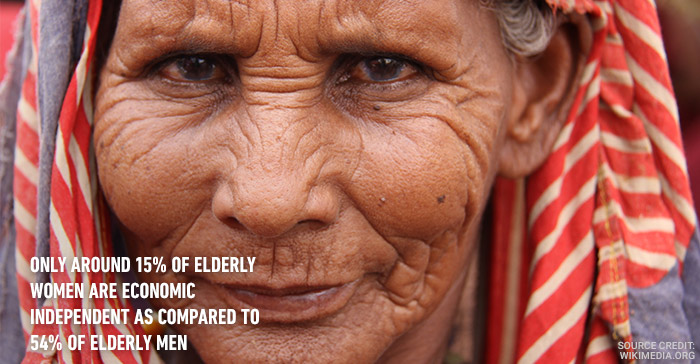
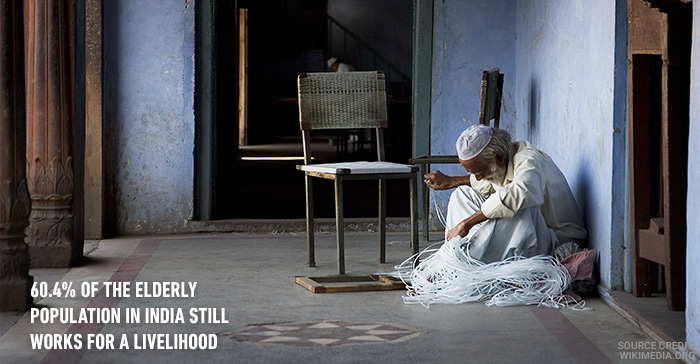
Some senior citizens still have to fend for themselves and earn a livelihood.
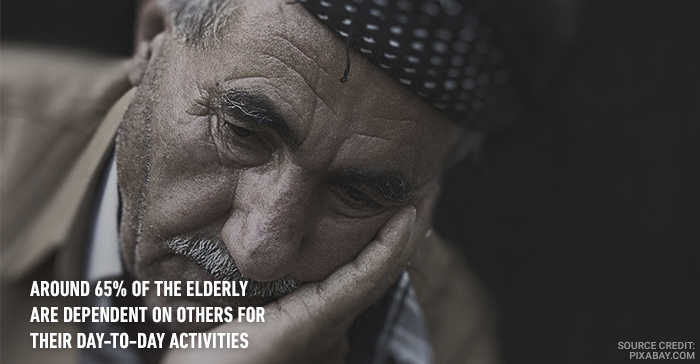
Some are also entirely dependent on their spouses or children.
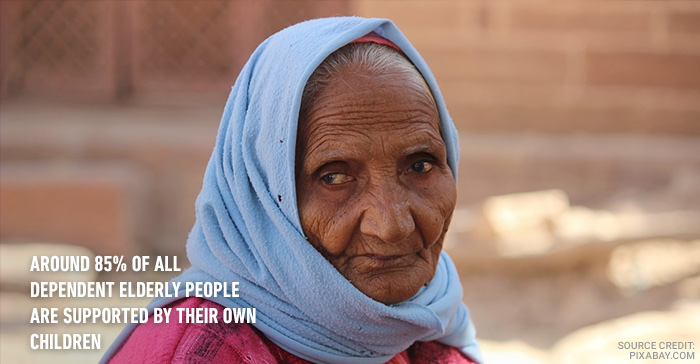
Not all senior citizens have a home to call their own.
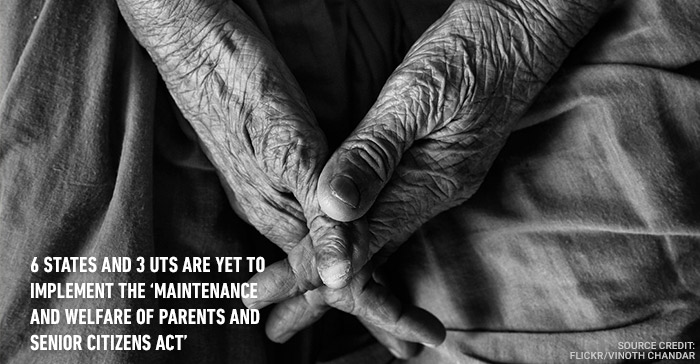
While there is a law for the maintenance and welfare of the citizens, it is yet to be implemented in many Indian states and Union Territories.
Why do we fail to care for our elderly parents in their twilight years? How do you think laws can be enforced so that every senior citizen gets the dignity he/she deserves? Share your views on our Facebook and Twitter pages, or email us at jaagorein@gmail.com
Source for all statistics - Ministry for Statistics and Program Implementation
Share this story on
How do different countries take care of their senior citizens?
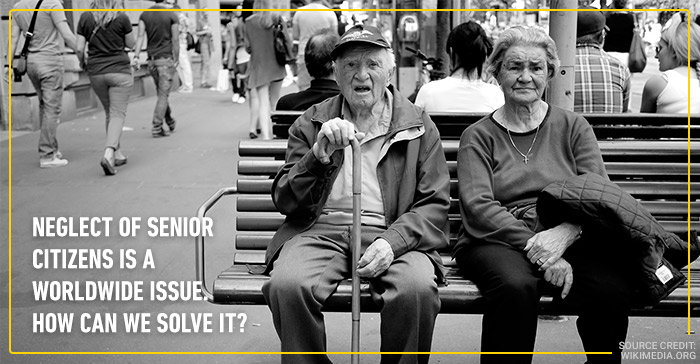
Most countries have laws in place that make it mandatory for children to look after their elderly parents, but often a lot of it remains just on paper. While the conditions of senior citizens in India is worrisome, let us take a look at the provisions that some other countries have in place for the welfare of the elderly in other countries.
Policies for senior citizens in Philippines –
Philippines has a state policy that ensures social justice and dignity to the senior citizens in the country. Here are few things the policy enlists –
20% discount and exemption on VAT on purchase of medicines, professional fees of attending physicians, dental services, utilization of services in hotels, admission rates in places for entertainment and for funeral and burial services
Exemption from payment of income taxes of senior citizens who are minimum wage workers
Establishment of exclusive ‘senior citizens wards’ in every Government hospital
At least 50% discount on electricity, water and telephone services for Govt. and privately run senior citizens
Needy senior citizens shall be entitled to a monthly stipend to help them sustain their everyday and medical needs. The amount is revised every 2 years by the Government
Policies for the welfare of senior citizens in Japan –
About 50% of the elderly in Japan have expressed a strong desire to work beyond the stipulated age for retirement and are ably supported by their Government. Japan’s policies start from the time people are working itself, so they do not face difficulties in their twilight years and still there are issues that raise concerns over how senior citizens are cared for.
Every working person is insured of a basic pension that he/she will receive once they turn senior citizens
A senior citizen and a caregiver is paid an amount depending on the medical condition of the senior citizen so that his day-to-day needs and medical facilities are taken care of
There are community homes for the elderly with dementia, so the senior citizens can enjoy a meal and also avail of basic medical care inside the facility
Policies for the welfare of senior citizens in the UK –
2.9 million senior citizens in the UK felt that they had nobody to go to during their times of need. Senior citizens in the UK have also been expressing desire to work beyond their prescribed retirement due to rising costs in the country. Here are and policies that the Govt. has in place to help ensure the welfare of senior citizens –
Concessions are made available by the Government for a senior citizen's railroad and air travel
If a senior citizens needs someone to take of him/her, he/she is entitled to financial help for the same and this type of allowance is called Carer’s Allowance
Most senior citizens are entitled to some form of pension, either from the Government or from their previous employers
Neglecting care for elderly is a very serious issue which is common all over the world. The question that we need to ask is whether senior citizens deserve to be abandoned when they need us the most, especially after they spent the best years of their lives taking care of us.
Let us know your thoughts in the comments below, you can also reach out to us on our Facebook page, or tweet to us Facebook and Twitter pages. You can also send us an email at jaagorein@gmail.com
Share this story on
A fresh take on the real meaning of friendship on #FriendshipDay
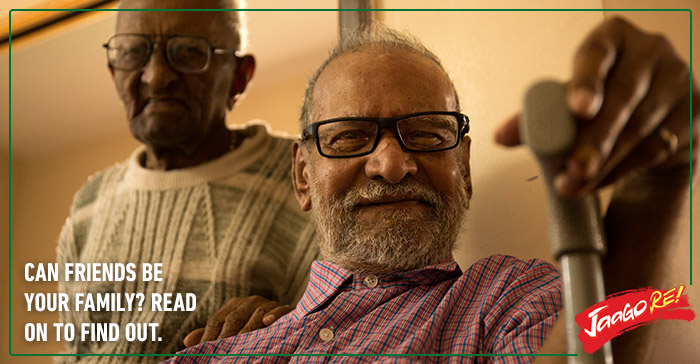
For all of us, friendship is a blessing. Our friends are our neighbours, colleagues, classmates and sometimes, strangers who have left everlasting impressions on our lives. While friends become as close as families for many of us, do we really understand their importance.?
This Friendship Day, we wanted to get a better understanding of the importance of friendship, so we spoke to a few very special people who have seen and lived many kinds of relationships in their life. These are senior citizens who have taken shelter in an old age home when they coudln't depend on their families or the society for love and care in their twilight years. None of them came to the old age home with any expecations, but they found friends who became family. Their take on Friendship is pure and strong, and an inspiration to us all.
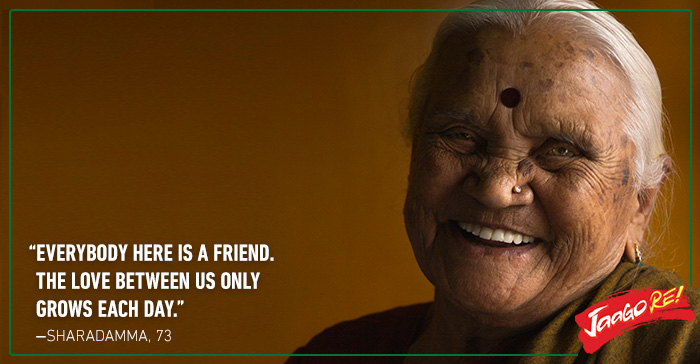
These senior citizens are only looking for a little love. Anyone who will welcome them with open arms immediately becomes a friend.
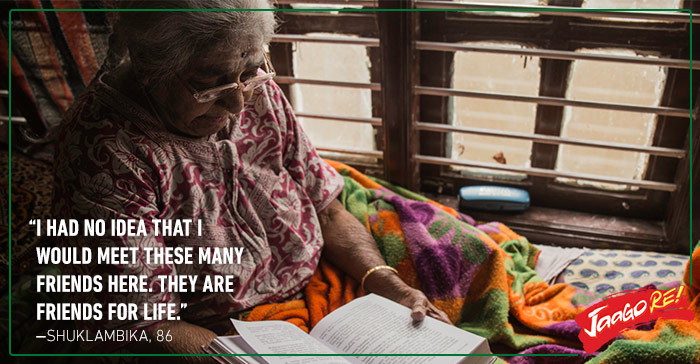
Because they are shunned by their families, they do not expect too much from others. But, when friendship comes their way, they are more than willing to give it their all.
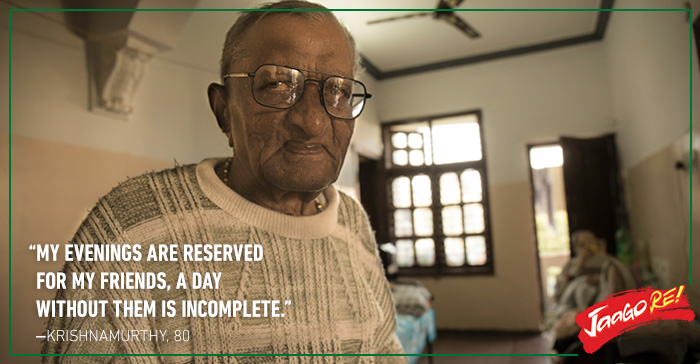
We complain that our friends do not have enough time for us, but these senior citizens make sure that they spend each day with them.
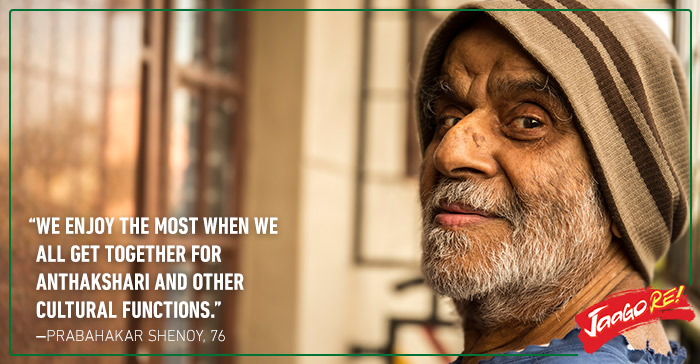
At this age, the elderly might not celebrate Friendship Day like the youngsters. But, they certainly know how to have fun.
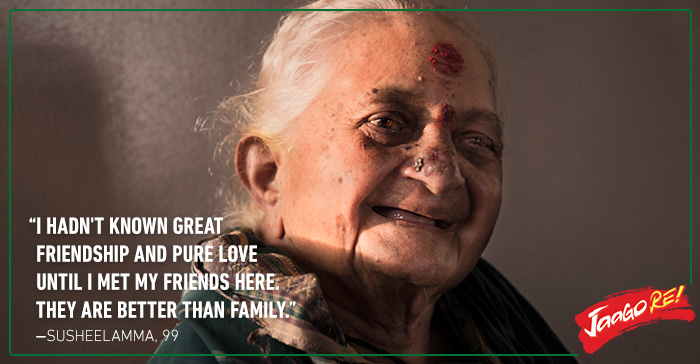
There is definitely no match for the zeal for life and friendship and life that these senior citizens have. They have found love and companionship in one another beyond linguistic or cultural borders. We can only pray that we have friends to love and cherish, just like these fortunate bunch of people who are friends for life.
We would love to know more about more such stories where friendship has crossed all barriers and been a pillar of support. Share your stories with us on our Facebook and Twitter pages. You can also send us an email at jaagorein@gmail.com
Share this story on
Acknowledging Everyday Heroes on Independence Day
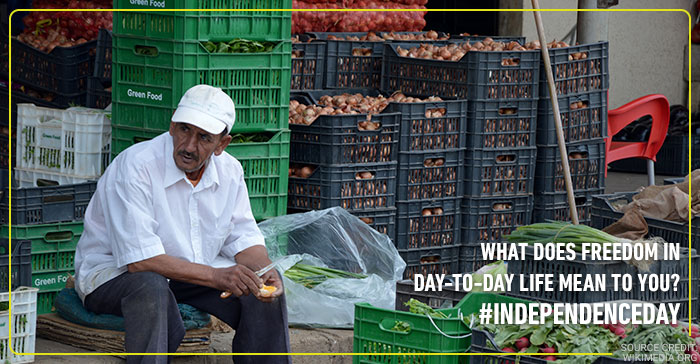
Our freedom from the colonial regime was an outcome of great sacrifices by our freedom fighters. Their efforts gave us sovereignty and unity in diversity. Today, we might not realise how important and valuable this freedom is - freedom from colonisation, and also freedom to live our lives the way we want, with all possible luxuries.
There are countless individuals who function as the backbone of our society, invisibly helping make our life easier and enabling us to enjoy our freedom. As we celebrate our 70th Independence Day on 15th August 2016, we remember not only the valiant efforts of our freedom fighters, but also every individual who make it possible for us to live as the free people of India.
Here are a few stories of such people who work tirelessly so that we can enjoy a comfortable life (stories and images via Humans of Bangalore).
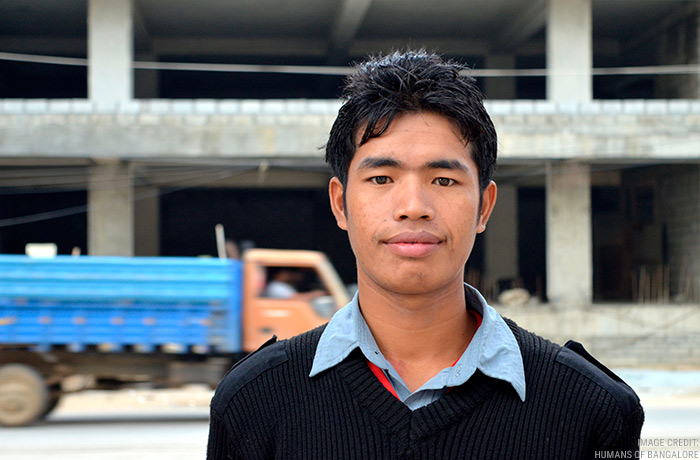
“The whole point of moving was to show my mother that I too could be someone. Being a security guard has given me some stability for the last one year. I wake up in the morning for a training, check to see if my night time logs have been registered in the books, make sure the visitors' cars are parked in the right place and recorded correctly in the books. Sometimes the visitors fight with us for no reason, mostly regarding parking. They come and park wherever they want and leave their vehicles unregistered with us. We're just doing our jobs, you know. Even if it’s just being a security guard, we have to do it right. We get questioned by our superiors if there's anything amiss. People complain that security isn't being taken seriously, but we're doing our best. I get angry thinking about it sometimes but in the morning it is a new day, so I don't hold it against anyone.”
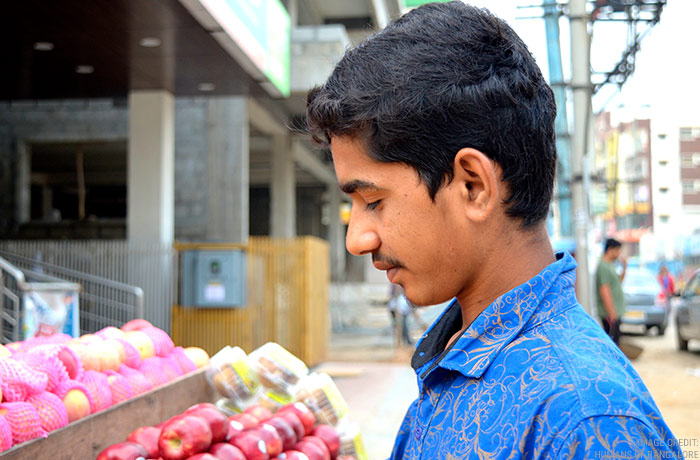
“My friends are market vendors, so we get the freshest produce for our fruit stall. I would like to be a farmer one day and grow my own produce but it is really expensive, so I've managed to open up a stall instead. I get up everyday at 3 AM and head to the state borders with my friends where we meet the other vendors and farmers. They bring their daily produce and set up in a long line where we buy them in bulk. The most beautiful thing about this practice is that nobody bargains for money. There is a silent form of honour amongst all parties involved, I think somewhere we understand each other and we pay for what we get. It's not the same case when we come back to the city though, people don't bargain when they go to big stores but they bargain with us. I give in to their bargaining because in the end of they day I don't want to lose a customer.”
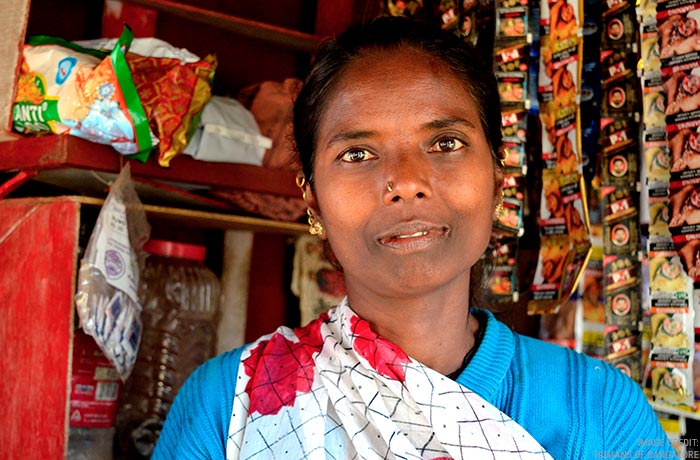
“Customers mostly come during the night time for a hot plate of dinner, we serve dinner till 2 am in the morning. There is nothing extraordinary about our dinner, but serving it means everything to us. I have a 10 year old girl and I set up this shop to help pool in money for her education. Instead of sitting at home and wasting my time, this seems like a better option. My husband is a labourer and his work is seasonal. He makes the food and snacks that we sell at this shop. Initially he was not willing to help but with our little girl growing up, he has slowly changed his ways. I know it is important for me to send my daughter to school.”
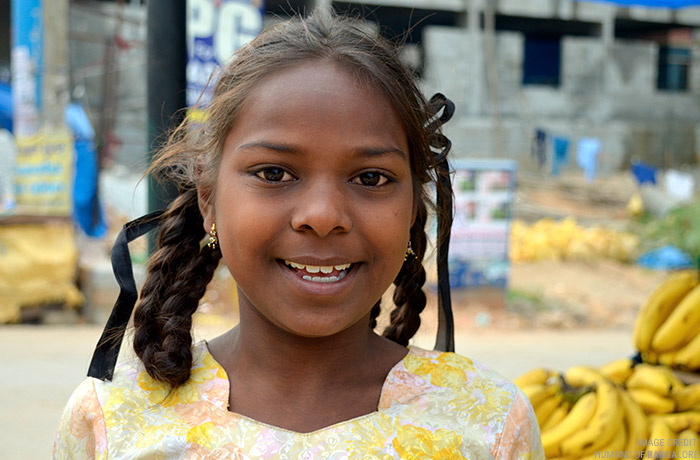
“I like being in the shop with my mom, we sell fruits and vegetables during the day. In the evening we sell paan and snacks. Amma is always scolding me when I eat the snacks because they're for the people who come to the shop. Sometimes I finish school and come to the shop directly, I do all my homework here and Amma gives me two extra snacks when I finish on time.”
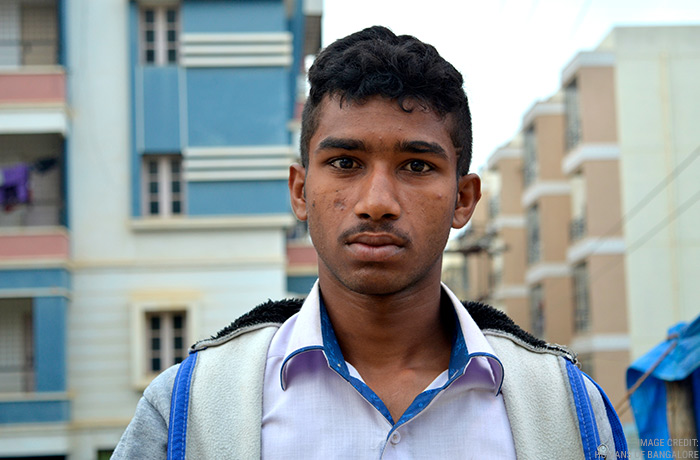
“I'm a labourer, I do this job because I am good with physical work. It's just another day at work for, loading piles of bricks, bags of cement and sand. The building contractors schedule our time slots, we head in mid day and are done by the night. We have built apartments, office buildings and plenty of public structures for the government. I never went to school but I'm good with money. The one thing I am really proud about is my family, I am saving up all my money to send my younger brother to school.”
It is important for all of us to realise that these very people form the backbone of the country we love and cherish. While we enjoy our freedom, let us not forget that it is also our duty to treat these people with the respect they deserve. This Independence Day, let us all get together to salute these soldiers who toil to enable us enjoy our freedom, Happy Independence Day!
What are your views on the story? Share with us on our Facebook and Twitter pages, or email at jaagorein@gmail.com
More about the Experts:
Share this story on
What teachers would like to change about India’s Education System
.jpg)
Education in India has always been a significant part of growing up, be it education from parents and Gurus during the vedic age, or formal education in the modern age. Our education system has undergone several changes, hoping to become more inclusive and efficient, but it is far from perfect. The one section that has tirelessly been trying to change our education system for the better are the Teachers.
On Teacher's Day 2016, wanted to know from the teachers in India the changes that they would like to see in the Indian Education system. Here’s what they had to say -
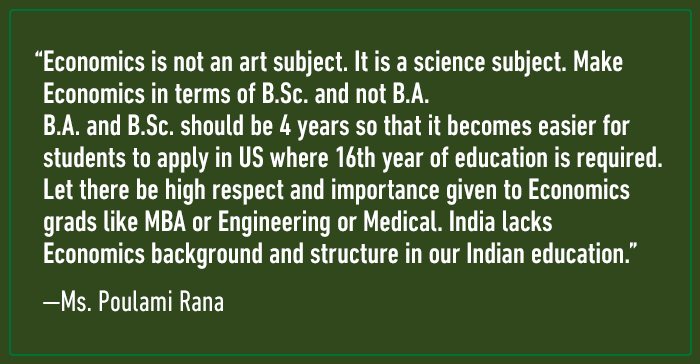
Give Economics its due importance -
Ms. Poulami Rana feels ‘Economics’, as a branch of study has not got its due and that undue importance is being given to medicine and engineering.
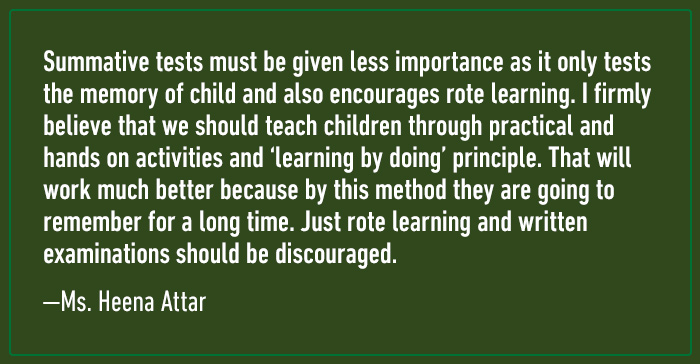
Encourage practical learning -
Ms. Heena Attar voiced her opinions about how tests/exams should be given lesser importance since they only emphasize on rote learning.
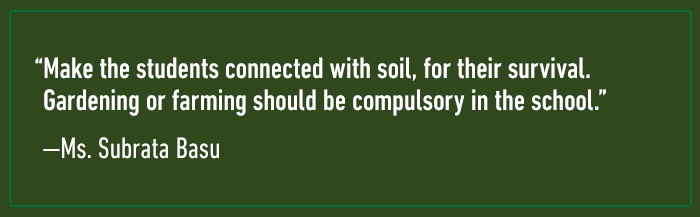
Connect to the roots -
Ms. Subrata Basu believes that children need to learn to feel connected to nature.
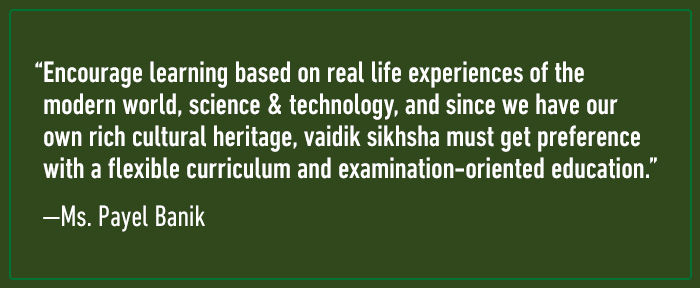
Bring vedic education back -
Ms. Payel Banik talks about traditional education and says that vedic education should be made part of the curriculum.
Recruit talented teachers -
Mr. Dipanjan Chakraborty too thinks that the ancient Indian education system was the best. He also talks about the need to recruit talented teachers.
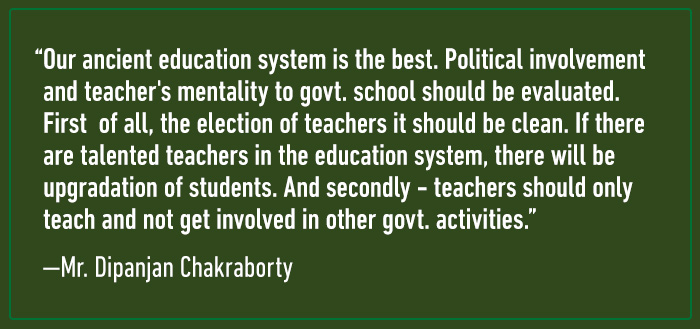
Monitor student - teacher ratios -
Ms. Ashra Khan feels that the student-teacher ratio need to improve, and that quality education can be guaranteed only by increasing the number of teachers.
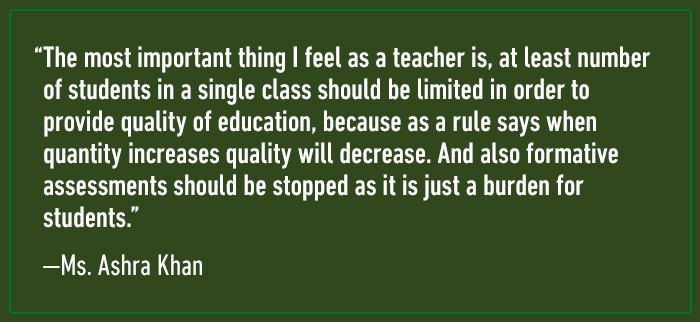
Instil values, and not morals -
Ms. Jayanti Mahapatra, who has been teaching for 28 years, feels that there is a lack of emphasis to human values.
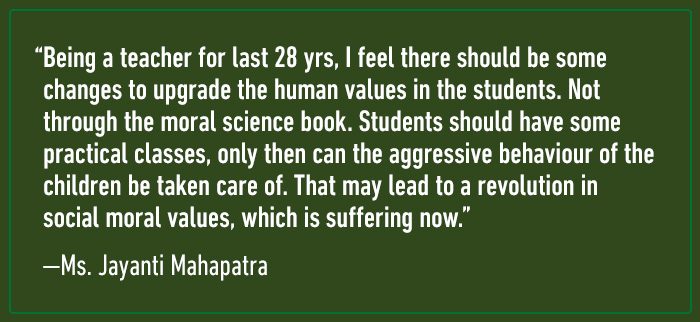
Teachers who have inspired generations and dedicated their lives to the cause of education feel that these are the changes that need to come about in the educational system. Do you agree with their views? What do you think are the changes that can make our education system better and more effective? Share your views and questions with us on our Facebook and Twitter pages, or email at jaagorein@gmail.com
Share this story on
How important is it to know how to respond to a heart attack
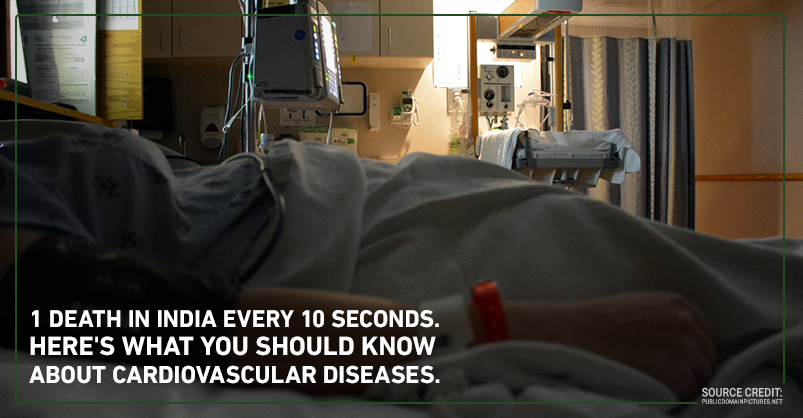
A person sitting next to you in a room has a heart attack, and you are the only one around. This is a situation that demands choices that are probably going to be one of the most important ones in your life. Well, if anything, it is definitely the most crucial one for the victim.
The choices that you make now will determine whether the other person lives or dies. So, what is one supposed to do? How does one react to a situation like this where it is matter of life and death for someone? Do we know enough about it?
World Heart Day is an annual event which is celebrated on the 29th of September every year with the intention to educate people around the globe about the world’s leading causes of death, claiming 17.3 million lives each year.
"India is the diabetic capital of the world. Let's not make it the heart disease capital. As Indians, we are genetically more prone to cardiovascular diseases," Dr. Rehan Sayeed, Chairman and Founder of Motherhood and the Heart Center in Bangalore told Jaago Re in an interview.
"When the rest of the world gets it at 60 or 70 years of age, we are seeing this at 30 or 40 years of age. Fundamentally, we have to understand that we have a genetic issue. So, we need to stay healthy. Exercise 30 minutes a day for 3 days a week and stay healthy."
To break it down into further numbers, around 9,000 Indian lives are claimed alone in a day, with patients succumbing to death because of cardiovascular disease (CVDs.) That's about a death almost every 10 seconds. Did you know that 31% of the global deaths are from CVDs with 82% affected coming from low and middle-income countries? And, this number is only expected to grow over the coming years, with the number going up to 23 million deaths annually by 2030.
Taking all this into factor, you could understand how important it is for people to really understand the disease and remain vigilant in grave situations instead of letting fear or confusion cloud their judgment. Or, better yet, be prepared for it.
Be prepared: Knowing where the nearest hospitals and keeping a list of emergency numbers come handy.
Be quick: "Time is muscle," is a saying that doctors have. Any delay in getting the patient treatment could mean lesser chances of survival.
Call for professionals: The first thing you should be doing is getting professionals with their equipment and medication to the victim. Driving them to the hospital is not advisable as the condition of the victim could change rapidly - something the professionals will be more than prepared for.
Waiting: While you wait for professionals, you can make sure that the victim is in a position that is comfortable for him. You could make him sit on the floor or lean against a wall. This, in fact, eases the strain on the heart.
"Educating the community is key" is what Dr. Srikanth KV from the Narayana Institute of Cardiac Sciences had to say. "Which drug should one take is perhaps the most asked question when I'm giving lectures. People need to realise that it is more cost effective to adopt a healthy lifestyle than treating the patient. Places at work could have more regular check-ups for their employees. Prevention is better than cure, and the same applies here. "
Speaking of leading a healthy lifestyle, Shwetambari Shetty, a Zumba fitness trainer and Nike Trainer, constantly pushes people around her to move and get fit.
"As a fitness expert, I always get one question, what exercise and how much exercise must I do for weight loss? I say weight loss is a by product of exercise, exercise must be incorporated to avoid or minimize the risk of Cardio Vascular Diseases (CVD)."
"Heart disease is the number one killer in India. Yes, genetics play a role, but now the lifestyle is making it worse, drinking excessively, smoking, stress, bad food and to top it, sedentary lifestyle is increasing CVD cases. The only answer is exercise and eating, not God or Doctors. No matter how busy you are, 30 mins exercise a day, at least 3 to 5 days a week can make a positive difference. Make exercise a necessity just like eating, bathing, sleeping and NOT a luxury."
We as a society must aim at living in an environment that shouldn't increase our risk of cardiovascular diseases. Outreach programs to spread awareness of the disease and appropriate treatment play an important role in reducing the risks. We need to all contribute in supporting such initiatives to ensure we live healthier and contribute to a better world.
What are your views on the article? Write to us on our Facebook and Twitter pages, or email at jaagorein@gmail.com
*The facts and figures mentioned in this article are via World Health Organisation.
Share this story on
What you need to know about applying for a passport in India
.jpg)
Applying for a passport is all set to become easier and more convenient. The Department of Posts recently announced that it will use the network of post offices to ease the process of applying for passports. While the Government intends to issue as many passports as possible, it is struggling to cope with the lack of manpower required to process the large number of passport applications at the ‘Passport Seva Kendras’ [PSK]. Hence, the Postal Department’s help is being viewed as a welcome and much needed move.
As the Government takes steps to make the process easier, here are some important things you should know before applying for a passport -
Most citizens are eligible to apply for a normal/ordinary passport, and all applicants including infants are required to be at the PSK to submit the required documents, photographs and biometrics at the time of the passport interview.
As per new rules, endorsement of a parent’s name is not allowed in the child’s passport. This makes it mandatory for even minors to have a passport of their own.
A new passport is mandatory in the following cases – lost/damaged passport, a passport that expired three years ago, change of personal details or particulars in the passport and the passport having run out of pages.
Police verification can be done on a pre-passport issuance or post-passport issuance basis. Depending on whether the passport is being freshly issued or re-issued, the Passport Office decides the type of police verification required. In most cases of re-issue, depending on records available in the Passport Seva system, police verification may not be required or only post-issue police verification may be required, exceptions being reissue of passport in lieu of lost passport or complete change of name.
The passport can also be issued under the Tatkal scheme for applicants who urgently need a passport. Most part of the application process remains the same except the fees and police verification process under the Tatkal scheme.
Most citizens apply for a passport only before an overseas travel. However, it is beneficial for all citizens to have a passport since it is an important document that serves as an ID proof and address proof at the same time. You can also apply online for your passport at the Passport Seva (Consular, Passport and Visa division) of the Ministry of External Affairs, Government of India.
What do you think about the decision of the government to start passport issuance services through post offices? Share your views and questions with us on our Facebook and Twitter pages.
Share this story on
Challenge yourself to do something new this Diwali
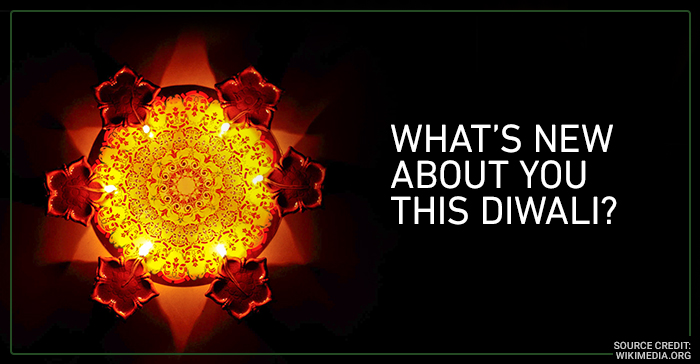
The reason behind celebrating Diwali may be different in different regions, but the thought of recognising the victory of light over darkness and good over evil remains the same, reminding us the importance of self-improvement and self-awareness.
However, how often do we try and do something new or different with the intent of improving the self and the society? This Diwali, we asked people in different regions what was new about their Diwali celebration and we found a few people who have understood the true meaning of good over evil. These people have realised that it is their deed, no matter how small, that makes Diwali better and more meaningful.
The new that Shwetambari Shetty saw in herself when we spoke to her was an encouraging one. The fitness trainer from Bengaluru has always been keen on helping people who needed the right motivation and the right training to make a foray into fitness. But, this Diwali, she had something else in mind.
She wanted to make this festive season a little more special for the children at Swanthana, a centre providing love, care and a joyful home to the abandoned, mentally challenged and spastic female children.
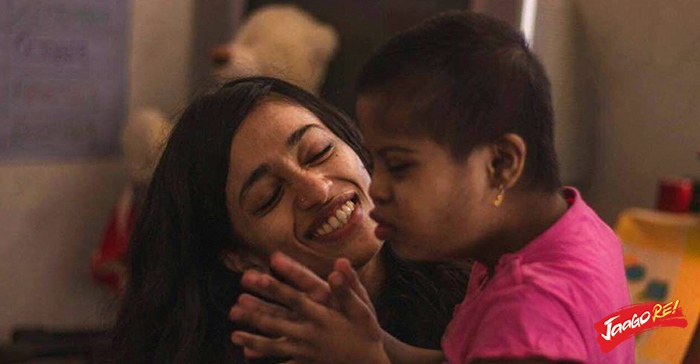
"The kids of Swanthana need all that we can give. Their heart beats, but we don't know how much they can do with their life and for how long. I did something little to make them happy. This Deepavali I worked a little more to earn a little more, to share a smile with the kids at Swanthana," she said.
"Deepavali is about wishing one and another happiness, joy, prosperity & health. Let's continue this and do more."
Manisha Mazumdar, a Teleperformance Trainer from Jaipur identifies herself as a dog caregiver when she isn't training people at her day-time job.
"Having lived with three dogs myself in the past, I know how a festival that is meant to bring light into our lives, can be so dark for these little dogs. So, I decided to do something nice for these innocent stray dogs near my locality by giving them healthy and tasty food this festive season," she said.
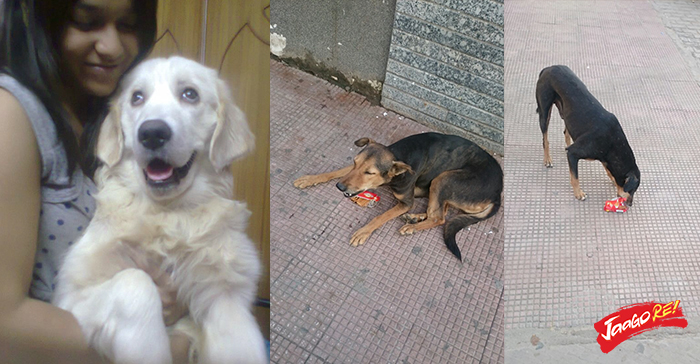
"And, that's not all of it. I appeal to people to burst low decibel crackers and be a little more kind. Let even the strays have a peaceful time on Diwali day."
Pavithra Ezhil, a student at the University of Maryland College Park in the United States. Spending her first Diwali away from home, the 23-year old found herself more open to letting go of her old habits and welcoming newer ones.
"The thought of celebrating my first Diwali away from my family wasn't very overwhelming initially. It was already tough being so far away from home in the first place. I missed India, the food, the culture. And, Diwali, being such a special day all throughout my life, was bound to make things more sentimental. I knew I was going to really miss my mother's special recipe for the day. Or, the times that I had spent with my cousins. This year, Diwali is going to be entirely different for me," she said.
"However, the best part is I am somehow okay with that - being okay with change. I find myself being more flexible and open to newer tradition and cultures. Be it how people celebrate Halloween over here, or how there were more pumpkins than diyas lighting up the streets. I am not forgetting my roots, instead, I'm just diving in and becoming more acquainted with theirs. I have started embracing the culture and becoming a part of it, rather than simply dragging my feet at the first sight. That's what is new about me this Diwali."
These are just three of the several people around the world who have come out of their comfort zone this Diwali to be a little different, a new little new by finding change within themselves.
How are you celebrating your Diwali? Share your new and different Diwali story with us on our Facebook and Twitter pages or email at jaagorein@gmail.com
Share this story on