5 reasons parents & schools should encourage physical education & sports

It is believed that a healthy body has a healthy mind. Anyone who has seen kids on a playground knows they are the happiest moving about, active and playing. Whether it is playing informally, competitive play or even playing just for fun.
However, present day education is largely academic. Persuasively, this positioning needs to be changed for a balanced development through inculcating a health consciousness among students. This includes development at physical, social and mental levels. With increasing emphasis on academics everywhere and rapid advances in science and technology, parental pressure has been driving academic training; albeit at the cost of health and physical fitness of the youth.
As per a study published in the British Journal of Sports Medicine, levels of physical activity may start tailing off as early as the age of seven. As children get older, it can be a challenge for them to get adequate daily physical activity. Hence, parents along with schools must take initiatives to inculcate a culture of ‘playing’ from early childhood of a student so that it follows them throughout their lives. Parents and schools should team up to encourage sports among children. As higher percentage of children go to schools, in this context there is now an urgency to lay a strong foundation and strengthen physical education and sports in education institutions or schools. With constant support from parents, this calls for the integration of physical education, sports and other recreation activities in schools for creating a healthier generation.
But why should we take steps to encourage physical education and sports?
As stated earlier, it is a well-known fact that children are the happiest when they play. Playing has physical, social, psychological and academic benefits for children. Regular physical activity also provides numerous health benefits for children. Let’s chalk out all the reasons:
Better academic performance
The relationship between mind and body has been acknowledged scientifically. Research has proven repeatedly that physical activity can have an impact on cognitive skills and attitudes and academic behaviour, all of which are important components of improved academic performance. These include enhanced concentration and attention as well as improved classroom behaviour.
Helps to forge character
When children play with others or play team sports, it creates a sense of belonging in them and encourages them to work with others. It teaches them how to accept a win or lose graciously - building a strong team spirit within. A win – win situation indeed!
Promotes a healthy lifestyle
Today’s children may fantasise about growing up to be svelte celebrities, athletes, etc. The irony however, is that children are largely inactive and unhealthy due to the sedentary lifestyles they are leading. Sports and physical education is the best cure for children to lead a healthy lifestyle. Regular physical activity helps control or reduce the risk of chronic diseases, such as heart disease, hypertension, diabetes and osteoporosis and improves their metabolism. Children who are physically active are more likely to grow into physically active and emotionally balanced adults.
Teaches life skills
By making physical education and sports more engaging and inclusive, one can make children learn respect for themselves and for others. It also teaches them team building skills, critical and creative thinking thereby making them more participative and responsible beings.
Holistic Education
Physical education and sports is an important part of holistic schooling. Physical education as an education tool can contribute significantly to the development and learning progress of children. It acts as a balance between a student’s body and mind and hence schools and parents must give their children sufficient time to play for their all-round development.
Across the globe, implementing sports education programmes is a huge challenge, considering the various constraints we are faced with. Parents and schools together can contribute to the monitoring and support required to keep up momentum of play and sports culture. It is known that children spend a significant amount of their time in schools. The school therefore is proven to be the best place to introduce changes in the way sports or physical education is handled. Schools come with a package of a play area, infrastructure, friends, teachers, etc. and hence provide the best environment to get children to play.
Parents can contribute by encouraging their children to increase their physical activity to improve their health and displace unhealthy behaviours. Parents can assess the physical activity patterns of their children to help refer them to the appropriate physical activity programmes the school is offering. But their role shouldn’t just be limited to supporting and encouraging their children to be physically active but by being physically active role models themselves. It’s a fact, children who lead active lifestyles are likely to remain active as adults and pass on their healthy lifestyle habits to their own children. Thus, parents who endorse and persuade to be physically fit in their own lives are more likely to pass on these good habits to their children.
Adopting a sports culture in early levels of childhood clearly is a significant step. However, to attain this paradigm shift towards physical education and sports, it is of vital important to encourage the acceptance of this sports – oriented culture by parents, schools and community at large, which requires a collaborative effort. Like it’s said in sports, talent wins games, but teamwork wins championships. Together everyone achieves more.
Alarm Bajne Se Pehle #JaagoRe!
Share this story on

Why Women too Need Gender Sensitisation

The long-drawn movement for women's rights has been fighting to bring women and men on an equal footing in society.
However, the perception that women are oppressed and exploited by men alone is not true. Patriarchy is so seeped into the system that often, some women vehemently act as espousers of patriarchy and misogyny. The ideology of patriarchy has been so deep-rooted that every part of the system works together to maintain this power structure. There are women who can’t break out of it. On the other hand, there are women who have ingrained patriarchy upto a dangerous extent that they will do anything, in extreme cases, kill another –just to uphold self-righteous 'principles' (read: honour killing).
How gender sensitive are our women? Here are some severe ways in which women contribute to their own suffering:
Forced by another woman, a woman aborts a girl child
This is common knowledge in India. The number of instances where not just men, but women who make the daughter/daughter-in-law in their family abort a girl child is unusually high. The innate bias towards a girl child only breeds the prejudice and misogyny towards women in India, and it's worse when women are the perpetrators.
Killing your child to save the "honour"
The recent case of honour killing of a young woman in Delhi by her parents for marrying a man outside her community shocked the country. However, it's certainly not an isolated case. These so-called 'values' are so deep-rooted that even children are not spared. Participating in such crimes further reveals our twisted sense of 'values and honour' that is inbred in our society.
Women guilty of torturing, or killing women for 'dahej' or dowry
According to an IBN report one woman dies every hour due to dowry-related reasons. Over 8,000 women were killed in India in 2012 for dowry.
Even in the 'modern age', at a time when dowry is illegal, such cases refuse to die down. We are following this tradition at the cost of abuse of thousands of women, and even murders of many more. Women have also been guilty of subscribing to these demeaning traditions. Instead of recognising these inhuman practices and banishing them, we still have thousands of families, including women staunchly espousing them.
Everyday instances where women make women the weaker sex
Many of us shrug and think of such extreme cases as the ones we read about in the news, not as something that would happen to "us". Yet the fact is these crimes are an inseparable part of our culture – they are born out of our culture.
You will notice everyday instances where women are allowing abuse, subjugation and offence; as subtle as it may seem.
"You're a girl, you don't need to work, you should be at home": Mother
When a society tries to shut out opportunities for you, because of your gender it sure is discrimination. When your own mother ascribes to the bias and proclaims it as "tradition", where does the girl go? We have to let a woman learn to be financially independent, instead of readying her simply for her "marriage". We cannot deprive her of her freedom to step out of the house and imprison her life and dreams – so she stays in her parents or her husband’s house.
Character assassination
Often, set roles are laid down by society of what a "good woman" should be like. Demure, soft-spoken, adorned in salwar kameez, home before dark etc. are some traits of the "good woman". Anybody who breaks out of this stereotype is usually looked at with disdain. Men and women often indulge in defaming such a woman – be it relatives, neighbours or the ‘society’ at large. It's time we learn not to scorn when women make independent choices for themselves.
Ofcourse, the media plays a big role in perpetuating this norm. The "good woman" is the sari-clad, super chef, self-sacrificial mother at home, and the "evil woman" is the outspoken skirt sporting siren. They haven't even masked this ridiculous stereotype and the audiences have willfully accepted it as real life models to go by.
Many over-the-top cases of moral policing we see today, also stem from such attitudes.
Tolerating objectification of women and idolising it
Our media may be guilty of this, but impressionable girls and women are also guilty of placing such women on a pedestal. Even when we have amazing role models like Mary Kom, Kalpana Chawla or Arundhati Roy, the idea of "beauty" is only limited to those who have an itsy bitsy waist, clear and flawless skin and an idealistic anatomy. Who decides what is "beauty"? Why are supermodels used to sell products that have no connection with them? Why are we (both, men and women) falling prey to such unrealistic standards of beauty?
Men and women, both have to learn that a woman is more than her skin, her figure or her looks. Women can start taking the onus, and men should embrace it.
Tolerating sexism and rape 'jokes'; not calling it out
'Rape culture' is being talked about widely. Often we are silent when offensive "jokes" are passed around. When a woman stands up for herself, she is also standing up for other women. Only when we call it out and draw the line between humour and sexism, is when the rape culture will start to recede.
Women should be allies, and not competitors
It’s high time women recognize each other as allies, support each other and embrace the power of their feminity. Several women (and men) have been fighting to make gender equality a reality for all women in India. Instead of supporting them, when we project misogynistic attitudes, it only puts their work ten steps behind. Identifying the root of patriarchy in day-to-day life is a start. At a time when crimes against women are at an all-time high, we need to transform our society in every way so that we give way for a country that is safer, more gender neutral and respectful to all genders.
Why we Need to Gender Sensitise our Women from an Early Age
Unless we gender sensitise girls from a very young age, this vicious cycle is only going to continue for the longest time. We have to put an end to it. And gender sensitising girls from a young age itself will be the answer for it.
Join Tata Tea’s movement to make gender sensitisation programmes compulsory in schools. Sign the petition by clicking clicking on this link or by calling 7815966666 toll free.
Alarm Bajne Se Pehle Jaago Re!
Share this story on
How we Normalise Gender Bias in India

There is a very distinct difference between sex and gender. The former refers to the biological makeup of a person and the latter is the social distinction between how a man and a woman is supposed to “conform to society.” A lot of issues relating to safety for women and men arise from this.
For example, it’s not wrong for boys to cry or for girls to be tough but we still find ourselves saying things that prejudice against genders. How many times have you said the following statements without realising its implications:-


Can Gender Sensitisation from an Early Age Reverse this?
The sexist comments we hear so often are part of a vicious cycle that sustains and perpetuates gender bias in our society. We cannot completely eliminate it overnight, but we can take conscious steps and change the way we say (and see) things. What we say has and will have a positive or negative impact on those around us, especially our children. By gender biasing in our day to day life, we are inculcating the same in our children, which, as we see from examples in our society, may lead to negative actions.
Make Gender Sensitisation Compulsory right from the Schools
If gender sensitisation is taught early on, it can lead to a complete make-over of the way our society functions. We can finally live in healthy, respectful environments that have equal space and opportunities for all genders. And finally bid goodbye to regressive and dangerous attitudes pervading among us. Both boys and girls should be taught early on how to treat the other ‘sex’ and not let age-old conditioning affect them.
Join Tata Tea’s movement to make gender sensitisation programmes compulsory in schools. Sign the petition by clicking clicking on this link or by calling 7815966666 toll free.
Alarm Bajne Se Pehle Jaago Re!
Share this story on
Gender Sensitisation in India: Where Do We start?
We often don't realise how the most common and seemingly innocent comments and actions send a strong message to kids that men and women are not equal. This mindset is what spurs so many instances of crimes like rapes and domestic abuse against women. The need of the hour is to raise our voice collectively as a progressive society and work towards building a safer society for women.
Here's a video that talks about the threat to women's safety in our society, and the possible ways in which we can overcome this. Join us and be torchbearers of the movement.
To make sure our children grow up as gender sensitive individuals, we must start by practising and teaching gender sensitisation at home. But, to bring about a holistic change in the society, we must ensure that our children receive a gender sensitive education too. Only then will our society be free from gender-based violence.
Join the Tata Tea movement and sign the petition to make gender sensitisation programmes compulsory in schools.
Alarm Bajne Se Pehle Jaago Re!
Share this story on
How we pass on Gender Biases to our Kids
How often have we heard people say, "Ladki se haar gaya?"
When we raise our children with such biases, we create gender-based societies. A biased society objectifies genders and promotes gender-based violence, especially against women. Is this how we want to raise our kids?
Here's a small example that is common across India, which shows how we knowingly or unknowingly teach our children to be gender-biased.
There is a huge outcry against women-related crimes in India today. However, if we are not paying attention to the fault lines pervading our culture and social environment, and if we don't not take steps to mend our ways, our situation is only going to get worse.
The video below is just a reminder of our own biases reflecting back at us, and the dangers of our own biases attitudes being picked up by young minds.
Change must begin from us, and as families are the most basic unit of a society, we must begin gender sensitisation from our homes.
Here are 5 things that we all can do to start practising Gender Sensitivity at home, and help build a society that treats and respects all gender equally.
1. Start by making our language free of gender bias
Refrain from using gender-specific statements like, “boys will be boys”, "don’t be such a girl" or "man-up".
2. Change the way we look at gender roles
Every day, encourage yourself and your child to do one task that is not associated with your genders.
3. Change the age-old gender constructs that compartmentalise people
Tell them that boys too can cry, and teach girls how to defend themselves
4. Break free from gender-based social expectations
Tell them that both men and women are strong and independent. Show them role models of both genders and help them see that greatness does not depend on genders.
5. Raise children to be independent, irrespective of their genders
Teach both boys and girls to cook, clean and look after themselves
6. Stand up for gender justice
Be intolerant against gender-based harassment and crimes, and show them the importance of standing up for others
Inequality gets learnt. Equality needs teaching.
Unknowingly, children are being taught gender inequality. Let's PREACT to reverse this. We don't have to fall back in the trap of gender-related menaces and crimes. Work now to make our country safer for our children.
Only when children are gender sensitised from an early age, will it reflect back in our society. Gender sensitisation right from the schools is a correct step in this direction.
Join Tata Tea’s movement to make gender sensitisation programmes compulsory in schools. Sign the petition by clicking here or by calling 7815966666 toll free.
Alarm Bajne Se Pehle Jaago Re!
Share this story on
How Gender inequality is mistakenly learnt from the home
Often, we mistakenly pass on erroneous gender and social constructs to our children. It only happens because patriarchy is so deeply ingrained in our society for a long time.
There is a huge outcry against women-related crimes in India today. However, if we are not paying attention to the fault lines pervading our culture and social environment, and if we don't not take steps to mend our ways, our situation is only going to get worse.
The video below is just a reminder of our own biases reflecting back at us, and the dangers of our own biases attitudes being picked up by young minds.
Change must begin from us, and as families are the most basic unit of a society, we must begin gender sensitisation from our homes.
Here are 5 things that we all can do to start practising Gender Sensitivity at home, and help build a society that treats and respects all gender equally.
1. Start by making our language free of gender bias
Refrain from using gender-specific statements like, “boys will be boys”, "don’t be such a girl" or "man-up".
2. Change the way we look at gender roles
Every day, encourage yourself and your child to do one task that is not associated with your genders.
3. Change the age-old gender constructs that compartmentalise people
Tell them that boys too can cry, and teach girls how to defend themselves
4. Break free from gender-based social expectations
Tell them that both men and women are strong and independent. Show them role models of both genders and help them see that greatness does not depend on genders.
5. Raise children to be independent, irrespective of their genders
Teach both boys and girls to cook, clean and look after themselves
6. Stand up for gender justice
Be intolerant against gender-based harassment and crimes, and show them the importance of standing up for others
Inequality gets learnt. Equality needs teaching.
Unknowingly, children are being taught gender inequality. Let's PREACT to reverse this. We don't have to fall back in the trap of gender-related menaces and crimes. Work now to make our country safer for our children.
Only when children are gender sensitised from an early age, will it reflect back in our society. Gender sensitisation right from the schools is a correct step in this direction.
Join Tata Tea’s movement to make gender sensitisation programmes compulsory in schools. Sign the petition by clicking here or by calling 7815966666 toll free.
Alarm Bajne Se Pehle Jaago Re!
Share this story on
A Conversation with Radhika Vaz - The Need for Gender Sensitisation in Indian Schools
Despite the recent outcry on violence against women, our society is still debating on the need for gender sensitisation in India. We still fail to understand the issue of threat to women's safety, and hence, we fail to discuss the possible solutions. With the 'Alarm Bajne Se Pehle Jaago Re' chapter, many experts and concerned citizens have come forward to discuss the issue and possible solutions.
We met Radhika Vaz, a writer and comedian who passionately speaks up on the need for gender sensitisation in schools in India. Here's what she had to say:
Make Gender Sensitisation Compulsory in Schools
We have to move now to make gender sensitisation a non-negotiable reality in India. Only when children are taught from a young age the importance of being gender equal, will the future of our country change.
Join Tata Tea to make this change happen by signing the petition to make gender sensitisation programmes compulsory in schools. Click on this link or call 7815966666 (toll free) to register your petition.
Alarm Bajne Se Pehle Jaago Re!
Share this story on
Safe & Inclusive Workspaces: How Gender-Sensitising Kids Will Change Future Work Dynamics

India is struggling with gender sensitising her citizens today. We grow up in a society where men have more rights. Things may be changing today, but the change is rather slow.
Many corporate organisations today want more diversity and inclusion, yet they are struggling to manage that. After all, how many women do we see in senior positions in most businesses and corporates around us? To tackle this, we need to sensitise men and women - that's where the problem lies, and it is a problem that is best tackled early.
Rainmaker is a Corporate Training Programme that has provided gender sensitisation programmes to over a lakh employees in several corporate organisations and MNCs across India. Here’s what Sanjay Jagtiani, (Senior VP of Corporate Solutions, Rainmaker), had to say about the need for gender sensitisation in India.
Is the workplace an equal playing ground for both genders?
Back at one of our corporate training sessions, the organisation had a sales team. The management and the teams believed that the men performed better. We decided to look at the situation more carefully.
It turned out that women were putting in nine hours of work, while men were putting in twelve hours. This was attributed to the fact that women had families and children to look after. A question then presents itself: Is this an equal playing ground?
We did the math and concluded that if men and women both were putting in same amount of hours at work, their performance would be at par.
This assumption was because of an inherent gender bias. This kind of discrimination can only be tackled through awareness, and gender sensitisation workshops which are most effective when started at an early age.
The youngest minds are the easiest to mould
To tackle the issue of workplace harassment and bias, one has to first look at the years of exposure our young men and women have to gender bias. Our society is biased, our families are rooted in patriarchal norms, our education barely fares any better. If people have to change, the change has to begin from the grassroots - and one space that can be easily influenced through policies and interventions are the schools.
In addition, school authorities, teachers and parents need to be sensitised. Simple things like the segregation of the kids’ seating arrangements in school leaves them with a feeling of disparity. They need to understand that eventually, the world is for both genders.
The habits, attitudes and perceptions children pick up in school stay with them. Once they have been conditioned, it's hard to break their mindsets. It becomes difficult to break these attitudes once they’ve been firmly set.
For example, we had different sports for girls and boys in my school; the more physically intense ones were for boys. Girls weren’t even allowed to play cricket, and had to opt for other classes, like dancing or performing arts.
This also affects career choices later. The stereotypes they see, the subjects they see divided among boys and girls, later impacts them and their decisions and life choices. The message of equality, empowerment, and respect for all genders must come to them right from an early age. Only then will we see equal and fair opportunities, respect for all genders and more inclusive and diverse workspaces, with healthy attitudes and no room for discrimination.
We have to move now to make gender sensitisation a non-negotiable reality in India. If our society and our workplaces have to be safe, we have to make sure that our children are getting gender sensitised, and are learning to respect all genders.
Join Tata Tea to make this change happen by signing the petition to make gender sensitisation programmes compulsory in schools. Click on this link or call 7815966666 (toll free) to register your petition.
Alarm Bajne Se Pehle Jaago Re!
More on the Expert:
Share this story on
Tackling raging gender bias through gender sensitisation
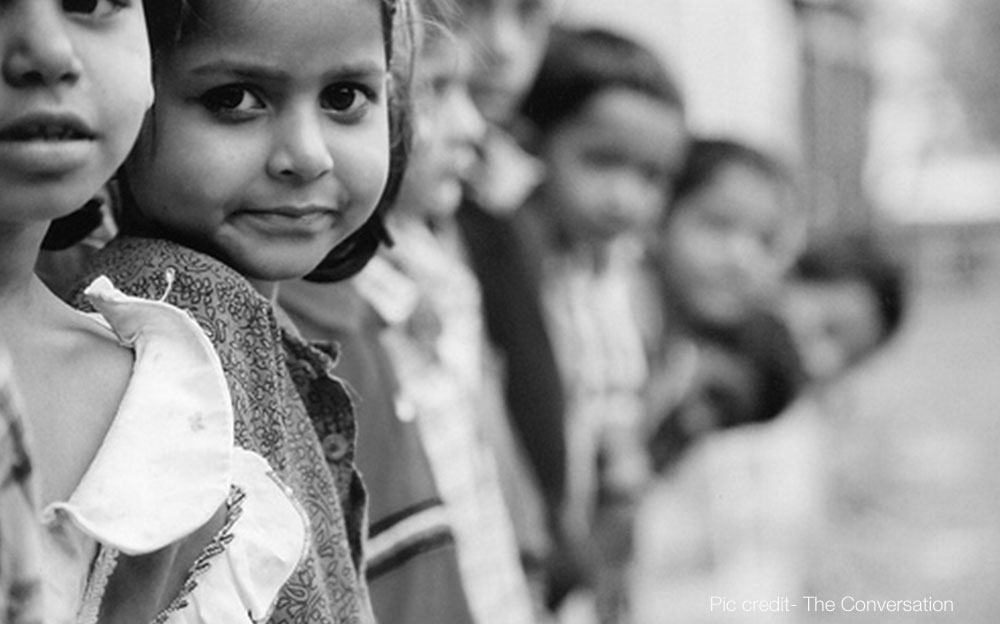
The World Economic Forum did a survey in 2016 which considered the proportion of resources and opportunities made available to women on educational, economic, political and health parities. India ranked a dismal 87 in the survey. We could blame the patriarchal society and regressive mindset, but the truth is that urban areas fare only a little better than rural areas.
India has a gender problem, and bridging this gender disparity is the need of the hour. Experts from both, urban and rural areas, advocate that gender sensitization is the key to resolving this issue.
National Research Center for Women in Agriculture recognizes the change in perception brought about by gender sensitisation in both, men and women. With their study, they identified that after gender sensitisation, men no longer perceived women in a stereotypical manner, and accepted that they are equal partners in the overall socio-economic development. However, they pointed out that for the inherent biases to change, women too need to change the age old perception that they are subordinate to men. They need to accept that they have an equally important role to play in decision making at household, community and organizational levels.
The State Institute of Urban Development in Mysore also identifies gender sensitisation as a weapon towards Gender Equity, Equal Opportunity and Women Empowerment, which is essential for creating sustainable development as enshrined in our constitution. Thus, it provides women with the dignity, liberty and opportunity that they rightfully deserve.
Gender sensitisation programs are advocated by all experts on the basis of results exhibited in various communities all over the world. Here are two instances of how such initiatives have been instrumental in bringing about a positive impact on society, and in improving the economic condition of women.
Indigenous communities in Rajasthan:
With the objective of raising awareness about gender-related issues and mobilizing equal participation of women in community affairs centered around the joint management (JFM) of common property forest resources, the Rajasthan Forest Department implemented intense Gender Sensitisation Programmes in a group of villages in Udaipur District. The effect was evaluated after 1 year of initiation of the program, by assessing the changes in five particular aspects:
- Involvement of women in the functioning of community institutions
- Overall effectiveness of community institutions
- Self-empowerment of women
- Attitudinal change for women participation
- Awareness and concern of women for community affairs
Overall, the scores had improved in all areas. When women came forward to make decisions, it resulted in economic development in the communities. However, while some villages showed significant improvement, the progress in a few villages were hindered by the patriarchal mindsets of the dominant Rajput community.
While it is very difficult to change the set ideals and beliefs of adults, this problem can be tackled in a much more effective manner by sensitising children against gender bias.
Men in Kerala:
Capacity building program focussed on gender sensitization by charitable trust Sakhi amongst the young men from Universities led to the formation of a core group of pro-feminist men. These men initiated a rally of men and conducted a public meeting during a 16-day campaign against violence against women. The theme ofmasculinities also figured at the workshop organised during the Kerala social Forum in December 2002.
Having said that, in most cases the benefits of gender sensitisation are not be realised overnight but relentless effort in this regard definitely contributes towards changing the mindset that women are ‘weak and unequal.’ The real challenge is that it becomes difficult to sensitise older people. It is much easier to mould a child’s opinion rather than change the deeply entrenched beliefs of an adult. We all know the wonders that gender sensitisation can bring about in our society. It has been proven that there is a positive correlation between socio-economic well-being and gender equality in society. Why shouldn’t we then take the necessary steps now to ensure gender sensitive education for our children?
Join us in our quest to realise a safe, equal society for all.
Sign Tata Tea’s petition for making gender sensitization compulsory in the school curriculum to pave the way for a better tomorrow. Click on Link or call 7815966666 toll free.
Alarm Bajne Se Pehle Jaago Re!
Share this story on
CREATING SAFE SPACES FOR OPEN CONVERSATIONS & MORE
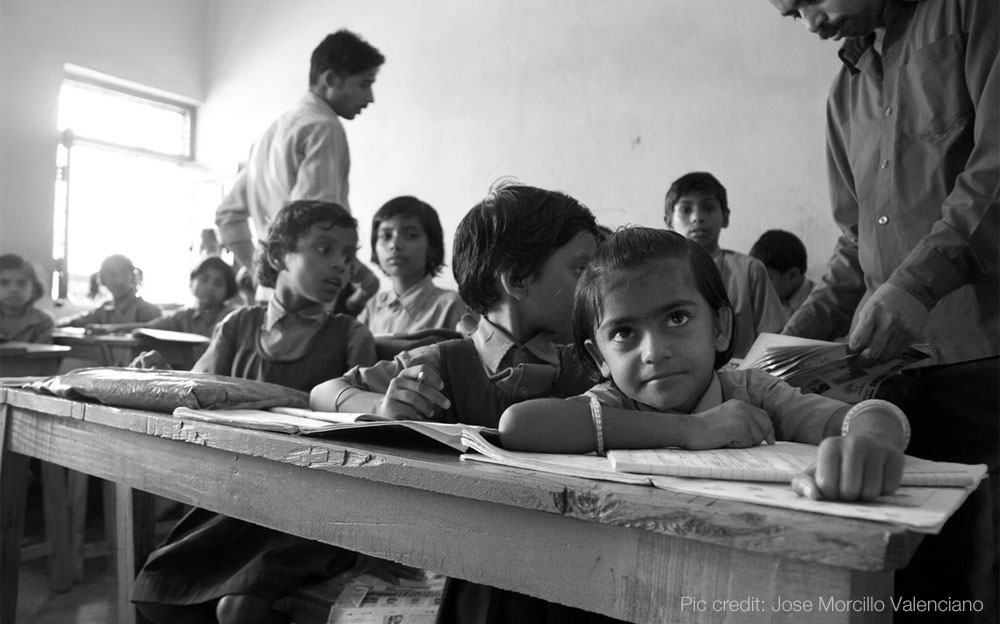
To end violence against women, you first have to name it, know it, and recognize its many forms as an unacceptable assault upon the dignity of women and all society.
I am a facilitator at an NGO called Seeds of Awareness. We hold sessions on sexual health at different low-income schools across Mumbai. For several years we have been trying to understand the complexities of this situation, and the best way to handle it.
Inaccessible and Stigmatised – Sex Education
Sex Education is relatively inaccessible in many parts of India. Currently, almost half of Indian population is within the age group of 18-35 and the majority of the crowd do not have access to correct information about sexual health. Plus, sex is stigmatized in our society, even if the youth want to seek help there is no place they can go to. And thus, they resort to seeking information from other avenues like watching pornography.
Is Sex Education Gender Sensitisation?
A lot of times there’s apprehension and confusion among parents, teachers, schools and even children on what gender sensitisation really means. While sexual health and knowledge empowers children, it’s also crucial to look at psycho-social conditioning and biases that are developed among children from an early age. It’s important to address behavioural patterns and perspectives, that enable children to develop a healthy attitude towards both their own sex and the opposite sex.
Mixed Messaging – A thin line between romance and crime?
The youth of India pick up a lot of mixed messaging from the media, the society and their friends. Hence, they are already confused. They think that following a girl and harassing her would make her fall in love. Youth also end up resorting to violence (rape, molestation, voyeurism, human trafficking, child sexual abuse etc.) as there is no place to have an open conversation.
Conditioning and gender bias
During our childhood years, we are told that a girl and a boy has a set of spoken/unspoken rules - this leads to discrimination on so many levels. If we are to concentrate on sexual health, then we are conditioned to believe that a girl should never ask for sex or be caught dead buying a condom. There are still parts of India where women and sometimes men do not have rights over their own sexual-reproductive health.
Social media and internet
Thanks to technology, the youth today has access to a lot of explicit content (read: pornography). This leads to exploration and experimentation without the safety blanket of gender sensitisation, which could go horribly wrong.
Reaching Out and Making a Difference
Until now we have been able to work with over 2000 children in about 15 schools in Mumbai, and the response has been phenomenal. We use Bollywood/Hollywood videos, dance movement therapy, sharing circles and many activities to make the sessions very interactive and spread awareness about feelings, communication, gender, stereotyping, body image, sexual / domestic violence, consent, sexuality, social media, along with anatomy and reproduction.
The children initially are in shock, but are later receptive and want us to do sessions for their parents too. These formats of gender sensitization initiatives go a long way in reducing violence against women and enable children to grow into individuals who take informed decision that are healthy for them. However, for these initiatives to have the desired effect, it needs to reach out to each and every child in every nook and corner of India.
Hence, we urge you to join the movement for making gender sensitization compulsory in school curriculum, to pave the way for a better tomorrow.
Sign Tata Tea’s petition for making gender sensitization compulsory in the school curriculum to pave the way for a better tomorrow. Click on Link or call 7815966666 toll free.
Alarm Bajne Se Pehle Jaago Re!
More on the Pre-Activist:
Share this story on