Everything you need to know about the withdrawal of ₹500 and ₹1000 as legal tender notes
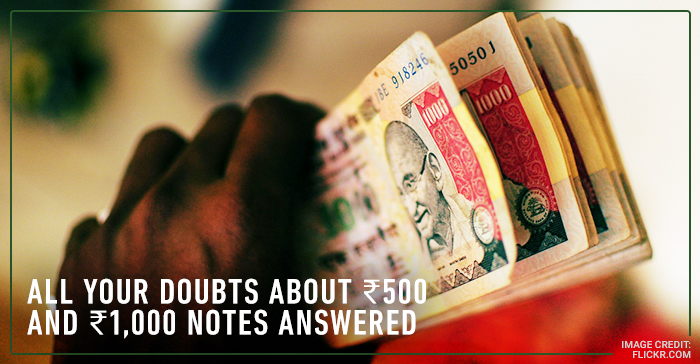
In a landmark move to curb black money, corruption and counterfeit currency, Prime Minister Narendra Modi made an unexpected announcement of the withdrawal of ₹500 and ₹1000 notes as legal tender, effective 8th November 2016. While many have welcomed this move, many other are apprehensive about the outcome of the decision.
Here's what you need to know about the scheme and how to go about exchanging the existing currency notes:
You still have 50 days to exchange/deposit for the same value at any of the 19 offices of the Reserve Bank of India or at any of the bank branches or at any Head Post Office or Sub-Post Office till the 30th of December.
For your immediate needs, you can go to any bank, the head post office or sub-post office, show your identity proof (could be your Aadhaar Card, Driving License, Voter ID Card, Pass Port, NREGA Card, PAN Card or any Identity Card Issued by Government Department), and exchange your old five hundred or thousand rupee notes for new notes. The limit for such exchanges has been set to ₹4000 till 24th November, but the limit will be increased in the future. Anything over and above ₹4000 will be receivable by way of credit to a bank account.
If you are unable to exchange your notes by December 30, you can declare them with the Reserve Bank of India till March 31.
Withdrawing from ATMs can take a while to be possible as the banks are still recalibrating their old systems. Once functional, you will be allowed to withdraw up to a maximum of ₹2,000 per card per day up to 18th November. The limit will be raised to ₹4000 per day per card from 19th November onwards.
You are allowed to withdraw cash against withdrawal slip or cheque with a limit of ₹10,000/- in a day within an overall limit of ₹20,000/- in a week (including withdrawals from ATMs) till 24th November.
₹500 and ₹1,000 notes will be accepted for an additional 72 hours in places of importance such as hospitals, railway ticket booking counters, government bus stands, and airports until 11 November midnight.
If you are currently not in India, you may choose to enable another person in India to deposit the notes on your behalf in writing. The person so authorised has to come to the bank branch with the notes, the authority letter provided by you and a valid identity proof.
If you are a foreign tourist, you can purchase foreign exchange equivalent to ₹5000 using the ₹500 and ₹1,000 notes at airport exchange counters within 72 hours after the notification, provided you present proof of purchasing the notes.
New notes of ₹2,000 and ₹500 will soon start circulating from November 10.
If you still have doubts, you may approach the control room of RBI by email. You can mail to publicquery@rbi.org.in or call 022 22602201 / 022 22602944.
Furthermore, to get a clearer understanding of the situation, we spoke to financial expert CA Rishabh Parakh who explained that unless the cash at your disposal was generated out of unlawful means and illegal transactions, you have nothing to worry about.
Here are a few tips he outlined that we can take to handle the situation:
Know your Cash Position/Prepare Cash flow summary: Update your book of accounts immediately to know your cash position to track how much amount of cash balance out of your capital account has been generated. Though most businessmen would understand this, but a salaried employee is usually unaware about this and most probably haven't prepared their Balance sheet for that matter.
The time has come to prepare your 'Cash Flow Statement' over the last few years. Apart from using your past income tax returns data, you will also need to look at your cash withdrawals from ATMs or your Bank account to create the statement. This exercise will help you in justifying the cash available to you.
No need to worry about your Cash Deposit: There are various reports stating that you shouldn't deposit more than ₹2.50L in one go or ₹10L lakh in a year (01/04/2016 to 31/03/2017) in your savings bank account as it may attract income tax notice. Any unexplained or unmatched deposits of over above Rs 2.5 lakh during this 50-day window could attract income tax along with a 200% penalty in case of any income mismatch. So, yes, a person with unaccounted black money will have a reason to worry.
But, for those whose money is well accounted for, there's nothing to worry about. The same has been declared in your tax returns as cash income and taxes have already been paid on the same. In this case, an even higher amount of deposits will not be an issue. However, you may have to justify your deposits by submitting an evidence in case of an enquiry.
You can refer to Rishabh's last column on income tax notices and how to handle the same.
File your Tax returns: File them as soon as possible, if the same are not filed for the last two financial years as beyond that you cannot file them. Your income tax return will be matched to see the cash you are depositing and in case you haven’t filed your tax returns, then chances of you getting a notice or an intimation are very likely. Be on the right side of the law and comply with taxation rules with immediate effect.
Using your account for others: Don’t use your account for depositing money for someone else as it will be extremely difficult to justify in case of any enquiry. Your simple act of support to someone will land you in a big soup.
Wallets payments: Use e-wallets, net banking facilities and debit & credit cards in case of any urgent transactions.
Don’t reshuffle your existing investments: Do not shuffle any of your legitimate investments to bank deposits. Let the mutual funds, equity and other financial instruments that you have invested in be stationery. Let the chaos pass.
A permanent measure is likely to cause some temporary pain but in the long run, its implications are expected to be only looked at as profit. Let us all welcome this move which has the potential to change our lives for better and bring forward a corruption free society.
If you have any queries about these new policies, write to us jaagorein@gmail.com or comment on our Facebook and Twitter pages.
Special thanks to Rishabh for helping us out with his expertise in this field. A Chartered Accountant by profession, he is also the founder Director cum Chief Gardener of Money Plant Consulting, a leading tax and investment service provider. He also writes for several leading publications in India.
Share this story on

International Men's day: What it means to be a man today
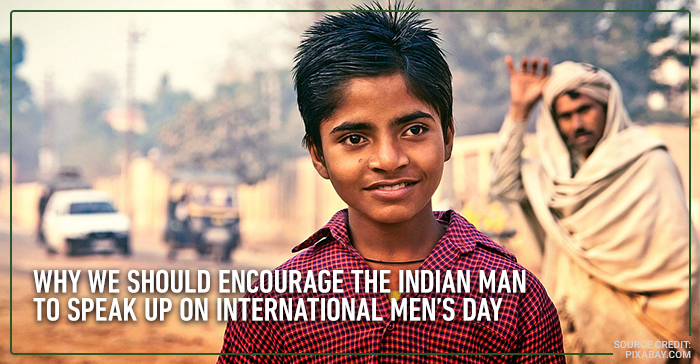
"Isn't every day International Men's day?"
"What are we doing to celebrate? Taking away women's access to basic health care? Or, are we bragging about sexual assault?"
These are two of the several arguments made against the observance of International Men's Day as an annual event. A day which calls for promoting the physical and mental well being of the men and boys of the world, and gender equality often ends up descending into the battle of the sexes. Is it because, perhaps the concept is fundamentally misguided to begin with, or maybe, it’s just a matter of how it is interpreted?
The theme of this year's International Men's Day is to raise awareness about the ever-growing rate of male suicides in the world, with the rate rising by 63.5% in India between the period of 1990 to 2013, according to Humanosphere.org.
We asked a few men what it meant for them to be a man in this day and age, and here's what they had to say:
Saransh Gehlot
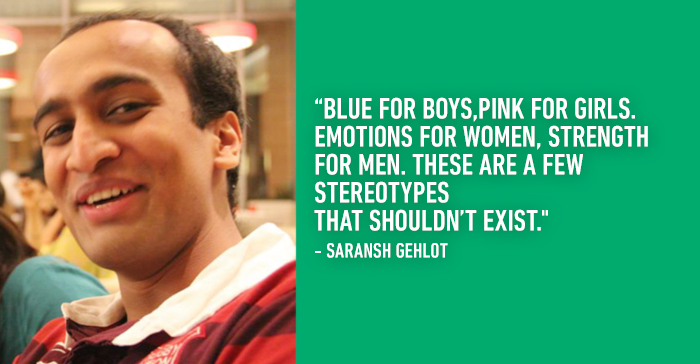
"A man could be a soft and emotional person, but if he expresses these feelings, it is often considered as a sign of weakness. Statements like 'Man up' or 'Act like a man' play a pivotal role in building this mentality. Blue for boys, pink for girls. Emotions for women, strength for men. These are a few stereotypes that exist, but shouldn't."
"Thankfully, the mentality of being the 'man of the house' doesn't exist at my place. But of course, you have to be able to support yourself and possibly your family if it does come down to that. Putting less pressure on men to be the providers could help in curbing the suicide rates; letting them express their feelings and not forcing them to keep it inside; building a happy and trusting environment in the family and society where everyone is treated equally; not judging people through the same yardstick."
Gautam Mahajan
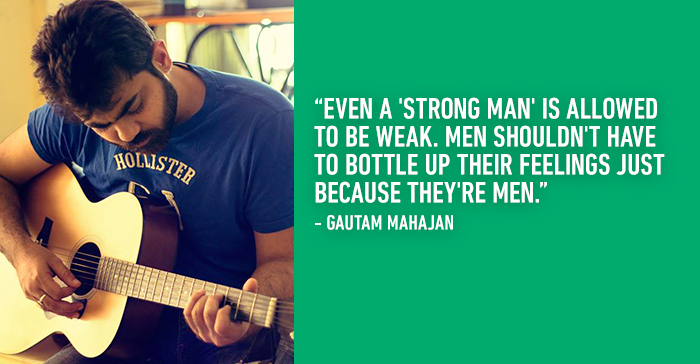
"The kind of conditioning where men aren't allowed to be emotional has negatively affected a lot of young kids, turning them into lost adults. I think for the first time in history, the role of a 'man' is changing, thanks to the evolving role of a woman. I think being a 'man' in today's times simply means being more accepting of things, letting go of male ego and being ready to let go of conventional gender roles."
"The whole 'be a man' culture and the stress of certain expectations than a 'man' is supposed to match up to can lead to an incredible amount of depression and stress. I think we need to understand that even a 'strong man' is allowed to be weak. Men shouldn't have to bottle up their feelings just because they're men. If we as men are accepting of other men going through emotional turmoil, we can ensure that they don't feel left-out."
Vinay Sundar
"Typecasting men as people who need to man up and act like a man is something that needs to stop now. Life is tough as it is, and allowing men the freedom to behave and react to situations in the best way they feel comfortable is the most important step to help them feel empowered as it places importance on their judgement of different issues."
"I do feel that our society is still prejudiced heavily in favour of men and that there is a lot that we still need to do to help remove that feeling. What it needs is the current generation to take a stand and provide the necessary support for women to know that they have an equal right to everything."
Parikshit Vivekanand
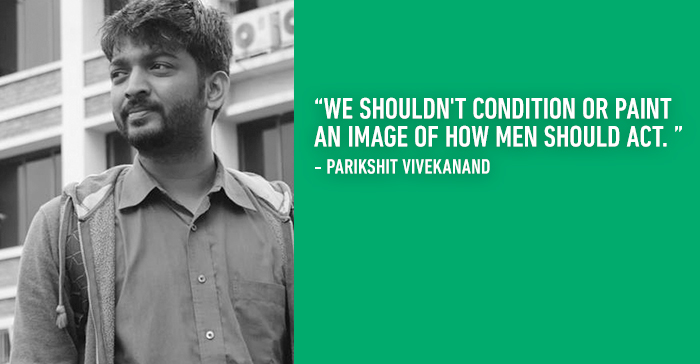
"Society has developed itself where it has created an aversion towards men. Sure, for generations along, men were considered to be a fairer sex, but society needs to move forward from that thought. The thought of being equal needs to come in."
"Every person, irrespective of their gender, have their own fears and advantages. You can't just generalise by saying, "Man up!" We shouldn't condition or paint an image of how men should act. If a man is living in denial to just fit into society, he will spend his whole life trying to prove a point. We are on the verge of being a society where every opinion matters."
International Men's Day is a day when we should be talking about taking actions that improve the lives of a man, their families and society as a whole, instead of brushing off the idea as a ‘stunt’. Men's rights are human rights, and it's time we reach out to one another, our friends and loved ones who are at their most vulnerable.
What do you think of the idea of celebrating the International Men’s Day? Share your views and questions with us on our Facebook and Twitter pages or email at jaagorein@gmail.com
Share this story on
International Day for the Elimination of Violence Against Women: Leave no girl behind
When activist and youngest-ever Nobel Prize laureate took a stand against the archaic mindset of treating girls as liabilities, she wasn’t standing alone. She was accompanied by her father at every step. In a society where women empowerment was often looked down upon, Malala's father Ziauddin bought a change of tide. And, he started pretty early.
Failing to spot even a single female name in his family tree, he wrote down Malala’s name on it when she was born. His choices as a dad inspired Malala to stand up, and a revolution followed. The ones who were suppressed are now demanding to be free, and this is what those who benefit from the silence of girls fear the most. However, at the end of the day, it is an effort that requires hand-holding without discrimination and an upbringing where girls are encouraged to dream.
On International Day for the Elimination of Violence against Women, Jaago Re spoke to two distinct women who share their side of the story, and their definition of being a woman in today's day and age.
Jaahnavi Sriperambuduru, the youngest mountaineer from India, scaled Mt. Elbrus, the tallest peak in Europe at the age of 13, which made her the youngest girl to ever do so. The 14-year old mountaineer now aims to scale the seven highest mountain peaks in the world with already several other records to her name.
"My mission to the seven summits including Mt Everest is to give the country the message loud and clear that Indian girls can achieve anything. I personally want to be able to grow to a stature where I can sponsor the education of girls,” she said.
Apart from her regular passion for scaling newer heights every day, she also works for the development of Girl Child in India. For someone who is just 14-years old, it is quite incredible to have realised her responsibility towards the education of underprivileged girls at such a tender age. For the last 10 years, she has been raising funds from her climbing expeditions for the cause.
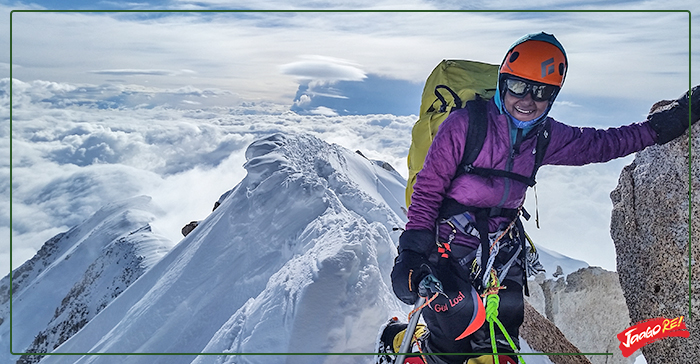
"While most Indian men go into a temporary depression when they hear about the birth of a girl child in the family, here is my dad who has staked his money, career and his life to see me up there, literally," she added. "I was raised in such a way so that I could face all sorts of challenges head-on and not knowing what fear really is. I climb mountains not because the world can see me but I climb mountains as I can see the world from the top.”
While Malala and Jaahnavi had fathers who believed in setting no borders for their daughters, a 32-year old Prabhath wasn't as fortunate. Prabhath has a condition that doesn't allow her to hold a pen or write in ways we know of. A disability what many would treat as, Prabhath looked at it as an opportunity to be unique in her own way.
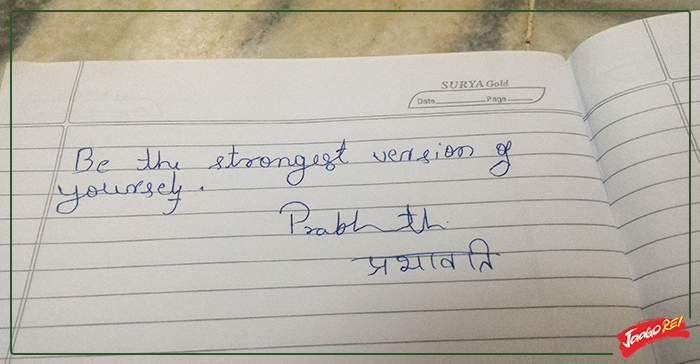
"When I was in the seventh standard, I was told that I can't pass since I can't write or remember. But, I wrote the exam and secured 89%. That shocked many, and then I was admitted to a city school. The school had changed, but the situation didn't. People would still ask me why I was trying to study despite being handicapped. But, it didn't affect me at all. I studied hard and finished the class with a score of 95%."
"Me finishing with such a high score attracted a lot of attention. There were reporters and writers who wanted to meet me, and I was on many local TV channels. When I was in college, a bank account was opened, inviting donations on behalf of my name. There is still a lot of money there - but I don't have access to it. The money, the publicity - this was overwhelming for my father. But, I wasn't happy with this. He would take me to functions even when I was reluctant. The money got to his head."
"He told me that I couldn't live a life without him, and that I will end up on the street. But, I wasn't having any of that. I left home, and told him that I will lead a life without him."
Her decision to move out of her father's house saw her move to Bengaluru. Not knowing anyone in the city and with no possession to call her own, she was all alone. Despite being an MA graduate, she wasn't able to secure a job for herself since her certificates were burnt by her father out of spite.
"When I came here, I didn’t know anyone. I was ready to give up. I had it in my mind to just die, but didn’t even know how to go about doing it. I was depressed. It was ultimately an auto driver who observed me, and led me to my current home. "He told me that he will be leaving me at this place, and that I could either choose to stay here or die. And, all I had to do was choose life."
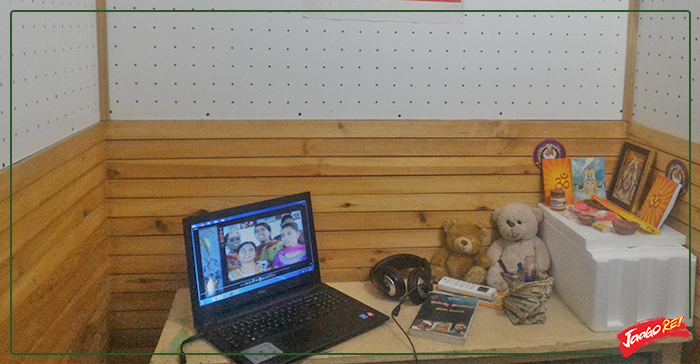
Prabhat’s workstation: a room tailor-made to suit her needs for audio recording
Prabhath insists that she is more confident, now that she is away from her restraining father. She keeps herself busy with her audio recordings - using her voice to read out textbooks for visually impaired children while also helping them out with their exams. She has been doing that for six months now.
"To everyone who neglected me, I would want to show them who I am. That’s all. Be it my parents, my relatives, my friends, anyone through my work. I want to show them who I really am. I want to show that I’m no lesser than a normal person. That’s my ambition."
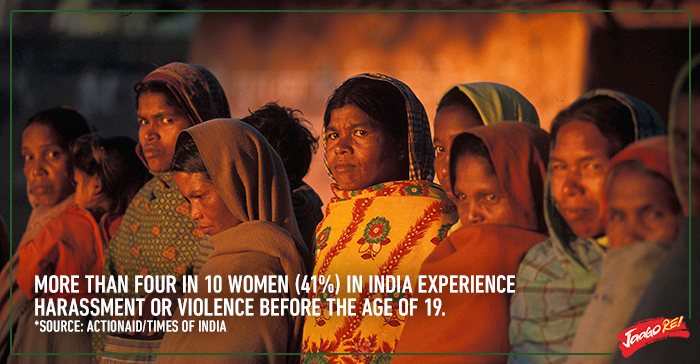
We are now living in a world where violence against women and girls are globally recognised as human rights violation. A research conducted by ActionAid and published by the TOI states that more than four in 10 women (41%) in India experience harassment or violence before the age of 19.
When a girl is hurt, it hurts her chances of making a living for herself with her employment at risk and her inability to leave abusive relationships. It would never be possible to achieve society's full potential by leaving one-half of humanity behind. Women and girls cannot afford to do that, and they shouldn't have to. Empowering a girl means empowering the whole society.
What role do you think society can play in supporting every girl out there while working towards an India that is free of all forms of violence - physical, psychological and economical.
If you wish to share your thoughts about this article, write to us at jaagorein@gmail.comor just comment on our Facebook and Twitter page.
Share this story on
International Day of People with Disability: Taking one step at a time
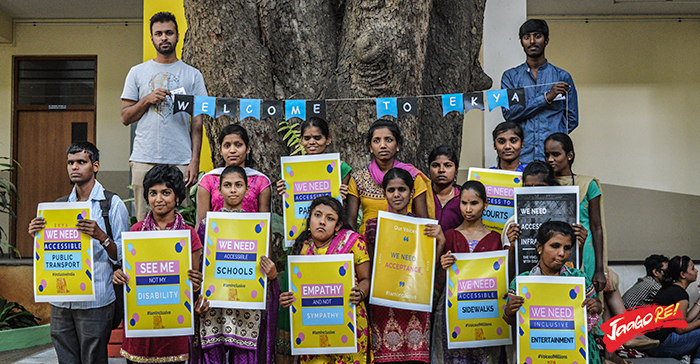
The 3rd of December marks as the International Day of People with disability, an annual event encouraging people to raise awareness about the rights and welfare of the disabled. More than 26 million citizens in India suffer from a form of disability. The form of disability where they are looked at differently. Treated differently. When you look around, do you think we live in a society that is friendly and enabling with equal opportunities for all?
"Give them your empathy, not your pity," insists Hema Subhash, the founder of One Step at A Time (OSAAT), a non-profit support group for people with disabilities in Bengaluru. "We are working on ways in which we can make a real difference in the way disability is seen by the society and to make a positive difference to those living with disabilities."
Her vision is to promote an inclusive community where people with disabilities have equal opportunities in all spheres of life. Hema agrees that it's a big ask and it's a big task, and it will be a long journey, but it is only when you hope to make positive change, you can.
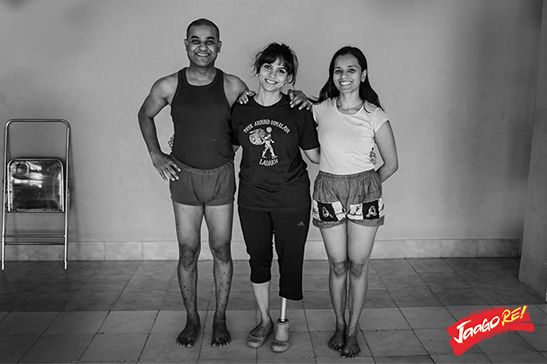
(In this picture: Hema in the middle)
"We started with the intention of making events possible on-ground, meeting people face to face and having that real connect which is lacking in this internet age. That I feel has been what set us apart - from casual coffee meets to lunch together, and home visits, to running marathons together, we have embarked on a lovely journey over the last one year. We feel a sense of not being alone in the challenges one may face while living with a disability. The events we now conduct in the capacity of the nonprofit, have started to reach out to a lot more people."
Recently, I had the pleasure of spending some time at an event organised by OSAAT. EKYA, as it is called, was a first of its kind event - not only for the volunteers organising it but for many who were present that evening. Audio Description for the visually impaired, sign language interpreters and the location being Wheelchair accessible location made this event unique, separating it from the rest.
"Be it support group meets or the dance events we have conducted in the past or EKYA - we were able to reach out to the section of the society living with disabilities and seeks the support we have the ability to give. The happiness that we are able to spread and the confidence that we are able to build in those with disabilities when they attend our dance and fitness events is exceptional."
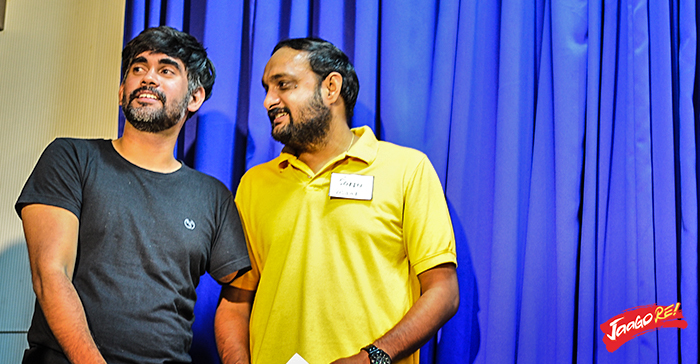
"The importance of an event like this is to create an environment where everyone can come together and experience entertainment and any other aspects of life in a way which is not taken away from them by physical barriers which are present in the society," said Biju Mohan, who is one of the co-founders of OSAAT.
"Accessibility in infrastructure is limited. Places like cafes or movie theatres aren't holistically accessible for all. We work towards breaking barriers and transforming attitudes by means of adapted physical activities and inclusive events such as EKYA," he emphasised.
It wasn't a tough question for Sonu K. Prasad to answer when I asked him about his motivation to chip in and help out for events such as these. "I wanted to see them smile," is all he needed to tell me.
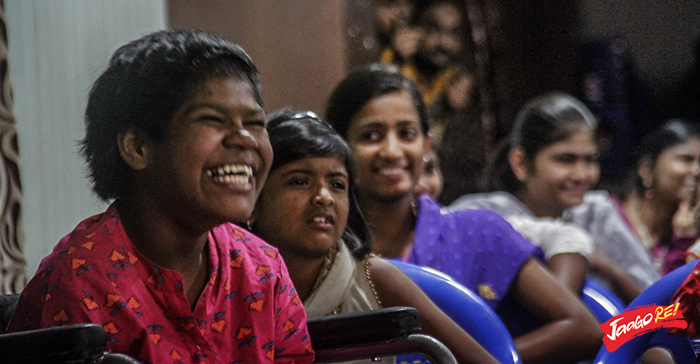
"We sit next to people who are visually impaired to help them experience the movie, sharing moments that the audio would usually fail at explaining," said Srinivas, who was one of the volunteers. "Don't treat them any different. They are not disabled. They are uniquely abled. We are the ones who need to accept the disability, not them."
If there's anything that you would want to do for someone with a disability on this International Day of People with Disability, it is this: Don't feel sorry for them, because they don't. The sad pitied and discriminating attitude serves no purpose in an equitable world. What do you think we as citizens can do to encourage participation of people with disabilities to employment, education and social protection?
If you wish to share your thoughts about this article, write to us at jaagorein@gmail.comor just comment on our Facebook and Twitter page.
Share this story on
What you need to know about demonetization's effect on economic sectors
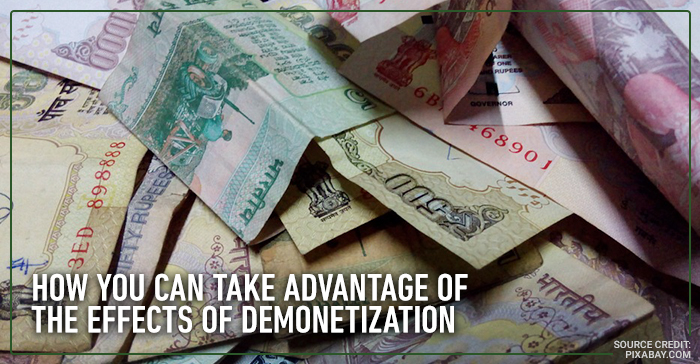
The government's decision to withdraw notes of Rs. 500 and Rs. 1000 as legal tender currencies hit everyone hard, be it the corrupt or the common man. Even though the change is being hailed by many experts as the ultimate surgical strike against black money, many are arguing if the method to implement the policy was right. Be it spending several hours waiting in ATM queues or finding out later that the ATM is out of money - it has been anything but convenient for the citizens over the last couple of weeks.
There were a few sectors which were affected the most ever since the policy was put into place. Here are four such sectors, and a tip on how to react to these situations:
Real Estate Sector: The real estate sector is likely to be hit adversely owing to the lack of 'under the table' transactions wherein the buyer could pay 20% to as high as 80% for deals in cash, making it a hotbed for the use of black money. This will not be possible at least until the time the new currency is set in.
This will decrease the demand for property and also decelerate the property and real estate scope for investment.
Investment Tip: You will be in a great position to negotiate hard and get a good bargain for your prospective home buying; be it for residential purpose or investment, be alert and stay smart with this.
Banking and Financial Sector: This sector is more likely to benefit the most, courtesy of the high frequency of deposits being made. The use of debit and credit cards will increase immensely as well along with the Net Banking facility. Financial Services will be the need of the hour for each and every individual, especially the ones in the business community.
Investment Tip: Though it is too early to comment, but the time has come wherein rather than making a bank deposit, you should rather buy their stocks. You could also choose to invest in a good mutual funds scheme because most of the diversified MF schemes have around 20% to 25% minimum allocation in BFSI.
E-commerce Companies: E-commerce industry, specifically the e-wallet companies like Paytm, Oxygen etc. wallet companies will increase their market share.
Investment Tip: You should be using these wallets wisely during this period. These merchants are willing to spend a lot of money on acquiring newer clients as partners and sponsors - meaning more lucrative offers for customers using the service.
Stock Market: Commodity transactions and transactions in the general cash market will feel the heat immediately apart from the general elevation of uncertainty. The equity markets are volatile and react based on events happening locally and globally beyond the fundamental grounds of companies those are traded. The reactions can be unpredictable at this stage and we need to wait and watch.
Investment Tip: Keep looking at stock market investments via the mutual fund route. Avoid direct investments based on hearsay or news or tips to buy stocks unless you yourselves are a professional investor as it is never possible to time the market. If you want to really buy direct stocks, then do your research thoroughly and invest only in the right fundamental stocks.
If you already have existing FDs or savings lying in your bank accounts, the same should be invested via STP route i.e. systematic transfer plan of mutual funds. This will help you to make the most of the current market movements.
If you have any queries or doubts, write to us at jaagorein@gmail.comor just comment on our Facebook and Twitter page.
More about the Experts:
Share this story on
Why India needs to change its attitude towards education
“Education which does not help the common mass of people to equip themselves for the struggle for life, which does not bring out strength of character, a spirit of philanthropy, and the courage of a lion; is it worth the name? - Swami Vivekananda."
Now is probably the best time to reflect upon these words which Swami Vivekananda spoke decades ago. President Pranab Mukherjee recently raised concern on the fact that none of the Indian universities or colleges have made a mark in the global rankings of top educational institutions. This isn't necessarily a race, but if it was, we as a country are left far behind.
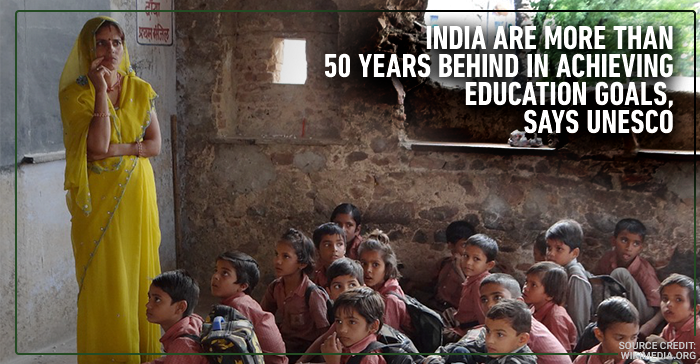
According to a report by the UNESCO, if we were to go by the current trend, it could take us another half century to achieve global education commitments. This means that we are way behind on our deadline to meet the 2030 Sustainable Development Goals (SDGs) deadline. One of the goals of the SDGs is to ensure that all girls and boys complete free, equitable and quality primary and secondary education.
On account of International Teachers' Day, we spoke to a few teachers and got their insights on the Indian Education System. Emmanuel Ratnaraj, the Principal of the Shishya Public School in Dehradun, insists that the education system needs to steer away from the traditional method of teaching as soon as possible.
"The global education system has marched way ahead compared to other countries, but our educational systems have seen no change and we are bound to follow the same old ground rules," he told Jaago Re.
His own approach towards education is a little different. He said, "At our school, we have a different way of teaching. We don't teach ABCDs. A is never the first thing a kid learns. They start by learning how the alphabets sound. We talk about sonics. They are taught how the alphabets would sound, and then move on to learning how to write. It makes the learning process easier. It makes their ability to pronounce and learn newer words better."
While this approach is not always understood or appreciated by guardians, Mr. Ratnaraj and his team look at it as a challenge that they are more than happy to take on.
"We need to realise that we are lacking behind. Our engineers and doctors do really well and that pushes us to believe that our education system needs no change. But, it is really important to realise that we can't boast about what we are. If that is the case, there is no moving forward."
Nevi Koshy has been a part of the Indian Education System for a while now, as a student and as a teacher. He also spent 6 months last year teaching students in a village in Dehradun. He felt that our system falls behind on concept and practical aspects of the teaching-learning experience.
"Our education system revolves around exams instead of understanding the concept and hence the students who come out of our system are most of the time unemployable. The mindset in the society needs to change. Education should be about enjoying what you study, not getting a job, or securing a degree just for namesake."
Education is the primary means to shape young minds into productive and responsible individuals, and only a handful of schools strive to work alongside the community to help achieve this.
How do you think we as a community should move forward in changing our attitude towards education, and how can we realise these changes? Share your views and questions with us on our Facebook and Twitter pages or email at jaagorein@gmail.com
Share this story on
For the love of sport: Securing the lives of future Indian sports stars
When we think of Olympics, do we think of the disappointment that was 2016, or do we think of the opportunities that lie waiting for us in 2020? Sadly, a quick online search will reveal the sheer number of negative responses to sports. All that commotion and furore over sporting facilities have died down, and it will remain dormant till the next big sporting event. Unless we change.
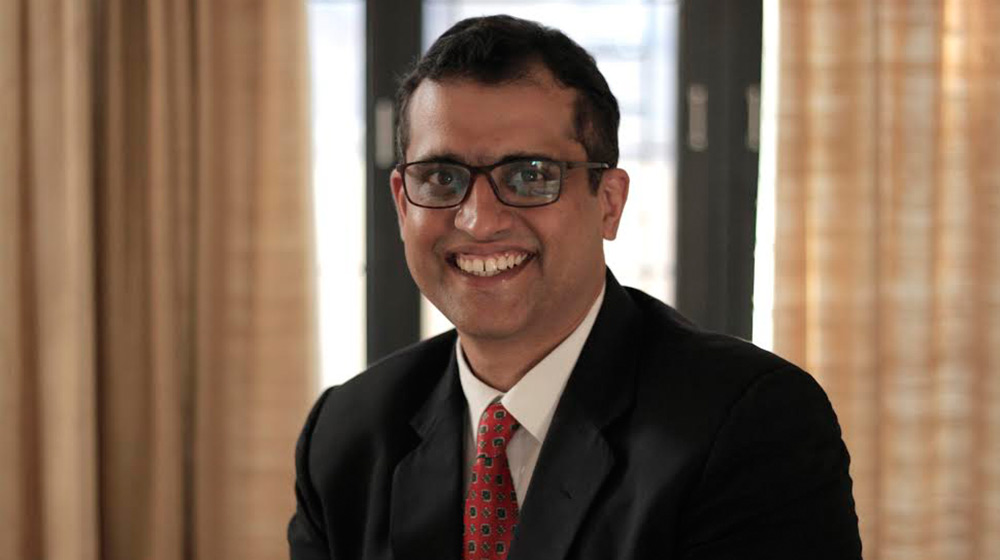
Unlike the majority of us, there are a few who believe in taking the bull by its horn. One such person is Nandan Kamath, ex-cricketer, lawyer and co-founder of GoSports Foundation, who realised the need for pre-activism to solve issues in sports in India. Here is his story:
“GoSports Foundation is a non-profit organisation focused on supporting the sporting journeys of the country's most talented young athletes for the Olympics and the Paralympics. We provide scholarships and support to junior Indian athletes.
I am also a lawyer, and specialise in sports, technology and media laws, with clients ranging from international and national sports federations, to leagues, teams, sponsors and athletes.”
The rough road ahead: Sporting in India
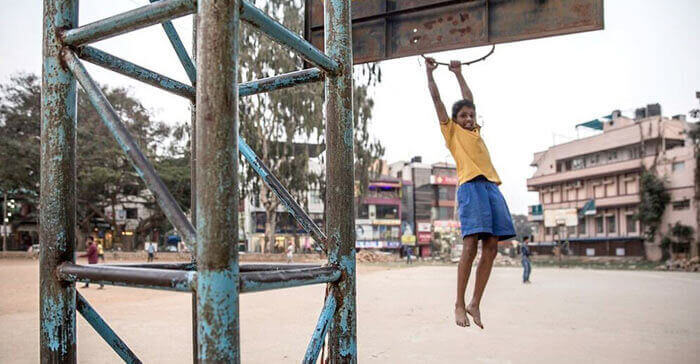
“Sport is a challenging career, even at the best of times. In an environment that is still evolving, the challenges faced by young athletes are many. From the lack of funding for training and competition, difficulty in getting access to the right coaching, difficulties with navigating the complex governance structures, the road ahead is certainly not a smooth one.
This often means that the best talent doesn't get the deserved resources and opportunities. The resulting misallocation can be seen in the outcome of the sport.
In this scenario, our athlete support structures play an important part in easing these challenges as there is a team behind each athlete fighting passionately for their cause.”
Can we make a difference?
"It is understandable to get upset every four years when we don't perform at the Olympics. Yet there are opportunities for everyone to make things better every day. I would encourage everyone to look behind each athlete and see what goes into his or her preparation. It’s very humbling and it gives a whole new perspective.
We started GoSports Foundation because we wanted to stop complaining and being cynical. We chose to be a part of the solution instead. It is a very satisfying way to channelise dissatisfaction. Once you go out and start doing the work, the amount of support you get from others is incredible. It’s not at all a lonely pursuit.
Everything said and done, I am hugely optimistic about the future. I believe we are a country bubbling with talent of all sorts, in many different sports. We are a country of resourceful, hardworking and successful people and I see no reason why those attributes will not extend to sports."
If he can do it, why can’t we?
Nandan Kamath has dedicated a huge part of his daily life towards improving the lives of sportspersons, in turn uplifting sports in India. He believes in being a pre-activist and not in reacting to failures.
Are we going to wait for failures at sporting events or are we going to take a leaf from Nandan Kamath’s book and address sports issues on time? The ball is in our court.
Alarm Bajne Se Pehle Jaago Re!
Share this story on
Rainwater Harvesting - A practice that India cannot overlook anymore
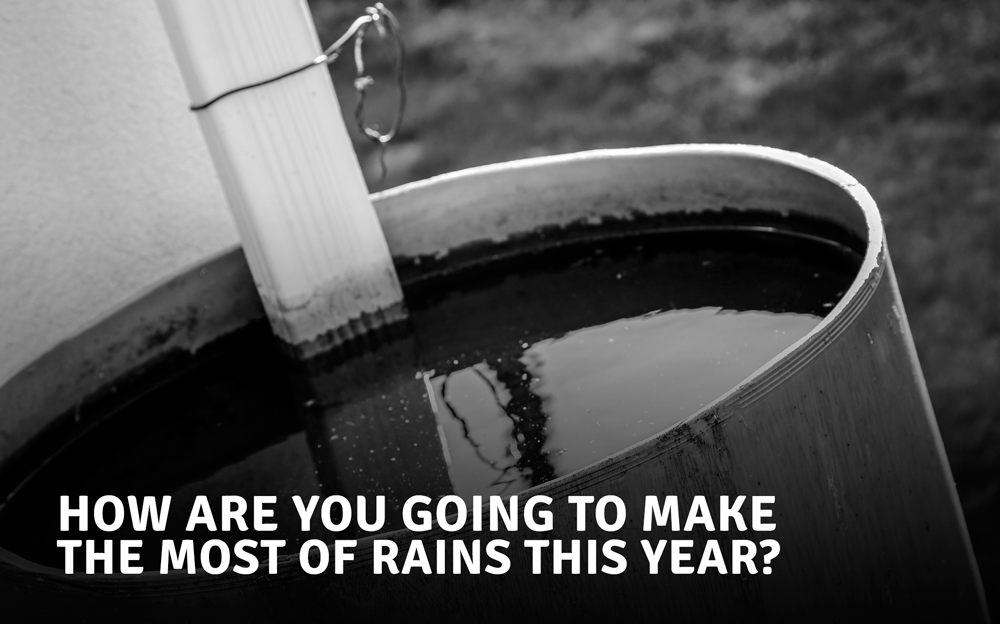
Indian cities are in the danger of going thirsty. Considering last year’s public unrest over Cauvery water in Karnataka and Tamil Nadu, one thing that stands out is our sheer unwillingness to adopt even the simplest measures to recycle water. Our dependency on water supplied from rivers has put us on a ticking clock. The question is, can Rainwater Harvesting (RWH) solve this issue? To answer this, we spoke to Mr. AR Shivakumar, who believes RWH is the need of the hour.
Mr. Shivakumar has been working towards sustainable management and renewable energy for the last 36 years, and has been championing Rain Water Harvesting in the city of Bengaluru. In his conversation with Jaago Re, he sketches out the situation of water scarcity, and the role of RWH in helping India win its battle for water.
The shift in our way of using water
We were a society where water was an individual responsibility. Every family collected water daily for its own usage, and there was no chance of water wastage. Eventually, with the cities coming into the picture, our water system got centralised, and water became the ‘problem of the authorities’. It was now up to the government to bring water to the cities from far flung areas. We started using water indiscriminately at the cost of environmental degradation. Slowly, our lakes and water bodies dried up and levels of groundwater table went too low.
The Situation now
The water supplied to the cities are usually pumped from water sources at much lower altitudes than the cities. This is a costly affair, both in terms of infrastructure and resources required, not to mention the impact on the environment due to requirement of dams and redirecting of water sources.
Even when the cities get water, it is supplied only to a particular section of the society. This means that a large section does not get access to clean water, and the section that does get water, uses it indiscriminately.The rest of the city is dependent on an already deplenished groundwater table. This increased pressure will slowly kill whatever greenery we have left in the city, and further add to making our cities un-liveable.
Right now the sewage system in Bengaluru flows because household get water at 98 litres per capita to flush out the waste. However, the rate at which we are wasting water, we will soon not have enough water to flush. Once the flow of water goes below 85 litres per capita, the sewage will stop flowing, clogging our drains and sewage system.
Available Resources
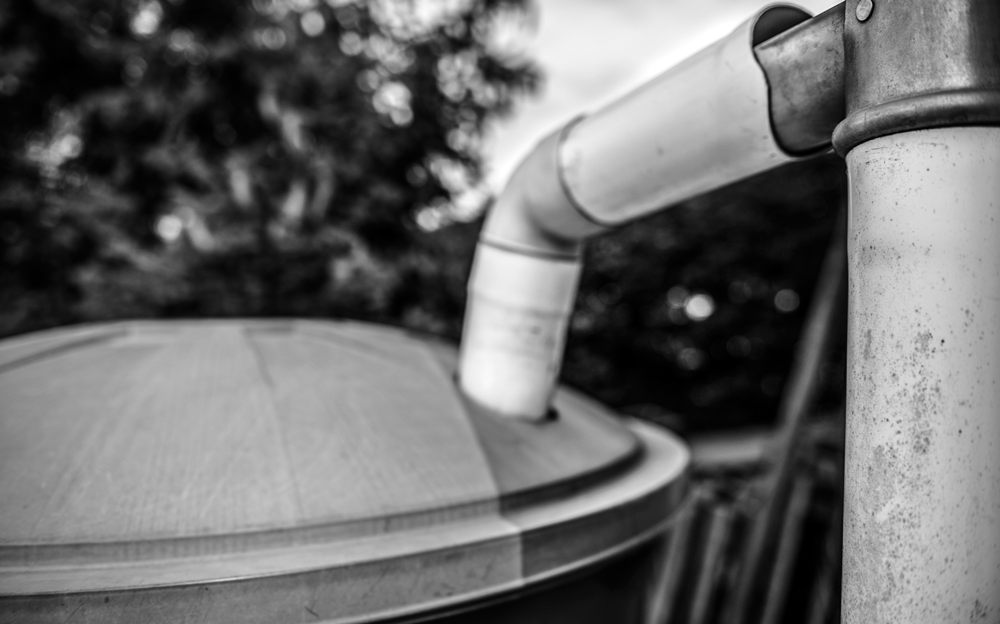
Many major cities in India have become water scarce regions, where the demand is much more than supply. While conducting his research on finding ways to solve Bengaluru’s water woes, Mr. Shivakumar found that the city receives an annual rainfall of 1000 ml. The quantity of water that can be collected in an average housing plot of 2400 sq.ft. is more than 2.3 Lakh litres, while the water required for a regular household is around 1.8 lakh litres. Bengaluru actually receives way more water than it can use, and still no one thinks of harvesting this water for future! If people in Bengaluru woke up before the alarm, they can very well generate their own water, and also help replenish the groundwater table.
The Solution - RWH and reusing water
Mr. Shivakumar did not just research the solutions, he decided to follow through with practice. According to IMD data, Bengaluru receives good rainfall throughout the year, with an average gap of 90-100 days in between, during which a household requires 40,000 litres of water. He built two underground tanks to collect water that can be used for non-drinking and cooking purposes, and an overhead tank with a filter, to collect drinking water.
Rainwater harvesting, according to Mr. Shivakumar, is easy, cost effective, and the most critical need for our cities today. He also built an innovative water filter called the Pop-up filter, which is quite cheap and eco-friendly. He has even dug percolation pits in his garden, which allow rainwater to seep into the ground and recharge the groundwater table. Additionally, people need to start reusing water to minimize wastage.
The big HOW
The first step to solving the water crisis is to believe that solution is easy, and effective. Mr. Shivakumar shares a few simple steps for this:
- Household produce two kinds of waste water - Grey water (produced from non-toilet use, like water from showers and washing clothes / utensils) and Black water (water mixed with toilet waste). Households must start reusing grey water. Instead of draining away the water from washing machines, it can be used to flush down the toilet wastes. Kitchen sink water from washing vegetables can be used to water plants / gardening.
- RO Water purifiers drain away 70% of water fed into them, and provide only 30% of the supply water as ‘clean drinking water’. The rejected water can be used for mopping and cleaning the house, vehicles, etc.
- Get leaking pipes and dripping taps fixed immediately to minimize water wastage
- Monitor your water bill closely to understand if your water usage has increased, and plan water usage accordingly.
- Try and use bucket to bathe and to wash cars or vehicles. On an average, showers consume about 100 litres of water, while buckets require just about 18 litres.
- Washing clothes and utensils with the water running uses about 116 litres of water, while using water at the same time uses only about 36 litres.
- Adopt rainwater harvesting. Most cities have guidelines and resources to facilitate RWH at households. Make sure you get all the information and implement the same at the earliest.
Do you have more points to share about RWH and ways to save water? Share your thoughts with us on our Facebook and Twitter pages, and wake up to the need to save water, before it gets too late.
Alarm Bajne Se Pehle Jaago Re!
More about the Expert:
Sources:
Rainmanspeaks (blogspot)
Mr. A.R. Shivakumar, Principal Scientific Officer, IISC
Share this story on
4 ways to handle e-waste
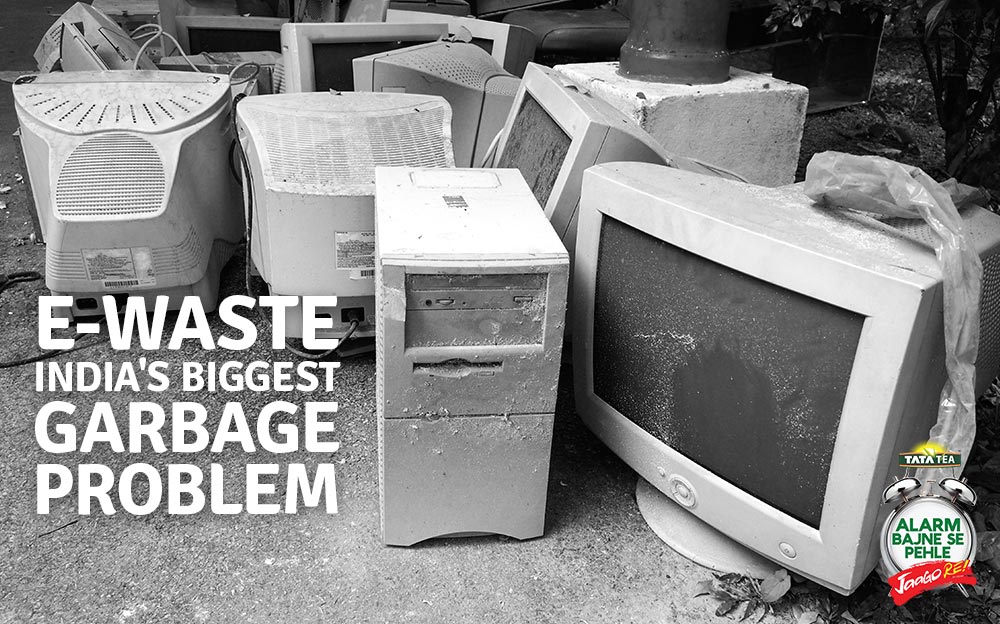
Electronic waste is the world’s fastest growing waste and to make matters worse, India is the 5th largest electronic waste generator in the world, discarding almost 18.5 lakh metric tonnes of e-waste annually.
Telecom equipment accounts for 12% of the e-waste alone. India’s e-waste is growing at a rate of 30% annually and a paltry 1.5% of India’s total e-waste is recycled, owing to lack of the necessary infrastructure to deal with the mounting waste. Approximately 40% of India’s e-waste lands in Delhi, with Bangalore and Chennai following closely in tow. According to studies, India is likely to generate 52 lakh metric tonnes of e-waste per year by 2020.
Almost 75% of the total waste is generated by the government, public and private industrial sectors, while 16% is generated from households. Mobile phones, televisions and computers are among the most dangerous items of e-waste as they contain high levels of mercury, lead and cadmium, elements that are detrimental to the environment due to improper disposal.
These mountains of e-waste that reach dump yards are handled by e-waste workers in India who have little knowledge and next to no safety training in dealing with hazardous waste. They are susceptible to a variety of health issues, particularly respiratory problems such as asthma, bronchitis, coughing and choking, among others. Do we have any role to play in changing this situation?
Here’s how you can help to tackle the e-waste problem:
Donate
If you are replacing your old gadgets with new ones, then donate your old gadgets to orphanages and educational institutions who can reuse the gadgets for learning purposes.
Take back programmes
Some electronic companies have take back programmes for old gadgets. Enquire with the brand you use if they have take back programmes. You can also consciously start using only those products that have such programmes in place.
Recycle
There are many ways in which electronic systems can be reused in some other form. Look up on the internet for ways to reuse old computers, which double up as interesting relics if repainted or ipods, which also double up as hard drives.
Expert Disposal
Find out who’s the local e-waste disposal company that ethically disposes off e-waste or refurbishes e-waste and sign up for their services. E-waste disposal companies help rid of e-waste in huge quantities and also help extract metals that can be reused for other purposes.
Educate everyone around about these techniques so that effective e-waste disposal becomes a practice. E-waste, if not controlled can lead to disastrous effects as such as diminishing of natural resources, ground water pollution and soil acidification among others.
Adopt these practices now so that we call can collectively avert disasters that are likely to occur in the presence of our inaction.
Alarm Bajne Se Pehle Jaago Re!
Sources
The Hindu
The India Environmental Portal
The Wealthy Waste
The Live Mint
The Economic Times
Share this story on
How to start a sports culture in India
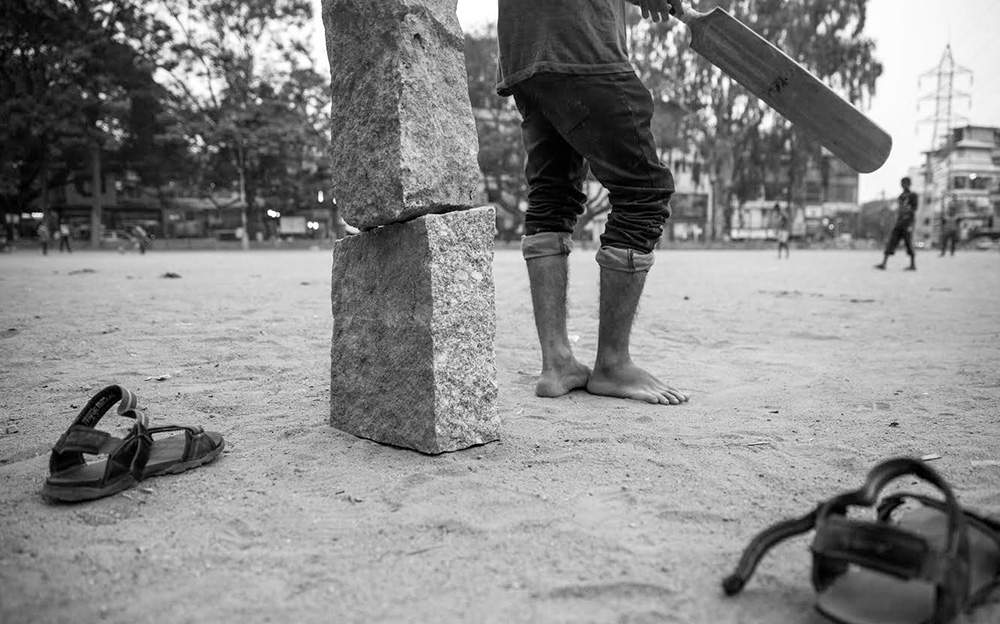
In a country of over a billion people, we only have a handful of champions. Countries with lower levels of per capita income than India, like Kenya and Jamaica, have outperformed India in international sporting events.
Many neglected athletes quit sports. Most others don’t get their due recognition. The sports culture is very weak in India and sports as a career option is still frowned upon. Ours is a country where earning a livelihood from sports is unusual, and hence, the results are seen in our overall medal tallies.
Some hard facts
India has been participating in the Olympics since 1920, but has won only 28 medals so far. At the 2016 Summer Olympics in Rio De Janeiro, we sent 117 athletes in 15 sports and we brought back only 2 medals, one silver and one bronze. While the 2 medals in Olympics 2016 placed India in the 67th position at the medal tally, if we consider the number of medals against the total population of India, we rank last among all the medal-winning countries.*
Is there anything that we as concerned citizens in our country can do to change the situation? We suggest three possible ways for you to be more involved in the betterment of sports in our country.
1. Be more involved
Start visiting more local games and matches in your city. Check out the schedules and programmes of non-mainstream sports like Basketball, Table Tennis, Boxing, Archery etc. You can also go visit the local regional sports like Mallakhamb, Kabbadi etc. Buy tickets to watch these games live. Take an active interest in these sports, join their communities and get to know the other sports in your neighbourhoods.
2. Volunteer at the local NGOs
Identify sports NGOs in your neighbourhood and extend your support to them - and support doesn’t have to be monetary only. One can help spread awareness, leave old sport gear or even volunteer. Many of these NGOs are run by former athletes who encourage and nurture talent in children. Several have even produced athletes from the NGOs itself. Participation at the grassroots directly puts you in touch with the future sports talent of our country. Volunteer for a chance to hone such talents.
3. An effort to make sports a part of our culture
Encourage sports and sports related activities. Be it among your friends, your family, your workplace, your neighbourhood etc. Join, or even form independent sports clubs. When children show an interest in sports, do your best to hone their talents - or encourage them to play, and join them in the game.
Can we go back to nurturing sports in India?
Enough has been said about the failing standards of sports in our society, but not much is being done about it. If we want India to be put on the world map when it comes to stellar performance in sports, we have to take steps to move in that direction. Start working towards that change, before yet another Olympic goes by and we return home disappointed.
Do you think we as a society can affect a change in the way India perceives sports? Share your views with us on our Facebook and Twitter platforms.
Alarm Bajne Se Pehle Jaago Re!
Source:
*NZHerald, Sportskeeda
Share this story on