Empowering themselves in a biased world: A glimpse of transgenders in India
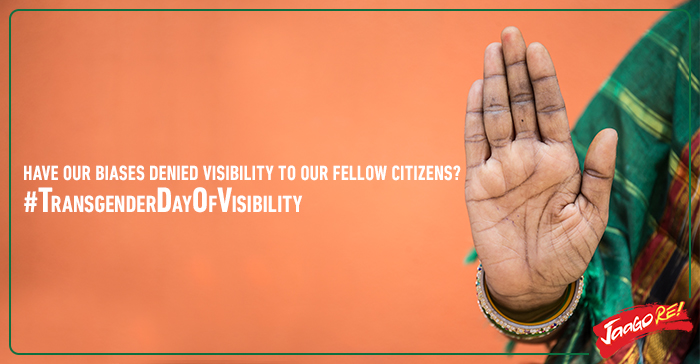
Transgenders have been a part of our society, our folklores, and our religious beliefs for a long time, but our perceptions of them have always been veiled behind one aspect - Gender. We have limited them in our imaginations and in popular culture as people who demand money on streets or indulge in flesh trade, but we couldn’t be more wrong.
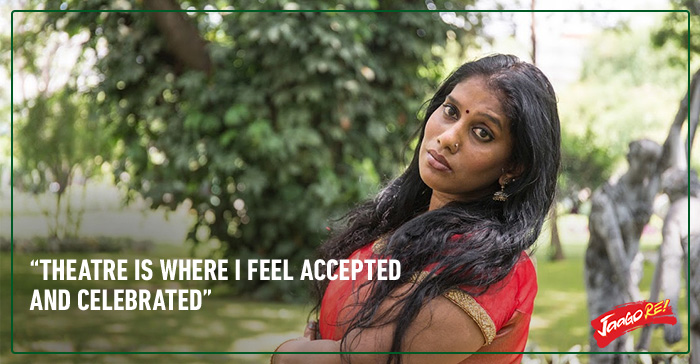
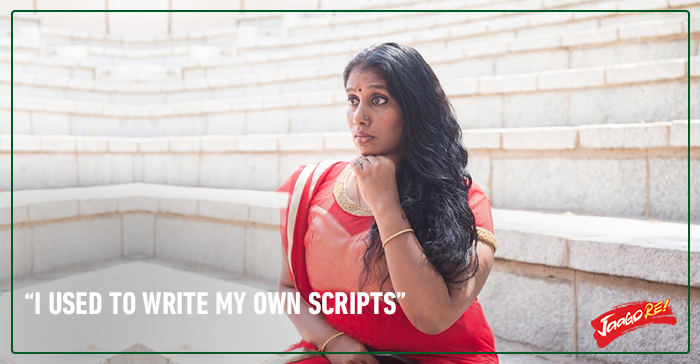
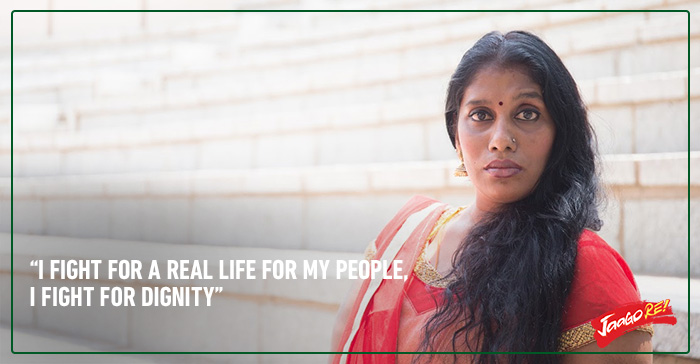
On account of International Transgender Day of Visibility (31 March), here are a few members from the transgender community sharing a glimpse of their lives with us. They tell us about:
Finding meaning in their passions
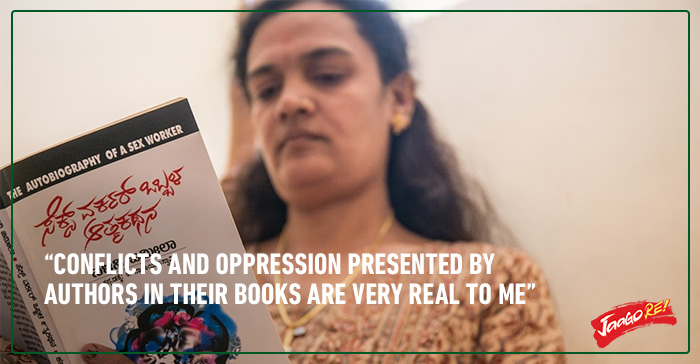
Living with Pride
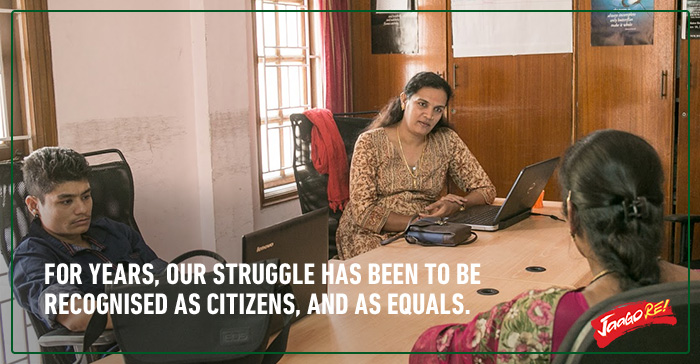
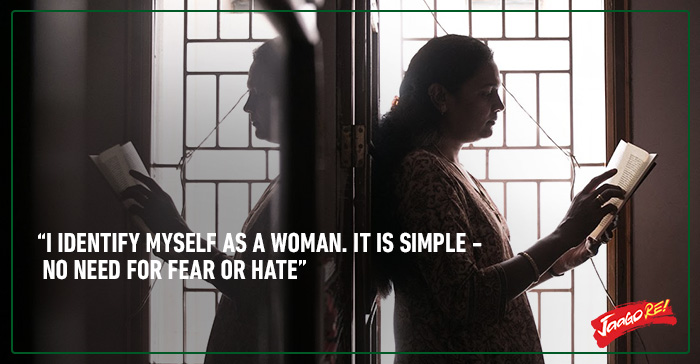
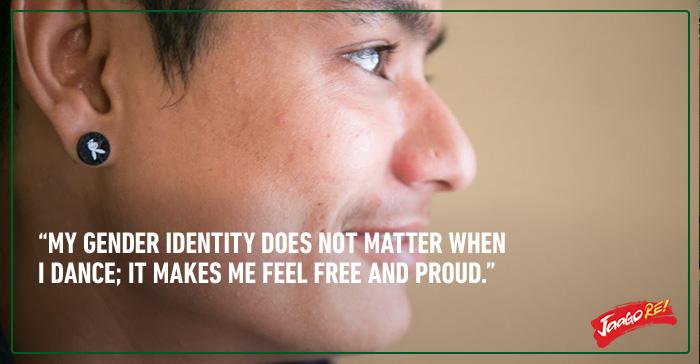
Being more than just the "other gender"
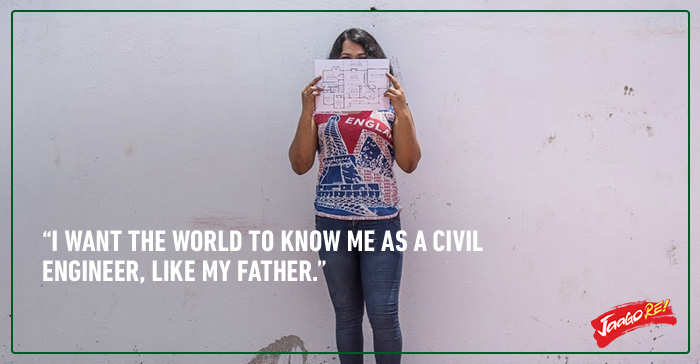
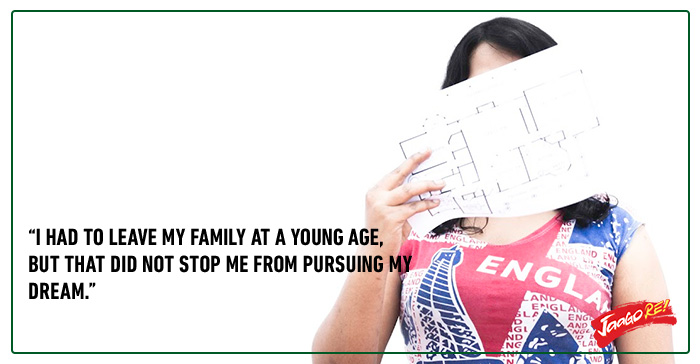
Being heard and seen
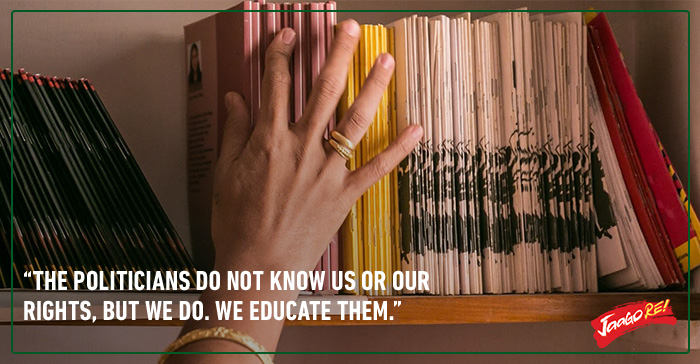
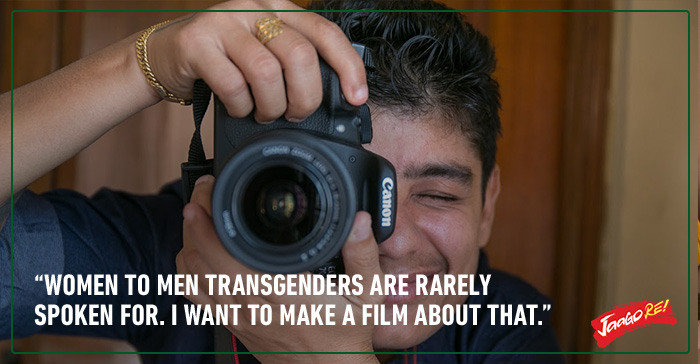
Learning to love and accept themselves, and others
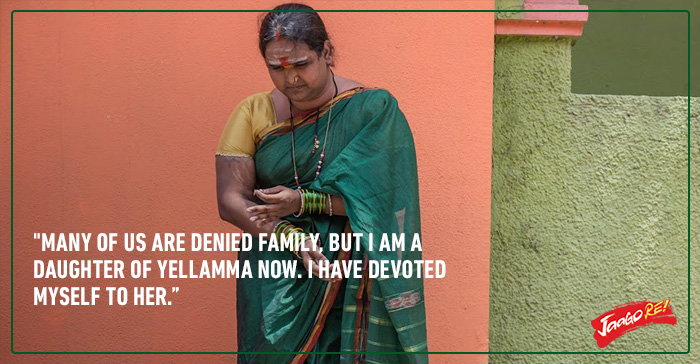
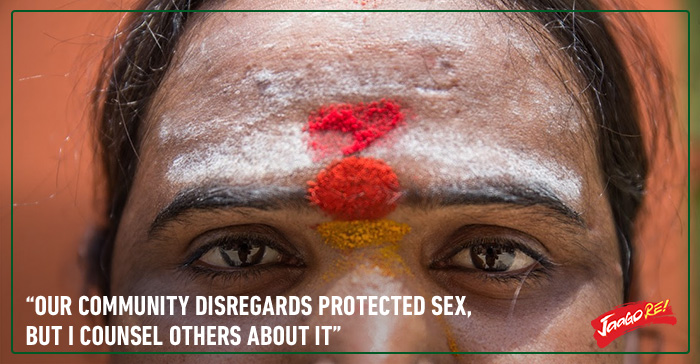
Pursuing happiness
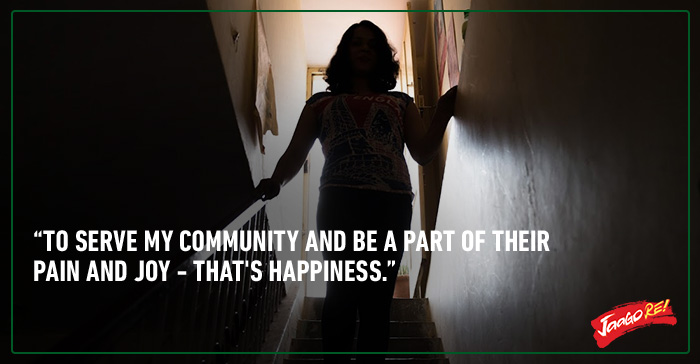
These are people who want to be remembered as humans, and as people with dreams and aspirations. They have grander stories to tell us about themselves than we could ever invent for them. Their stories are not just stories of pain and sufferings of being transgenders, but experiences and memories of unique and whole individuals celebrating their right to live. Is it not time that we too start seeing and listening to them as individuals, as equals?
What are your views on transgender issues and their visibility in India? Write to us on our Facebook and Twitter pages, or email us at jaagorein@gmail.com.
We sincerely thank Ranjitha, Rose, Christy Raj, Sony and Nisha for their valuable input.
Share this story on

Make a difference on this #WorldEarthDay

Every year on 22nd April, the world celebrates the World Earth Day to increase awareness about environment safety and to encourage steps towards environment protection. This year, the theme for the Earth Day is ‘Trees for the Earth’, with an aim to plant 7.8 billion trees by 2020.
While planting trees is one of the most sustainable ways of conserving the environment, not many of us know how to go about it. We are not familiar with the kind of plants that can grow well in a particular area (indigenous plants), or know the impact that factors like soaring temperatures can have on saplings.
Here are a few simple steps to grow some indigenous fruit trees, which can help make our localities greener, and also get the benefit of the produce of these trees in future.
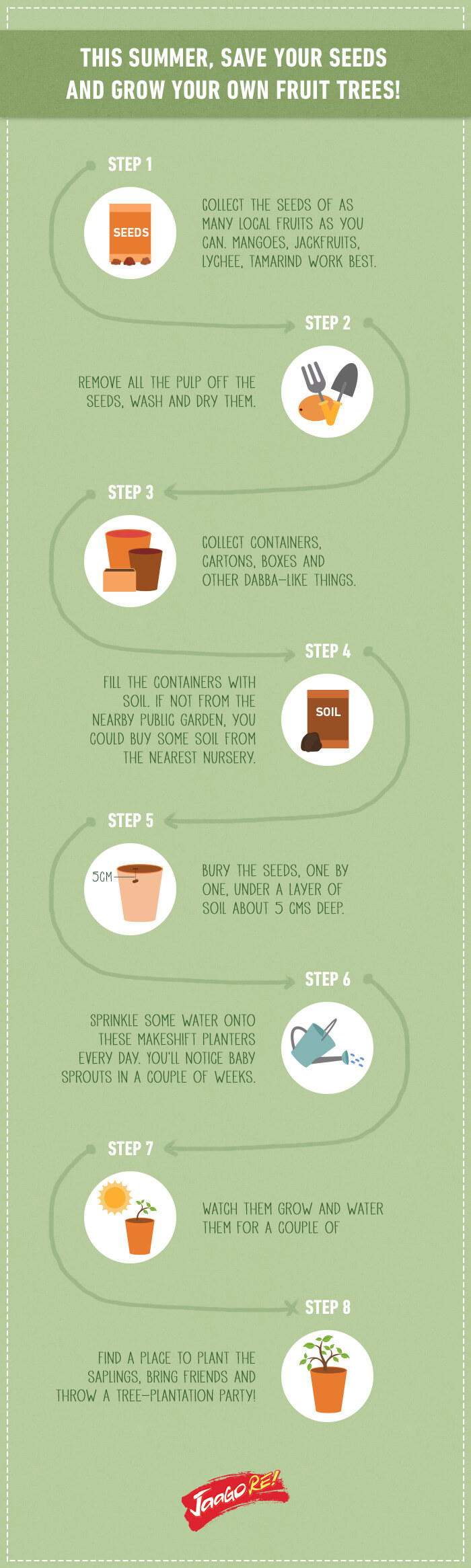
If you have more insights on how we all can successfully increase the green cover in our country, write on our Facebook and Twitter pages.
If you have more insights on how we all can successfully increase the green cover in our country, write to us on our Facebook and Twitter pages.
Do you want to know what more you can do to protect the environment? Read this article on ways of practising waste segregation.
We sincerely thank Mr. Hari Chakyar for his valuable input. Mr. Chakyar is a tree-planter and has been actively involved in various environment conservation programs.
Sources:
Earth Day Network
Time and date dot com
Share this story on
5 things you should know about the International Labour Day
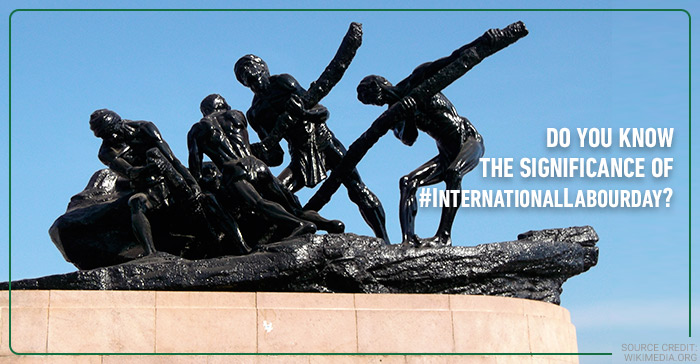
The 1st of May is celebrated as the International Labour Day (International Workers Day or May Day) in many countries across the world, including India. It is understood that this day is dedicated to labourers and the working class, but what is the significance of this day? Here are 5 points to explain more about the International Labour Day.
- The International Labour Day commemorates the protest by workers on 1st May, 1886, in the United States of America when labour union in the USA went on strike, demanding 8-hours work days for labourers. This eventually led to the establishment of 8-hour work days in many countries, including India.
- India celebrated its first Labour Day of 1st May, 1923, in Chennai. This day was then chosen as a day to celebrate and honour the contribution of working men and women towards building the nation. Labour unions and labour groups use Labour Day to fight for workers’ rights.
- May Day is celebrated to continue the struggle for improving the working conditions of labourers and higher wages. Before movements like the 8-hour work days, deaths, injuries of labourers and dangerous working conditions were very common.
- Labour Day is known as Kamgar Din or Kamgar Divas in Hindi, and is observed as a public holiday in India, and is a crucial day for labour movements by various labour groups and parties. Schools, offices and stock markets remain closed on this day.
- International Labour Organisation (ILO) is a part of the United Nations Organisation which works towards improving the working and living standards of workers all over the world. On 1st of May every year, ILO conducts rallies and marches across the world to create awareness about issues like forced labour, minimum wage law, rights of migrant workers, etc.
How do you think can India improve the standards of the working class? Share your views on our Facebook and Twitter pages.
Sources:
News 18
Heavy dot com
DGreetings dot com
DNA
Share this story on
Being a mother, a friend, and so much more - #HappyMothersDay
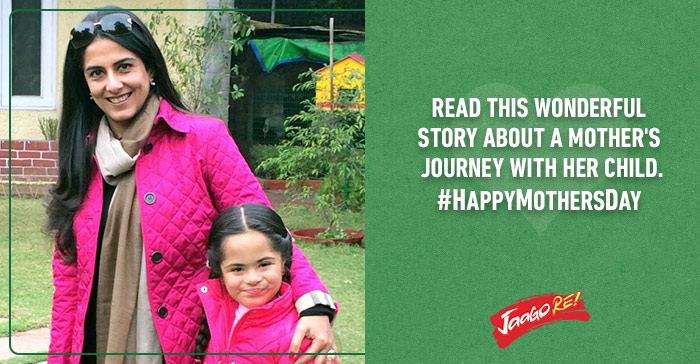
Anjali Khosla was looking forward to having her second child, and she really wanted a baby girl. The first time she saw her baby, she thought the baby was perfect. Anisha was everything Anjali had hoped for. However, baby Anisha was diagnosed with Down's Syndrome. From that moment, till now, Anisha has been changing Anjali's life, and Anjali has been reveling in the unique bond she shares with her child.
As we celebrate Mother's Day to honour mothers, and cherish the mother-child bond that keeps us going, here's Anjali's story on being a mother to a very special child.
Being a Mother
Being a mother means a piece of my heart now lives outside of me.
Typically motherhood starts with the delusional notion of being the sole 'Creator and Controller'. As the journey progresses however, you soon realize this isn't just about you, there is somebody else, a whole new person, walking alongside you on this path. Once you understand the duality of the equation and start respecting your baby as an individual, you really start enjoying this journey.
Anisha and I learnt to match our steps - sometimes she walked a little faster to keep up, but mostly I slowed down; not because she couldn't keep up, but because in my effort to constantly stay focused on the destination, I was losing out on the joy of the journey.
When Anisha was learning how to walk, I learnt to take shorter steps and longer breaks. I celebrated the muscle tone of her legs grow stronger under my massage. I celebrated the cross pattern of her crawl as it emerged. I celebrated the first time she pulled herself into a standing position, and as for those first few independent steps she took. We're still walking, and I'm still celebrating.

Coping with being a mother to a child with special needs
When I first set my eyes on Anisha, she literally took my breath away. She was gorgeous. I had always wanted a baby girl, and there she was- A soft cotton ball with pink lips, a little pug nose and eyes that made her look like a direct descendent of the Dalai lama- Ten little fingers, ten little toes - She was just perfect! But, one diagnosis changed my perception.
Soft cotton ball was low muscle tone,
Pink lips were thin upper lip,
Pug nose was flat nasal bridge,
Dalai Lama's descendancy was upward slanting eyes,
And the ten little fingers and ten little toes were stubby with a simian crease and gaps that apparently weren't supposed to be there.
All I could see was a 'Syndrome' and a declaration of impending doom! The biggest challenge for me was the fear of the unknown.
I'm not sure how I would've put things in proper perspective, if it weren't for my husband. His love for his little girl, unquestioning and absolutely unconditional. Strong and yet so gentle. It was his advice that went on to become the mantra I now live my life by - “ Let's not ruin today by worrying about problems that may never even happen tomorrow. If and when there is a problem, we will deal with it- but until then, let's just enjoy our baby'
And since then, that's just what we've been doing.
A beautiful relationship
Once I'd processed the multiple emotions involved with the revelation of Anisha's diagnosis , I came through with a renewed sense of purpose. If I really was the one God had especially singled out to parent this child, I had a big responsibility at hand.
Me and my ego, we were ready to take on the world - I was going to be that 'incredible' parent- I was going to be her teacher and teach her to be all that I believed she could be.
It didn't take me too long to realize though that sometimes you teach, but more often… you learn. Anisha opened up a whole new world to me. Anisha taught me that we don't need magicians for magic - it happens in front of us all the time, every day.
Team work
Anisha and I - we are a pretty good team. I get credit every time she crosses a hurdle. Every achievement of hers wins me applause. She excels, I'm rewarded. She shines, and all the light falls on me.
She continues to take the strides and move forward, and I just keep going higher and higher on that pedestal. I'm not sure of how much I created – but my little Anisha, she created a whole new 'Super –Mom' me.
Message to all Mothers
Live for Today, Plan for Tomorrow and Dream – as in really 'Dare to Dream' for Day after.
Share your views about this article on our Facebook and Twitter pages, and join us in wishing all mothers a very happy Mother's Day.
Share this story on
India’s water crisis: A situation we can solve together
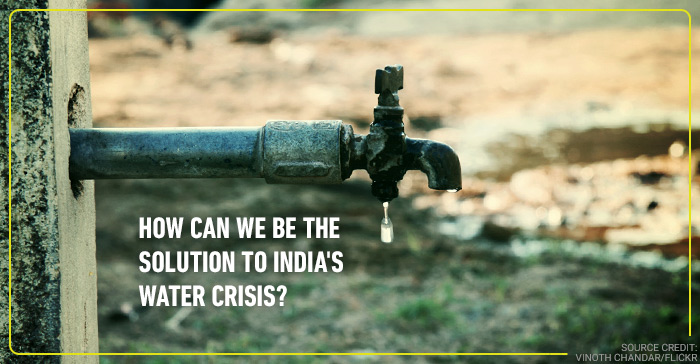
Water crisis in India reached an alarming level this year. For a country which claims 2.4% of the total global area, supporting 18% of the global population has been a challenge on various fronts. Ensuring availability of water has been one of them.
As per Census 2011 data, 32% of the rural households in India had access to piped water supply, while the corresponding share for urban households was 72%.
In one of his articles published in 2013, water activist Sri S. Vishwanath had made an observation that high income households tend to consume 250 litres (per head and above) and sometimes as high as 600 litres while low income households sustain on as little as 40 litres per person per day (Source: ‘How much water does an urban citizen need?’ – The Hindu). The rich-poor divide in water consumption has only risen over the intermediate years.
With the India Metereological Department predicting a delay in the monsoon, it’s time we started adopting certain water-saving measures in our households. Some of these measures were issued by the Ministry of Water Resources, Government of India:
Toilets: Residential demands account for about three-fourths of the total urban water demand. Indoor use accounts for roughly 60 percent of all residential use, and of this, toilets use nearly 40 percent. Traditional toilets use between 16 and 20 liters per flush, which means an average consumption of 80-100 liters daily per inhabitant; water-efficient low-flush toilets use only 6 litres per flush can reduce that figure to 30 litres a day per inhabitant.
Showers: Showers account for about 20 percent of total indoor water use. Using a bucket instead is likely to reduce this wastage by more than 80%. However, for those who love their showers, the standard ones with 20 litre-per-minute showerheads can also be replaced with 10 litre-per-minute showerheads to cut down wastage by half. This can be accomplished by using new shower-head designs or flow reducers.
Indoor leak detection: A great deal of water is lost in homes through leaks in pipes, plumbing fixtures and toilets. Water trickling down through a leakage through the kitchen or bathroom pipe is not a rare sight in a regular household. However, keeping water consumption efficiency and conservation in mind, even such minor leakages may be fixed expeditiously.
Garden watering: Domestic wastewater composed of wash water from kitchen sinks, vegetable washing and laundry is called gray water. It can be used by homeowners for home gardening, lawn maintenance and landscaping in residential apartments. Further, ensuring appropriate garden watering practices also helps in saving water. The best time to water is between 4 and 8 a.m. or 8 p.m. and midnight.
Vehicle washing: One of the most wasteful ways of using water is washing down vehicles with a hose. It is best done with the gray water from households and a wet cloth. And for car owners in urban centres, on the basis of feasibility, public car wash services that reuse water may also be patronised.
Low-flow plumbing fixtures: These are easy-to-implement, permanent, and onetime water conservation measures that regulate the flow of water and ensure minimum wastage in kitchen sinks, toilets and bathrooms.
Basin and sink faucets aerators: Flow reduction in these fixtures is achieved by using aerators. Faucet aerators, which break the flowing water into fine droplets and entrain air while maintaining wetting effectiveness, are inexpensive devices that can be installed in sinks to reduce water use by as much as 60 percent while still maintaining a strong flow.
Water metres: Though water metres have not been made mandatory in all cities in India, installation of these metres can help in self-monitoring water consumption and conserve accordingly.
Given the extent of wastage in urban households, most of these measures are focused on the urban users. However, even in semi-urban and rural communities, it is important to ensure that faulty community taps are reported, and used judiciously and repaired regularly to cut down on water wastage.
Water was meant to be a free resource for all living beings. Nature had also created its own system for replenishment. However, we have for long exploited this resource, like all other natural resources, indiscriminately. Hence, to avert a major water crisis, it is definitely time to adopt measures for a ‘water truce’ – a truce that would ensure adequate availability of water for people across income and regional divides.
More about the Writer:

Share this story on
The scene of child sexual abuse (CSA) in India

India shelters 430 million children, approximately one in five children (individuals under age 18) in the world and the government assesses that 40 % of India's children are susceptible to intimidations such as trafficking, homelessness, forced labour, drug abuse, and crime. Every 2nd child is being exposed to one or the other form of sexual abuse and every 5th child faces critical forms of it. They all are in need of protection.
In 2006, a study on CSA was conducted on 2211 class XI students, girls and boys, who had different socioeconomic upbringing and attended mainstream schools by the Chennai-based NGO Tulir – Centre for Prevention and Healing of Child Sexual Abuse, and international organisation Save the Children. The results showed that 939 (42%) out of 2211 children had faced at least one form of sexual abuse at some point in time. 39 per cent of the girls faced sexual abuse, compared to 48 per cent of the boys.
Another significant study at the pan Indian level has been the National Study on Child Abuse (2007). This study, which is the largest of its kind, covered 13 states with a sample size of 12447 children, 2324 young adults and 2449 stakeholders.
The National Study reported the following:
53.18 % children in the family environment not going to school reported facing sexual abuse.
49.92% children in schools reported facing sexual abuse.
61.61% children at work (Shop, factory or other places) reported facing sexual abuse.
54.51% children on the streets reported facing sexual abuse.
47.08 % children in institutional care reported facing sexual abuse.
20.90% of all children were subjected to severe forms of sexual abuse that included sexual assault, making the child fondle private parts, making the child exhibit private body parts and being photographed in the nude.
50% abusers are persons known to the child or in a position of trust and responsibility.
Reasons for the prevalence of CSA in India
In Indian context, Child Sexual Abuse (CSA) is snowed under many different suppositions and oppositions. Some assumptions are:
Out of sheer curiosity children must have asked for sexual contact.
Sexual abuse is part of the process of growing up and does not lead to any negative consequences.
Very young children cannot be abused sexually.
Boys cannot be abused, only poor are abused.
Women being the caregivers can never be offenders etc.
The reality contradicts these assumptions. Nonetheless, after trying to make people constantly aware of these facts, the myths prevail.
Adults of our society are interpellated with many unacceptable stereotypical messages and the same is passed to future generations. Child sexual abuse in India thrives on this very mentality. Parents have no idea how adversely this crime can affect children in their adulthood.
Break the silence
Despite the harsh statistics, currently there are only four organizations in India working on the issue in a determined manner. Hence, the need is great to make people aware about this issue and talk more about it openly. Getting involved in the fight against sexual abuse is the only way to prevent it. We should raise awareness of the prevalence and consequences of child sexual abuse by educating adults about preventive steps, recognize and react responsibly to the reality of child sexual abuse. We need to teach children, both boys and girls about empathy, respect, compassion and consent.
Read more about how to recognise and prevent child sexual abuse.
At Arpan, we do all these things and more, through our Personal Safety Education programme for Schools, communities, and institutions and run awareness and training programmes for adults and caregivers from different walks of life. However, the true power to end Child Sexual Abuse rests in the hands of the common man, people like you and me, who can stand up and break the silence around this heinous crime. Together we can achieve any goal.
Jaago Re!
More about the Experts:


Share this story on
Fatherhood VS Career: Is India bridging the gap for working dads?
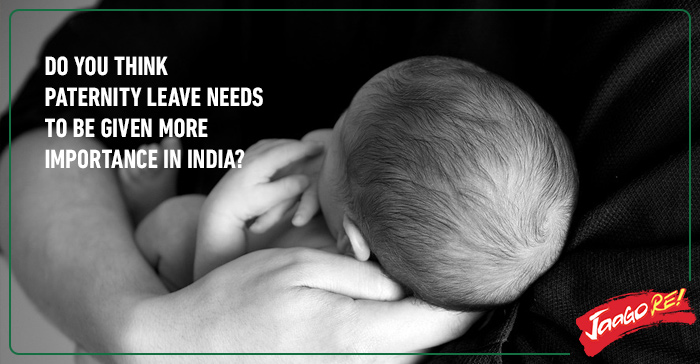
In an age where the preset roles that men and women are expected to play in society are gradually changing, we decided to take a look at the different methods in which this change is encouraged.
One of the notable changes is facilitating men to be more involved in the upbringing of their children. The pre-conceived notion that since ‘fathers go to work’ and hence aren’t necessarily as physically available for their kids is now being questioned. Men may have jobs to go to, but their involvement in their kids’ welfare does not take a backseat.
The International Labour Organization stated in a report in 2014 that 78 countries provide paternity leave to their citizens. This is primarily done to encourage men to participate more actively in child rearing. Most of these countries offer at least two weeks of paternity leave, but Sweden stands out in offering 2 months of paternity leave. This brings us to the paternity leave policies provided by the Government of India.
Here are a few points the Government of India says about paternity leave facilities for those in service with the Central Government –
Any male member in service can avail of paternity leave, even if he is under probation.
He can avail of this leave 15 days before or before 6 months from the delivery date of the child.
Paternity leave is paid leave where the father will be paid exactly the same salary he was drawing immediately before the leave.
Paternity leave may be combined with any other leave of any nature.
The leave will be considered as lapsed if not availed before 6 months from the birth of the child.
It’s about time we all learn to accept that fathers are primary caregivers as well. While a move is being considered to increase maternity leave from 12 weeks to 28 weeks, in comparison, paternity benefits have a lot to catch up with. In addition, most private companies are yet to bring in the paternity leave policy for their employees. While most fathers today feel the need to spend quality time with their children, when is the society going to allow them to?
Share your views on our Facebook page or Twitter handle.
Sources:
Ministry of Personnel, Public Grievances and Pensions
The Hindu
Share this story on
Father's Day stories on challenging society’s norms of parental roles

June 19 marks the day when all of us celebrate Father's Day, thanking dads all around the world for the sacrifices they have made and the hearts they have won.
While gender roles are converging, a social stigma still exists - the notion that fathers cannot or should not be the primary caregiver of the family. It is normal for a mother to give up her career in order to dedicate her time and attention to be a wife and a parent. But, having a man do the same is still hard to accept as they are expected to be the breadwinner of the family.
This father's day, we spoke to a few fathers who have managed to go beyond the stereotypes, and are a source of inspiration for us all:
Gregory David D’silva
.png)
Born into a family of 11 siblings, Gregory David D’silva (a.k.a Stan) has always been surrounded by love and laughter. Right from an early age, he helped out with the cooking, cleaning and even looked after his nephews and nieces when he was just an adolescent!
These early years helped nurture his caregiver instincts and he proudly and very willingly carried it forward into his family life.
"When I was blessed with my two beautiful daughters, I decided that I wanted to be around them as much as possible. So, I got into marketing which allowed me flexible working hours," he recalled. "While my wife Marisa went to work during the day, I would stay home and look after my daughters, and leave for work once my wife returned home. Tag teaming allowed my daughters to get the best of both the worlds."
"Not long after, I became a freelancer to allow me more time with my daughters. I dived into the world of cooking, chaperoning my daughters to the bus stop, swimming lessons, music class etc. and even helping with Hindi homework!" Stan added.
On being interviewed upon his decisions to be so involved in the lives of his daughters, Stan said, “I am proud that my daughters have been brought up with discipline. I feel very blessed and incredibly lucky to have experienced all the important - big or small moments in their lives.”
Alston Lobo
.png)
It was mostly chance than a choice that Alston Lobo made to take up the role of a stay-at-home dad, but he wouldn’t mind calling it the best decision he has ever made.
"It was during the last couple of months of my wife, Lina's pregnancy when I had decided to quit my daytime job. Alternatively, I was given an option to remotely work from home, and I couldn’t have asked for anything more," he said.
"Lina and I were mostly left out on our own after our daughter’s birth, and that's when I took the decision of being the primary caregiver of the family. The first couple of years were an incredible learning experience, and it brought us really close to my daughter."
"Parental instincts are natural, but nothing makes your bond stronger with your children, than being closer to them. Be it knowing what they want, or how they felt, being close to them teaches you all these little things about them. If my daughter was cranky, she wouldn't have to tell me. I would know."
Be it picking her from school, helping her with her homework, serving her dad's special recipes - having a daughter made Alston more responsible and helped him beat his nervousness of merely holding a baby, let alone bringing up a kid.
His tip for other dads who don’t get enough time for their children?
"Live these moments, take it up. The early years of a child’s development don’t come back. You have to cherish those moments and be involved as much as you can."
Sridhar Laxman
.png)
Sridhar Laxman left a successful career as a marketing professional and set out on a path of self-discovery. He did not just find his passion, but also realised that the key to his happiness was in helping others lead fulfilling lives, spending time with his family, and in being around for his growing son.
"My wife is a pilot and I was a marketing professional. When we decided to have a child, we realised that the nature of our jobs would be a challenge in bringing up the child. We wanted our child to grow up with our values, It was then that I told my wife that I would quit my job and become an executive coach while she could continue the career she loves so much," he said.
“My wife flies international flights and is away for a few days each week so I plan my work in a manner that I can be around my son more often. We divide the work equally, When my wife is home, I take a break from my daily responsibilities and she takes over. For me, watching my son grow and being a part of his development has been a wonderful experience, my son has certainly helped me become patient, open, more curious and a better human being" he added.
“If there is a message I can share, it would be that you need to identify what is really important, what matters in the long run and how you can create sufficient time and energy for it. Make time, Pause, reflect to identify this and build everything else around it.”
Click HERE to read about paternity leaves in India
Fathers should be every bit as invested in their children’s lives as mothers are. A father’s choice to be the primary caregiver of a child should receive as much respect and importance as a mother does. Today, when most households share the responsibility of earning a living, it is only sensible that we accept and give due importance to the essential roles fathers play in their children’s lives, don’t you think?
Share your thoughts about this article on our Facebook and Twitter pages, or email us at jaagorein@gmail.com
Share this story on
'Brexit' and it’s effects on the Indian economy.
Britain's exit from the European Union took the world by surprise. Experts describe this event as a ‘once in a lifetime’ which will haunt the economies across the globe for years to come. Like every other economy, our stock markets too suffered the effects of Brexit. Here, are a few points to understand why exactly we must worry about the event.
Effect of Global Economic changes on the Indian Economy: -
India is one of the most lucrative markets for foreign investors and, hence, we attract attention globally. So, any major change across the globe, be it political or economic, is bound to have an impact on India too.
Britain always provided a gateway to the European Union. Many Indian businesses have their offices in Britain so they can avail benefits and continue to remain a part of the EU. But with Brexit, this benefit will be taken away and may result in companies relocating their business set ups to other places.
Brexit might also have a positive effect, but these results may not show up immediately. The process might take time considering that the new government will take time to design and implement their policies.
Which are the Sectors which will be affected by Brexit?
Automobile, Pharma and IT might be the most affected. NASSCOM has predicted that the effect of Brexit will be felt on the $108 Billion Indian IT sector in the short term. Leading Indian IT firms have not commented on it as since there is a possibility of renegotiations for all the ongoing projects because of the devaluation in the value of pound. These things can be covered up in the next few years wherein alternate arrangements can be placed between the countries.
In the automobile industry, Brexit may lead to reduction in sales and companies that derive good revenues of profits from Britain could get hurt majorly.
Effect on Education sector/students & Travel
Britain is one of the most sought after education destination for Indians. Before Brexit, British universities were forced to offer scholarships and subsidies to the citizens of the UK and EU. Brexit frees up funds for the other students and more Indian students might be able to get scholarships.
Reduction in pound value will reduce travelling cost to the UK and will make it a good travel destination.
Investors moving to safe haven - gold.
Britain's decision to leave the EU has forced many to sell their risky assets and rush towards safe haven investment option like Gold. Gold prices in India had breached Rs 32,000 per 10-gram level.
In the long run, Brexit will help strengthen our ties with Britain because India's focus on innovation and entrepreneurship still makes it an attractive destination for outsourcing and investment.
India's economy is doing well and should use the current turmoil as an opportunity. For the common man, with every uncertainty there is a bigger opportunity to pick great stocks. It pays to focus on companies in the consumer driven sector. Financial sector companies too can surely generate great returns.
Disclaimer: The views expressed are that of the expert alone, and do not necessarily represent that of the brand.
More about the Experts:

Share this story on
Stop being just a bystander!

There have been repeated instances where precious lives have been lost because people chose to do nothing to help a person in need - because they chose to remain bystanders. The infamous Nirbhaya case was just one such instance which highlighted this attitude we carry, showing public apathy not just to victims of road accidents, but also to victims of violence.
‘The Chennai Techie’ murder case opened our eyes to a new level of apathy. Many people were quoted saying that they left the scene because they have little/no idea about what to do or that they did not want to “get involved”. Are such excuses justified for a nation that claims to have rich cultural and social values? If a lack of knowledge is the reason for our hesitance to get involved, it is our duty to make sure that we educate ourselves about what to do when we see someone in need.
Here are a few things we must do to ensure that a victim is out of immediate danger, and receives help at the earliest:
Danger Assessment
In case of a victim of violence, assess the immediate danger to the victim and to others. If you see a person being attacked, getting involved individually might harm you. First thing to do is to find ways to stop the assailant. You can shout at the attacker and cry out to people for help. This might scare the assailant and help save the victim. If the injuries are serious, call for an ambulance right away. If not, try and minimise the risk of aggravating the inuries.
In case of a victim of road accident, if the injuries seem serious, call for an ambulance straightaway. Make sure the accident zone is safe for you to enter and if the victim is conscious, try and talk to them to keep the victim calm. Try not to move the person, unless absolutely necessary. Make sure there are at least 3-4 people helping you while moving the victim.
First Aid
If a victim is finding it difficult to breathe, make sure to loosen the clothing around their neck. If the victim is bleeding profusely, try to stop the bleeding by tying a clean handkerchief around the wound to stop the bleeding. Minimise the victim's movements. If it is a serious injury or you aren’t sure what needs to be done, here are your next steps.
Call for an ambulance
Call for an ambulance immediately. The helpline number for India is 102 and will connect to the nearest ambulance service available.
Call the police
The number ‘100’ connects one to the nearest police control room. Once the police is informed, the next steps can be taken. The Good Samaritan Law dictates that anyone who helps a victim must be treated with utmost respect and sensitivity. It also gives the bystander to remain anonymous if he chooses to be.
Delegate Tasks
Most understandably, a crowd is bound to gather at the scene of an accident/violence. Take charge of the situation and delegate tasks. Point and call out people specifically (For example, “You, person wearing a blue shirt, come and do this.” “You, lady with a phone, please call the ambulance”, etc) Make sure people get mobilised. The quicker the response from people, the more chances there are of saving the victim.
The biggest problem we face today is that we do not want to get involved because it is “none of our business”. The fact is that when a person is in need of our help, it becomes our business, and not helping a victim makes us too responsible for the victim’s plight.
What do you think needs to be done to make sure more people get involved and try to save a victim, rather than just watch or move on? Share your views on our Facebook and Twitter pages, or email us at jaagorein@gmail.com.
Share this story on