A Christmas Message For Us All

This Christmas, here’s a special little message that will make us all think. Merry Christmas!
Share this story on

“You Are A Sex Worker, How Can You Be Raped?”
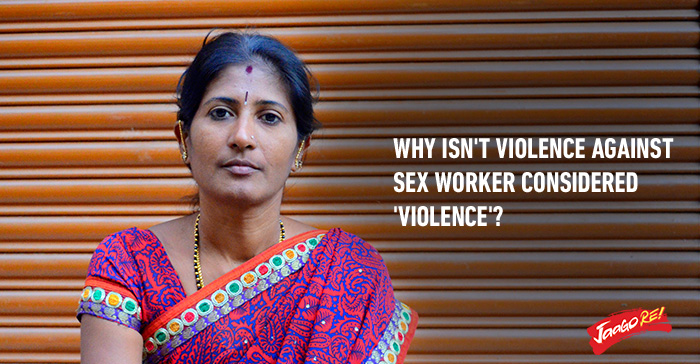
December 17th marks the renewment of support to end violence against sex workers worldwide. It is a global movement that brings together allies and advocates from around the world in recognizing the human rights of sex workers. In a survey conducted by the World Health Organisation, it was surveyed that an estimate of around 70% of sex workers in India reported experiencing violence and sexual harassment from society and police.
To understand what sex workers go through when they report incidents of violence, Jaago Re met with a sex worker. Here’s what she had to say.
“I was married when I was quite young, when I was 15. I didn’t have a chance to complete school and I was forced to quit when I was in class 5. The man I married had HIV and I didn’t know about it until I had two sons. As soon as I found out, I ended things with him. My family wasn’t the least bit supportive of my decision, so I left the house leaving the kids behind. That was the first time I came to the city to look for a job and I decided that I would be a sex worker. I went to a brothel and registered myself by paying Rs. 250/- and went to one of the popular bus stands to look for a client. That’s how I began working as a sex worker.
One night, after making a deal with my client I took him in a car and we were headed to his place. Once we were at his place, I noticed that there were a bunch four other men there, all drunk out of their minds. I had started to protest but by then it was too late, I was physically beaten and gang raped by five of them despite telling them that I had HIV. They taunted me saying that I was lying and were in a hurry to go between my legs. Once the ordeal was over, I escaped by hiding myself in a truck and went to the nearest police station. I had shown the bruises I had on my body and private parts, and asked for the help. Their reaction was, “You are a sex worker, how does this classify as rape when you are whoring around town for money?” My case was never registered and investigated. The men were never convicted and they’re probably out infecting HIV to other women. I now work closely with NGOs and lawyers to help other sex workers like myself. Society doesn’t take our rights seriously and doesn’t understand that we too have the rights for ourselves, that it is possible to be a sex worker and be sexually harassed. The concept of consent doesn’t exist in our world because society sees us as sex workers.”
Her story is just one among the 70% of sex workers in India who go through violence, some even lose their lives in the process. It is time to renew our commitment to the on-going struggle for empowerment, visibility, and rights for all sex workers.
Final thoughts:
What are your opinions about human rights for sex workers? Do you think that we as a society must be sensitive to their needs? How best can we support a minority community like theirs? Share your thoughts with us in the comments section below and continue tweeting to us on Twitter. You can also write to us at jaagorein@gmail.com and on our Facebook page.
Source for Sex Workers Survey:
World Health Organisation
Share this story on
Being Aware vs Being Sensitised - Tackling the HIV/AIDS issue
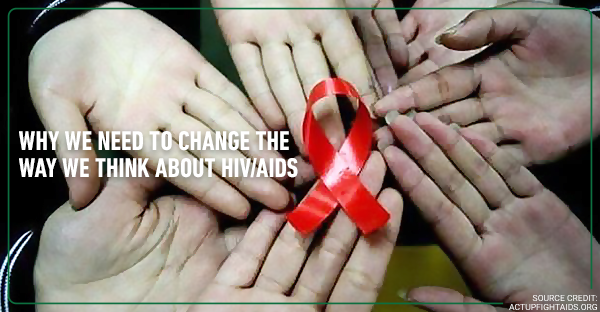
On World AIDS day, we asked people a simple question on our social platforms - “What would you do if you got to know that your friend is HIV positive or has AIDS?”
Here are some of the responses we received -
“Spread this news in school/college. Start making a distance from him/her.”
“My first reaction will be, ‘Bhai condom ke paise nahe the to mujhse le”
“Ask him for some blood.. I've some scores to settle #ColdRevenge”
While AIDS awareness has been a major agenda all over the world, these responses made us think that we as a society need to first rethink the way we address someone who is living with the HIV infection or AIDS. Our attitude leads to their ostracisation, and we become a major source of depression among people in the community. Evidently, awareness about AIDS/HIV is just not enough, and there is a drastic need for the shift in our mentality to show our solidarity to the AIDS/HIV community.
To know how to bring about this shift in mentality, we spoke with Nived Nambiar (an AIDS awareness activist) and here’s what he had to say:
Difference between HIV and AIDS
HIV is a virus that causes infection, AIDS is a condition developed by the severe immune destruction due to HIV virus.
HIV (Human Immunodeficiency Virus) is a subgroup of retrovirus that causes HIV infection. Progressive failure of our body’s immune system (if left untreated for years) allows life-threatening infections and cancer to thrive, this condition is called AIDS (Acquired Immunodeficiency Syndrome).
Ever since the virus dreadfully made its presence felt in the world in 1980’s, HIV has infected, 37 million people in the world (WHO).
Reasons behind stigma against the HIV / AIDS
Click here to read more about the stigmas related to HIV infections / AIDS
Earlier, there was almost no awareness regarding the prognosis of the disease, and medical treatment was absent to control the viral activity. This resulted in unfortunate stigmatization and added immense pressure on people living with HIV/AIDS (PLWHA) to conceal their status to anyone. Things have changed now with medical discoveries, but the stigmas remain.
When we hear HIV or AIDS, we only have one word to associate it with - Sex. We have kind of set our mind that HIV cannot be transmitted through any mode other than sex, and it seems like we have taken an ownership for this inappropriate ideology.
Stigma is also associated with hesitation to get subjected to mandatory HIV testing, it almost sounds like an ‘abuse’ when one is insisted to undergo testing. This report on hand comes with the fear of being detected positive and feeling endangered about the consequences he/she could face.
How to overcome stigmas against HIV / AIDS
Awareness is the key to combat HIV because ignorance, followed by stigma holds the potential to kill the survivors psychologically killing their strength.
1. Know the right language or the right terms
The first step is to break the bad language and emphasize on using right terms. An individual suffering from the disease is a ‘Person living with HIV/AIDS’ or a ‘HIV/AIDS survivor’, we must address them positively. ‘HIV Patient’ or ‘AIDS patient’, ‘AIDS victim’ must be avoided to maximum level as it only creates negativity, affecting their psychological well being.
2. Know what happens when someone has AIDS
HIV survivor dies of/from AIDS-related diseases and not because of AIDS. Like I mentioned earlier, AIDS is an advanced stage that involves severe immune system destruction making the survivor extremely vulnerable to opportunistic life-threatening infections that causes death ultimately.
3. Know how HIV is transmitted
HIV is transmitted via:
Unprotected (or condomless) sexual activity between partners (both Heterosexual and Homosexual).
Through Placenta from Infected mother to fetus.
Using infected hypodermic needles.
Drug overuse.
HIV is not longer a deadly disease
Survivors with successful HIV treatment on regular basis have shown undetectable viral load on their body fluids, which means that the viral activity is under-control and less likely to transmit. In fact, there are discordant couples (where one partner is HIV-infected and other is not) who are living a regular life. People living with HIV/AIDS shouldn’t be judged for their HIV status, neither should the theory of their possible infection be a subject of discussion.
Psychology always affects physiology.
When a body is stressed or experiences a negative atmosphere, it affects the body’s immune system making the body weak and develop symptoms in the form of headaches, body aches, mood swing and in extreme cases, chronic depression. It is the same with people living with the HIV infection or AIDS. Imagine how amazing their life would turn out to be if they received positive vibes from a supportive society.
What are some of the ways in which we can remove the social stigmas related to people living with HIV infections and AIDS? Write to us at jaagorein@gmail.com or on Facebook, or tweet to us at @JaagoRe.
Disclaimer:
Views expressed here are of the author alone and do not necessarily represent that of the brand.
Sources:
Wikipedia
About the Author:

Share this story on
6 simple steps to protect yourself against Cyber Crime
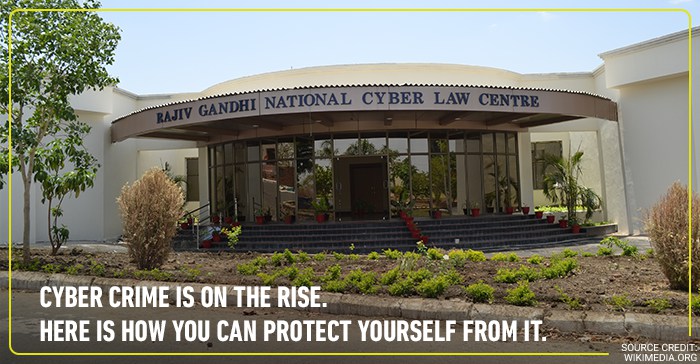
What makes cyber crime dangerous?
Is it the anonymity that internet provides its users?
Or is it because of the rate at which it is growing?
In 2011 there were around 13,301 cases of cyber crime reported in the country but in 2015 we already have over 3, 00,000 cases.
All the above facts throw light on the disturbing facts of cyber crime.
To help you stay safe from becoming a victim of cyber crime, here are some precautions you could take:
Using a strong password:
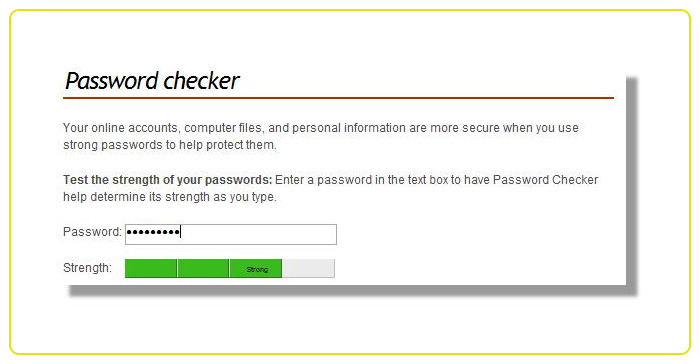
The first defence in being safe is to secure your password. This statement might have become redundant as you see it every time you sign up for an account but a strong password does make a huge difference to how safe your account is. This is imperative, especially when it comes to cyber-stalking (where someone goes through all your information present on your computer or on social media) and hacking (gaining illegal access to computer or data).
You can also protect your password by using a trusted password generator or simply make sure you have a combination of alphabets, numbers and symbols in the chosen password.
Never disclose your account details to anyone or any personal data to someone on the internet or on the phone:
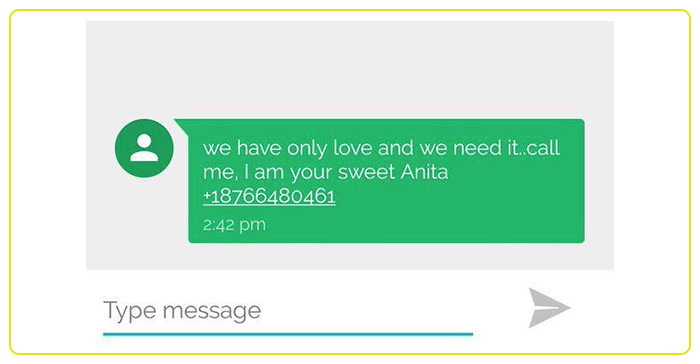
Many people have been getting fraudulent messages that ask them to disclose their bank account details or transfer money to another account in promise of more money. People who aren’t aware of such scams fall prey to them. These messages or people are scams and must be reported to the police or bank authorities.
Many times people call and ask for personal details regarding online accounts stating they are from trusted sources such as a bank. Unless you know the person and can authenticate him/her, never give your details.
Use a trusted anti-virus:
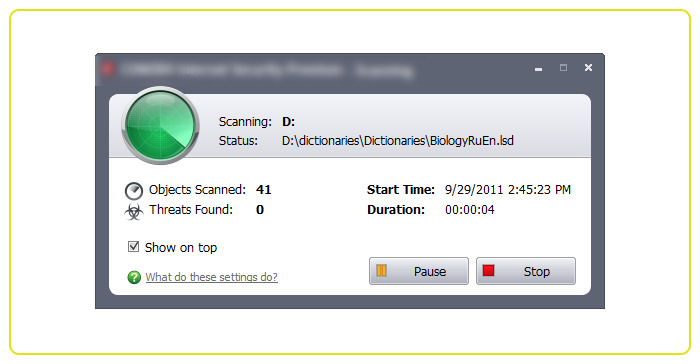
Many people believe that there is no use of using an anti-virus but protecting your computer via an anti-virus can actually stop people from hacking into your computer and stealing your information. Investing in a good anti-virus is one of the key steps in ensuring safety from cyber crimes. Also, maintaining and upgrading your anti-virus is crucial.
Never send credit/debit card details on any untrusted site:
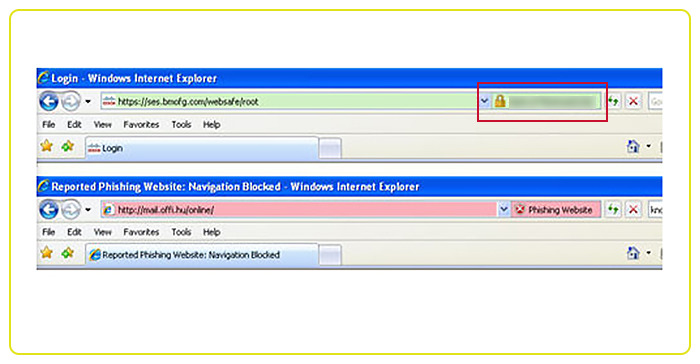
If a payment site does not start with https or if you are asked for your credit/debit card details when it does not seem necessary, then never enter your details. There should also be a lock icon on pages that are secure. If none of these parameters are present, then do not reveal your card details.
Protect your Wi-Fi:
Make sure you have a strong, encrypted (8 digit, website generated password). If you prefer your password to not be encrypted make sure that no one except the people in your house are aware of how to log onto the Wi-Fi.
An additional measure you can take is to make sure your phone or your computer’s Bluetooth is switched off when not required.
Report a Cyber Crime immediately:
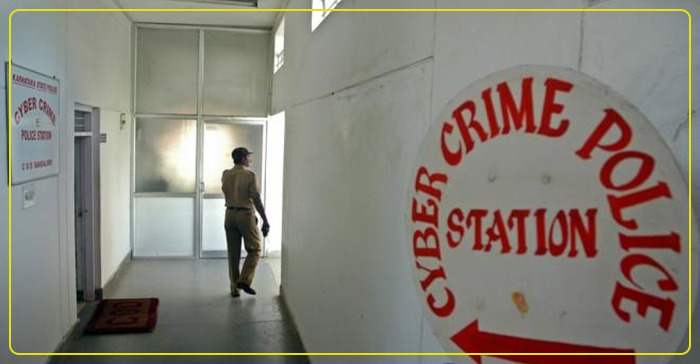
The Information Technology Act 2000 was enacted to help for the commercial use of Information Technology (IT). It also states actions that are punishable in the IT space.
The Indian Penal Code 1860 has also included cyber crime under its purview.
Bogus websites, threatening messages sent via email, email abuse, hacking etc. are some of the acts that come under the above mentioned laws.
Every city has a cyber crime cell where the complaint should be lodged.
If a person suspects that he/she is a victim of cyber crime then they should immediately go to the authorities with the necessary details.
The introduction of new technology brought new types of crime which is making us insecure of the information we can or cannot put on the internet. It takes only a matter of seconds to become a victim of cyber crime. To make sure that such crimes decrease, everyone must make efforts to keep themselves safe and educate those around them to not fall for illegal activities, scams or frauds.
If you have you been a victim of a cyber crime or want to share your views on the subject, please write to us at jaagorein@gmail.com or tweet to us at JaagoRe.
Sources:
LegalIndia
ASSOCHAM
Share this story on
5 Simple Ways to Practise Waste Segregation
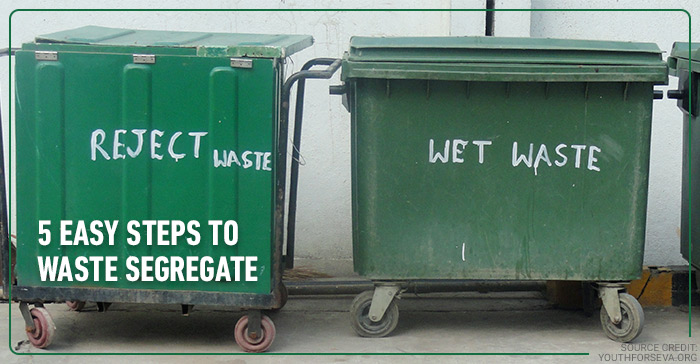
What is waste segregation?
Waste segregation refers to the separation of wet waste and dry waste, the purpose is to recycle dry waste easily and to use wet waste as compost.
Why should we segregate waste?
When we segregate waste, there is reduction of waste that gets landfilled and occupies space, air and water pollution rates are considerably lowered. Segregating waste also makes it easier to apply different processes - composting, recycling and incineration can be applied to different kinds of waste.
Here are some steps to manage and segregate waste:
1. Keep separate containers for dry and wet waste in the kitchen.
2. Keep two bags for dry waste collection- paper and plastic, for the rest of the household waste
3. Keep plastic from the kitchen clean and dry and drop into the dry waste bin. Keep glass/plastic containers rinsed of food matter.
4. Send wet waste out of your home daily. Store and send dry waste out of the home, once a week.
5. Keep a paper bag for throwing the sanitary waste.
Practising waste management and segregation as a community -
The best way to practise waste management is to form a group of like minded people. The process of waste segregation should be thoroughly explained to family/neighbours in your apartment building or neighbourhood. Create awareness amongst the staff in the apartment building/neighbourhood to help make the process easier. Acquiring separate storage drums for storing the dry waste and wet waste will be a great way to store bulk waste. Contact the local scrap dealer to collect the dry waste.
Are you practising waste segregation in your home? What are your thoughts on this? Let us know your thoughts in the comments below, you can also reach out to us on our Facebook page, or tweet to us @JaagoRe and even write a mail to jaagorein@gmail.com.
Share this story on
Emergency Contact Numbers for Manipur Earthquake

On 4th January 2016, an earthquake measuring 6.7 on Richter Scale hit Manipur at 4:37 AM, with its epicentre at Noney in Tamenglong district, and the tremors were felt across the northeastern states in India.
The central and state governments have sent in the armed forces, the National Disaster Response Force, and a medical team for rescue and relief work. A list of emergency helpline numbers has also been circulated to provide assistance to those in need. Here’s a list with a few helpline contact numbers for Manipur:
| Manipur State Emergency Control Room /Manipur State Emergency Operations Centre | 03852 443441 |
| Police Control Room | 2220100 |
| Rapid Response Team, Head Quarter | 9612555708, 8974035295, 9436026694 |
| Rapid Response Team, Imphal West | 8974009603, 9856089275 |
| Rapid Response Team, Imphal East | 8974035200, 9862236856, 9612186831 |
| Rapid Response Team, Jiribam | 9774522750, 9612021665 |
| Rapid Response Team, Thoubal | 9615901826, 8974009015 |
| Rapid Response Team, Bishnpur | 9436022335, 9436025511 |
| Rapid Response Team, Senapati | 9612042811, 8416074460 |
| Rapid Response Team, Chandel | 9612258678, 8729988519, 9612412938 |
| Rapid Response Team, Moreh | 9436894439 |
| Rapid Response Team, Ukhrul | 8413806564, 9436032231, 8413942523 |
| Rapid Response Team, Tamenglong | 9402415562, 9436683196 |
| Rapid Response Team, Churachandpur | 9862152829, 8258056494 |
| DC Office - Tamenglong District | 03877 - 222003 |
| DC Office - Imphal West District | 0385 - 2451188 |
| DC Office - Imphal West District | 0385 - 2228387 |
| Fire Service | 101 |
| Regional Institute of Medical Sciences | 2414478 |
| Jawaharlal Nehru Institute of Medical Sciences | 2450385 |
| Imphal Hospital | 2411353 |
| Shija Hospital | 2055584, 2055585 |
| Langol View | 2414679, 2416288 |
| Raj Medicity | 2441653, 2459553 |
You can also get in touch with Sphere India helplines to reach out for help:
| Fr. Domanic - Convenor, Inter Agency Group (IAG), Manipur | 9436204745 |
| Mr. Saikhom Kennedy, Programme Coordinator, IAGs, NE India, Sphere India | 8285221559 |
| Mr. Manoj, SPM, Sphere India | 9716774476 |
| Ms. Shivani, Programme Coordinator, IAC, Sphere India | 9599109716 |
The emergency numbers listed here have been sourced from manipurtimes.com. If you know of any other emergency helplines and contacts that we can add to this list, please write to us on our Facebook and Twitter pages. You can also send us an email at jaagorein@gmail.com.
Sources:
Indian Express
Manipur Times
Share this story on
8 things you should know about the Indian Army
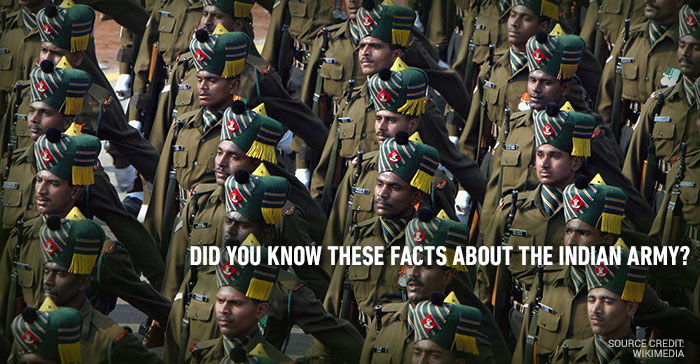
The Indian Army is the second largest army in the world, and is a branch of Indian armed forces, specialised in operating on land. It is also the largest component of the Indian armed forces. The chief responsibilities of the Indian Army include national security and maintaining unity, protecting India from external and internal threats, maintaining peace and security within Indian borders, and also conducting rescue operations during natural calamities and disasters.
On 15th January 1949, Lieutenant General K.M. Cariappa took over as the first Commander-in-Chief of the Indian Army, and this day is celebrated as the Army Day in India.Today, on account of the 68th Indian Army Day, here are 8 points about the Indian Army that we should all know about:
1. The President of India is the Commander-in-Chief of the Indian Army, and the Army is commanded by the Chief of Army Staff (COAS). Here’s a graphic representation of the structure of the Indian Army:
.jpg)
2. The Indian Army is an all-volunteer force (the largest all-volunteer force) with a regimental system where an enlisted troupe normally spend their entire career in the regiment. Some regiments are formed on the basis of religious, ethnic or regional identities (e.g. Gorkha Regiment, Sikh Regiment, Assam Regiment etc.), but there are also regiments that not limited to ethnic, religious or regional identities (e.g. the parachute regiment and the Brigade of Guards). Depending on geography and operation, they are divided into seven commands - Army Training Command, Central Command, Eastern Command, Northern Command, Southern Command, South Western Command, and Western Command.
3. The Indian Army has been the largest contributor to the UN peacekeeping forces, and India also holds credit of forming the first Female Formed Police Unit under the UN.
4. Siachen glacier, at a height of more than 5000 metres above sea level, is the highest battlefield in the world, and it is under the control of the Indian Army. The conditions at the Siachen are extremely difficult, with temperatures dropping as low as minus 50 degrees and more soldiers perish from cold, than from bullets. The Indian soldiers have successfully defended this region against all conflicts and aggressions.
5. The Military Engineering Services is one of the largest construction and maintenance agencies in India, and is responsible for some of the best constructions across the country, like the Khardungla Pass (the highest motorable road in the world), the Magnetic Hill in Leh, and so on. They are often consulted to deliver projects that require swift and efficient action.
6. Indian Army also holds credits to the construction of structures at some of the most difficult geolocations, like the Baily Bridge constructed by the Military Engineering Services, and the Border Roads Organisation in 1982. It is the highest bridge in the world, and is built between the Dras and Suru rivers in the Himalayas. The Border Roads Organisation is also responsible for building roads and giving accessibility to the areas in the Himalayas which were once inaccessible.
7. The Indian Army is known for high altitude and mountain warfare, and the Indian soldiers are considered the best in the world for high altitude warfare. The High Altitude Warfare School (HAWS) of the Indian Army is an elite training centre, sought by Special Ops team from many countries.
8. Indian Army has a horsed cavalry regiment - the 61st cavalry regiment, and it is one among the only three cavalry units in the world. While the regiment is used primarily during ceremonial occasions, they can also be deployed for internal security purposes.
The achievements of the Indian Army, or the number of instances we as a country need to be thankful to them for, are numerous, and almost impossible to list down. They have made us proud on countless occasions, and have made umpteen sacrifices so that we can live in peace. As a sign of respect, the least we can do is live in harmony with each other, don’t you agree?
What are your views on this article? Write to us on our Facebook and Twitter pages, or email us at jaagorein@gmail.com
Sources:
Indian Army
International Business Times
Quora
Scoop Whoop
Wikipedia
Share this story on
5 Steps to make workplaces accessible for persons with disabilities
.jpg)
Around 4 - 8 percent* of people in India are persons with disabilities, but India is still quite behind in terms of acknowledging and assimilating them in the workforce. A major reason behind this is the lack of awareness about disabilities. Many employers do not know how workplaces can be made more accessible to people with disabilities or how to look at them as human resources. This results in persons with disabilities being stigmatised as burdens and being forced to be dependent on others.
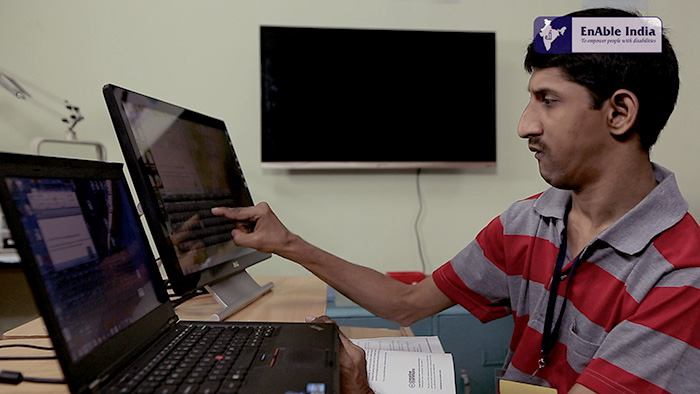
How can we change our workplaces to ensure that persons with disabilities get the opportunities they deserve? To understand this, we approached Mr. Subbiah, Program Manager - Employment from EnAble India, and he shared with us the first five steps that he thinks are needed to make workplaces accessible for people with disabilities:
The first step is disability awareness – It is essential to make employers aware about the different kinds of disabilities, as different disabilities come with different challenges and required intervention, and also to change their mindsets about persons with disabilities.
The second step is job analysis - To ensure that a person with disability is able to work optimally, their skills have to be matched to the job role. So, at EnAble India, we do a careful examination of job tasks to help employers hire persons with disability better. Workplace solutions and accessibility of premise and IT tools are addressed.
The third step is peer awareness – Just employing a person with disability isn’t enough sometimes. It is important for us to sensitise the co-workers and address apprehensions of the other employees in a company to help accommodate and assimilate persons with disabilities, so that the work environment functions smoothly.
Sometimes, persons with disabilities need some initial handholding to help them get familiar with the workplace to ensure that the premises are accessible and comfortable. This is something that EnAble India can help employers do.
Finally, ensuring that follow ups happen with the company and employer to create a culture of inclusive hiring. Communication about challenges to both employers and their employees with disability is one of the best ways to ensure accessible workplaces.
Given the deep biases against people with disabilities and acute lack of information, there is a lot more that goes behind prepping both the employers and the candidates. The first thing to do for all of us is to let go of our preconceived notions and look at persons with disabilities as individuals who contribute as much as (if not more than) any of us, and who can in fact make our workplaces more inclusive and efficient.
What more can the society and the employers do to encourage workforce participation from the Persons with disability? Share your opinions with us on our Facebook or Twitter pages, or write to us at jaagorein@gmail.com
Sources:
*National Centre for Biotechnology Information
More about the Expert:

Share this story on
3 ways to make India a better place for every girl child
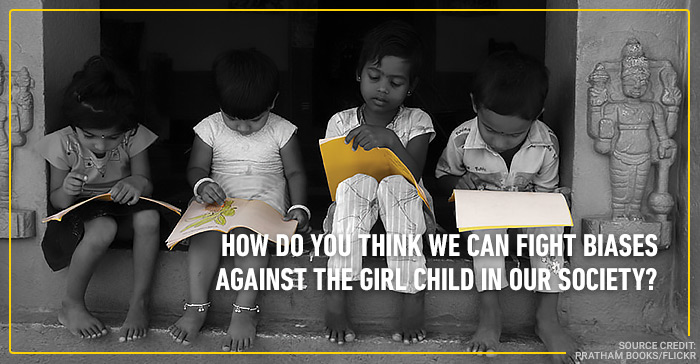
On 24th January, 2016, India celebrated its ninth National Girl Child Day - an initiative of the Ministry of Women and Child Development. This day has been chalked out in the dream of creating a gender equal society that welcomes the birth of a girl child, and ensures a happy, healthy and safe life for her. While the Government can draft policies and pass legislations, it definitely needs its citizens to come together to fulfil any dream. Here are a few things that we as a society need to implement to work towards this goal:
Change the way we treat the girl child at home
While we want a positive change in our society, we forget that we make the society. If each of us indeed wants to change society, we need to begin this cycle of change from us, and from our homes. Treat the girl children with respect, love and affection at home. The girl child is a child first, and then a girl. Give her a safe and healthy childhood environment and watch her blossom into adulthood.
Children often learn through modelling; if you are a parent or a caregiver to a child, instil values of gender equality right from their infancy. Teach them to break gender stereotypes. If children see adults around them being partial towards boys, they will grow up to believe that this is how the world works.
Share the household work between yourself and your spouse and see your children growing up to dismantle myths about gender roles! It is true that biology separates boys and girls, but the human experience definitely brings them together. Biological differences should never be an excuse to perpetrate inequality!
Send the girl child back to School
Whoever can deny the benefits of a good education in today’s world? Schools are not only centres of learning, but also became the spaces where children interact with their peers and other social groups. A girl child has the basic right to education just as any other child in India has. Biological and social phenomenon like puberty and marriage should not be a hindrance to the pursuit of knowledge. Though there is constant pressure about getting a girl married at the earliest to ‘get rid’ of the burden, a good education is far more important and lasts a lifetime. Marriage and procreation are not the ultimate goals of female lives. A good education has the potential for financial independence, which can be life-changing for our girls.
Teach the girl child about her body
Growing up, we all have had several questions about our own anatomy. However, most of them went unanswered and we were left to find out the answers on our own. While puberty is a natural phenomenon that occurs in both girls and boys, the experience is vastly different for each sex. With menstruation and other associated pubertal changes happening in a frenzy, girls need to be taught about their own biology. Several girls grow up to become adults, have marital relationships and even give birth to children without the slightest information about the female reproductive system! This information will empower them in ways beyond our immediate understanding. Teach them to respect their bodies, instead of shaming it. If we don’t respect our bodies, who else will?
These are just a few ways we can begin to change our society and the way it treats the girl children. What are your views on this? What more do you think should we do? Share your views on our Facebook and Twitter pages, or write to us at jaagorein@gmail.com.
Disclaimer:
Views expressed here are of the expert alone, and do not necessarily represent that of the brand.
More about the Experts:

Share this story on
The relevance of celebrating 'cleanliness' in today's India.
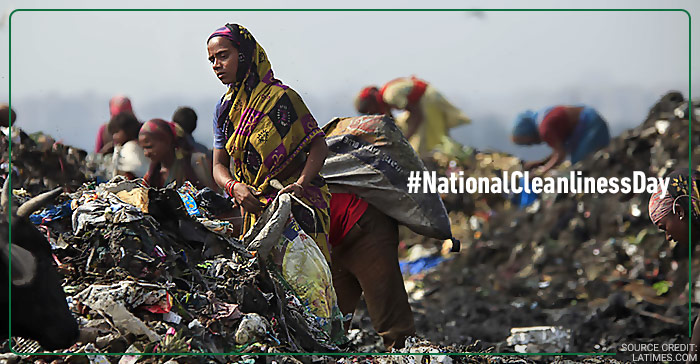
Since 2014, every year on January 30th is observed as National Cleanliness Day to commemorate the death anniversary of Mahatma Gandhi. This responsibility for environmental cleanliness, calls to maintain high standards of cleanliness in our homes, workplace, road/streets and public places. However, let us question the importance of observing this every year while many of us still pursue apathetic attitudes towards cleanliness in public spaces.
In a country where cleanliness is restricted to the four walls of our homes, there is a sense of ownership that is lacking when it concerns public spaces. It’s unfortunate to say that, it is still not possible to access public toilets without covering one’s nose and ignoring the sight of faeces that usually is left unattended by its owner and the toilet cleaners. It’s the same story when it comes to littering in public, despite numerous attempts by the Government to help citizens understand waste segregation - not many city dwellers follow it. Our excuse? It is time consuming.
What more must we do to simplify the objective of cleanliness? Is the onus upon the Government to create stronger outreach programmes or is the onus upon us citizens to shed our apathy and take responsibility for creating the mess that we constantly complain about yet do nothing?
So far, our celebration of ‘National Cleanliness Day’ seems to be restricted only to preaching. How will we answer when the future generations asks us what we were doing instead of cleaning up our dirty act? Let us truly celebrate this day for what it asks us to stand up to.
These are just a few ways we can begin to change our society and the way it views cleanliness. What are your views on this? What more do you think should we do? Share your views on our Facebook and Twitter pages, or email us at jaagorein@gmail.com.
Share this story on