Why we need to talk about suicide
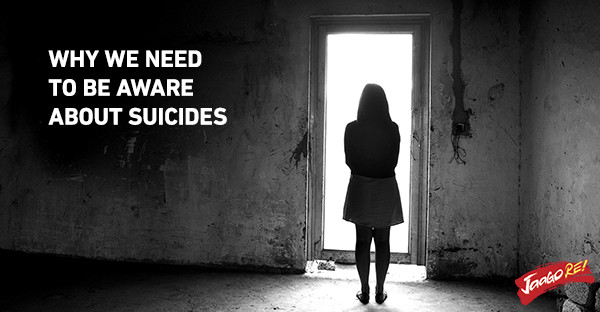
“A boy who was living with his roommate woke up one morning and decided to take his life by jumping in front of a train. He was lonely and upset, inspite of having spent the previous night with some of his friends. His roommate till today doesn’t know about the extreme step he was about to take.“
According to the World Health Organization, India has the highest number of suicides. The youth, especially between the ages of 15-29 years constitute the highest portion of these suicides. Why, you may ask? What makes them take this grave decision? According to sources, family problems are the leading cause. So this brings us to our next question- How can we as as a country priding ourselves on having a tradition of close knit families be in such a situation?
Mr. Vinny George a Psychologist with Sampurna Montfort Counselling and Psychological Services (SCAPS) says, “In our country since we are kids, we are taught not to cry and to be strong, which creates a stigma around weakness. If you are depressed then you are weak hence people find it every difficult to talk about their problems even to their parents.”
It’s not just the youth who are taking this drastic step, suicides have been affecting one of our most needed workforce-Farmers, as crops fail and they find it difficult to make ends meet, many farmers take this unfortunate step to end their misery thus leaving behind a family who has to live with this burden. Though the media has pointed it time and again it’s taken a long time for the issue to come to the forefront. According to the recent suicide data revealed by NCRB, 4.3% (5,650) of all suicides were committed by farmers across India but the statistics also revealed something more shocking- 18% (20,412) of all suicides committed were by housewives/homemakers.
According to IndiaSpends, these housewife statistics also combine suicides among women farmers as India doesn’t traditionally view farmers to be female. Majority of the causes of suicide relate to family problems but not necessarily related to their marital issues. The study also finds that suicides are deep rooted in India’s patriarchy. The stigma that surrounds us discussing depression and mental health issues is worrying and leading to suicidal tendencies.
The fact that India criminalises suicide also contributes to the factor. Under Section 309 of the Indian Penal Code from the Statute book, “suicide bid is punishable with imprisonment up to one year, or with fine, or both.” Though the government has moved to decriminalise it, the bill is yet to be passed.
Mr. Vinny George also explains that one of the other reasons that makes people less aware about the signs of suicide is that there are proper records detailing the number of suicides. “In one of the previous data it was revealed that Bangalore had no suicides in a particular year” he says, “but we all know that isn’t true.”
He also adds that, in countries like the USA, “there is only one suicide helpline which people call to and there is not much confusion but in India, there are many voluntary organizations who give their time to help people change their minds about taking the extreme step. These organizations hire people and train them but since there aren’t too many of them doing it, they burn out quite easily. It would be so efficient if there was a helpline pan-India.”
It’s not just helplines that there is a dearth of. Even the number of counsellors and therapists is lacking, thus reducing awareness and the help that could be given to people (India is short of professionals for medical illnesses by 87%). Not only is it considered taboo to talk about depression or mental illness but to be someone who can help them is also looked down upon. Though many colleges have started specializations in Psychology and other subjects that could help treating mental illness, they still are not comfortable with putting up posters or having talks about suicide. Mr. George says, “They feel youngsters are more likely to commit suicide if they are made aware of it but they do not understand that there are correct ways and plans that can be used. When people know that they have someone to talk to who won’t judge them, they will try and get help.”
If you want to share your experiences on suicide get in touch with us at jaagorein@gmail.com or comment below.
SCAPS recently held a suicide prevention campaign in Bangalore and on 10th September which marks anti-Suicide day, they are holding a candle light event for people to participate and share their experiences. The event will also be held in Bangalore.
****
Sources:
Thanks to Mr. Vinny George from SCAPS.
IndiaSpend
FirstPost
NCRB
****
Share this story on

What is the BBMP and what do they do?
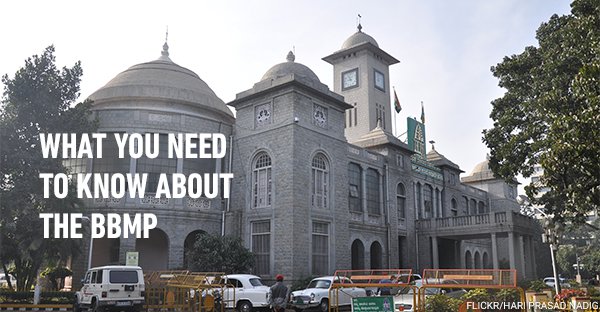
Bangalore has the fourth largest municipal corporation in India and has seen tremendous growth since the city was established. The Bruhat Bengaluru Mahanagara Palike (first established as Greater Bengaluru Municipal Corporation on 27 March 1862) has been responsible for sustaining and managing Bengaluru’s civic body and infrastructure.
With the upcoming elections of the BBMP, we decided to look into the basics of how the body functions and its roles and responsibilities.
Who heads the BBMP?
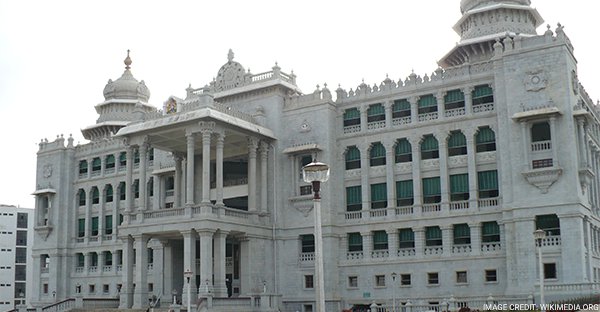
A mayor and deputy mayor are elected every year, though not by voting - only a candidate from the Scheduled Caste and Tribes, Other Backwards Caste or an Other Backward Class female from the elected councillors can fill this position.
They head BBMP’s council which consists of 198 corporators from the different wards, MLA’s, MP’s from Bangalore and some nominated members. However, in the absence of an elected body, an Administrator and a Commissioner are appointed by the State Government.
The Commissioner as Executive Head is incharge of various departments such as Revenue and Administrative departments.
All decisions taken by the Council are executed by him/her (a commissioner plays a role similar to Chief Minister and Prime Minister).
In his/her two-year tenure, he is assisted by the Deputy Commissioners and Assistant Commissioners.
Currently, the BBMP does not have an elected body and hence is run by a Commissioner and Administrator.
How does the BBMP function?
With its ever increasing population of over 7.8 million, the city has been divided into 8 zones (Yelahanka zone, Dasarahalli, Bommanahalli, South, Mahadevapura, East zone, Rajarajeshwarinagar and West zone), to make administration easier. Each zone has a zonal administrator who is answerable to the Commissioner.
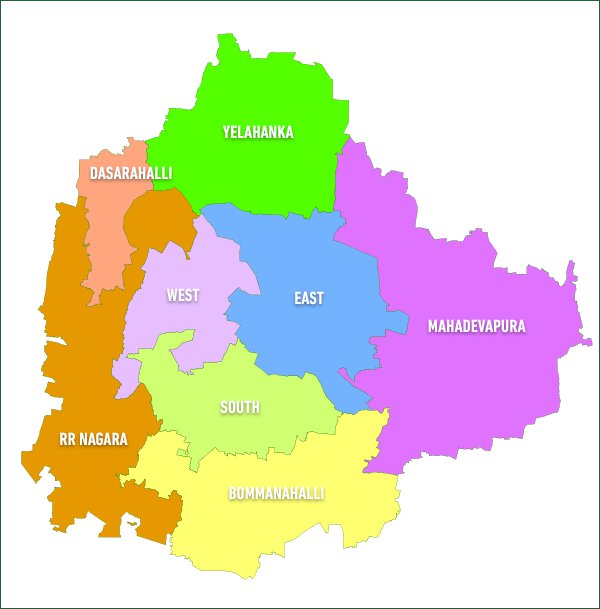
BBMP also works with the Agenda for Bengaluru Infrastructure Development Task Force (ABIDe), Lake Development Authority (LDA) and the Bangalore Development Authority (BDA) for various infrastructural projects in the city.
What are the responsibilities of the BBMP?
Under the umbrella of infrastructure and civic responsibilities, the BBMP is responsible for most of the amenities we use on a daily basis from zoning and building regulations to hygiene, health, licensing, education, trade and quality of life which include water bodies, parks and greenery.
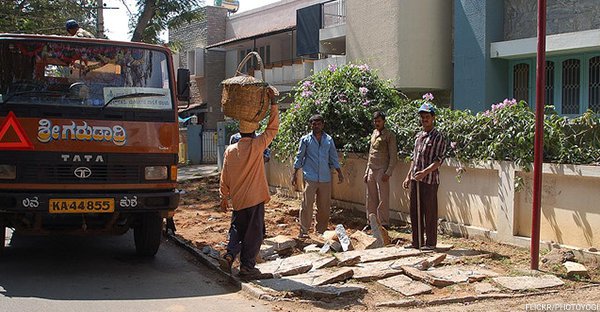
Some of the other obligatory functions include cleaning and construction of roads, clearing of sewage and garbage, waste disposal, maintenance of drains, bridges and pavements and tree planting among others.
Why is the BBMP important and why should I vote?
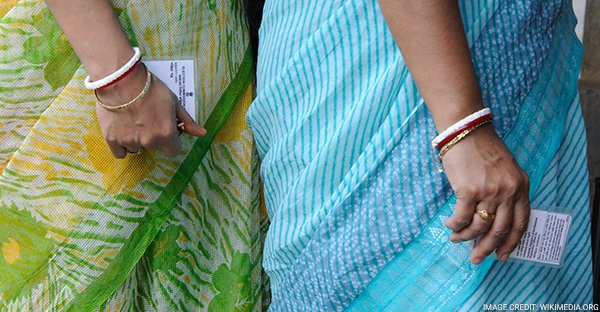
Local elections have the maximum impact and immediate effect on our lives . We complain if the roads are bad or if the lights on the street aren’t working. We are also constantly worried about our safety. To help the city improve and to not worry about the basic amenities we are promised, it is important to vote in our elections. It not only helps us have our voices heard but makes us more aware of the people we need to hold responsible and be more proactive when it comes to helping our city develop.
What can I do as a citizen apart from just voting?
Sri. Vijay Bhaskar, IAS, who is the current Administrator of the BBMP cites the example of Kigali the capital of Rwanda, where the citizens spend a day every month cleaning the streets which has made the city, the cleanest in the world. He hopes that the same can be done in Bangalore- “if citizens don’t litter, it makes the job of the cleaners and garbage collectors much easier.”
He also urges citizens to get in touch with their Residents Welfare Association who will then take their grievances to the respective Ward Committees. He adds, “Active participation and holding your respective wards accountable will help Bangalore improve.”
The BBMP Elections are being held in Bangalore on August 22nd 2015.
To check if you are on the voter’s list go to- http://ceokarnataka.kar.nic.in/hm_ec.aspx
To check the list of candidates go to - http://www.mybengaluru.com/articles/bbmp-candidate-list.aspx
To know more about BBMP visit their page- http://bbmp.gov.in/home
Sources
Inputs from - Sri T M Vijay Bhaskar, IAS, Administrator BBMP
Wikipedia
Citizenmatters
Praja
Share this story on
What we need to know about the Digital India Initiative
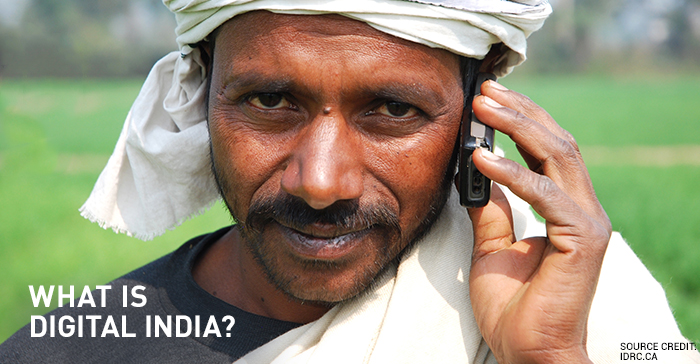
We have all been reading about the recent Digital India initiative and many have even taken to changing their display pictures on Facebook in support of it. But do you really know what Digital India is all about?
What is the Digital India initiative?
The Digital India initiative is divided into 3 main vision areas, which are:
Digital Infrastructure as a Core Utility to every citizen - The Indian government wants the Internet to be an integral part of every citizen’s life
Governance and Services on Demand - The initiative hopes to integrate departments across the government to make it more accessible to citizens
Digital empowerment of Citizens - The government will make available various resources for citizens and help educate people about the internet
What will the Digital India Initiative mean to the common man?
All Indians under the Aadhar system will be given a lifelong ‘Cradle-To-Grave Online Unique Identity Number’ which will distinguish them from others.
Google will be providing broadband connections to 500 railway stations and Microsoft has agreed to provide the same to 5 lakh villages and Qualcomm (an American Wireless Telecomm Company) will be investing $150 million in Indian start ups.
Digital India hopes to have Broadband internet in 2.5 lakh villages, universal phone connectivity, wi-fi in 2.5 lakh schools and all universities, public wi-fi hot spots for citizens and also hopes to create millions of jobs in the digital sectors.
The initiative hopes to create a digital locker for citizens where they can store digital versions of their pan card, passport and mark sheets. This will help citizens to share their documents easily.
Through the Digital India initiative, the government hopes to include India’s diversity by facilitating ‘human-machine interaction’ in different languages. The aim is to facilitate larger representation of Indian languages in future technology.
The government will also connect panchayats with high speed broadband in a bid to improve connectivity across the country. It will also commit to provide connectivity with over 1900 government departments and agencies across the country through mobile platforms.
All government services to facilitate businesses will be made digital in order to improve the ‘Ease of Doing Business’ in the country.
All financial transactions above a certain amount will be made electronic to eliminate the need for middlemen. Even the payment of fees for various government services will be made available through the internet, so as to enable transparency in the procedure.
Kiosks or stands with Information and Technology services will be made available in villages which will connect people to government, financial, social and private sector services in the areas of agriculture, health, education, entertainment, banking, insurance, pension, utility payments, etc.
The initiative is aiming to make ‘high speed internet as a core utility’ by using ‘fibre optic technology’ and information and communications which is reliable and cheap.
Data related to a particular location of a person (Geographic Information System) will be used for various e-governance initiatives.
States will be allowed to add ‘state-specific’ projects that could help improve their socio-economic conditions.
What are your views on this new and unique initiative? Write to us at jaagorein@gmail.com or tweet to us at @JaagoRe.
Sources
Digital India
NDTV
Wikipedia
Share this story on
Remembering four powerful sibling stories on Raksha Bandhan

Sister donates 65% of her liver to save brother
In late 2013, Nisha Bhaisade from Mumbai didn’t think twice before donating 65% of her liver to her brother Nilesh Bhaisade. The surgery took place on the day of Raksha Bandhan.
Excessive alcohol had damaged her brother’s liver. According to the doctors, Nilesh’s degraded liver was removed and a part of his sister’s liver was transplanted in his body. Liver has a tendency to grow wholly in a span of three weeks in both the donor and recipient’s body.
The surgery was just in time; for her brother had barely three weeks to live. Unable to find an immediate relative of the same blood group, Nisha herself turned up to make a donation for her brother. “I am extremely lucky to have a loving sister who saved my life while putting her’s in danger,” Nilesh reportedly stated.
Playing with their lives to save their brother
In a village in Bihar in mid-2012, three teenaged sisters lost their lives while fighting to save their three-year-old brother and another toddler from drowning. The girls were washing their clothes on the river bank when they saw their brother Shivam and another child Vikas struggling in deep water. The girls plunged in to rescue the young boys. The three of them reached the toddler boys who clung on their sisters tightly, preventing them to swim freely.
The two boys reached to safety. The villagers also heard their cries and pulled them to the shore. However, the three girls could not be saved and they lost their lives in the bargain.
Brother's stem cell transplant gave new life to sister
India’s first successful stem cell transplant that gave a new life to a young girl. One and a half year old boy Pugazhendi’s umbilical cord blood stem cell cured his sister Thamira of a fatal blood disorder she had for seven years.
The disorder can destroy blood cells and cause severe anemia that occurs within months following birth.
Today, their parents are heaving a sigh of relief since their daughter’s misery has ended.
My brother's cord blood saved me or I knew I wouldn't have been alive for long. I love my brother," says Thamira.
Fighting the fury of nature to save her younger brother
In the monstrous floods of Uttarakhand in 2013, eight-year-old Mahika Gupta saved her younger brother’s life. After spending three days without food, water and clothes at Uttarakhand, they reached Delhi safely.
She was awarded the National Bravery Award 2013 by the Prime Minister in January 2014 on Republic Day.
This is her story in her words: “In this summer vacation I went to Kedarnath Temple on June 16th with my family. We were praying in the temple and suddenly there was a great thundering sound. Everyone was frightened. Before we could understand anything, muddy water with huge stones entered the temple with great pressure all around us. The pressure was so high that we got separated from each other. I found myself alone in the water. Suddenly, I heard someone crying and it sounded like my brother’s voice. Quickly looking towards the sound I saw his legs were pressed down under a big stone. The horrible darkness of the muddy water made me helpless. The water began to enter my nose, my ears and my mouth. I did not know what to do and I could not swim. But to save my brother’s life I began to move my hands towards him. Luckily my hand touched a little finger. I pushed myself with my whole strength and succeeded in finding him. I held his hand tightly and closed his nose with the other hand. Water flowed around but I did not lose my grip. We were both lost in the water. After some time I was able to see a little light. I waved my hand for help. Like an angel a person appeared and took us to a safe place”.
Share this story on
Are We Prepared for an Emergency?

The recent Nepal earthquake and the damage caused to life and property has left us all stunned. Meanwhile, many of us are left wondering how prepared we are to deal with a disaster of the same magnitude.
Almost all states in India face different kinds of natural disasters or man-made hazards.
Some quick facts*:
- More than 58.6% of the landmass in India is prone to earthquakes
- 12% to floods and river erosion
- Almost 5700 km of India's coastline is prone to cyclones and tsunamis
- 68% of cultivable land faces risk of drought, and
- There are chances of occurrence of man-made disasters like chemical, biological, radiological, and nuclear disasters.
While these disasters cannot be avoided, we can definitely make sure that we are prepared to meet the situations created by them.
Here's what we can do to create an Emergency Preparedness Plan to help in situations like an earthquake**:
Assess Risks at Home
Find out objects that are likely to fall and injure people during an earthquake or prevent smooth exits. Get these objects fixed to strong walls or to the floor.
Develop a family preparedness plan
These are important in case of any kind of emergency situation
Make sure that everyone in the family knows what each of them needs to do during an emergency, and also decide a safe meeting place in the neighbourhood where all members can come to, in case they are separated.
Keep handy a list of contacts of your relatives (hard copy – written on a piece of paper, and also a soft copy – on your email) who can help in case of emergencies
Prepare a family emergency kit
Prepare a family disaster kit that can be easily accessed and carried during an emergency, with the following items:
- First Aid: roller bandages, cotton, scissors, antiseptic solutions/creams, ORS, Triangular bandages and gauze pieces, sterilized dressing with small and large splints made of wood or bamboo sticks, pain killers, prescribed medicines, reflecting thermal blanket
- Non-perishable food to last for about 72 hours
- Water (4 litres/day/person)
- Torch and spare batteries
- Radio and spare batteries
- Sanitary items
- Emergency cash
- Copies of valuable documents
- Dust masks
Keep the emergency kit in a place known to all family members and replace the supplies in the kit every four months. Also, make sure that someone in the family is trained to administer CPR.
It can also help to have a copy of important documents on your email, and a list of emergency contacts (hard copy) for help during an emergency.
While it is unfortunate to meet a disaster, it can be catastrophic to not be prepared to handle the situation. Understanding the situation and the best possible ways to handle it can help save life and property. We should constantly update our knowledge about possible hazards, preventive measures, and steps to be taken during an emergency.
Sources:
Share this story on
6 rules of an Indian motorist
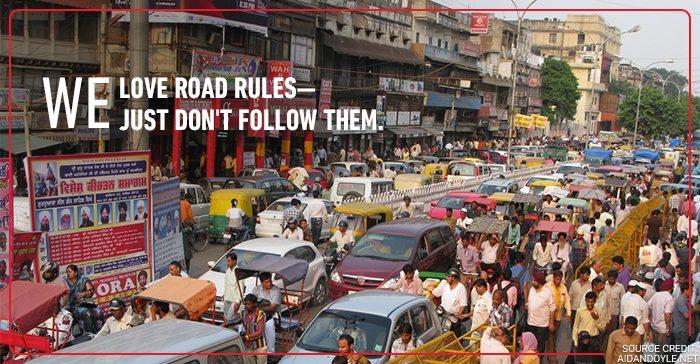
“Road rules, what is that?”
Calling Indian traffic chaotic is an understatement. People don’t follow rules or laws; they just do what they please and go where they please. ‘Just blame others and move on’ is the only law that seems to exist. The 1,35,000 road accidents which happen every year are always someone else’s fault.
We thrive on showing blatant disregard for rules and others. Below are examples of how we do this:
“Lane discipline is overrated!”
There is a long-standing enemity between queues and Indians, judging by the consistency in which we refuse to maintain any discipline when it comes to maintaining a line.
“It’s more comfortable to risk my life!”
Wearing a seatbelt or a helmet is so inconvenient that we would rather break our heads or fly through the windshield.
“Overtaking is my birthright, not yours”
We have always been told to stay ahead of the race, so if you are slow, overtaking from any side we please is our right. It does not matter if the other person is inconvenienced by it. They should be vigilant, but when someone does the same to us - “Do you even know how to drive!”
“See pavement - must ride on it.”
Pavements are just shortcuts to get ahead when the road is blocked during traffic. Why do people need to walk anyway?
On Indian roads, everybody is in a hurry. We don’t care if our disregard of rules lands someone else in trouble or causes them harm, because, let’s face it, with the way we are, neither ambulances nor the police can reach anywhere on time.
It’s easy to complain about the system and compliment “foreign countries” on how well disciplined they are and how efficient their traffic is. However, we fail to realise that our own civic sense is lacking in many ways. We would rather point fingers at each other than change ourselves. Is it possible to progress with this attitude?
If you have any thoughts or opinions on the same, please write to us at jaagorein@gmail.com or tweet to us at @jaagoRe.
Share this story on
Is this how you imagined Independent India?
Are people from former generation proud of the freedom we have today? Is this the freedom we fought for? On the eve of Independence Day, Jaago Re met five elders who were alive to see the Indian flag being unfurled in an Independent India in 1947. Here’s what they said.

Janaki Kallapiran, 82

We regret fighting for this freedom
Is this what our freedom has given us?
Freedom for us meant getting rid of the British. We wanted our own people to rule. Now we regret fighting for this freedom.
We were very patriotic. In spite of the riots, life was peaceful for us. Now things have changed, you all run and make us run.
Cost of living is so high. Back then in 20 Rs. a man could run his entire family.
Before we used to have unity. Now we all are fighting over petty things. This is what our freedom has given.
Politics is just being played out between opposition and ruling: criticising and fighting with each other. They are doing nothing for India.
The constant news of rapes and attacks on women are disgusting. All these men have turned into monsters. Back then men had a conscience, they were God-fearing.
Fast and furious: new generation
This generation is fast and intelligent. Life is fast and competitive. There are all comforts of life, but no peace of mind.
There is a powerful media which didn’t exist then. This generation can easily stand up and point out mistakes, unlike our generation. We didn’t know anything.
My advice to the new generation
Learn to defend yourself from your opponents. Learn to free India, again.
Valliamma Pillai, 93 years old

Bound by nature
In those days connections were personal and bound by nature. We had freedom from technology which this generation cannot understand.
The growth in the industrial world - to mass produce hastily has almost given a demise to our beautiful indigenous craftsmen and their livelihood.
Freedom of the grasslands
Freedom in those days was to produce by cultivation, the love for your cows and birds as your family, drawing milk, collecting egg from your hen coop, growing more trees, grinding seeds to extract oil etc.
The freedom to leave your dogs unleashed, building your house with your own hands without any additional walls as partition or separation raised around your house. Today I find the very same place with walls and concrete buildings. People buy milk supplied in closed plastic covers.
Bonding is superficial, freedom is inhibited.
Saradakutty, 72

Allowing your daughter to go to school was a big deal
I was 5 years old when India acquired its freedom. Now you're lucky to do as you please.
Lost a chance to be financially independent
I was allowed to study. Yet I wanted to study music at an academy a few hours away from home. I was a really good singer. At the age of 14, my brother stepped in and said there's no need for girls to study afar.
I sometimes imagine - if I had the chance to develop my skills I could have been financially independent.
Stark difference between freedom then and now
Girls weren't even allowed to go to temples. Allowing your daughter to go to school was a big deal. Back then, we didn’t have knowledge or exposure.
Today's generation is brighter, sensible, daring. Even the kids know how to take care of themselves. They are well-informed. That is a sense of freedom. Knowledge is power. From being meek to being empowered, Indian youth has come a long way.
Yet this generation takes freedom for granted.
Sharda Venkatraman, 85 years old

We didn’t ever think independent India would be like this.
Our people ruling India is a disaster
We just wanted the outsiders to leave, and our own people to rule over us. But we didn’t think that in reality, it would be a disaster. I prefer the British now. They did good things for India then. They built the railways, the post office; they got rid of sati. Today's rulers just care about their own pockets; and nothing else.
Now nobody cares about the sacrifice of the elders who fought for the independence we have today.
Safer India
Back then we could send our 7-year-old child to go out and shop for us. Now even the elderly are frightened to go out – we fear crimes, assaults. There's just no safety for anyone. All you have is corruption.
Honesty
People were honest and sincere – everything's value was not determined by a price tag. Now, people will do anything for money. I can't believe how people now cheat for every little thing, every minute.
Respect
Even the generation has changed. In those days we would help and respect our elders.
Civic Sense
There's no civic sense either. People think they can do whatever they want. Now the values and manners are forgotten.
License to Freedom
People should have a license to freedom. I want to tell this generation to be an Indian.
R.U. Prasad, 75 years

Even after so many years, we are nowhere.
Freedom imbibed at an early age
I was 5 years old when India acquired Independence. At that time we would wear the scout uniform and wave the Indian flag in our hands, proclaim slogans like Bharat Mata ki Jai, Quit India! Freedom then was the hope of turning India back to "Sone Ki chidiya". The idea of freedom was inculcated in our minds when we were very young. At that time, every village, town, city was united in their agenda of freedom.
Name-sake freedom
Even after so many years, we are nowhere. Today freedom is just name –sake. Real sense of freedom is missing today.
Corruption
Now you have the Government. Earlier we didn’t have a Government. Corruption has trickled down from top posts to lowest posts in administration.
Freedom means Discipline
For freedom, today we need to bring strict changes in the system. Replace the crumbling system of corruption to a correct way of living. Now freedom means discipline or freedom means nothing. Freedom comes with a code of conduct.
Power lies with our Generation
This generation has the power to change things. It is their duty to reverse this horrible situation and take us back to our golden days.
Push the Pin and report the issues of your constituency here. Also follow us on https://www.facebook.com/jaagore to share your views.
Share this story on
Celebrating Ganeshotsav Responsibly: How these citizens cleaned up the act
Another year of revelry has gone by, as our favourite festival - Ganesh Chaturthi has come to an end.
The elephant –headed deity is worshipped for about 10 days: a humungous idol made of plaster of paris is taken to the homes of the devotees, and continuous prayers and processions mark the festival.
A sign-off to the festival is farewell celebration for the Ganesh idol, where the idol is taken to the sea and immersed with a routine cheer slogan: "Ganpati bappa morya, purcha varshi laukar ya" (Ganpati Lord, the great, come back soon next year).
Over one lakh such Ganpati idols dot every part of the city, even more so for different parts of India; some as big as 2 feet tall, many others as huge as 15 feet tall.
Lakhs of such Ganpati idols are immersed in the sea, which wash up on the shore. The idol often contains toxic and non-soluble material - broken idols float out of the sea and hordes of rubbish, plastic and debris are seen floating on the beaches, once the festival is over.

Sprouts Environmental Trust’s beach-clean up drive finishes its 11th year
For the last ten years, Sprouts Envt Trust in Mumbai has been organising beach-clean up drives. They invite schools, corporates and the general public to join them in their mission of cleaning up the beaches post the religious processions.
Unhappy with the manner in which we celebrate the festival, a miffed Anand Pendharkar, founder of Sprouts, remarks, "For spreading noise and water pollution, the festivities are protected by authorities. But to clean up the lakes and beaches, we need permission."
Pendharkar says that it's high time we learnt how to celebrate festivals responsibly and sensibly. "All the plastic, metal, glass, plaster of paris and decorative material like thermacol and colours used are hazardous. The chemical in the colours are poisonous and kill the fish in the ocean.
We invite many people to join us so that they can see the remains of the sacred worship and see how our coastlines look after the processions."
Indeed, the filth and garbage piled up on the coasts are not going to please the Gods.

Citizens pressure the civic authorities
In Mumbai, after enormous pressure by the Juhu residents association a few years ago, the (Brihanmumbai Municipal Corporation) BMC routinely clean up the entire beach after the festival is over, within one day.
Eco-friendly Ganpati Festival
Anand says, "We have started promoting eco-friendly idols, made of clay, natural colours. We are promoting bio-degradable idols and materials. There are lakhs of Ganpati idols that are immersed in the ocean every year. BMC and other environmental organisations like WWF, Rotary clubs, Sprouts Trust etc. get together with school and college kids, and organize beach-clean up drives.
Of late, civic authorities and the BMC have also started building artificial ponds in different parts of the city, where devotees do not need to go to the beach front, but can make a trip to the artificial lake/pond in their neighbourhood to immerse the idol. The lakes are later thoroughly cleaned up by the BMC."

Why these ordinary citizens clean up our coastline
On September 9, 2014, a day after the Ganpati festival ended, about a 100 volunteers gathered at Girgaum, Chowpatty beach in Mumbai to clean up the beach. Jaago Re spoke to a few of them and asked them what makes them come for the clean-up drive year after year.
Vinayak Kamble, 27, research student at Indian Institute of Science
My mother asked me why I join the beach clean-up drive. "It's the BMC's job," she says.
I tell her it's important because it's not a one-man job. Even if a 100 people come together to clean up the beach, it cannot be cleaned, such is the extent to which the beach gets polluted.
The authorities need helping hands. If all the devotees gathered on the beach pick up one stray of garbage each, our coastlines would be clean.
Sachin Marti, 26 years old, working with Tata Institute of Social Sciences on a project at Vasai lake
People come here with a lot of devotion and enthusiasm to immerse the Ganpati idol and to bid farewell to the Ganesh lord. Why don't we clean up our beaches with the same enthusiasm and devotion?

Ruchira Mahashabde, 20 years, pharmacy student
When we start cleaning up the beach, most just stare at us and wonder what we are doing. Some continue to litter the beach despite the fact that they can see us cleaning up. Very few join us in cleaning up.
What's funny is that people come to the beaches to be spectators at the Great Visarjan Festival. The Ganesh idols, and all the decorative glitz get washed up at the shore in masses. People even stand on the remains of the idols to enjoy the festivities.
Sudesh Pansare, 53, corporate trainer and outdoor expert
People always say, "Someone has to clean up this mess." Well, I say someone has to take the first step.
For leisure or entertainment people happily commit and prioritise – but for this dirty job, people find excuses.
I have been coming for clean-up drive the last four years. I hate to see piles of garbage lying around, on our streets, in the cities, on our beaches.

Omkar Pai, 21, student, trustee of Sprouts Environmental Trust
People throw garbage and litter so casually. When we ask them to join us to clean up the dirt, they get cynical and question us; they make remarks and denounce it as "social service". It isn't.
People must understand that we have to take ownership of our environment. They are not doing a favour for anyone. It is their responsibility to keep the environment clean.
Anand Pendharkar, Founder, Sprouts Envt. Trust
People see us in knee-deep water lifting the broken ganesha idols out of the ocean. We shout out for help. Yet people are very hesitant to join in.

Will the Gods be pleased?
The images of Ganesh idols lying broken and disheveled on the beaches were too graphic to publish here. Our nature of festivities have often been under question: do we indulge in severe noise, water pollution at the time of many Indian festivals?
Is there a sense of hypocrisy and double standards in our nature of festivities? Is there a need for reform?
Will the Gods be happy to see the destruction of our natural water bodies and coastlines that make up our cities, and our country?
If you think we need to change our habits, to make way for festivities that are more environmentally sound and people-friendly, please leave your comments below.
You can also visit Sprouts Envt Trust here
If you have seen severe issues of health and sanitation in your city, please push the pin here.
Share this story on
What can I do for my city?
"I pay my taxes and still look at our roads"
"Why can't the government do anything?"
"There is so much apathy in our society, people just don't care."
How many times have you said the above and been frustrated with the state of our infrastructure? It's hard to count isn't it?
Bangalore, one of our biggest cities recently held elections for its local bodies. With various groups coming to highlight the importance of voting, the city saw a dismal turnout of 44%. The city which has seen a growing traffic problem and declining infrastructure could not bring its citizens to come out and be part of their city's electorate body but if you go around asking people, you will never stop hearing about how various things in the city need to be improved That being said there are still a handful of people who have helped create a change in their neighbourhoods, braving apathy and consequences from those in power.
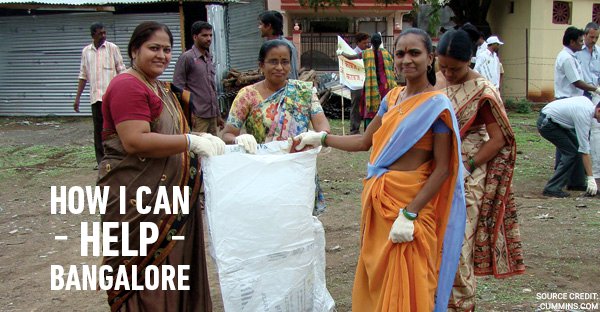
Deepak Rajanna, a resident of Koramangala in Bangalore organized an eco-drive in his neighbourhood. He and his wife Manjari cleared garbage that had piled up near their house. With the help of volunteers they were able to clean the rubbish and with constant monitoring for a week were able to maintain it.
Mr. Rajanna also adds that the BBMP (Bangalore's civic body) helped them with the task even though the cleaning was organized on a holiday.
Sneha Nandihal and other residents of Indira Nagar 1st Stage in Bangalore have struggled and fought hard battles to not only keep their area clean but also remove commercial properties which were illegally present.
They got in touch with different centres and were finally able to enlist a person who with the help of waste segregation from our neighbourhood, is doing really well. They have also looked into finer details such as making sure that dustbin lining bags are bio-degradable.
It isn't just enough to pay taxes; you have to be part of your Residents Welfare Associations, to voice your opinions and help take measures to improve conditions that you are not happy with.
Instead of only being a vocal citizen on social media, here are some steps on how you can take part in helping your city:
Be part of your Resident's Welfare Association
Be proactive - if something is wrong, with the help of the neighbourhood and the local government, try and solve the issue, One of the ways by which you can do this is to find out who your local corporators or governing body is. Most details are available online for the same.Ex: People living in Koramangala, Bangalore can find out by going to their local government's site.
Find out about the budget of your ward or locality and how it is being allocated by filing an RTI or contacting your local RWA and Corporator.
Find out the basic rules and regulations that govern residential areas which can be done by filing an RTI or contacting your lawyer.
If you have any suggestions/comments or know of anyone who has put in a lot of effort to help their city please write to us in the section below or email us at jaagorein@gmail.com
You can also go through our photo story on - https://www.facebook.com/jaagore/timeline/story?ut=43&wstart=0&wend=1441090799&hash=1369327198691497115&pagefilter=3
Share this story on
5 questions every parent needs to ask about cyber bullying
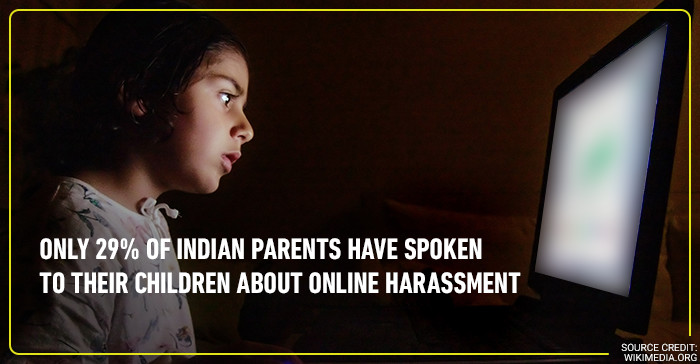
Have you ever experienced cyber bullying? Are you sure that your children or youngsters in the family are safe from cyber bullying? If your answer is yes then you will be startled by the following:
According to a survey conducted on children between 8-17 years, India ranks 3rd in the world when it comes to online harassment.
Close to 66% of children have dealt with cyber bullying in some form.
53% of the teens revealed that they had met strangers in real life who they had contacted online. Most of these meetings are done without the knowledge of the parents.
These statistics beg that attention be diverted towards the fact that children are often vulnerable and do not know about various risks they could put themselves in when it comes to online media.
To help reduce the instances of harassment, it is imperative for parents to understand what cyber bullying is all about. Below are some questions we have compiled which every parent must ask, and have answers for.
What is online bullying or cyber bullying?
Cyber bullying refers to intentional harming or harassing of someone in the online space. It could be through private or public messages on social media.
In cyber bullying people usually resort to name calling and/or shaming in a consistent manner in order to embarrass the other person. This could be based on their appearance, intelligence, and even their background.
Cyber bullying is also used to incite hatred and public ridicule for the victim.
How is it different from offline bullying?
India is one of the few countries where online and offline bullying numbers are equal among children.
Offline bullying might be in front of few people, whereas online bullying is usually before a public audience owing to the wide reach of social media.
There is also less empathy felt by the bully towards the victim as he/she is not able to see the person in front of them which makes the bullying more vicious.
How to keep a child safe from cyber bullying?
We cannot restrict children from using computers, tablets or mobile phones, but we can make sure that it is monitored through various applications that can be installed by parents.
Talking to children about the meaning of cyber bullying so he/she is aware of it helps. It enables children to avoid situations that might make them victims of bullying.
Limiting the number of hours children are on the computer or any other device can also help in keeping them safe.
If you think a child is spending too much time on the internet or seems depressed, emotionally unstable then it is better to have a talk with him/her to discuss the reason behind it.
If you suspect that a child might be a victim of cyber bullying, it is important to have a conversation so they know you are there to help them.
Can I make a complaint if I find proof that my child is being cyber bullied?
If you suspect that it is someone from school or your child’s peer group, you could talk to their parents and the child as well. Explaining how the bullying affects your child could help them see the harm done by it.
Alerting the site where the bullying is taking place and blocking the bully will help from the action being repeated.
If this does not work, school authorities can be alerted as an extreme step.
If the person bullying is someone unknown, there are laws in place against cyber bullying. Under Section 66A, cyber bullying is a bailable offence, with imprisonment of three years and a fine. The cyber crime cell in your city or district can be contacted to make a complaint against cyber bullying.
My child is an online bully, what can I do?
Under unfortunate circumstances you might find that your child is bullying someone else. In such an instance, you need to talk to your child about the consequences of his/her actions.
Most times your child might think that what he/she is doing is harmless and not realise what the victim is going through.
If you find the behaviour to be extreme then it is best to consult a child psychologist who will be able to help you and your child understand the risks of cyber bullying.
While technology has it’s benefits it also has negative consequences. Many children give in to the pressures of online harassment and resort to drastic steps like committing suicide. For parents to protect their own children, they first need to be aware of the harm that is lurking online.
Do you know anyone who has been a victim of cyber bullying and needs help? Write to us at jaagorein@gmail.com or tweet to JaagoRe.
Sources:
Haltabuse
Economic Times
Firstpost-Tech
Share this story on