7 Questions we need to ask about the fall of the Indian Rupee
Market volatility is nothing new; with the increasing variations and fall of the rupee in the market, many Indians are left exhausted due to its effects on price rise, inflation and increased interest rates.
Let’s look at the reasons behind this and understand what is making the Indian rupee more vulnerable every time:
To start off; how do we know that the rupee is falling?
This can be forecasted from the Current Account Deficit (CAD), foreign exchange inflow rate, domestic inflation rate, interest rates of funds and other government policies.
It also depends on the economy of other countries.
By analyzing these factors one can try to get a decent idea and foresee the possible rupee’s fall or rise.
How do Federal Reserve actions play a role in this?
The foreign exchange rate for conversion of currencies completely depends on the current market scenario and the exchange rate of different countries.(Increase in exchange rates means Indian currency is depreciating and the Dollar is gaining more value.)
In contrast, whenever the exports rise and there is more inflow of currency, the rupee starts strengthening.
Earlier, most countries used to have a fixed exchange rate at which they could exchange but this system was discontinued in order to stay far from the risk of currencies declining.
How does Inflation affect it?
The difference between increase in money flowing to other countries from India can cause a surge in inflation. The more money goes to other countries, the more the economy is pulled down.
In this case, deflation will not be of much help if the price of commodity and other goods don’t fall. Also, if you’ve a fixed interest rate then you’ll have to bear a higher valuation of debts and loans.
What is the link to high gold import demands?
When the price of gold is cheaper, internationally, most Indians try buying as much as they can which ultimately increases the demand from gold importers. Hence, they are importing more gold than ever and this is causing gold prices to fluctuate.
Does the increase in the demand for imported products affect it?
The value of currency largely depends upon the import and export of goods like clothes and gadgets; this boosts foreign currencies, resulting in the fall of the rupee.
What are the effects of the fall in Rupee?
As India gets 80% of its crude oil imported owing to increasing requirements: the weaker rupee would affect our import bill and oil companies will increase their petrol and diesel prices.
This inturn would result in us paying more at petrol pumps and also make transportation costlier, resulting in costlier goods.
It also automatically impacts your foreign education as you will end up paying more for your education abroad due to the fall of the Indian currency. Or, if you had planned a vacation abroad, then your air tickets, travel insurance, hotel tariffs, shopping and other additional cost would go up.
How can we control this?
Decrease in the usage of imported items like many foreign brands for clothing and electronics can help.
To an extent, if we neutralize the buying of gold and other non-essential items then it can relax the burden on the forex department and wouldn’t worsen the CAD (current account deficit), which is getting more bleak.
Given an estimate that we siphon around approximately Thirty thousand Crores abroad in exchange for products like cosmetics, food & beverages, tea, etc; consumption of indigenous goods, use of public transport and innovative products should be implanted to minimize the consumption of fuel and natural gases.
The fall of the rupee affects the common man. Businesses relying on imports are hit hard and forced to pay more which results in citizens paying more. To help curb the decline of the Indian currency, it is important to understand it and know how we can tackle it so people are not paying more than they can afford for goods and services.
Share your thoughts and views with us by writing to jaagorein@gmail.com or tweet to us @JaagoRe.
More about the Author:

Share this story on

Attention! Childrens' Parliament In Session!
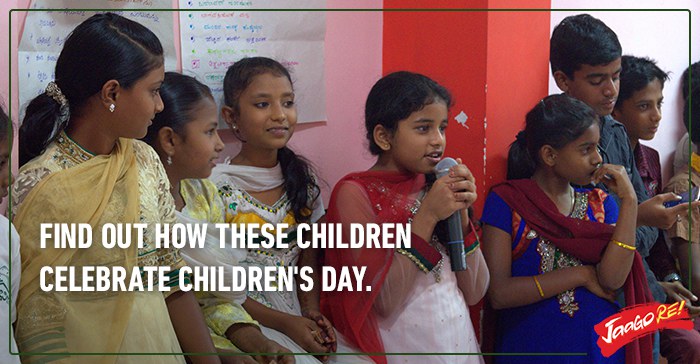
Gone are the days where children were offered candy and materialistic gifts by their teachers and parents on Children's Day. APSA (Association for Promoting Social Action) has teamed up with UNICEF (United Nation Children's Fund) to create a special gift that goes by the name "Children's Parliament". It has largely benefitted many children from lower economic backgrounds and is now a hit with school students aged 8 and above. Every year as part of Children's Day celebrations, the APSA Dream School reaches out to children from the urban poor classes and slum communities to put together a mock parliament, specially designed to address a multitude of children's issues. The theme for Children's Day this year is 'Child Labour. Child Trafficking. Sexual Health. Juvenile Justice.' Jaago Re brings to you, this
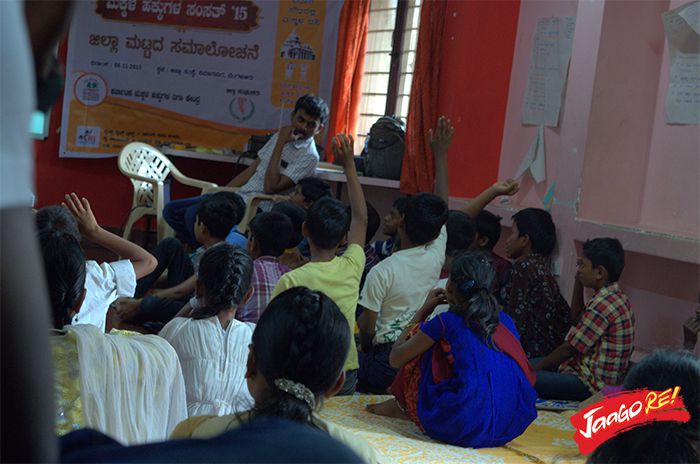
Taboo-less/Open minded discussions with children.
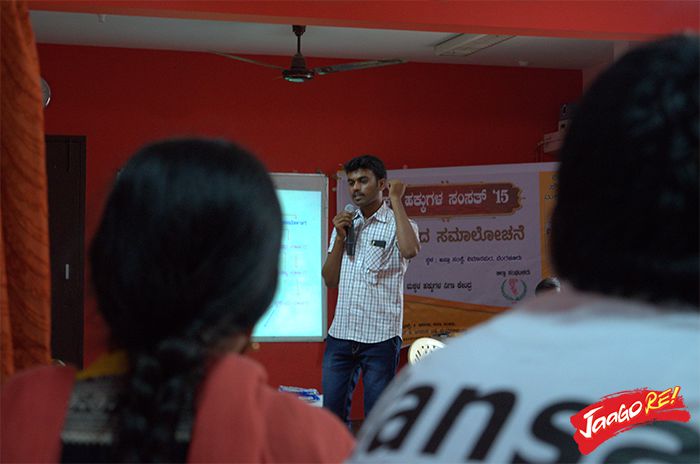
APSA doesn't shy away from discussing what most schools in India don't address. They have an open talk with children about sexual health and diseases. The children are very receptive to the information that is being given. They spontaneously participate in discussions, offering their opinion on how best sexually transmitted diseases can be prevented. There is no ambiguity from either side when it comes to asking questions and getting doubts clarified. This is a positive takeaway as it creates mass awareness at the grassroots and is a communal benefit.
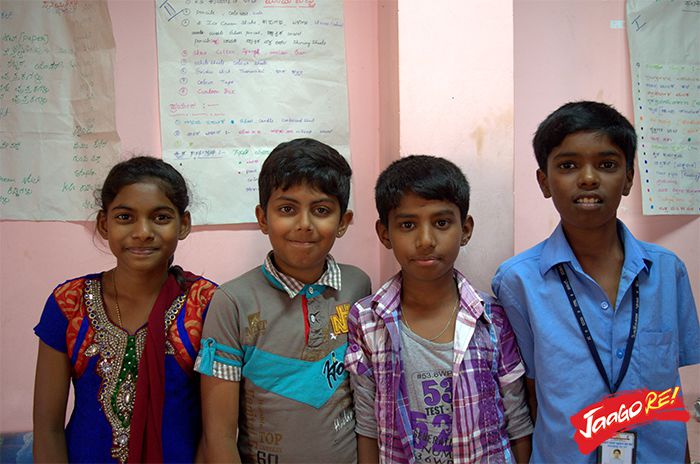
A sense of self-empowerment and a sense of responsibility.
Jaago Re asked a few of the children how they feel after attending the Children's Parliament, here's how they responded.
"We've seen most of our friends from the other residential areas carrying heavy load of stones or sand for their employers. Many of them used to attend school after coming straight from the factories. It never occurred to us that it was illegal, that it was something we as young children aren't supposed to do. As children, how do we say no? Adults are physically stronger than us, sometimes they beat us if we refuse. Even at home, we were always taught to not question back anything that was being told to us. After learning that we as children have rights, we've understood that we can learn to say no. We can demand for education and the resources that enable us to become educated. It doesn't stop with just ourselves. We want to, and will help out any other child we see. Especially the ones who are in trouble. Slowly, we want to start involving all the adults in the neighbourhood as well, so that we as children have leverage when adults are backing us."
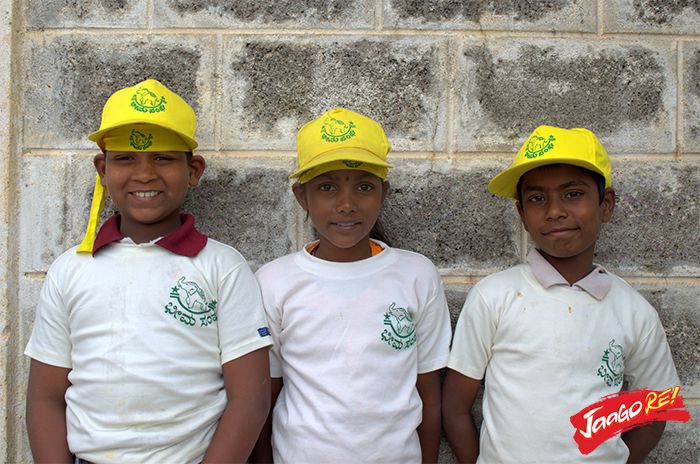
Understanding the need for gender equality.
"Did you know that currently not many girl children get to go to school? It's because people think girls shouldn't be educated. We learnt that it must not be encouraged because everybody deserves a good life, and so do girls. Empowering a girl child is like empowering an entire community. Not only does she get educated, she also educates her children in the future. We also know that it is everybody's duty to help out at home. There is no rule that says mother should only clean and father should only go to work. If we don't help out each other as a family who will?"
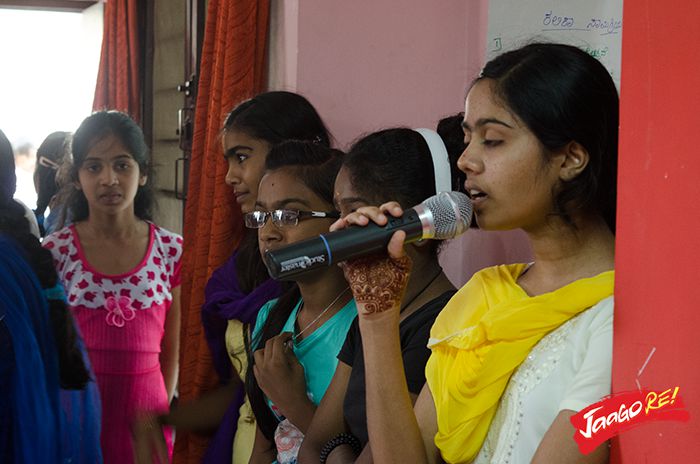
Learning to speak for the self and voicing out concerns without ambiguity
"Our democracy calls for being participative and proactive, but we don't see many of the adults in our society living up to it. If there is a power cut, nobody makes efforts to even find out why. If there is a trash can that is overflowing, people don't make efforts to clean it up or call the BBMP to get it cleaned. When there is heavy rain,the sewage drain gets clogged and the roads are water logged. So whose responsibility is it? We've been taught to take action for ourselves, we now report all civic issues to the BBMP or the area MLA. We may still be in school, but this is our way of bringing notice to issues that need desperate measures."
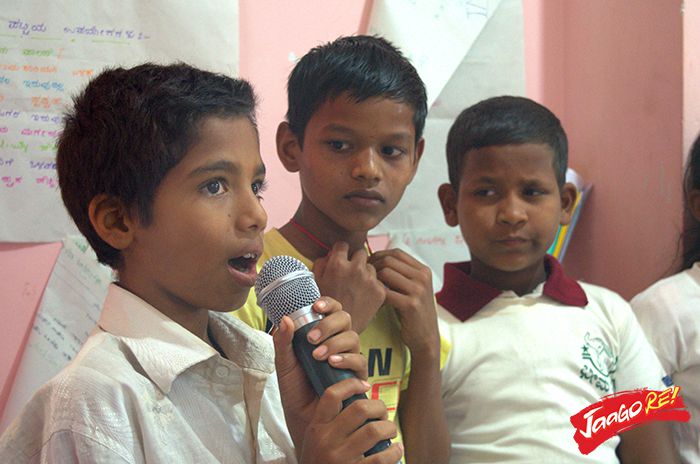
Questioning inaction from society and its local authorities
"Many people do not vote, but they have a lot of questions to ask the local governing bodies. There are people who vote, but they don't follow up to see if the progress promised by the elected bodies is being made or not. Society is in a state of denial, the elders don't accept that they are all fault for failing to show that they care enough about their own streets. Great cities don't happen overnight. They require a lot of hard work and patience. However, that is not the case in our city. We live in ignorance and inaction."
Final thoughts:
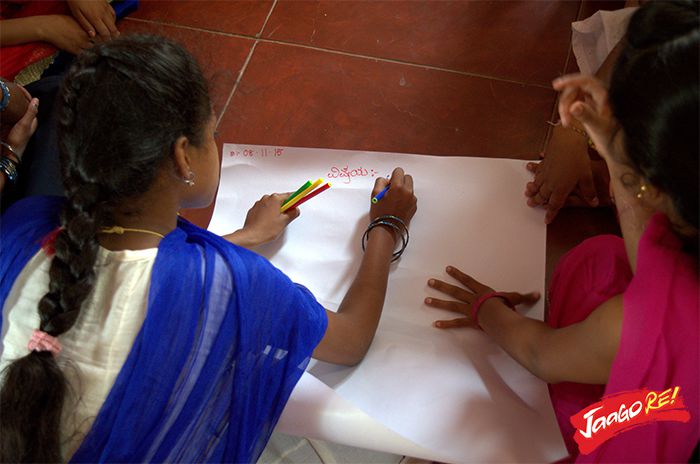
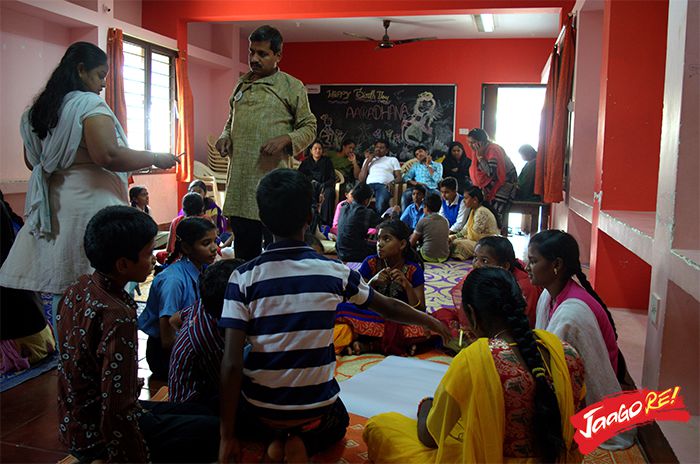
Towards the end of the Children's Parliament, all of the discussion points are penned down by the children on to a large chart sheet. Children collectively discuss amongst themselves, without any adult's supervision and interference. They note down everything that they think requires attention from the local government. The charts are later sent to the Vidhan Soudha in Bangalore, where Child Rights workers pass them on to government authorities.
This is how children are making a difference for themselves and the society they live in, on Children's Day. As adults, we may fail to ask questions to ourselves, but when one is asked those very questions by these young children, it is impossible to escape feelings of guilt and shame.
Children are truly an asset to our growing culture and nation. They look up to as idols and role models. Let us in turn respect them, by not disappointing their image of us.
Happy Children's Day!
Share this story on
India's Politics: From kids' point of view
Gone are the days where children were offered candy and materialistic gifts by their teachers and parents on Children's Day. APSA (Association for Promoting Social Action) has teamed up with UNICEF (United Nation Children's Fund) to create a special gift that goes by the name "Children's Parliament". It has largely benefitted many children from lower economic backgrounds and is now a hit with school students aged 8 and above. Every year as part of Children's Day celebrations, the APSA Dream School reaches out to children from the urban poor classes and slum communities to put together a mock parliament, specially designed to address a multitude of children's issues. The theme for Children's Day this year is 'Child Labour. Child Trafficking. Sexual Health. Juvenile Justice.' Jaago Re brings to you, this
Taboo-less/Open minded discussions with children.
APSA doesn't shy away from discussing what most schools in India don't address. They have an open talk with children about sexual health and diseases. The children are very receptive to the information that is being given. They spontaneously participate in discussions, offering their opinion on how best sexually transmitted diseases can be prevented. There is no ambiguity from either side when it comes to asking questions and getting doubts clarified. This is a positive takeaway as it creates mass awareness at the grassroots and is a communal benefit.
A sense of self-empowerment and a sense of responsibility.
Jaago Re asked a few of the children how they feel after attending the Children's Parliament, here's how they responded.
"We've seen most of our friends from the other residential areas carrying heavy load of stones or sand for their employers. Many of them used to attend school after coming straight from the factories. It never occurred to us that it was illegal, that it was something we as young children aren't supposed to do. As children, how do we say no? Adults are physically stronger than us, sometimes they beat us if we refuse. Even at home, we were always taught to not question back anything that was being told to us. After learning that we as children have rights, we've understood that we can learn to say no. We can demand for education and the resources that enable us to become educated. It doesn't stop with just ourselves. We want to, and will help out any other child we see. Especially the ones who are in trouble. Slowly, we want to start involving all the adults in the neighbourhood as well, so that we as children have leverage when adults are backing us."
Understanding the need for gender equality.
"Did you know that currently not many girl children get to go to school? It's because people think girls shouldn't be educated. We learnt that it must not be encouraged because everybody deserves a good life, and so do girls. Empowering a girl child is like empowering an entire community. Not only does she get educated, she also educates her children in the future. We also know that it is everybody's duty to help out at home. There is no rule that says mother should only clean and father should only go to work. If we don't help out each other as a family who will?"
Learning to speak for the self and voicing out concerns without ambiguity
"Our democracy calls for being participative and proactive, but we don't see many of the adults in our society living up to it. If there is a power cut, nobody makes efforts to even find out why. If there is a trash can that is overflowing, people don't make efforts to clean it up or call the BBMP to get it cleaned. When there is heavy rain,the sewage drain gets clogged and the roads are water logged. So whose responsibility is it? We've been taught to take action for ourselves, we now report all civic issues to the BBMP or the area MLA. We may still be in school, but this is our way of bringing notice to issues that need desperate measures."
Questioning inaction from society and its local authorities
"Many people do not vote, but they have a lot of questions to ask the local governing bodies. There are people who vote, but they don't follow up to see if the progress promised by the elected bodies is being made or not. Society is in a state of denial, the elders don't accept that they are all fault for failing to show that they care enough about their own streets. Great cities don't happen overnight. They require a lot of hard work and patience. However, that is not the case in our city. We live in ignorance and inaction."
Final thoughts:
Towards the end of the Children's Parliament, all of the discussion points are penned down by the children on to a large chart sheet. Children collectively discuss amongst themselves, without any adult's supervision and interference. They note down everything that they think requires attention from the local government. The charts are later sent to the Vidhan Soudha in Bangalore, where Child Rights workers pass them on to government authorities.
This is how children are making a difference for themselves and the society they live in, on Children's Day. As adults, we may fail to ask questions to ourselves, but when one is asked those very questions by these young children, it is impossible to escape feelings of guilt and shame.
Children are truly an asset to our growing culture and nation. They look up to as idols and role models. Let us in turn respect them, by not disappointing their image of us.
Happy Children's Day!
Share this story on
3 Stories You Should Read on International Men’s Day!
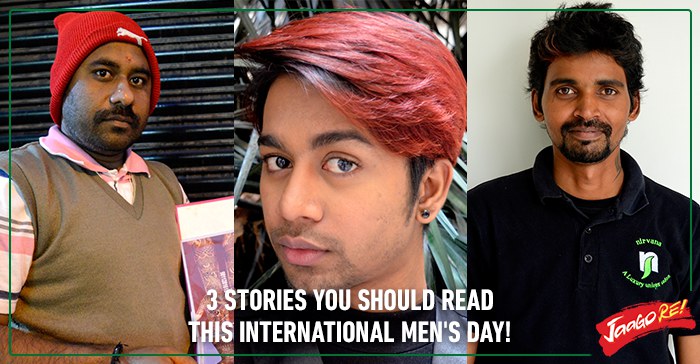
Society has forever been setting parameters on the kind of jobs that men and women should be doing. What happens when men are doing offbeat jobs that are supposedly meant for the women? On the occasion of International Men’s Day, Jaago Re spoke to some interesting men in offbeat professions to find out what they feel about their career choices. Here’s what they had to say!
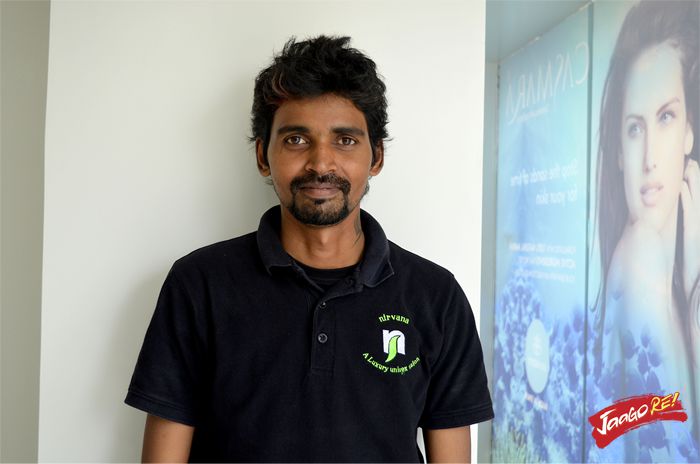
Men too are subject to adverse sexism, but being assertive can help establish personal choices on the long run.
“For the longest time, I’ve always been interested in haircare, hair art and experimenting with fashion. My parents chided me for taking up a woman’s profession, till date they haven’t accepted my career choice. A lot of people assumed that I was homosexual due to my personal choices. Can I not be a heterosexual man and work as a salon hairstylist? What does my sexual orientation have to do with any of my life choices? Luckily for me, I always found the optimism to continue to do what I wanted. Primarily due to my wife’s support, I’ve been able to do this. Men are always under scrutiny for not choosing ‘manly’ jobs. We’ve got to put an end to such unrealistic standards.”
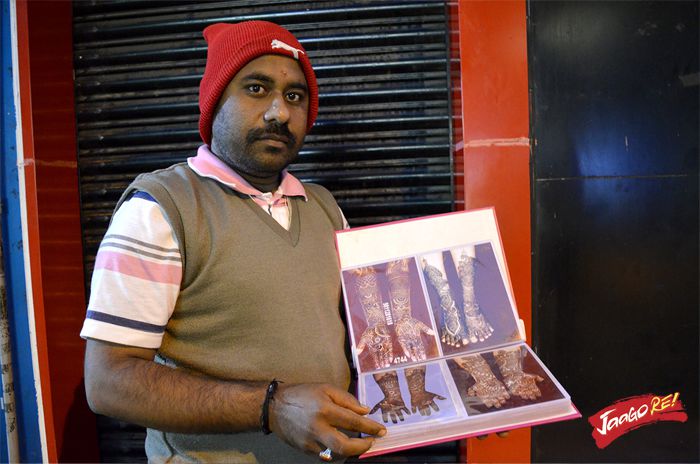
The courage to defy societal judgements makes it possible for men to pursue what they want.
“I have been drawing since I was 12, I used to pluck the henna leaves from my aunt’s garden and grind them with her to make the henna paste. I’d find myself sitting at home and experimenting with mehendi on my hands while the boys my age would go out playing cricket. Back in school, they used to make fun of me after seeing my henna tattooed hands. As I grew older, even my family had started making remarks but they soon grew accustomed to it once they saw me making good money out of it. It did bother me when the boys bullied me at school, but it didn’t stop me from going ahead and giving a shot at being a henna artist. It wasn’t until I lost my job at a call center that I decided to follow this old dream of mine. Do I have any regrets? Yes, for not having done this earlier.”
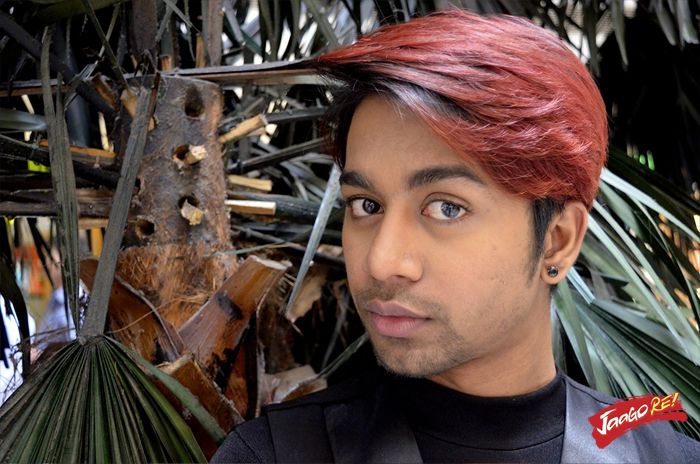
Men are using their careers to step out and express their emotions through art, breaking the long held belief that men aren’t sentimental.
“I always liked the glamour, the sheen and the feel of looking good. My tryst with cosmetics began when I was a cabin crew member at an airline. All my female colleagues would get their make-up done by me and they appreciated my skills. It was then that I realised that I had potential, so I gave an interview at a renowned cosmetic brand and after 7 rounds of intense interviews, I was hired. My artwork comes to life when I do make-up for both women and men at photo shoots. I like seeing their features come to life. Being a make-up artist, one must be able to apply make-up on themselves. But when I do that to myself, I get a lot of questions, ‘Why do you apply make-up to yourself?’. The answer is simple! I do it because I feel great and confident. There’s a notion that men cannot wear make-up or be make-up artists. It isn’t true, men are free to express themselves however they wish to. There are no specific careers that men should take up to prove their ability.”
Final thoughts:
These stories are a true form of celebration for every boy and man out there, let us set realistic expectation for them and give them the courage to follow paths that mean the most to them.
International Men’s Day is celebrated every year on November 19th, to recognize the efforts of men and boys around the world. There is special focus laid on highlighting discrimination against men and boys, to celebrate their achievements and contributions, in particular to community, family, marriage, and child care. The larger and eventual purpose of the event is to encourage basic humanitarian values.
Share this story on
Emergency Assistance for Chennai Floods

The residents of Chennai have been in a lockdown ever since the downpour of rains began on November 10th and have continued till date. While there have been no severe downpours since December 2nd, the city is wading through water. While many areas have reported that water levels are receding, a good 85% of the city is still flooded with water reaching almost up 6 feet of water in some of the areas. The army and navy have been called in to help rescue people along with expert swimming teams and boat assistance.
Here are a list of emergency helpline numbers that will benefit people who are trying to seek shelter, food/medical aid and rescue-
Boat rescues and areas of availability:
| Helicopter and Boat Rescue by NDRF | Adyar | NDRF | 9445190013 |
| Helicopter and Boat Rescue by NDRF | Alandur | NDRF | 9445190012 |
| Helicopter and Boat Rescue by NDRF | Perungudi | 9445190014 | |
| Helicopter and Boat Rescue by NDRF | Tambaram | NDRF | 9445051077 |
| Rescue/Helpline/Boats | Velachery, Chennai | Army Helpline | 9790652255 |
The Navy has also organized some boat helplines:
| Boats Helpline | Gandhi nagar | Indian Navy | 044-25394240, 04427237107, 9840295100 |
Food supplies and areas of availability:
| Food | Chrompet, Pallavaram, Pammal, Polichalur, ECR | 9841745122 |
| Food | Annanagar | Suresh | 9444088299 |
| Food, Water, Mosquito Repellents | Nungambakkam, near Loyola College | Ajay Kumar, Alfred Jose | 9786011166, 8056211279 |
Medical supplies, accommodation and prepaid recharge availability:
| Accommodation/Medical Assistance | Gopalapuram | Dr. Mohan | 9842408789 |
| Medicines, Recharge | Porur | Barath Kumar | 9500052728 |
| Assistance/Medicine | Runima, Prasad, Avinash | Runima Biswas 9884131162 or Prasad Balaraman 9940040199 or Avinash Naidu 95511664444 |
If you or somebody you know might be in trouble, please reach out to any of the hotline numbers provided below:
| Emergency | Fort-Tondiarpet | 94450 00484 |
| Emergency | Purasawakkam-Perambur | 94450 00485 |
| Emergency | Egmore-Nungambakkam | 94450 00486 |
| Emergency | Mylapore-Triplicane | 94450 00487 |
| Emergency | Mambalam-Guindy | 94450 00488 |
| Emergency | Ambattur | 94450 00489 |
| Emergency | Ponneri | 94450 00490 |
| Emergency | Gummudipoondi | 94450 00491 |
| Emergency | Thiruthani | 94450 00492 |
| Emergency | Pallipattu | 94450 00493 |
| Emergency | Thiruvallur | 94450 00494 |
| Emergency | Uthukottai | 94450 00495 |
| Emergency | Poonamallee | 94450 00496 |
| Emergency | Kancheepuram | 94450 00497 |
| Emergency | Uthiramerur | 94450 00498 |
| Emergency | Sriperumbudur | 94450 00499 |
| Emergency | Chengalpattu | 94450 00500 |
| Emergency | Thirkkalukunram | 94450 00501 |
| Emergency | Tambaram | 94450 00502 |
| Emergency | Madurantakam | 94450 00503 |
| Emergency | Cheyyur | 94450 00504 |
| Emergency | Saidapet | Chandrasekhar - 9445190737 |
| Emergency | 8939 813866, 8939 813863, 8939813849, 8939854594, 8939955108 | |
| Emergency | Cuddalore | 9445086406, 9445086407, 9445086408 |
| Emergency | Urapakkam | 9500002000 |
| Emergency | RA Puram, Mylapore, Alwarpet | Aakash - 7299028 |
All of these details have been compiled from www.chennairains.org , a crowd sourced platform that is being generated by volunteer and rescue groups in Chennai.
Share this story on
7 things you should know about the Paris climate deal

India was among the 195 countries that signed a historic climate deal on Saturday, 12th December, 2015 to decrease the carbon footprint that has resulted in climate change around the world, and to limit global warming. The deal (also known as the Paris Agreement) was signed at the Paris Climate Summit after almost two decades of discussion on controlling emission of global warming gases by different countries.
Here are a few things that you need to know about the Paris climate deal:
1. This deal is the first universal deal to control the harm caused by human beings to global climate.
2. The goal is to limit global warming below 2 degree Celsius, and to bring greenhouse gas emissions by human activities to a net zero.
3. Each government of the 195 countries will be held accountable to meet the targets set by the agreement.
4. Many aspects of the deal has legal force, and it does not require approval from the US Congress.
5. Countries are required to shift focus from using fossil fuels to clean, eco-friendly energy.
6. Rich countries agreed to raise $100 billion by 2020, to help poorer nations to transform their economy towards clean energy, and also set new global climate finance goals by 2025.
7. The deal defines set procedures to review the status of greenhouse gas emission every 5 years, and alter emission cuts, as required.
A lot of people have pointed out shortcomings in the agreement, but most of the world has welcomed this decision. With many Indian cities being counted among the most polluted cities in the world, how do you think India can reduce greenhouse gas emission and incorporate sustainable energy? Share your views with us on Facebook or Twitter, or write to us at jaagorein@gmail.com
.
Sources:
BBC News
The Guardian
Science Alert
Share this story on
Are Smart Cities the Smart option for India?
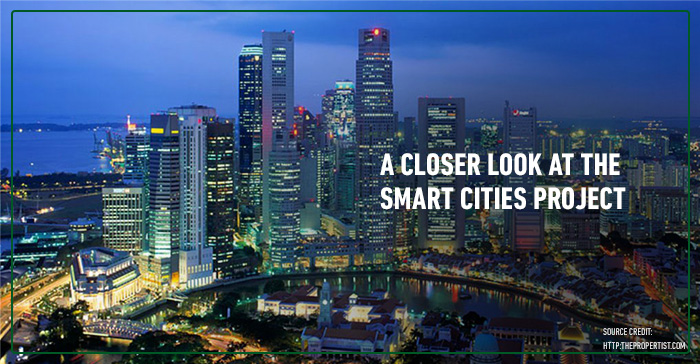
All Indian states, except Tamil Nadu and Telangana met the deadline of 15th December 2015 for submitting their smart city proposals.* The smart cities plan has been in news for quite some time, but many of us do not know what this project entails.
Rishabh Parakh (CA), an expert on finance and budget, shares his views on the smart cities project and explains how this plan will affect all of us.
What is the Smart City Mission?
Government of India recently launched this bold and futuristic initiative involving 98 Indian cities. These cities were selected from our various States and Union territories through a smart city challenge participation.
What is the need for creating Smart Cities?
We have already witnessed lot of urbanization and a tremendous growth in the past several years but the quality life has not increased at the same pace. The Smart city mission in India is aimed at making the selected cities smarter in terms of increasing the quality of life with optimum utilisation of resources.
How it will change our lives?
The Smart Cities mission will bring dramatic changes to improve the quality of life by various measures like adequate water and electricity supply, waste management system, intelligent traffic system, public transport, e-governance, full IT connectivity and digitization, better safety and security, good education and health services, and affordable housing for all.
What are some of the salient features and benefits of smart cities Mission?
One of the most interesting aspect of this project is that it calls for an active participation from the public by considering common people’s ideas and suggestions. The idea is to have people participate actively in better governance and reform processes, and not limit them to a ceremonial presence. People's involvement, will not only help in increasing the sense of belonging but also deliver a sense of responsibility towards the city.
Intelligent security measures & smart traffic management to help minimize terrorist attacks and accidental deaths.
Generate employment and private investment in infrastructure development.
Attract FDIs in our Industrial and IT hubs.
Reduce the burden on Metro cities.
Serve as role models to towns and villages w.r.t. infrastructure and utilisation of resources
What are the key challenges in making Smart Cities a success?
While the overall concept and mission of developing 98 Smart Cities is praiseworthy, its overall implementation and success depend on several factors.
Our country is already facing many pressing issues like the ongoing struggle for “roti, kapda aur makan” (food, clothing, shelter) for a huge section of the society. Our villages still do not have adequate water & food supply apart from struggling for basic needs.
Our primary education system and health care facilities are barely functional in many regions, leading to a major imbalance between cities and villages. The focus has to be on minimizing this gap and simultaneously putting efforts to upgrade the overall living standard for all our citizens irrespective of our city and rural background.
If not planned in advance, it will increase further migration and people will keep migrating for better opportunities from villages to Cities thereby increasing the burden on the cities, and in that scenario even smart cities will not be able to live up to its promise of delivering and improving the quality of life.
In fact, our metros are also not developed with world class amenities as we all have seen in a recent Chennai Floods and the pressing need is to first fix our disaster-prone cities.
Capital investment required for this project is very high. Making sure that the entire process to raise funds will be 100% transparent and corruption free is a herculean task in itself.
Smart cities plan in India envisages common man’s participation and to get them to work towards it, but this requires active political support and that again brings back the issue of lack of transparency in the administrative system.
Smart City Mission is a good initiative and the best option is to implement it in different phases. At the same time, the focus should not shift from overburdened cities and development of rural areas. Though smart solutions are good, they are certainly not a fix-all.
What are your views on the opinions shared in this article? Do you think smart cities is indeed a smart option for India? Write to us on our Facebook and Twitter pages, or send in your thoughts at jaagorein@gmail.com
Disclaimer:
Views expressed here are of the experts alone and do not necessarily represent that of the brand.
Source:
*Business Standard
About the Author:
Share this story on
How does the Public Provident Fund work?
_0.jpg)
What is PPF (Public Provident Fund)?
PPF is one of the most popular modes of investment in India, which is backed by government and work as a long term saving instrument. This is very useful for those investors who are either self-employed or working in company/ small organization, which does not have GPF or EPF (provident fund); in that case it serves as the best tax free long term investment option.
What are the returns on PPF?
Interest rates on PPF are notified every year by the government and currently it is 8.70% p.a. for the financial year 2015-16. The interest calculation is done on a monthly basis but actual credit happens only at the year-end. The best part of PPF returns is that it is tax-free on maturity and you also get tax benefit under section 80C for the investments you make in PPF every year.
How it is different from GPF or EPF?
Many of us who are working with professionally managed companies, must be aware of General Provident fund (GPF) or Employee Provident Fund (EPF). Employer and employee equally contribute to these funds, the return of investment is interest earnings and the total amount invested by an individual gets tax exemption under 80C.
The option to increase the employee contribution is also available; you can withdraw your PF based on a pre-defined upper limits and it is allowed for some specific purpose only. If you switch your job or you quit, then you can withdraw the PF or transfer with your new employer. It is also taxable if a criterion of continuous service for five years is not fulfilled apart from certain other conditions. Returns on PF are also similar to PPF.
You can always opt for the PPF scheme to deliver similar purpose of investment and saving; let’s understand more on PPF as follows:
Salient Features of PPF:
It is very easy to open & maintain a PPF account. Several banks are authorized to facilitate PPF account facility, and it is also available with Indian post. Some banks even offer online opening of the PPF account through net banking or you can walk down to any nearest branch of the authorized banks.
Long term saving and a Maturity period of 15 years makes PPF investment a wonderful tool for your retirement planning.
This is totally a secured government backed investment; there is no risk involved.
PPF returns are tax-free.
You get tax exemption for your investment amount under 80C.
Funds in PPF account can’t be attached by any court orders.
Initial contribution for opening PPF account is as low as Rs. 100/-.
Annual deposit limit for investment is min Rs 500/- and max Rs 150,000/-
PPF account is transferable.
Change in name is also allowed (for e.g. if a women’s name post marriage gets changed and if she wish to change the same for her PPF account; then it is allowed)
Eligibility criteria to open PPF account:
Any individual can open a PPF account except NRI and HUF.
“One individual-One PPF account”, you can open only one such account in your own name.
PPF account can be open for minors by their parents or guardian (tax exemption benefit is still available subject to a maximum limit allowed).
Nomination facility is allowed, except for minor account.
Even if you have GPF or EPF account, you are allowed to open a PPF account in your name.
What is the maturity period & withdrawal options available in PPF account?
The maturity period for the account is about 15 years and on maturity you can have the following three options:
1. Withdraw your accumulated money in PPF account and close it; Or
2. You may even extend your PPF account for another 5 years without paying any further contribution: Or
3. You may extend it for another 5 years with regular contribution.
Can I have a partial withdrawal facility in between the lock in period of 15 years?
Though the maturity period for PPF account is 15 years as seen above, but partial withdrawal is allowed form 7th year onwards subject to the prescribed specified limit.
Loan against PPF: Yes, loan against your PPF account is also allowed and the same can be availed during a specific period.
Expert Opinion
Should you invest in PPF?
Yes, undoubtedly because PPF comes across as one of the best & simplest investment tool to serve your long term financial needs and to top it all; its returns are completely tax free and offers you tax savings u/s 80C as well. One should invest in it though small or big but consistently. Ideally every fresher or a new joinee should open a PPF account right when they start working and as a parent also you should open PPF accounts in your children’s name so that once they attain majority they continue it and enjoy the free from lock in PPF account.
Disclaimer:
Views expressed here are of the experts alone and do not necessarily represent that of the brand.
About the Author:
Share this story on
7 interesting things you didn’t know about India’s own navigation system
 (1).jpg)
Until recently, India has been using a United States owned Global Positioning System (GPS) to keep track of the time and locations in and anywhere near the Earth. Things are going to change as the Indian Space Research Organisation (ISRO) has developed what will now be known as India’s very own navigation satellite and here’s what you need to know about this:
1. It is an autonomous regional satellite navigation system that will be known as the Indian Regional Navigation Satellite System (IRNSS) and the Indian government will be controlling and monitoring it.
2. It was launched from the Satish Dhawan Space Centre.
3. ISRO states that upon the authorising of IRNSS-1D, it would place India in a club of countries that have their own satellite navigational systems.
4. It is quite similar to the GPS of the US which has 24 satellites, Glonass of Russia (24 satellites), Galileo of Europe (27 satellites) and China's Beidou (35 satellites).
5. It will provide two types of services - standard positioning service and restricted service.
6. IRNSS would have seven satellites out of which four have already been placed in the orbit - IRNSS-1A, IRNSS-1B, IRNSS-1C and IRNSS-1D.
7. Standard positioning service will be provided to all users and the restricted service will be for authorised users.
Do you think this is a step ahead for India? Share your thoughts with us on our Facebook page, you can also tweet to us @JaagoRe or even write an email to jaagorein@gmail.com
Share this story on
All that you need to know about Delhi’s odd-even rule
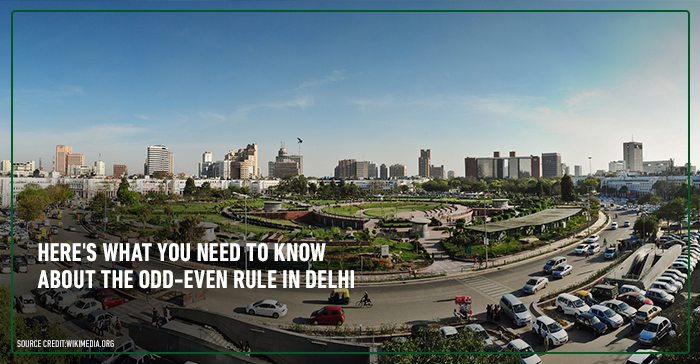
In order to curb the pollution by restricting the number of cars running on the city roads, the Delhi Government has introduced an odd-even rule for all of its vehicles. Here’s a quick rundown on the rule and what it means for the citizens of Delhi.
What is the odd-even rule?
This rule would determine which car you can drive on a particular date. On even dates, only cars with license plates ending with an even number will be allowed on city roads, and on odd dates, cars with license plates ending with an odd number will be allowed.
To help understand this better, on dates ending with 0,2,4,6 and 8, a citizen can only drive a vehicle that has a vehicle registration number ending with an even digit such as DL83AB0XX4. On odd dates, citizens can only drive vehicles with registration numbers ending with odd digits. For example, DL83AB0XX3.
How will public transport fare to make commute smooth for citizens?
While the city itself boasts of an excellent metro connectivity which will help make smoother, the Delhi government will run 3,000 extra buses to ensure an uninterrupted, hassle-free experience for everyday commuters. The Delhi Metro has decided to ramp up its services during the current 15-day trial period of the rule and would run 198 trains to make an additional 365 trips everyday.
One can even consider www.odd-even.com for car pooling — a website that has been developed by a 13-year old student of Amity International school.
Has the odd-even rule worked so far?
Gufran Beig, director of System of Air Quality and Weather Forecasting and Research (SAFAR) announced that pollutants in Delhi's had air dipped by around 10 per cent between 8 am to 2 pm on January 1st, compared to the last two days.
What do you think?
What are your opinions on the odd-even rule in Delhi? Do you think this can help bring down traffic congestion levels and lower pollution as well? Let us know your thoughts in the comments below, you can also reach out to us on our Facebook page, or tweet to us Facebook and @JaagoRe pages. You can also send us an email at jaagorein@gmail.com.
Share this story on