




Using technology to revolutionize India’s healthcare services
.jpg)
India contributes the largest percentage of maternal (16%) and child (27%) mortality worldwide. Women and children are dying in large numbers, and it’s because we cannot provide them with basic information and resources.
Luckily, there is a solution available.
Telecommunication can help reduce these numbers
As of May 2015, India is the world's second-largest telecommunications market, with over 1 billion telephone subscriptions and 267 million internet subscriptions. The Government’s ‘Digital India Campaign’ plans to provide mobile and broadband connectivity to all villages by the year 2020.
What this means is simple – India can now provide timely, specific, and life-saving medical information to a diverse population at a relatively low cost.
How can technology help?
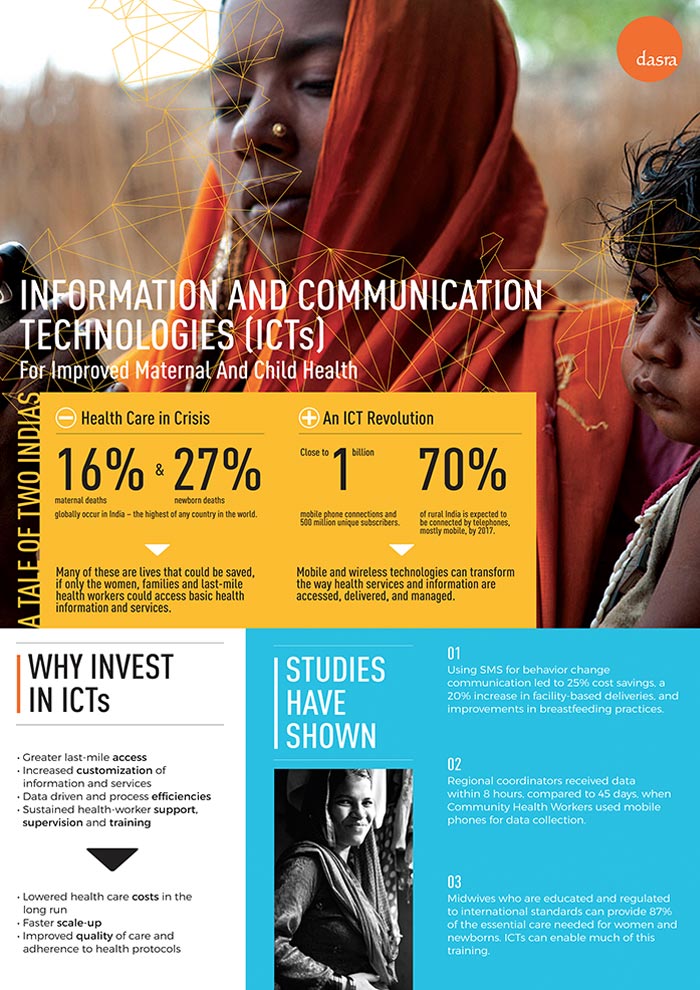
NGOs have begun using voice messaging services (via mobile phones) that provide families in villages with information aiming to develop healthier behavior that work to ensure the wellbeing of both mother and child.
The services work via SMS and voice messages which are timed to match a woman’s stage of pregnancy. Through these messages, themes such as nutrition and newborn care are covered.
These mobile based services overcome a lot of challenges that typically prevent women from receiving medical guidance. The service saves time and money for women because they do not need to travel to health centers that are often far away.What’s more, the information provided is personalized and verified by qualified doctors, who are often city based, i.e. doctors they would not otherwise have access to.
But that’s not all! In addition to SMSs that get delivered to women who need it, technology is being used to train health workers in far-away districts that are usually inaccessible. NGOs are using educational videos, interactive exercises and training via videoconferencing to ensure that health workers have up to date information. Since health workers in small towns and villages usually influence the community at large, this training is crucial and a fast way to bring about a change in mindsets.
What does this mean for India?
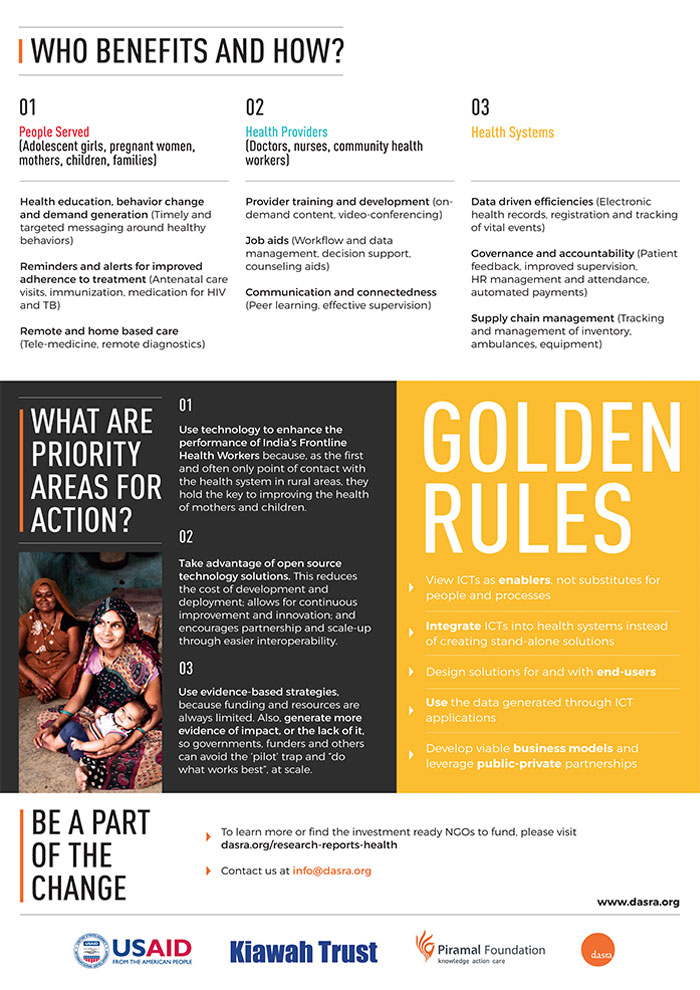
Information and Communication Technologies provide a real opportunity to address India’s problem with maternal and child morbidity and mortality. It can also bridge gaps in health services and systems and reduce inefficiencies.
The integration of technology and healthcare has the potential to revolutionize not only the system, but the country as a whole. Women stand to have their lives saved and their communities transformed – and that’s an outcome which goes beyond statistics.
How can each of us help?
Keep in mind that technology is not the answer to India’s healthcare crisis in and of itself. However, it can be used to find solutions to real problems and it can definitely save lives.
Now that you know more about information and communication technology, help spread the word! Learn more about how technology can be best used where you live, read about the services offered, how they work and talk to your local NGOs about what you know. After all, technology brings change with it, and you can decide how best to be a part of that change.
This article has been co-authored by Harish Sigiriraju and Devanshi Vaid.
Disclaimer:
The views expressed in this article belong to the authors alone, and do not necessarily represent that of the brand.
About the Author:


Share this story on