The good Indian girl: Is it a norm that we need to question?
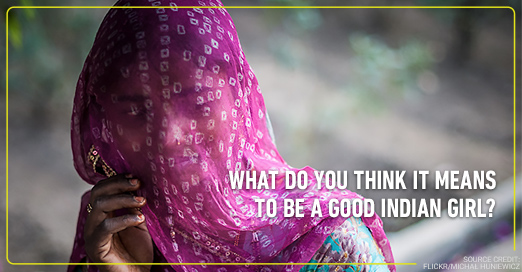
“Yaar, this never happens to good girls”, remarked a friend casually in a moment of whiskey aided candor during a heated debate. “This” referred to the rape and sexual violence that Jyoti Singh faced in 2012.
Normally, I would have asked what he meant by a good girl, but I was sickeningly aware that I knew EXACTLY how my friend, and most of India judge a girl’s “goodness”. Legitimizing statements like these were common after the Nirbhaya rape (and still are to this date). They come from growing up in a culture that creates strict norms about what it means to be a woman - what she is allowed to wear, how she lives and what she should NOT do.
How did these gender norms become a part of our society?
These ideas can be traced all the way back to the rules of Manu in 200 B.C.
"by a young girl, by a young woman, or even by an aged one, nothing must be done independently, even in her own house"
While not many of us still live by the rules of Manu today, these rules have been codified over time into behaviors and attitudes that have a bad influence on the status of women in India.
For example, while women have gained more independence in modern India, an ideal woman is one whose life and decisions are still firmly tied to her home and family.
It’s not surprising that 70% of women in modern India have faced physical and sexual violence when more than half the country’s adult population believes that such violence could be justified.
What are the repercussions?
Apart from affecting everyday lives, regressive gender norms have very real implications for India’s development. Practices like child marriage, dowry, honour killings, etcetera are deeply rooted in biases stemming from gender norms. Child marriages and early pregnancy alone cost India almost $56 billion annually and this is just one example showing how gender norms limit the growth potential of the country.
‘But I don’t think like that…’
Many of us do not even realise when we are being gender insensitive (take the Jaago Re Gender Sensitivity Quiz to know how gender sensitive you are). It’s easy to believe that these norms are a result of poor education and poverty and thus, not relevant to you. Unfortunately, despite rapid improvements in both primary and secondary schooling, the median age of marriage has only increased by 1 year since 1992. The preference for a male child actually increases with wealth, and even rich and urbane New Delhi has one of the worst ratios of girls to boys in India. These norms are very much a part of our lives and manifest in various ways right from pink playrooms for girls to our choice of adjectives - men are bosses while women are bossy.
What can I do to change this?
The good news is that these norms are constructed socially and are thus, subject to change. A good place to start is by taking gender sensitivity quizzes that uncover your unconscious gender biases. Being aware is the first step to understanding how biases affect the actions you take - are you sending different messages to your son and daughter? Do you judge female job candidates differently?
Most importantly, people need to talk about this with EVERYONE. One reason why gender norms are hard to change is that we never actively engage with them. So we need to talk to our friends, colleagues and staff on how we can address gender norms, even bring it up with the rickshaw wallah on the ride back from work. Most people don’t act out of the fear that they will never change, however norms do change over time, for example, did you know that for a century high heels were made for men while cheerleading was considered too masculine for girls?
The question is, will you take the first step?
Let us know your views on the article on our Facebook and Twitter pages, or email us at jaagorein@gmail.com.
Disclaimer:
The views expressed are those of the experts alone, and do not necessarily represent that of the brand.
About the Author:


Share this story on


Talking to ‘Empowered Indian Women’ on International Women’s Day
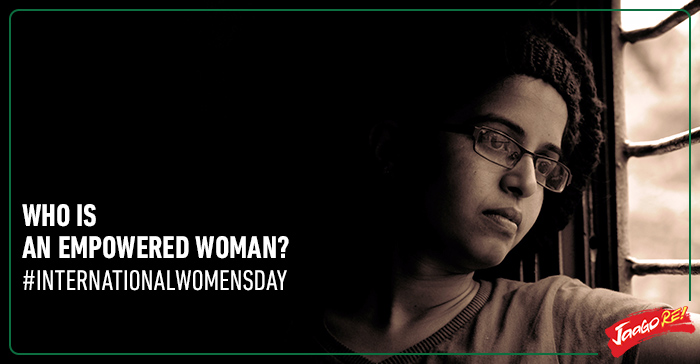
It is the International Women’s Day - a day for us to celebrate women all over the world, and why not? We have made huge progress in overcoming age-old gender biases. Violence against the Indian woman is being addressed, and women are turning up in increasing numbers to vote (Bihar saw an increase from 42% to 57% in the last Assembly Elections*). Our Prime Minister recently pointed out that we need to move towards “women-led development” rather than just “women’s development.”
With so much going on with women’s empowerment in India, how do women look at being empowered? We spoke to a few women who have managed to go beyond gender stereotypes, and here’s what they shared with us.
1. An entrepreneur, and a dynamic addition to Bangalore’s thriving start-up scene

Nayantara Kochhar strongly advocates self-dependence and confidence when it comes to being empowered. She believes that our society is changing, and there is a positive tide turning things around. While there have been instances where people have assumed her choices as being “typically what a woman would do,” she has not seen them as setbacks, but as challenges and situations to overcome. This leads us to ask- what is stopping more women like Nayantara from taking charge of their own lives?
2. A software developer making a name for herself in a male-dominated field

When women go out into the world to achieve success and run their own lives they are seen as a threat to the men there. We have to ask what it is within our society that feels threatened by an empowered woman.
3. A housewife looking to get back to work
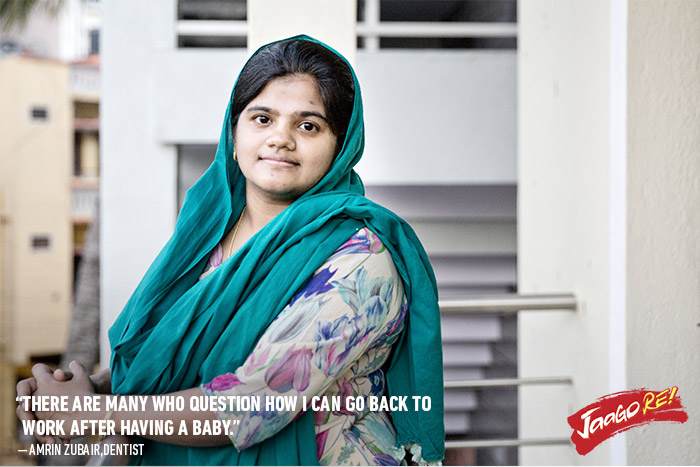
As a stay at home mother who eventually aims to get back into dentistry, she often has people trying to discourage her from those plans.The gender bias is particularly strong at places where men are considered as breadwinners and women as homemakers.
4. A Psychologist and consultant
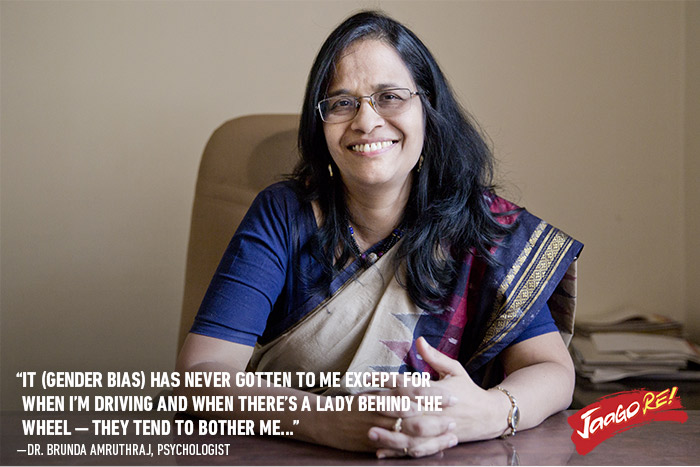
She is fully aware of the absurdity of the situation - that in spite of being an accomplished and strong person, she is questioned by random people about her ability to drive, solely because of her gender. Regardless of how empowered she feels because of her qualifications and profession, her gender becomes a defining factor and her sole identity while she drives.
Does our attitude towards women drivers empower them, or does it make it more difficult for them to be self-dependent?
5. A firebrand activist and a feminist voice
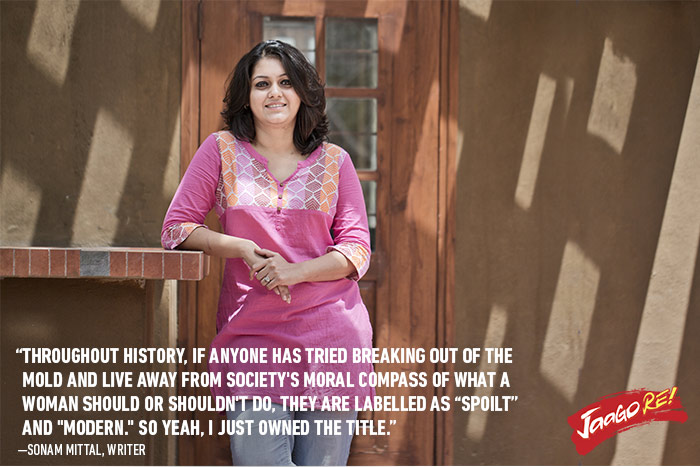
Sonam speaks to the core of what women are still struggling with today. There are successful and empowered women out there in the world, but there is a huge segment of society which still sees these women as threats and views them as “spoilt” or “modern” - which becomes their antithesis to what an ideal Indian woman should be.
We are at a point in history where we have overcome gender biases which the previous generations fought, and we are now seeing the birth of a new set of biases - biases which define how an empowered woman should be, and exactly how empowered she can be. What good are opportunities if they do not enable women to get out of the confines of gender bias? It’s time we paused to reflect to think if we are really moving towards women’s empowerment, or if we are just drifting towards a different kind of gender bias. Has the status of women in India truly changed?
This International Women’s Day, let’s take a step back and reconsider what gender empowerment actually means, and how we can achieve it.
If you wish to share your thoughts about this article, you can visit our Facebook and Twitter pages, or you can email us at jaagorein@gmail.com.
Sources:
*The Hindu
Share this story on

Why is Financial Independence for Women Important?
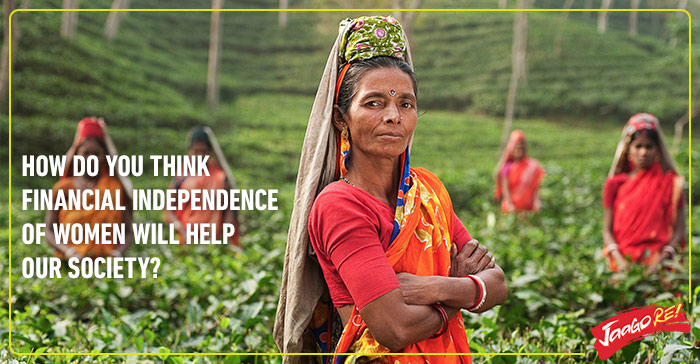
Oxford Dictionaries defines empowerment as ‘making (someone) stronger, more confident, especially in controlling their life and claiming their rights’.
There are several organizations, activists and campaigns like Going to School and Sarathi Development Foundation that advocate women empowerment and emphasize on self-reliance of women in our society. Other initiatives like Majlis Legal Center helps victims of violence access their legal rights and provides socio-economic support.
While these and other similar organizations have their own approach to empowerment, a critical common thread that lies at the core is financial independence.
Why financial independence?
As defined above, empowerment means giving someone the ability to “control their life and claim their rights”. Financial independence is not only a source of confidence but also gives women the credibility to participate in important matters of decision making, for themselves and their families.
This is relevant to both, women from low income communities, as well as women from affluent families, where making women financially independent is not considered a priority.
What happens when women are not financially independent?
When women earn for themselves, they are immediately more in control of their lives.
This is especially important for women who are live in abusive households. It has been reported that 70% women in India face some form of domestic violence. One such form of conducting this violence is by using ‘controlling behavior’ i.e., restricting access to financial resources. Hence, women who face abuse often have no option but to continue living in the same house with their abuser as they lack financial independence, which would otherwise enable them to have a choice.
When parents don’t think their daughters should be financially independent, they can choose to neglect their education. This translates into an extremely troubling statistic: in rural India, 1 girl out of 100 reaches grade 12.
What happens when women are financially independent?
Research shows that when women earn income they reinvest 90% of it into their families, as compared to only 30% to 40% for a man.
But, that’s not all. Having women participate in the workforce benefits India as a whole. At the launch of an initiative called W20, where women leaders from the world’s top 20 economies gathered, International Monetary Fund’s chief Christine Lagarde said, ‘India's GDP can expand by a whopping 27 % if the number of female workers increases to the same level as that of men’
Read about the empowered Indian woman here.
What can we as a society do?
Recent campaigns such as #Heforshe or the #ShareTheLoad that advocate gender equality are examples of changing ideologies. If reading this article has influenced your thinking, then speak to people around you and help them understand the importance of educating girls and giving them the choice to gain employment or become an entrepreneur.
We need independent and empowered women. Supporting women to be financially independent is a key step towards that.
What steps can each of us take to ensure greater financial independence of women in our society? Share your views with us on our Facebook and Twitter pages, or email us at jaagorein@gmail.com.
About the Author:

Share this story on
 stro...)
Using the power of sport for empowering India’s girls
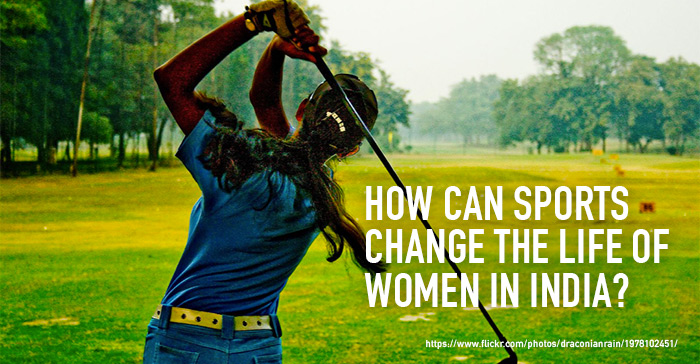
The T20 World Cup 2016 saw an unprecedented spike in Indian media coverage of the women’s T20 matches. Social networking sites buzzed with posts about the women’s match against Pakistan and slogans like Chak De India and Jeetay ga bhai jeetay ga reverberated in the stadium, just like they do for any other match. Complementing this spirit was the advertising campaign by the Board of Control for Cricket in India (BCCI) featuring women cricketers and their male counterparts as equals.
In a country where sport has historically been associated with masculinity, it remains to be seen whether we have reached a turning point for women’s sport, but the conversation around it has certainly grown louder.
Why is this important?
Girls and women in India are being denied opportunities for development at all levels due to limited mobility, poor education, early marriages, high levels of violence, and a lack of freedom to make decisions. Adolescent girls are particularly vulnerable – only 29% study until grade 10, almost half are married before the age of 18, and over 30% face domestic violence.
How does sport help?
Sport can be used as a powerful tool to:
Challenge gender norms
Given that sport is traditionally viewed as a male domain, the participation of girls breaks deep-rooted attitudes held by boys, families and communities and challenges entrenched gender stereotypes such as ‘girls cannot run freely outside the house’ and ‘girls cannot be leaders’.
Provide access to resources
Community and institutional resources are often limited for girls. Sport programs can provide them with access to mentors, strong female role models and the social support of a team or group of peers. It can also give them access to public spaces, especially in societies where their mobility is restricted.
Develop agency
Sport involves leadership roles such as captaincy, coaching and refereeing that can enhance girls’ self-confidence. Improved perception of girls’ abilities amongst the girls themselves and their families also enhances respect for one’s body, a sense of belongingness, ownership, decision-making skills as well as a sense of identity beyond the domestic realm.
Where then, does India stand?
Well-designed sport programs have shown to prevent disease, increase school attendance and build skills that promote employment. These benefits are especially important for adolescent girls given that they are a particularly vulnerable group. Yet, sport as an organized mass-based activity in India is almost absent, especially for women in sport. It is considered as either luxury or leisure, leading to unstructured efforts to encourage participation. India lags behind other countries not just in medals in international sport, but also in promoting a culture of participation in sport.
What can you do to help?
To begin with, you can spark dialogues to convince those around you about the benefits of sport. Learn about the sport initiatives in your community, and talk to your local NGOs about what you know. You can also engage key influencers in your community to provide playgrounds that are safe and accessible to every girl in your locality. Finally, you must encourage every girl to come out to play, and by nurturing their talent, help some of them to become champions and leaders of tomorrow.
More about the Experts:

Share this story on

How it felt to finally have Independence
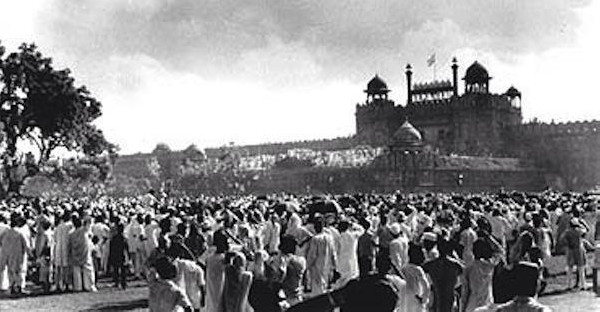
Independence day means different things to different people. For the two younger generations that have only heard about about the significance of the day from their elders, it is more of a fairytale scenario, as we finally made our "tryst with destiny". So, we decided to speak to people who not only experienced the moment independence was declared, but also played a part in it.
B.K. Viswanatha Rao, a retired principal living in Bangalore who participated in the Quit India Movement, describes 15th August 1947 with excitement:

"I was 20 years old, a school teacher in Mysore, and at that time it was still called "Mysore state". Though the King did not participate in the celebrations, we had a wonderful day. We hoisted the national flag and for the first time saw helicopters drop flowers on it. It was glorious. Right after that as I was influenced by Gandhiji’s ideas, I joined a board to teach in rural schools and give back to my country."
Col. K.R.Murty from Vishakapatnam recalls his Independence experience and provides many detailed insights:
"I was 16 years old and on Independence Day, I was awarded a scholarship by the then British collector of Vishakapatnam, who did not salute the Indian flag as it was hoisted. I did not realise the significance of this but people made a furore over it. I had very little knowledge then about the rule but a couple of years later when I read more, I began to understand the impact the Britishers had on Indian society and how it had influenced so many Indians."
Kokila Nandkishore who was arrested during the 1942 Quit India Movement talks about her experiences which are still very clear in her mind:

"Unfortunately on August 15th,1947 I was in a sanatorium in Miraj, recovering from an illness but we knew that Independence was coming as talks had been going on for 5 years, since 1942. Having taken part in those movements, we were expecting Independence anytime. Our family had close ties with Gandhiji and I remember attending his talks in Mumbai which were very inspirational. Though I was cut off from the outside world at the time, I was very happy.
Indira Srinivasan who was just 11 years old during the time recalls the wonderful occasion:

"It was fantastic. Everybody was out on the streets rejoicing. Though I was very young, the feeling was wonderful. People were holding hands and being friendly to each other, it was just beautiful."
Share your Independence day stories from 1947, whether it’s your own or you heard it from your parents and grandparents, we would love to hear from you.
Share this story on
6 Ways Society Punishes People with HIV / Aids

It's not easy living with HIV or AIDS, what makes it worse is the stigma that surrounds it There is nothing greater than recognising the need for compassion during times of emotional struggle that a HIV affected person goes through. It's also not surprising to note, that many of these arise from a biased thinking, ignorance of the condition of the disease, lack of empathic understanding. Here are some of the common stigmas people with HIV / AIDS have to live with:
1. He /she has HIV/AIDS? Don't touch him / her!
People with HIV or AIDS are not touched as people believe that touching leads to 'getting infected'. These kinds of perceptions tend to exist in modern society as well, which is an indication of how much people know or are willing to know about AIDS.
2. He/She deserves it!
Many believe that HIV / AIDS afflicted people are promiscuous or are addicted to drugs; while there have been numerous cases of people getting infected from their own spouses, or from botched medical procedures.
3. Oh, who would employ him/her now?
Some employers are not supportive of people afflicted with the disease – many a times, 'necessary precautions' is cited as an excuse for dismissing afflicted people from the job.
4. You cannot continue to live here, you are putting the neighbours at risk.
Afflicted people with limited means lose their homes as they are evicted by their landlords or neighbours for fear of 'contracting the disease'.
5. We don't serve food to people with HIV/AIDS, our guests will not be comfortable being seated next to you, please leave.
More often than not, people with HIV or AIDS are denied access to public places - parks, restaurants, cinema halls, hospitals.
6. You are HIV positive, we cannot afford to treat you here in this hospital.
Hospitals refuse to treat people affected with HIV, despite having full knowledge of how the disease works.
HIV DOES NOT spread by coughing, saliva or sneezing, hugging, living under same roof, sharing toilets, playing together, studying together, working together and eating from the same plate – (source: aids-india.org)
Don't stigmatise, Learn to empathise!
As a result of these baseless stigmata, people living with HIV are emotionally affected. They don't have support from their loved ones, livelihood, poor care in the health sector, loss of reputation, character assassination. Many HIV affected people have self-stigma, where they put themselves down without proper understanding of the disease. This World Aids Day, make a difference by learning to understand what HIV is all about and how you can get support from the right places, if you are or someone you know is affected with HIV.
Also, to know more about the inspiring story of a person afflicted with HIV who turned her troubles to a source of strength for millions who are suffering from this stigma, read about Jyoti Dhawale's story here
If you see any issues related to health and sanitation or any discomforts, discrimination or mismanagement, please report it on Push the Pin
Share this story on
5 things you won’t believe the Indian Police did in the last 60 days
Quite often the Police is in the news for the wrong reasons. With public pressure and media attention, the Indian Police is now on their way to change the public's impression of them.
Amidst all the negative stories about Police and their inefficiency, we bring to you five positive stories from India, about how Police are stepping up to make India safe.
These are five welcome steps, albeit on a long road ahead. They can certainly serve as examples for the rest of the country to follow, towards making India a better place.
Let's take a look at them.

200 women police beat marshall squad introduced in Mumbai
Mumbai saw the first of its kind women police beat marshall squad flag off last week. 200 female marshalls will patrol the streets, especially for women's protection. They will carry wireless devices in case of notifications from women's helplines to help a distressed person. Delhi Police has also been asked by the Government to form women patrolling squads for areas frequented by women or from where such cases are mostly reported.
Jaipur Police and UNICEF launch one-stop crisis centre for children
In an effort to combat high levels of child marriage and child labour, Jaipur police is launching "Sneh Aangan" – a one-stop crisis management centre to deal with child victims and juvenile delinquents. In association with UNICEF, this centre will specifically cater to providing legal aid and counselling for the children. Apart from UNICEF, Panchayati Raj institutions, national level NGOs and other government organisations will also be engaged to serve the children. The Police will be sensitized to deal with children's issues.
Delhi Police launch a Police complaint Whatsapp helpline
Delhi police has launched a police personnel complaint helpline number, on which you can call, text, or send a whatsapp message. If any police is caught taking a bribe, or is harassing civilians, such a video or a complaint can be communicated on the new helpline number, 9910641064, which started on August 6.
Bangalore Traffic Police launches application to ease commuter woes
Commuters in Bangalore can now get auto fares and route details by sending an sms to 51115. Bangalore Traffic Police has launched an application called 'Autofare', conceptualised by a Bangalore technology start-up company.
At a nominal 50 paise charge, the message can include the name of the city source and destination. The user will receive a reply with the distance, auto fare and landmarks on the route. Phones that do not have Internet can use SMS, and web users can access Android.
This can be helpful for people who are new to Bangalore. Over the coming months, the application will evolve to include complaints against auto drivers for harassment.
The following initiative is not by the Indian Police - it's by the Border Security Forces. Yet it's remarkable enough for us to make a mention of them.
BSF set up a school for 25 kids at a border village
About 250 kms from Jaisalmer, Border Security Forces jawans have set up a school in a village bordering with Pakistan. The village doesn't have any schools, and seeing the need for one, BSF forces set up a school themselves. Over 25 children are being taught English, Hindi and mathematics. The children are reportedly receiving free education in the village.
Is there a Police-Public disconnect?
The Indian public has gradually been losing faith in the Police system. Perhaps if more people take initiatives to communicate openly with the Police, their grievances can be addressed. On the other hand, the Police also has to be more sensitive towards the public to rebuild their trust among the people.
Push the Pin
If you see any cases of harassment, or any issues that you face, or know someone who faces it, push the pin here. Report your pins on www.jaagore.com/push-the-pin
Share this story on
What Teaching Taught Them

Mr. Hubert teaching music at APSA school for underprivileged kids in Bangalore
This Teacher’s Day, we spoke to five people who are giving a new meaning to education. Instead of pursuing a conventional occupation, they are volunteering at an NGO where underprivileged children are sheltered. Through their simple efforts, they are bringing these children from scarred pasts to promising futures. Read on to know how teaching has changed the lives of not only those sitting behind desks, but also those who stand before them scribbling on the blackboard.
Trupti Godbole
Has been teaching a nursery class for the last few months at an NGO Former pre-school teacher.

I remember one of my teachers, who showed us that we all have very rigid “beliefs”. We believe we are not good enough. We believe teaching these kids is tough. We believe these kids cannot learn. I have since learnt that we have to challenge our beliefs.
It’s not about teaching what I know. It’s about teaching what they ought to know.
I have also realised that we take too many things for granted. For instance, at any other school, while teaching alphabets, I might say ‘C’ for ‘Cheese’. But it’s possible that these kids don’t even know what cheese means.
Instead of just staying at my house as a homemaker, I now have a new home to come to.
Kotagiri Sarita
Teaching Science, Indian culture & heritage at the children’s shelter for about 10 years now.
Also works as Assistant Professor in a Pharmacy college.

I remember one of the kids I taught. His mother was a housemaid. When he was first brought down here, he was rather uninterested and in fact, quite naughty. Soon he took to studies and passed out with 65% marks. After some years, he even brought his younger brother and sister and keenly followed up with their studies.
Today he is working with a multinational firm, and is saving up for another course that will cost him around 3 lakh rupees.
This job was initially just a “timepass” for me. But now it’s a full-time commitment.
Carla Kentouche
Graduating from a German art school, Carla is on a one-year placement at an NGO in Bangalore.
Teaches English and music to the Nursery and 7th grade students.

Back in school, one of my teachers showed us that you can’t force children to be silent. He knew that it wasn’t helpful to shout. Through him, I’ve learnt that if I’m calm, the kids will just follow my lead.
I believe that music is the one of the best ways to teach and reach out to these children. If they can learn how to sing, dance and enjoy music; and if there is someone who cares and shows affection to them, there are so many possibilities for them.
Sheela Ramesh
Teaching at an NGO for the last seven years.
Teaches English, Maths and Indian culture and heritage to 10th grade students

I have learnt that teaching is about developing the kids, rather than just imparting knowledge. We develop their confidence and try to bring them out of their fears. For us, it’s about connecting, bonding, and building trust among the kids. When you show them affection, they talk back with affection.
We teach them to go out and face the world, to tackle problems in their life.
Lopamudra Naresh
Teaching Maths and English to the 10th grade students at an NGO for the last three years.
Formerly teaching Business Management at Delhi Public School.

I have seen how a single gold star sticker on their book can mean so much to these kids. Just a little bit of love and affection can bring so much change in them.
Some of my students are not afraid of Maths any more – and that’s a big achievement for me. Before they used to be so scared of numbers.
Today these kids mean a lot to me. They are like my kids, beyond my own two kids. If they don’t do well, I feel responsible. I feel I didn’t inspire them enough.
It’s my job to put them in a place where they can move ahead in life.
What is the true meaning of a teacher?
Today, more often than not, schools have become commercial. Many high-profile schools have been in the news for overcharging the school fees, or for mistreating the children.
However, these teachers are not in it for themselves. They work with children for whom a good education was a far-fetched dream. By teaching here, they have raised important questions: don’t these children deserve a proper education? Isn’t there anything we can do to help them?
And now we leave you with a question: Do such teachers make us rethink what education means?
If you see any issues with education and employment in your city, please make a report of it and push the pin here.
*The above pictures are from APSA NGO, where volunteer teachers are working to rehabilitate underprivileged kids.
Share this story on
Adoption and foster care campaigns in different countries

There are over 150 million orphans* in the world, and thousands of childless parents but somehow, adoption is still not a norm. Despite an increase in the number of childless couples in India, adoption numbers have decreased**. One way to do away with social stigmas that hinder adoption, and to encourage adoption, is to run adoption awareness campaigns.
Countries like the United States and the United Kingdom have been championing adoptions for quite long but even they are seeing a decline in the number of inter-country adoptions***. To address adoption related issues specific in their country and to encourage adoption and foster care, these countries run various campaigns on adoption. Let’s take a look at some of these campaigns and the concerns they address:
National Adoption Week
Organised by the British Association for Adoption and Fostering (BAAF), this annual campaign has a history of 17 years. This year (19 - 25 October 2015), the focus of the campaign is on siblings considering siblings who are put up for adoptions don’t usually find a home, and if they do, they are mostly separated from each other. The campaign encourages prospective parents to adopt siblings so that they can continue their relationship, along with forming new familial relationships. During the week, they feature children on television and online to and provide guidelines to adoption.
Give a Child a Home
This is also a BAAF campaign run in collaboration with the Fostering Network, and is backed by the government. Their focus is on children who find it difficult to be adopted or fostered. The campaign has a website which gives information about adopting and also connects prospective parents to trained professionals.
Adopt Change
#AdoptChange is an initiative in Australia that works with the belief that every child has a right to a family. They work with the community and government to change attitude and laws related to adoption, and support families through all stages of adoption. Their goal is to increase child adoptions, and also to reduce the time taken in the process of adoption.
Adopt US Kids
AdoptUsKids is an adoption campaign based out of the United States and has been running since 2004. Since 2004, they have placed over 20,000 children in the US with a permanent home. Their constant approach is to encourage prospective parents by conveying the message - You don’t have to be perfect to be a perfect parent. Their idea is to do away with doubts people have about being a parent. Their latest public service announcements also focus on adopting siblings as sibling relationships are "the longest lasting-relationships for children in foster care".
#MeetTheKids
The Statewide Adoption and Permanency Network (SWAN), Pennsylvania initiated this unique campaign as a platform where prospective parents and foster carers could “get a peek into the hearts” of children and youth waiting to be adopted. They selected 12 children from across Pennsylvania waiting to be adopted and made them record videos of each other, talking about what having a family would mean to them. SWAN also features youth waiting to be adopted and various activities conducted for them, on their Facebook page.
28 Days of Amazing Children
The Department of Children and Families and the Governor’s Office of Adoption and Child Protection, Broward County, launched this campaign to encourage adoption of African-American children, in February 2015. They made videos and biographies of children and also made a Public Service Announcement highlighting adoption of siblings.
Do you think campaigns tailor-made for an Indian audience can also encourage adoption, as these campaigns are doing in other countries? What kind of message do you think Indian campaigns and Public Service Announcements on adoption should highlight? Share your views in the comments section below.
Sources:
*The Huffington Post
**DNA
***Time.com
Florida Department of Children and Families
Pennsylvania Statewide Adoption and Permanency Network
Adopt Change
Adopt US Kids
National Adoption Week
Childalert - first for child safety
Share this story on
Penalities for breaking traffic rules across the world
.jpg)
India has various laws regarding safe driving but still our traffic is as chaotic as it gets. People don’t follow the rules laid down and are not afraid of its consequences as well. How would such behaviour be tolerated in other countries? Let’s take a look at the different penalties imposed on people who violate traffic norms.
Not wearing a seatbelt
Singapore
A fine of upto $120 (Rs.5579) and 3 demerits points which contribute to the driving record of the person.
Since 1993, seatbelts for rear passengers was also made compulsory.
United Kingdom
A fine of 100 pounds (Rs.10000) is imposed - however, in some cases, 500 pounds (Rs.50000) can also be imposed.
South Africa
Fine for not wearing a seatbelt is upto 250 rand (Rs.1250) and misusing of points from their driving record.
India
Fine of Rs.100
If the new Road Transport and Safety bill is approved, the fine will be Rs.2500
Not wearing a helmet
France
A fine of 135 euros (Rs.9331) and loss of 3 penalty points
Australia
Fine of $100 (Rs.4695) if the bike rider or pillion rider is not wearing helmets, and $80 (Rs.3756) if helmet is not securely fastened.
Italy
Fine of $70 (Rs.4443) for not wearing an helmet and a fine of $30 (Rs.1904) for an unfastened helmet.
India
Fine of Rs.100 for first time offenders and Rs.300 for repeat offenders.
Driving on the wrong side
United States
Differs from state to state but is anywhere from $100 (Rs.6350) to $250 (Rs. 7620)
Brazil
The fine is about 53,20 BRL (Rs.1065)
India
Fine of Rs. 100 for first offence and Rs.300 for repeat offenders.
It’s apparent that India’s punishments for breaking traffic rules is not as strict as compared to other countries. The Road Transport and Safety Bill which is yet to be passed will be making some harsher changes and we can only hope that it will help instil civic sense in us!
You can read about the Road Transport and Safety Bill here.
Sources:
Driving in Singapore
Transport
Transport
Driving in France
Share this story on