The Lady Who Never Gives Up

How does one turn suffering into strength and inspire those who suffer, to rise? To answer this question, there can be no better example than Sunita Krishnan.
From a young age, she has always been inclined to helping children and opening their minds with education. It was during one of these episodes when Sunita was subjected to the immense trauma of gang rape at the tender age of 15. However, she consciously decided to not be a silent victim but to turn her anger into something constructive. She dedicated her life to correcting society’s tendency to blame the victim than the one who was guilty for the crime.
She travelled to Hyderabad and came to know of a brothel that was being shut down. She met the sex workers who wanted nothing for themselves, but wished for her to attend to their kids.
The thought that these children would be dragged into the same bleak environment that their mothers would currently live in, spurred Sunita to begin the foundation - Prajwala. With barely any money, and just a pair of gold earrings on her, she sold it off to get some money and began taking the children under her wing in the slum areas of Hyderabad. She has helped rescued almost 3200 girls, and in the bargain, has also been subject to physical violence.
Inspite of such obstacles, Prajwala went to become an anti-trafficking organization that is actively involved in preventing women and children from getting entrapped in the chains of prostitution. After rescuing the girls and the women, she helps them get an education and provides them with vocational training in activities such as carpentry, masonry, welding etc.
Sunita is an inspiration to all of us – that a woman, on her own terms, can impact society positively. She may have undergone some of the worst traumas in her life, but she still can make society take note of her, if she works towards to it.
We have so much to learn from her example – each and every woman in Indian society has the power to positively impact society. Imagine then, 49% of India’s voters who are women, using their combined power as a voter’s bloc – will our democracy be able ignore this power?
Let’s not allow that to happen – let’s utilize the #PowerOf49!
Share this story on


PowerOf49 Manifesto on Education and Employment
India has the world’s largest population of girls that do not go to school.
Nearly 2 in 3 of all illiterate children are girls.
Half of India's girls can read vs 3/4th of India's boys
It is a known fact that India still lags behind when it comes to progress on girl's education. Women have begun to be more visible in the employment sector only in the recent decades.
Jaago Re and CNN IBN invited 3 individuals that have represented this cause in India. They came together to frame a 5-point manifesto on education and employment.
Kiran Bedi, the first Indian women IPS officer; Virendra Sam Singh, educational activist and founder of the Pardada Pardadi Educational Trust; and Sairee Chahal, founder of Sheroes, which inspires women to find their work-family balances; joined the show on CNN-IBN.
The 5 point manifesto on Women's Education and Employment -
1. Savings for girls, free transportation
Incentivise schooling by putting savings for girls. Transportation costs to schools must be borne by the State.
2. Technical Education, Rural recruiting camps
Special emphasis on Technical Education of girls. Set up rural recruiting camps to provide women in villages with more job opportunities.
3. Home sciences and Sports compulsory for boys and girls
Mandatorily introduce home sciences and sports in curriculum for boys as well as girls.
4. Women-friendly work policies
Need mandatory crèches, women-friendly maternity policies that include long-term leave – both rural and urban.
5. Women's reservation in the workplace & politics
Time-bound commitment to women's reservation in party-ticket distribution and cabinet. Bring public sector on par with private sector on women's representation.

The Power of 49 has put forth their manifesto on education and employment.
Join the conversation on @JaagoRe on twitter
All the four manifestos have now been presented to the leading parties. To read the final 10 point Powerof49 Manifesto, click here
Share this story on
What’s stopping 90 million Indian girls from going to school?
A recent UN report stated that 90 million Indian girls are illiterate. A country cannot progress if half the population cannot even read or write!
Here are some of the ridiculous reasons why girls are not allowed to go to school!

She will not become a good housewife
Not doing household chores and wasting time in studying is going to make her ‘unprepared’ for her ‘wifely’ duties.
Well, it’s not like a wife has anything better to do at home other than do household chores, right?
She will be controlling, and will not obey the in-laws
The girl will learn to reason, debate and question rituals that bind her by obtaining knowledge.
So much for education opening one’s mind, right?
She will mix around too much with boys
Because that’s what schools and teachers and books inspire children to do! It’s not like encouraging an informative environment where the young minds of girls and boys can healthily blossom is really a good thing now, is it?
Daughters will marry and leave the house; what’s the point in giving them an education?
Yes, because it will never ever cross a girl’s mind to use the education for the benefit of BOTH her families after marriage..
Right?
"Educate a man, and you educate an individual. Educate a woman and you educate a whole family."
A young girl is the future of the country. We cannot waste her youth in teaching her how to cook and stitch clothes. She needs to know that she is equal to men. She needs to be taught that anything is in her reach. We have to make possibilities endless for her. She needs to be educated so she can take care of herself. So she can work for the society and contribute for the larger good.
Power of 49 – Bring Importance to Education
49 % voters are women. If majority of the women voters are illiterate – what kind of a Government can they bring to power? They may fall prey to biases, influence from husband or the immediate society they are in, and can fail to cast an independent vote. Understanding the Power of 49 means empowering the women of India to make a well-informed vote. The rest of the 51% voters must also work towards creating an educated votebank that the Government cannot ignore.
That’s when the PowerOf49 can really set in motion – and bring in the changes we long desire.
Share this story on
PowerOf49 Manifesto on Women's Safety
Politicians are gearing up for the big electoral fight in 2014. India’s citizens are demanding their rights from the leaders. CNN-IBN and Jaagore invited three resilient women to have an in-depth discussion of what Indian women need. Laxmi Saa, acid attack survivor, Ruchira Gupta, anti-trafficking activist, and Sonali Khan, from Breakthrough have helped frame the CNN-IBN Jaagore five point-action plan for women's safety in public spaces.
1. Woman specific agenda in the politician’s manifestos
Each political rally must begin with politicians taking oath to address women’s issues. More amendments in favour of women are a must. Representation of women in police force must rise from the current 5 % figure. Representation of women in politics in the upcoming elections should also rise, up to as much 50%.
2. Nirbhaya fund allocation
Each political party must give a concrete list of how they will utilise the 1000cr allocated to the Nirbhaya fund. There must be a clear direction of how this money will be used for addressing safety issues.
3. City-wise Report Cards on Women’s safety
The government must come out with a periodic report card based on how every state/city ranks in terms of women’s safety, especially with regards to public spaces and public transport. Police should have a women’s safety and sensitisation drive. It must be introduced urgently and progress should be monitored through the report card.
4. Acid Attack Survivor's Rehabilitation
Acid attack should be incorporated as an integral issue, worthy of the strictest punishment. The guilty must be punished within 3 months of the crime. Free treatments for plastic surgeries and sufficient compensation for the survivor is also essential.
5. Set up a nationwide women’s tribunal
Parties should set up a nationwide women's tribunal. It must examine all the laws governing women's safety and parties must also encourage women to go to the tribunal and raise issues important to them.

The Power of 49 has put forth their manifesto on women and public safety.
Join the conversation on @JaagoRe on twitter next week as we discuss domestic violence and create a #Powerof49 manifesto on CNN IBN on Friday, 28 February, 8.30 pm
To read the final 10-point #Powerof49 Manifesto that was presented to leading political parties, click here
Share this story on
Has justice for Indian women improved in the last ten years?
Every day, the newspapers are filled with new cases of atrocities committed against Indian women. In recent years, the Indian penal system has been brought into scrutiny by the public eye, as women, backed by the entire society, have been fighting for justice.
Today, we are highlighting steps forward that have been taken in the last 10 years to improve the situation for women and children in India. Only time can heal the deep-rooted cultural problems of the country. Yet, it is the state’s role to protect all its citizens from injustice, to allow them to live a life free of prejudice, discrimination and crime.

Stricter Laws against Sexual Harassment
After the gang rape of 23-year-old Nirbhaya in Delhi in 2012, the whole country became embroiled in waves of protests against sexual harassment.
• The 2013 Criminal Law Amendment Act, popularly known as the Nirbhaya Law, tried to tackle some of the loopholes in the Indian Penal Code.
• It introduced a minimum 20-year-sentence for gangrape offenders.
• Those guilty of recurrent harassment or gang rape also became liable to the death penalty.
• Formerly, those guilty of stalking or voyeurism could get away without a sentence. Now, these crimes are non-bailable and properly recognised within the Amendment Act.
Source: TOI and India.gov.in
Increased Justice for Acid Attack survivors
The brutal acid attack of 16-year-old Lakshmi hit the headlines in 2005, especially because she was one of the few victims who sought justice for herself and all other victims.
• Earlier, acid attack was not even considered a separate punishable offence under the Indian law.
• With the 2013 Amendment Act, however, acid attack became properly defined as a crime with a minimum sentence of 10 years, and a sentence that could extend to life.
• In 2013, the Supreme Court ordered the Government to limit over-the-counter acid sales to people over 18 years of age who provided ID and a reason for the purchase.
• The court also ruled that the Government should make acid attacks a non-bailable offense and pay about Rs. 3,50,000 to each survivor within 15 days of the attack for medical care.
Source: India.Gov.in and Washington Post
Greater Protection for Children under POCSO
Following the increase in cases of sexual abuse against children, particularly in the highly populated NCR region in India, the issue was brought to the forefront by the Indian public and the media.
• The 2012 Protection of Children from Sexual Offences Act (POCSO) has drastically increased the penalties given to those guilty of sexually assaulting a child or using a child for pornography and has introduced speedy trials to combat these cases.
• The minimum sentence for anyone who has sexually abuses a child is seven years and a maximum of life imprisonment.
• Even those who attempt to molest a child, will still receive up to half the penalties given to actual offenders.
• Protection has crucially been given to children from media interrogation, and safety measures have been put in place to protect children’s public profile and dignity.
Source: TOI , NDTV and National Informatics Centre
Harsher Penalties for Child Marriage
India has the largest number of child brides in the world and yet little has been done to curb this problem.
• In 2006, the Prohibition of Child Marriage Act formed an important first step in solving the issue.
• The Act has criminalised marriages which take place between people younger than 18, and if such marriages do take place, parents can face up to two years of imprisonment and a Rs. 1 Lakh fine.
• The Act also penalises any man over 18 who marries a minor, and anyone who fails to report and condemn child marriage.
• This is a huge step forward from the 1929 Child Marriage Restraint, which allowed girls as young as 14 to tie the knot.
Tougher Laws against Domestic Violence
• With the 2005 Protection of Women from Domestic Violence Act, men who physically, emotionally or economically abuse women in their household became liable to severe penalties.
• The Act gave a voice to the many sisters, mothers and in particular wives of India who are treated in a shocking way due to substance abuse or simple misogyny.
• The Act also gives protection to the women against the threats of assault and emotional manipulation.
• Read more about this step forward here.
Source: National Informatics Centre
Taking a hold on Sexual Harassment at the Worksplace
The 2013 Women at the Workplace Act has given protection against sexual harassment to all women in the workplace, including those in informal industries and domestic workers.
• It has greatly formalised the process of dealing with cases of abuse, putting structures in place to deal with complaints in offices, both in the private and Government sectors.
• Sexual harassment on the back of promises of preferential treatment or threats of loss of salary will also be heavily penalised.
Source: National Informatics Centre
Promising higher representation for women in Parliament
Currently, women only have 11% representation in parliament; shockingly, this is the highest it has ever been.
• The 2008 Women’s Reservation Bill was suggested to increase female representation in parliament.
• The Bill, which was passed through the Lok Sabha in 2010 and is now awaiting final approval, proposes that 33% all seats in parliament should be reserved for women.
• Also, a third of all seats reserved for certain castes and tribes will go to women in these groups.
• Read more here
Better Late than Never – Is Justice Delayed, Justice Denied?
Many Indians, particularly the survivors of crimes may feel that a lot of these laws and the amendments hereby made to them were late in the day. A whole lot of women have suffered brutally under a host of crimes, and continue to suffer today. While these laws are certainly a welcome move to boost the deteriorating position of women in India, there’s a lot more that needs to be achieved. Higher conviction rates, Police, medical and courthouse sensitivity to women and an eradication of patriarchal and misogynistic mindsets may help reduce crimes against women.
We are hosting a record from India on all the issues that citizens, particularly women face. Push the Pin here to record your discontent with the current administration, and other crucial affairs in India.
Share this story on
Are ALL crimes against women getting the attention they deserve?

This week, seven outrageous issues women faced skipped our attention. Let's take a look at them:
1. Molested At The Protest Against Molestation in Kolkatta
A peaceful protest rally of students demanding justice for a girl molested in the campus of Jadavpur University was viciously attacked – reportedly lathicharged, beaten and molested. Student groups are still awaiting answers.
2. Gangrape survivor consumes poison before the Chief Justice of India
A woman lawyer consumed poison at the Supreme Court in protest of a gangrape and the Police's inaction in Chhattisgarh.
3. Rape accused Senior Police official in Mumbai now charged with molestation
A senior Police official from Mumbai who was already accused of rape, is now accused of molestation.
4. Headless body of woman found in Mumbai
A decomposed headless body of a woman stuffed in a plastic bag found in Mumbai.
5. 81-year-old woman raped & murdered in Delhi
81-year-old woman in Delhi raped and set on fire by domestic help. The 21-year-old also fled with cash and jewellery after the murder.
6. Dowry murder in Delhi by an official from Tihar Jail
A 25-year-old woman died in Delhi after allegedly being set afire by her father-in-law, who is Deputy Superintendent of Tihar Jail, and her husband for failing to meet dowry demands. Victim and family had already stated they were being harassed for dowry for a long time.
7. A rapist/murderer of a 11-year-old girl lynched to death by mob in Nagaland.
According to sources, accused confessed to the crime of raping and murdering the girl. The mob took over after complaints of Police inaction.
Jaago Re – Let's Speak Up!
Do you think our outrage on national issues can be selective, short-lived and limited? Perhaps we are quick to take sides and offer support when it comes to celebrities, as opposed to everyday women. Yet the fact is that Bollywood stars and other celebrities will continue to remain in a much more empowered position than thousands of survivors of rape, molestation, acid attacks, women who face human trafficking, dowry deaths etc. Every regular woman that walks down a dark alley in India and looks over her shoulder doesn’t have the support and backing of an entire country.
Media and the public have recently taken a stand against shoddy representation, objectification and discrimination of female celebrities. Can we also condemn the other attacks that are happening on women all over the country?
We are right in voicing out our outrage of crass treatment of women in public spheres.
Yet we are wrong when we ignore and stay silent on the repeated and ghastly attacks on women in all parts of India.
Don't be a mute spectator. Push the Pin on issues of women's safety, report them here.
Share this story on

660 Rape Crisis Centres Slashed: Survivor of Rape Speaks Out
.jpg)
I’m a rape survivor. I have survived sexual violence and I’m deeply disappointed at this moment.
The Government has slashed 660 rape crisis centres that were initially approved and about to be set up in India, termed as 'Nirbhaya centres'. They will now establish only 36 centres, one for each state and union territory. Instead of one in every district, we will now have only one in every state. 36 rape crisis centres for a population of over a billion. Is this fair?
Why we shouldn't ignore this move:
It's a gross mismatch of numbers. The number of rapes reported in the year 2013 stands at 33,707. In 2012, the number was 24,923. It is quite obvious that the numbers are increasing. Most importantly, we need to realise that these figures are only for 'reported' cases. We have effectively failed to account for thousands and lakhs of women who have been raped, tortured, humiliated and shunned into silence.
I’m among those millions who have not reported. I’m not a part of this statistic. Do I want to report? Yes. Am I confident that I would not be mocked at, dismissed, and called a sex worker whose deal went wrong or a disgruntled woman who’s framing an innocent man? No.
"Police is much more sensitive now": Do we all agree?
What angers me furthermore is the reason given by the authorities. We have cut down the number of rape crisis centres because they say, "Our police have become much more sensitive now." How close is this statement to reality?
From the refusal to file an FIR in rape cases, like that of a recent brutal rape of a 5-year-old girl in Delhi, or the police inaction in Badaun, UP case, to my own experience of filing a molestation case just three months back, the protectors of Indian citizens who have now apparently become more sensitive, have a lot to answer.
No country for women
In December 2014, I had tried filing a molestation complaint in Goa, where I was vacationing with family and friends. The attendant of a hotel molested me and I decided to file a complaint. When I approached the Police, I was told that it is my fault I was 'roaming out till this late.' That 'decent girls' don't do 'such things'. The Police Inspector also went on to tell me that if he found his daughter doing 'such' things, he would promptly give her a hard slap across the face.
I was moral policed when I wanted to file a complaint. I was also told that I should be thankful that I was just molested, and not raped.
Any normal person would be able to understand that such behaviour is anything but sensitive. Sure, it would be wrong to paint our police force with the same brush, but my case is not an isolated incident. There are many women out there who cannot complain because they do not have the necessary information and support at their disposal to seek justice. Rape crisis centres are supposed to be that one-stop centre where rape survivors can seek medical, legal and counselling services, all under one roof. These centres would also have a retired police officer who would help in filing FIRs. Sadly, this will still remain a dream for many women who continue to live their lives in silence.
Any strong democracy should be able to answer this question; what happens to people who survive rape? A mere 36 rape crisis centres is not the answer.
More on the author:
.jpg)
Disclaimer:
Views expressed here are of the author alone and do not necessarily represent that of the brand.
Share this story on
.jpg" /></p>
<p class="art-para-power">
I’m a rape survivor. I have survived sexual violence and I’m deep...)
Violence at Home? Know your rights
Prior to the landmark law passed in 2005, domestic violence wasn’t really recognised as a serious crime.
Protection of Women from Domestic Violence Act 2005 changed that and was put in place to legally protect the survivors of domestic violence, and prevent them from continued harm.
If you are facing domestic violence, here are the laws that can protect you.
The law explains "Physical abuse" as any act or conduct which is of such a nature as to cause bodily pain, harm or danger to life, limb, or health or impair the health or development of the victim and includes assault, criminal intimidation and criminal force.

Victims could be
- Wife
- Female live-in partner
- Sisters
- Mothers
- Widows
Actual abuse or the threat of abuse could be
- Physical
- Sexual
- Verbal
- Emotional
- Economic
- Dowry demands
Hard Facts
The National Crime Records Bureau reveals that a crime against a woman is committed every three minutes, a woman is raped every 29 minutes, a dowry death occurs every 77 minutes, and one case of cruelty committed by either the husband or relative of the victim occurs every nine minutes.
Push the Pin on domestic violence

Statistics of assaults on women are a dark blotch on the face of our democracy. Know your rights. Use the law and protect yourself. Alternatively, push the pin and demand an end to violence against women.
Share this story on
5 young Indian girls making a difference
Meet five young Indian girls, who are a massive inspiration to all- old and young. Ambitious, courageous and determined, they have not let their gender or age come in their way. From setting up an NGO for children in slum communities to selling art work to raise money for life-threatening diseases, these children have used their natural confidence and creativity to make milestones for the country.
An inspiration: 11-year-old girl refuses to tie the knot

11-year-old Rekha Kalindi refused to become a child bride. Since, then she has inspired thousands of girls across India. Rescued from child labour by a UNICEF educational programme, Rekha, already aware of the deep-rooted problems facing her society, grew confident in her own voice. When her parents took her out of school to make preparations for her marriage, they expected full obedience. However, the prospect of estrangement and beating from her family did not put young Rekha off. Her simple act of defiance inspired so many other young girls both in her village, Jhalda, near Kolkata, and in whole of India, to speak up against the prospect of a ruined childhood. Sometimes it is what you don’t do rather than what you do, which makes all the difference.
Two birds in one stone: 16-year-old girl tackles polio and child marriage
.jpg)
16-year-old Sikha Patra is committed to improving health and sanitation in India as well as promoting gender equality. At the young age of 14, she joined the Kolkata youth group ‘Daredevils’. She and her group members went door-to-door to spread awareness about Polio vaccination booths in the area. They used puppetry to inform the children about the importance of disease prevention, and eventually helped to make her village Polio-free. Recently, Patra, recognised by the Bill and Melinda Gates Foundation, has also been campaigning for women’s rights. She has created a three minute video, Rivers of Life, about young unmarried girls standing up for themselves, and this video went on earn international recognition. Patra's work in raising awareness for the vital problems are phenomenal.
16-year-old waves her magic brush to bring relief to the underprivileged

Anjali Chandrashekar is a volunteer, activist and artist- all at the tender age of sixteen. She began painting before the age of five, and was teaching at a centre for the underprivileged when she was only ten. Now, Anjali has combined her passion for art with her love for helping others. She produces artwork which raises awareness and funds for issues such as natural disasters, prevalent diseases in India, child abuse and the rehabilitation of underprivileged children. In 2008, for instance, she raised around $5000 for an international Diabetes charity by creating a poster; this money went on to provide insulin for many impoverished children with the disorder. Her art work has been purchased by several charities, including UNICEF and UNESCO, and has proved that art really can make a difference.
18-year-old transforms the streets of Delhi

Rashi Anand was only 18 years old when she founded Lakshyam, an NGO that provides education and employment for street children and women in seven states in India. Originally from Delhi, Rashi was inspired to change the lives of the people of her city. A child herself when she set up the library, Rashi created a Toy Library, which has since delivered donated books and toys to over two lakh underprivileged children in India. She also set up schools in Delhi which have provided English, Maths and Computer Skills training to 300 children living in the red light areas. Finally, as a young woman witnessing gender inequality in society, Rashi made sure a strand of her NGO was dedicated to empowering women in India. The charity has helped around 200 women in the villages of Jharkand gain training in stitching, sewing and jewellery making.
Not yet 18, but committed to bringing Women on Wheels

Avani Singh, a 17-year-old female entrepreneur from Delhi, founded an organisation, Ummeed, which gives training to women in slums to become taxi and rickshaw drivers. Singh came upon this idea after reading about new, electric-powered rickshaws that are also much easier to pedal. Receiving her first rickshaw from the local firm Green Wheels, Singh first provided employment to a 33-year-old single mother. Since then, her organisation has helped many others out of poverty in Delhi, whilst also bringing women into what was previously imagined to be a male profession. Most amazing of all, Singh has helped these women get on the road before she herself can legally learn to drive.
Source: Ted X
Share this story on
A peek into the lives of women construction workers
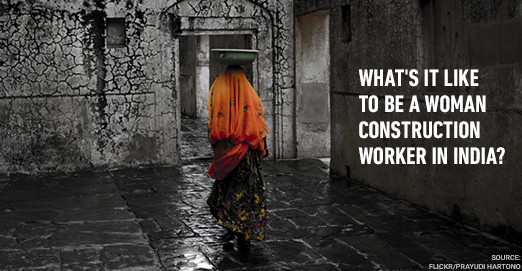
Construction is the second largest and fastest growing industry in India. 51% of the workforce in this sector are women and majority of them are unskilled labourers.
We looked at two women construction workers to understand the kind of lives they lead:
Devamma lives on the ground floor of a house under construction with 4-6 other people. She has no privacy even when she feeds her child.'
Devamma, 32 hails from Rampur near Yadgir in Karnataka and has been working as a construction labourer for the last 12 years. She is part of the 92% women in the industry who are illiterate.
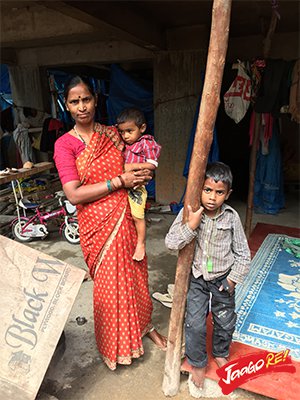
Devamma stays in a small shanty adjacent to the construction site with her husband and two children. There is no concept of privacy and everything from breastfeeding to even taking a bath has to be done in the open.
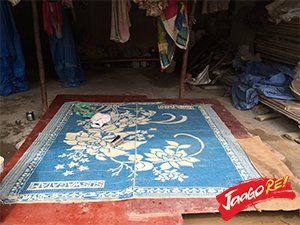
She and her husband found work in the city as they had worked here before. Their main contact is an engineer who is usually punctual about giving their salary. However, if there are any issues with their payment, they don't feel empowered enough to do anything to get their money.
"The pay is better in the city", says Devamma. She gets paid only Rs. 250 per day whereas her husband gets paid Rs. 400. They are hardly able to save anything.
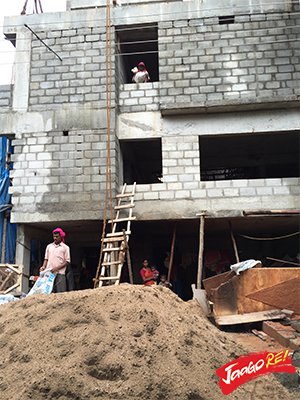
Her youngest son Bhagwant has been sick and they've spent a lot of money to treat him. She has been running between hospitals to get her son treated."The doctors at the government hospitals seemed overworked and could not attend to my son properly. He has been getting thinner and thinner," she says. It had taken her 12 years to have her first child.
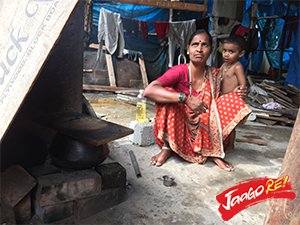
When Devamma is not working in the city, she is helping with farm work in her village. The family moves between the city and village every 6-8 months.
She along with her husband has bought a house in the village where she has more privacy and facilities; but she has to work in the city in order to pay for the house. The house is only the beginning of their troubles as Devamma has to make a choice between earning money in the city and staying back in the village to educate her son.
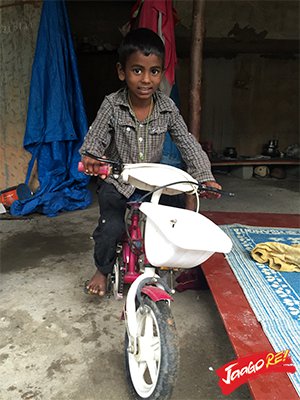
Padmaja earns Rs.400 per day which is a total of Rs.12,000 per month. She helps educate her children with this money.
"Even if we don't eat will they understand our troubles? We have to send the fees to educate our children or the college will not let them study", says Padmaja, a 30-year old construction labourer working in Bangalore. She is a victim of child marriage, having married at the age of 11 years and her husband is a victim of child labour as he has been working from the tender age of 7 years.
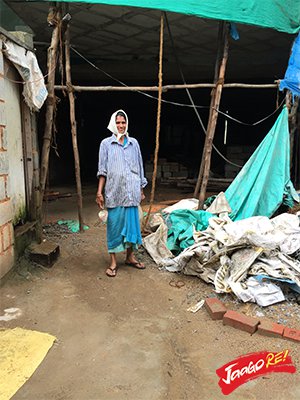
"I work for my children's sake. I started working two years ago to fund their studies." Padmaja gets paid only Rs. 400 whereas her husband gets paid Rs. 650 per day. Originally from a small village in Andhra Pradesh, this is their first time in the city. They live in a small hut adjacent to the construction site.
Padmaja says, being around the dust and concrete structures all the time has made them prey to various diseases.
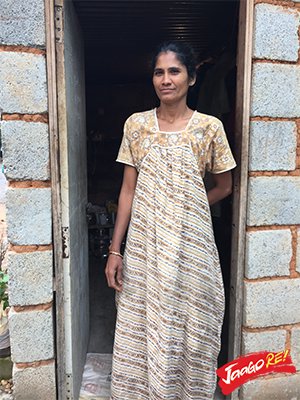
"We aren't too happy in the city, but the pay is better here. We usually find work through our previous employers or we go looking for it," she says, as her contractor keeps yelling for her to get back to work. Her job involves carrying bricks, cement and other heavy loads, all of which is transported to and fro via a rickety, make-shift staircase.
"We miss our children and it's a hard life but someone has to do it." She hopes that her children get good jobs and not have to live the hard life she does. She works a back breaking shift from 8 am to 7pm, everyday.
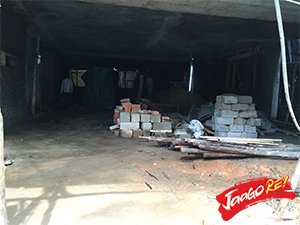
Defined by the International Labour Organization as ‘one of the most hazardous and accident prone activities', Devamma and Padmaja are only a few examples of the women construction labourers that we see in urban settings. They live a hard life but there are lakhs of others who are disguised in plain sight. They are forced to work as bonded labourers (even though it is illegal) and sometimes work 10-12 hours a day without any breaks, for the entire week. The materials that are used for construction contribute to various illnesses that do not only affect the mothers but are showing serious symptoms in their children as well. The women sometimes even have to carry loads of 51 kgs and they hardly have anything to eat. The workers are also under-represented and lack basic facilities such as toilets in most cases. The Power of 49 manifesto addresses the need for sanitation, equal wages and maternity leave which, many of these women are not given. If you think a construction labourer is being mistreated in your city, you can push the pin to highlight the issue.
If you have any comments or thoughts about construction workers or would like to share any stories, please write to us at jaagorein@gmail.com or tweet to us at @jaagoRe. If you think that a labourer is being exploited please push the pin.
Sources
PRSIndia
IAP
WIEGO
Share this story on
