To Make Sports a compulsory subject in schools
MAKE SPORTS A COMPULSORY SUBJECT IN SCHOOLS
Petitioning Union HRD Minister
A Tata Tea Campaign in association with Network 18
34% MPs elected from General Elections 2014 have criminal charges against them.
Let's look at a breakdown of candidates with criminal cases; who slipped through the system. Who we voted to power.

Two powerful civil society groups have released disturbing data on the current Lok Sabha candidates contesting the Elections. Their findings are crucial for us to determine how transparent our democracy is.
186 out of 543 MPs elected in the current Lok Sabha in 2014 have criminal cases against them.
Let's look at some more data released by the National Election Watch (NEW) and Association for Democratic Reforms (ADR).
How many Candidates with Criminal Records have contested in the last 2 Elections?
The overall number has increased by about 2 % since the Previous Elections.
Candidates who Won in Elections 2014
Isn't it a very big number of candidates occupying our seats that have criminal cases against them?
Candidates in Question Who Contested Elections 2014
Again, an extremely high number of candidates with criminal cases contested this election.
What do "serious criminal charges" mean?
This is the ADR's criteria for candidates with a criminal background that come under the category of "serious criminal cases" :
Some important criteria for serious criminal cases:
Here's a look at candidates with criminal cases over the last three Elections in India - Examining our voter affinities with them.

Overall voting % for candidates with criminal candidates has dropped
More candidates with criminal cases are contesting now as clearly seen in the graph above.
Yet if we go by the last column in the box, a slightly lower percentage of such candidates have won. This means that we're being more prudent about who we are electing to power now.
Our voting patterns reveal now that a lower % of candidates that have criminal cases are being elected.
Cheers to the Powerof49!
Here's to the PowerOf49 that exercised their due restraint before voting questionable candidates to power.
Though we still have a long way to go to before we have a completely clean and honest Government, we can say slowly but surely, we're getting there.
Let's make change happen. Let's have a clean, honest and transparent Government leading the way for the rest of India.
Share this story on

Soon after the new PM came to power, a debate sparked off on Article 370 that saw heated exchanges among political heads in India. Here's an attempt to simply Article 370.

What does Article 370 signify?
Article 370 grants special autonomous status to Jammu and Kashmir (J&K).
Since the time of partition, Article 370 has been a part of the constitution which was introduced with the objective of giving space and autonomy (self-governance) to the government of the state which feels disconnected from both the countries fighting for it.
The article is a measure of safeguard that allows J&K to have its own constitution. Some issues lie with the Indian Government while others are matters dealt by the State Government.
For instance, according to Article 370, except for defense, foreign affairs, finance and communications, the Parliament needs the state government's agreement for applying all other laws.
The state's residents live under a separate set of laws, including those related to citizenship, ownership of property, and fundamental rights, as compared to other Indians. As a result of this provision, Indian citizens from other states cannot purchase land or property in J&K.
The coming months should see how the ruling Government follows through with the debate on Article 370 and if an outcome that is favourable to J&K and the rest of India emerges.
*Source - TOI
Share this story on

A traffic police officer, on witnessing an accident or on receiving information about an accident must immediately:
If a person refuses to stop when asked to or give information as required he/she can be punished with imprisonment of up to three months or with fine or both.
A police officer can also inspect any vehicle which is involved in an accident, if the inspection is done at a reasonable time and only if the police officer proves his authority to do so. If the vehicle is moved to another place for inspection, it must be returned to the owner within 24 hours after completing the formalities.
Share this story on
Dear Pedestrians,

From where I stand, I have seen a lot. Accidents, people stumbling and falling in the dark, women being stalked, molested and raped - you name it. Yessir, many a disaster has occurred right below me. Had there been a CCTV mounted on me, you would have the evidence as well.
It's pretty traumatic being me. I have shed light on so many incidents... but hidden in the dark are so many more. Once, an old man was mugged. My wiring was in dire need of repair, so no one saw what happened. Perhaps if I were in a better condition, they wouldn't have had the guts to attack and rob you.
You may have passed by me many times. Some of my own kind are well lit even during the day, but aren't turned on during the night. Some of us, including me, have existed for so long that people have forgotten that they could use me, and I just stand there, unused, uncared for.
I remember the other day, when a car rammed into the street lamp down the road. It's ironic, actually. The car couldn't see the other lamp because, well, I wasn't functioning. And it had to go and ram itself in, of all things, a lamp. It's like we're trying so hard to make a point, but no one's really listening, or seeing for that matter.
So while I try and make myself more visible, here's a fun question for you to answer: "How many humans does it take to screw in a light bulb?"
Yours no longer functional,
A broken Street Light
Share this story on

Railway Minister Mr. Suresh Prabhu announced the Railway Budget 2016-17 on 25th February 2016, with a plan of Rs. 1,21,000 crores. The plan proposed several things like keeping the fares same, and also suggested emphasis on finishing all ongoing projects over starting new ones.
Here are a few highlights of the Railway Budget 2016-17:
The Railways has set an ambitious 92% operating ratio target, as opposed to the existing 90 paise, which means that the Railways will be spending 92 paise from every 1 rupee earned as revenue. This is being done because of the 7th Pay Commission which had recommended a pay hike for railway employees.
The expected revenue for the next year is Rs. 1,84,820`crores. This is 1.1% higher than the revised target of FY 2016. The expected support from the government is r. 40,000 crores.
Three new categories of trains have been announced:
Tejas - trains operating at 130 km/hour, with world class on-board services
Hamsafar - All compartments 3-tier AC trains with an optional service for meals
UDAY (Utkrisht Double-Decker AC) - trains with increased capacity
Wi-Fi services will be commissioned at 100 railway stations this year, and at 400 station by the end of two years.
Lower berth quota for senior citizens will be increased, so will the number of railway coaches. The budget has sanctioned 44 new projects covering 5,300 kms, which will cost 19,000 crore.
Children’s menu will be available separately in trains. Baby food, hot milk and hot water will be available.
The Centre has proposed FM Radio Stations to provide their train-borne services by installing Public Announcement systems in trains.
Rs. 8.5 lakh crores will be spent in the next 5 years to modernise and improve railway infrastructure. The LIC has also agreed to fund Rs. 1.5 lakh crores in the next 5 years.
The Railways is targeting to improve punctuality to 95%, and increase average speed of all trains.
Two new loco factories will be set up under the Make-in-India plan.
Projects to connect New Delhi to Chennai, West Coast, and East coast will be put on fast track.
A first-of-its kind Rail Auto Hub will be set up in Chennai.
These are a few points from the Railway Budget presented yesterday. You can read more at Indianrailways [dot] gov [dot] in.
What do you think about the Railway Budget 2016-17? Send us your views on our Facebook and Twitter pages, or email us at jaagorein@gmail.com.
About the Expert:

Rishabh Parakh
Rishabh is a Chartered Accountant and a founder Director cum Chief Gardener of Money Plant Consulting, A leading tax and investment service provider He also writes for several leading publications in India.
Share this story on
MAKE SPORTS A COMPULSORY SUBJECT IN SCHOOLS
Petitioning Union HRD Minister
A Tata Tea Campaign in association with Network 18
TO MAKE GENDER SENSITISATION COMPULSORY IN SCHOOL CURRICULUM
Petitioning Union HRD Minister
A Tata Tea Campaign, in association with Network 18
According to National Crime Record Bureau, crimes against women in India rose from 41.7% to 53.9% between 2011 and 2015.
IndiaSpend, data analysis agency writes for Expert Speak to uncover the real numbers behind Budget 2015.
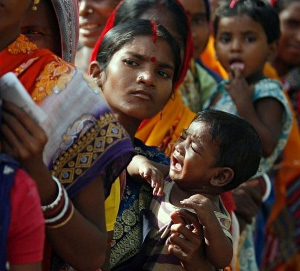
Fact:
The 2015-16 Budget sees a 19% cut in the overall allocation towards women from last financial year.
The total budget for the Ministry of Women and Child development is less than halved.
Rape crisis centres cut from 660 to 36
A hard look at the numbers
Let’s take a look at the data. As the new Government came to power, they promised that women’s issues will be taken seriously and women’s development was on their agenda. However, the real picture now seems wary.
Gender Responsive Budgeting in India: Funds Decline in Budget 2015-16
The 2015-16 Budget had a 19% cut in the overall allocation towards women from last financial year. The Government is being criticised for slashing funds for women from various quarters.
Let us take a look at the volume of total funds that go towards schemes for women from the past budgets from the last five years:
Budget Allocations for Women in the Past (figures in Rs.Crore)
| Year | 2009-10 | 2010-11 | 2011-12 | 2012-13 | 2013-14 | 2014-15 | 2015-16 |
| Allocation of resources for women (in Rs Crore ) |
56,858 | 67,750 | 78,251 | 88,143 | 97,134 | 98,030 | 79,258 |
Source:Union Budget
Budget 2015-16 sees a 19% cut in the overall allocation towards women from last financial year.
The table above shows the gradual increase in the allocation. But this year, the allocation suddenly declined. The central government has cut down the overall spending on social schemes in the budget 2015-16. And that is also reflected in budget allocations for women.
India ranks among the lowest countries in the world: Gender Inequality
The socio-economic condition of Indian women does not fare too well globally. In UNDP’s (United Nations Development Programme) Gender Inequality Index (GII) India ranks 127 amongst 152 countries. GII takes into account reproductive health, empowerment and economic status of women.
The poor statistics of women’s health and overall social backwardness is reflected in poor international rankings.
Very low rates in female Literacy, child sex ratio and maternal mortality: India
Female literacy rate in India is only 64.6% in census 2011.
Another concern is the decline in the child sex ratio (CSR– girls per 1000 boys aged 0-4 or 0-6) in India from 976 in 1961 to 918 in 2011.
As far as maternal health is concerned, the Millennium Development Goals for maternal mortality ratio (MMR) is 140 per 100,000 live births. India had achieved 178 by 2010-12 and it is estimated to reach 141 by 2015.
With such state of affairs cutting down of spending for women may not be conducive for gender development in India.
Ministry-wise Spending Cuts for Women and Child Schemes
| Ministry | Scheme | Interim Budget 2014-15 |
Budget 2015-2016 |
|---|---|---|---|
| Rural Development | National Rural Livelihood Mission(NRLM) |
33,364 | 2,382.7 |
| Ministry of HRD | Sarva Shiksha Abhiyan (SSA) |
27,634.7 | 2,200 |
| Mid-day Meal | 13,152 | 1,461.4 | |
| Rashtriya Madhyamik Shiksha Abhiyan (RMSA) |
4,965.5 | 367 | |
| Women and Child Development |
Integrated Child Development Services (ICDS) |
18,170.7 | 8,345.77 |
| Rajiv Gandhi Scheme for Empowerment of Adolescent Girls (RGSEAG) – SABLA |
689.65 | 10* | |
| Indira Gandhi Matritva Sahyog Yojana (IGMSY) |
400 | 433 |
Source: Budget 2015-16 (Figs in Rs Crore) *10 crore is Centrally sponsored. Funding through states will be through Nirbhaya Fund.
Less than halved: Budgets for Ministry of Women and Child
The data above show the decline in funding for women in the new regime compared to UPA’s last budget. The total budget for the Ministry of Women and Child development is less than halved. Programmes such as the National Rural Livelihoods Mission (NRLM) have shown a lot of success with women’s Self-Help Groups.The funds for the old schemes have been slashed while the new schemes are still not implemented fully.
Following are new women’s schemes from the Budget 2015-16:
New Schemes for Women
| New Women and Child Schemes implemented in 2015-16 |
Description | Ministry |
|---|---|---|
| Nirbhaya Fund for Women Safety |
For safety and security of women |
Finance (Department of Economic Affairs) |
| Apprentice College for Women |
||
| Sukhanya Samridhi Yojana |
Part of Beti Padao Beti Bachao campaign |
|
| Beti Padao Beti Bachao |
For promoting survival, protection, and education of the girl child |
Ministry of Women and Child Development |
Source: Budget 2015-16(Figs in Rs Crore)
Women’s safety is the biggest challenge before the Government and the Indian society. Various attitudinal studies paint a sad picture when it comes to violence against women.
Nirbhaya Fund: Only 321 crore from 1000 crore utilised
After the Delhi rape case of 2012, the Government of India set up Rs 1000 Crore Nirbhaya Fund in the Budget 2013-14. So far, only Rs 321.69 Crorehave been sanctioned from this fund to build Global Positioning Systems for police to provide speedy help in emergencies. In the present fiscal, another Rs 1000 Crore have been allocated for the Nirbhaya Fund.
The new schemes added last year such as Beti Padao, Beti Bachao addresses low female sex ratio and literacy rates in India. So far, it is too early to comment on the implementation of this scheme. This scheme is being launched through the Ministry of Women and Child Development and Ministry of Human Resource Development.
More on the writer:
Disclaimer:
Views expressed are of the author alone and do not necessarily represent that of the brand.
Share this story on
Arushi is a feminist from Lady Shri Ram College, Delhi.
MV Foundation - The Mamidipudi Venkatarangaiya Foundation (MVF), is based on the non-negotiable principle that ' no child works and every child attends full-time formal school as a matter of right’.