What is an Arrest Memo?

Submitted by admin on Thu, 02/25/2021 - 15:57

An Arrest Memo or ‘Memo of Arrest’ is a document that the police must file at the time of arrest or immediately on bringing the arrested person back to the police station. It acts as a safeguard against illegal detention by the police

What are the limitations of an FIR?

Submitted by admin on Thu, 02/25/2021 - 15:55

An FIR can only be filed for a cognisable crime.In the event someone is trying to file an FIR for a crime that falls in the non-cognisable category it is the duty of the police to listen to them, enter the matter in their daily register or dairy, give the person a signed copy of the entry made (as proof of the matter being recorded) and direct them to the closest or appropriate magistrate

How I met my first molester

“When is a safe time for women to leave for home from office in the evening? 8 pm? 7 pm? 6 pm?

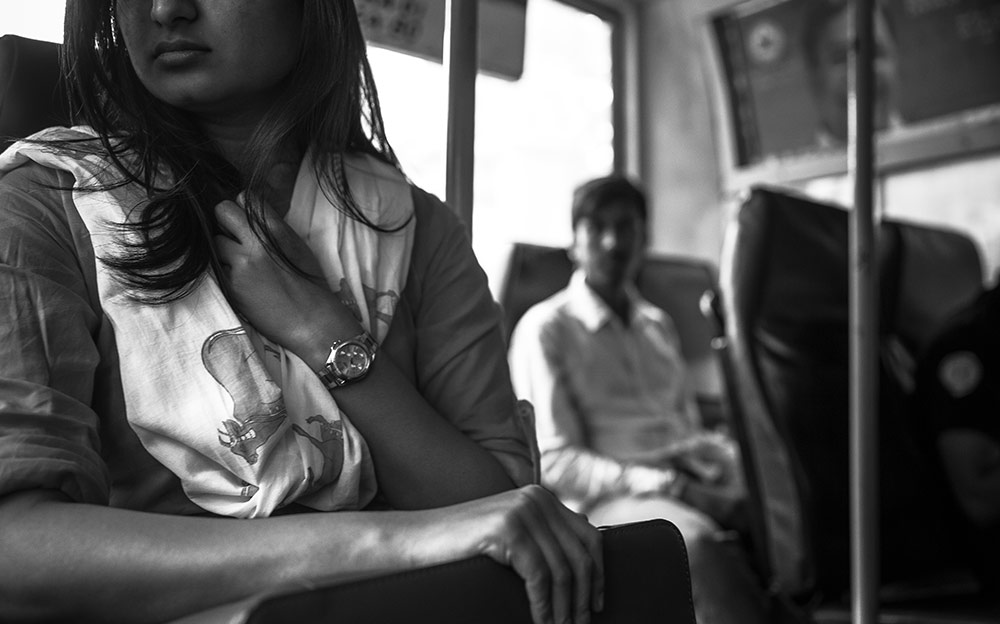
I left office at 5 pm that day. I had to run some errands and I left early to get a head start. I took the bus, found a seat and sat down for the long journey. I paid for my ticket when the bus conductor came by, and when I leaned back into my seat, I felt a hand touch my back; a hand that was squeezed between the seat and the window just to feel me up. I turned around, feeling shocked and violated. The sight that greeted my eyes disgusted me to the core. I saw the molester smiling back at me. I got up from my seat and asked him to explain his actions, as I trembled in anger. He continued smiling at me, not responding.

I got up, and moved to another seat. I looked back again and the man was staring at me.

I had a feeling of dread creeping all over me. I didn’t know if I should raise an alarm or let this go - I was afraid he would alight from the bus and stalk me if I made a hue and cry about this. On the other hand, I was furious about what I had to go through. I stopped leaving at 4pm.

I thought that somehow, not leaving at 4 pm is a solution. What next? Do I stop taking the public transport? Do I weigh the pros and cons of taking my molester to task, who is probably looking forward to torturing another hapless woman? Do I change offices? Do I change streets?

What do I do?”

The signs are everywhere

These are issues we are well aware of – but we have waited for the next big assault, the next horrific rape, the next brutal attack to wake us out of our slumber. They say it’s never too late to do something, but in this case, it is. Now is the time to show that we don’t want to wait anymore.

Alarm Bajne Se Pehle Jaago Re!

Share this story on

An Open Letter to Children from a battered Playground

Dear kids,

They say that some lessons can be only learnt on a playground.

I will be the first one to agree - I mean look at all the lessons I am teaching the kids.

So kids, here goes nothing:

You will learn to adjust. You need to understand that I'm not always ready to be used the way you'd like. Sometimes I will have pebbles. Sometimes I will host non-sporting functions. Sometimes I will be unavailable. We'll work around it. We always do.

Be versatile like me - I am used for every sport.

Don't sweat the small stuff - I will not be the same size you need me to be.

Always remember the bigger picture - remember that the sport is bigger than the playground.

These valuable lessons will come in handy when you are competing at a national level. Or at a global level. Like the Olympics.

Some of us may not be very receptive, but you know what they also say: "Any publicity is good publicity."

And then you can all point fingers at us. But how does it matter?! We have taught you the hard lesson by then.

Go ahead learn these lessons kids, while I settle some scores.

Yours Sincerely,

The Battered Playground.

Share this story on

Is the child labour debate becoming #AntiChild?

With the recent proposal to amend the Child Labour Act 1986, the debate on child labour has flared up afresh. In these debates we, as adults, often talk about the ‘best interests of children’ and make decisions influencing their lives on their behalf. However well intended, we fail to see that our understanding of the best interest of children clashes with how they experience their realities.

Understand why children work

The Concerned for Working Children’s partnership with working children since the past 35 years has shown over and over again that children work because of a complex web of economic, social, political and cultural factors.

Our experience shows that a ban approach to child labour, which only addresses the demand side, ends up pushing children into more hidden and exploitative working places, since their need to work has not been addressed. Out of reach from protective systems, these children are made more vulnerable. The proposed Amendment continues to disregard this reality. The exemptions made to the ban are family based work and work in entertainment industries. These seem arbitrary especially as in these sectors children are highly vulnerable to exploitation.

Understand children’s realities

With one-dimensional one-size-fits-all solutions we are unable to look from children’s perspective to see what context specific challenges and needs they have. Simplistic solutions, like enrolling children into schools or forcefully ‘rescuing’ them without provisioning long-term support, are not viable alternatives. Raid and rescue makes children and their families feel criminalised for trying to deal with the reality they live in and in the long term it does not have a positive impact on their lives. This was articulated in the below statement made by the National Movement of Working Children submitted to UN.

“We are constantly told that we have to stop working and start going to school. But they do not realise that in our given situation of poverty and deprivation, work is a necessity. Even if we try to explain our situation, we are not taken seriously. If we are migrants, we are sent off to our villages. They do not realise that we left our villages because we had no livelihood there. In the raid process we the concerned children are not at all consulted. Our needs are not taken into consideration. The alternatives forced on us by the Government actually make our situations worse than before. These raids are a total violation of our rights and are not a solution to child labour.” (National Movement of Working Children 2003)

Nature and conditions of work vary from place to place and whether it is hazardous depends on age, gender, ability and conditions of work. To decide what is in the best interest of working children we need to try to look through the eyes of the child, to understand what constitutes a good solution in their given situation. An example of this was how children in a Panchayat in Karnataka facilitated by the Concerned for Working Children, made their own list of what work children can and cannot do From: Their document provided a win-win situation; the Panchayats response could be made context sensitive, and at the same time be able to address protective mechanisms children need to prevent them from working in hazardous conditions. Work can be an educative safe space where children learn skills, gain knowledge and prepare for their future, but only if these spaces are regulated and monitored.

Towards a fresh approach

Approaches to child labour can be in children’s best interest only when we try to understand their problems from their perspective. The proposed amendments to the Child Labour Act are failing to do so. The root causes are not addressed and the focus on child’s rights and voice is still missing. We need to actively include children and concentrate on why they work and what kind of systemic support they require not to engage in harmful work. Only a holistic, child rights centric approach, where the local conditions and realities of children are addressed, will make a true, positive and sustainable difference in the lives of children.

Biography:

The Concerned for Working Children is a 35 year old not-for-profit secular, democratic private development agency, thrice nominated for the Nobel Peace Prize. We have been focusing on the issue of working children and children’s rights, with a special emphasis on children’s right to self-determination. We work in partnership with children and their communities, local governments and national and international agencies to implement viable, comprehensive and appropriate solutions to address the various problems that children and their communities face.

Read more:

Have we Asked the Children? By Nandana Reddy (The Hindu, 13th of June)

Are you Anti #ChildLabour or #AntiChild? Campaign details

Join the campaign here:

https://www.facebook.com/workingchildren

https://twitter.com/workingchildren

Disclaimer:

Views expressed here are of the author alone and do not necessarily represent that of the brand.
Share this story on

A Platform to Prosper

“Give a man a fish and you have fed him for a day.
Teach him to fish and you have fed him for a lifetime!”

This proverb couldn’t be any more apt. Every child in our country has the right to education. Unfortunately, the vast economic disparity in our society doesn’t allow this to happen. As a result, many children remain illiterate as they cannot afford even the most basic education.

That’s where selfless women like Inderjit Khurana come in. A schoolteacher herself, she used to commute by train to work every day. She would notice some children begging for food in the train or doing small odd jobs to make a living. She was well aware of the fact that these children would never get an education as the money they do end up earning is spent in procuring their meals.

That’s when Inderjit decided to use her skill and teach these kids on the train platform itself. Nearly 100 students became a part of the clan within a few months of the commencement of these ‘platform schools’ at which she would use simple flash cards or take them on small field trips as methods of teaching them.

More members joined her and the Platform School and as it began to grow Inderjit realised that she was onto creating a life changing experience for these children. She branched out in terms of reach, began conducting training courses, opened a shelter for runaway kids and provided medical help as well.

Inderjit passed away in 2010, but has left behind an organisation with a legacy that inspires people to continue enriching children’s lives with light of knowledge and education.

All it took was the resolve of one teacher to inspire others to come forth and share their skillsets as well. To inspire others to transform a kid’s life for the better. When one woman can inspire so many, shouldn’t every woman also be inspired to use her power?

Women must join other women and change the way democracy currently views them. Women must be inspired to act by the possibilities that can be achieved by the #PowerOf49.

Think about it.

Share this story on

Subscribe to