The Gender Advantage: Women who Misuse it & Men who get Offended
Is it an Issue with your EGO, or her Spirit?

I believe women are always at an advantage.
For instance, there are reserved seats in buses. There are separate ticket counters for ladies. Some trains have 'women-only' coaches. In metros there may be complete trains only for the ladies.
I am a 24-year-old guy and I find this disgusting. I respect women but if they cannot keep their pace with men, they should just quit.
Every day I travel to my college in crowded buses. These buses are so packed that at times I can't escape the breath of my co-passengers. Yet, all these years I have never found a hand brushing up my ass just to feel it.
I use the metro service regularly. I've travelled in it ever since I was a small kid. Never has anyone intentionally pushed me to touch me. Even if they attempted it, I would have raised an alarm and all my fellow passengers would have supported me and made the culprit the centre of attention. No one would have stared at my body right after getting abused. No one would have blamed me for getting into crowded coaches. No one would have muttered to his friend, "Lucky guy…. atleast he got a chance to grope his chest."
I believe women are always at an advantage.
For instance, I come from a lower middle class family, and taking a taxi to go back home is a luxury I cannot afford. But that isn't the case with girls. Their fathers give them enough so that they can avail a taxi anytime. Recently, a female friend of mine was supposed to come to my house. It was already too late. So I called her up and asked her to take a taxi. Guess what? She replied she could not since she was alone. I do not understand how "being alone" is problem. I love to wander the streets and travel alone.
I believe women are always at an advantage.
Let me explain how. You love pizza. You enter a restaurant and get your pizza on the table. You start munching on the cheese, when you suddenly realise the guy on the next table has been noticing you. He is staring at your pizza, and your lips as they move, as your fingers pick up the tissue to clean off the chesse on your cheeks. May be he wants to lick it. Why would this bother you? You don't know what's on his mind. He has done nothing that violates you, atleast not yet. Well this was just an analogy.
Likewise, in the corporate world, why should it bother you if your boss keeps trying to peep in through your shirt? Often straps of your vests and the brand of our underclothes can somehow be viewed. I take pride when someone takes notice of mine. Why do you think someone will discuss its colour, or may be play bets on its size? I am a stud. Same goes for females, right? Why do you think the view of my strap would be taken as an invitation to take them off? Women! They just make a hoax out of nothing. Attention seekers.
I believe women are always at an advantage.
Let me explain how. I may loot a thousand houses. I may burn people alive, or rip their heads off their shoulders to get money. I may thrash them with cane regularly or get marks by hot iron imprinted on their skin just so they give me money. Government may make stricter laws against people like me. But wait,what if some evil guy goes and puts false charges of extortion on an innocent person and the person gets arrested within hours - without any fault of his. The laws should be lenient. Because even if hundreds of criminals convicted of killing an entire race are let free;even if hundreds of people face the risk of being burnt alive,an innocent should not get punished.
Same goes for dowry cases. The fact that thousands of girls can be saved doesn't come as respite. Some random person may happen to lodge a "false" case (oh, the horror!). Therefore laws should change and moreover deciding penalty for those putting false charges of dowry should be our topmost concern.
I believe women are always at an advantage.
All a woman has to do to seek revenge with someone she hates is to go up to the Police station and file "fake rape" charges. The girl and her family get popularity as an added benefit.
The only risk is if she cannot prove charges. Then she will be declared a slut and a "rotten fish that would contaminate the locality".She may have to hide her identity forever, this may affect her prospects of job or marriage, it may affect her mentally and emotionally forever. A handful may call her clothes provocative, but a single poster stating: "Even if I am nude, you do not have the right to touch me" will silence them. So, in comparison to the benefits, the risks are negligible.
I believe women are at always at an advantage.
They only have to take care of household chores. They don't have the tensions of competitive exams, studying for graduation or the hard life of earning an income. What’s more, society labels a man who allows his wife to work as 'mangina'. So again, it's the man who's got to work. The result - so many farmers revert to pesticide bottles... suicide cases among men are increasingly high. Perhaps a working mother along with working father can give their kids a better life, but no…
Women will always take advantage of their gender.
The pet parrot is always pampered and fed regularly with chillies or fruits. The birds flying in the forest may not be "fed" properly as they have to fend for themselves. They envy the parrot. They conveyed this to the parrot. The parrot replied, "Yes, I am fed healthy fruits of my owner's choice. You choose your worms. My owner made this cage of gold for me... my owner's neighbours say had they owned me, they would have kept me in a better cage. I do not wish to be treated differently just because I belong to a different species. I also want to spread my wings and fly in the open forest. Everyone wants to own me, but no one loves or respects me."
To which the forest birds replied, "We still believe you are at an advantage."
More on the writer:

Disclaimer:
Views expressed here are of the author alone and do not necessarily represent that of the brand.
Share this story on


PowerOf49 Manifesto on Health and Sanitation
Over 600 million Indians defecate out in the open.
More than 50% girls in India are anemic.
Every 10 minutes a woman dies of child birth.
These gory statistics prove that India is grossly unable to provide basic rights of hygiene, health and sanitation to many of her citizens. For women, the reality is all the more grim. Almost 60 years of Independence have gone by, yet half the population does not have a toilet in their home.
CNN IBN and Jaagore invited three individuals that have contributed remarkably to health and sanitation in India.
Anjali Nayyar, Senior Vice-President of Global Health Strategies, Ranjana Kumari, Director, Centre for Social Research (CSR), Former Vigilance Commissioner (CVC) and Former Chairperson, NABARD and Anshu Gupta, Founder of Goonj, came together to help frame the PowerOf49 Manifesto on Women’s Health and Sanitation.
1. Construct 1 crore toilets within one year
Construct at least one crore toilets within a deadline of one year. Separate women's toilets in particular must be built. There must be provisions for toilets with easy accessibility and assured privacy 24/7. The toilets must also have adequate water supply.
2. A "frontline army" of health and sanitation workers
Build Government workers, NGOs, local health and sanitation workers, along with ASHAs (programme on Accredited Social Health Activist) into a combined "frontline army".
The frontline army or political ground level workers should also ensure that it isn't the job of any one particular caste to clean these toilets.
3. Free medical services for all expecting mothers
Free, incentivised safe deliveries in hospitals for every mother including post-natal maternal care.
4. More health schemes for girl child
Incentives for care of girl child - more schemes promising medical insurance for girls 0-18 years must be put in place. Additionally, a programme that focuses on iron folic supplementation must be introduced to fight the issue of anemia in young girls.
5. Dedicated women’s wards and hospitals for AIDS, cancer patients etc
Women's wards and hospitals should be constructed for looking after those diagnosed with cervical cancer, breast cancer, HIV/AIDS etc. These hospitals must include specialised medical insurance packages.
Political parties must also mobilise its ground level workers to hold public awareness talks.

The Power of 49 has put forth their manifesto on health and sanitation.
Join the conversation on @JaagoRe on twitter next week as we discuss women's education and employment and create a #Powerof49 manifesto on CNN IBN on Friday, 14th March, 8.30 pm.
To read the final 10-point #Powerof49 Manifesto that was presented to leading political parties, click here
Share this story on
Women's Safety: In Your Words

It is an accepted fact that brutal crimes against women are occurring in India daily. Now many Indians do not deny, or shy away from conversations relating to eve-teasing, sexual assaults or rape.
Even the common man's conversation on the streets often steer towards the escalated and horrendous attacks on women.
An overbearing concern each of us has towards the women in our families has lent a sense of urgency to our dialogue on the critical and pressing issue of women's safety.
Jaagore recently threw this question open to our audiences.
What should women do in the wake of continuous attacks on women?
We asked them one piece of advice they would give to women to be safe in their cities.
Many women, and even a larger number of men participated in this survey.
Many replies predictably lay restrictions on women. Let's take a look at some of them:
Women's safety – Can'ts
.jpg)
.jpg)
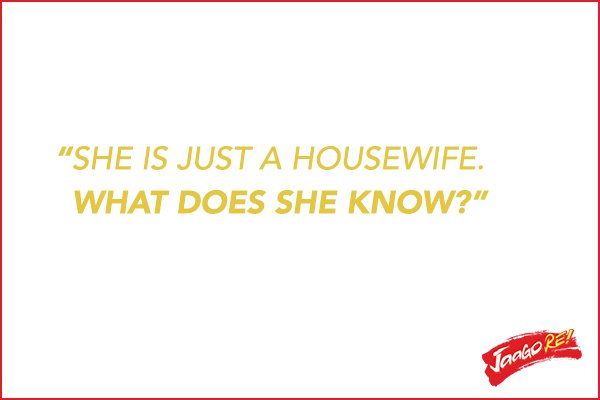
For a long time, we have been asking our women to "cover themselves up", to "stay in their limits" or "ignore" cases of harassment. It's now reached a tipping point and these age-old methods are proving to be ineffective.
An important point to remember is that many assaults on women are rooted in power play. Experts have often stated that all acts of aggression towards women are tools to assert power over a woman, be it rape, molestation or even 'eve-teasing'.
It makes sense then, to take that power back, instead of validating and legitimizing violence by towing the line and "staying within a limit". Is it really practical to 'look down when you walk', 'stay home after dark' or always be 'covered from head to toe'?
Then there were other practical and thoughtful words of advice that can actually make sense and can be imbibed.
What Women Can do to be safe


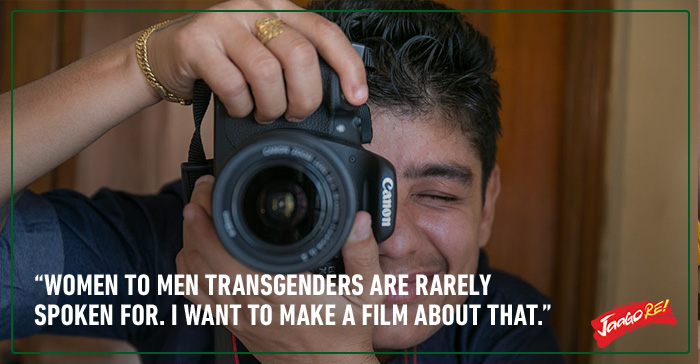
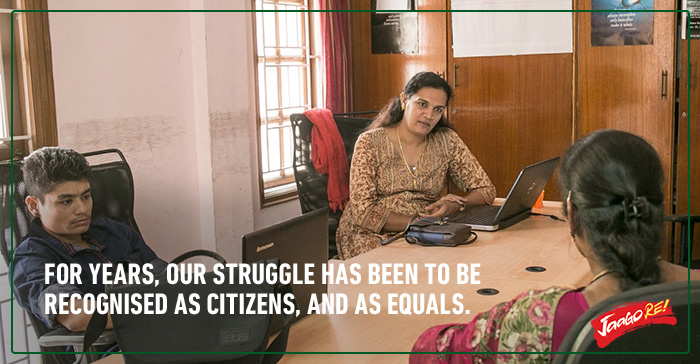
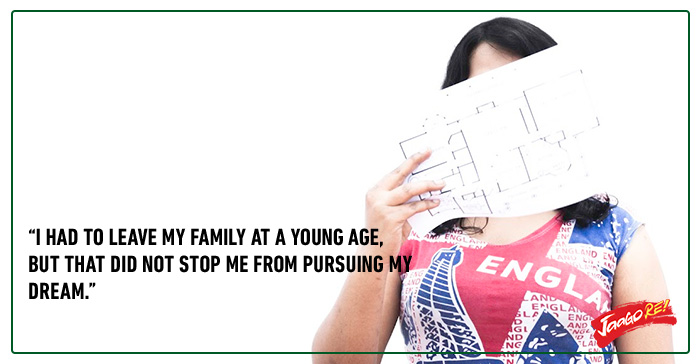
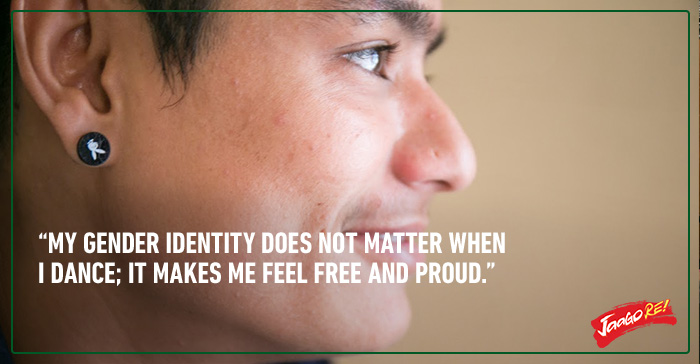
These are some quick-fixes that women can keep handy. While a change in society and intervention by authorities will take time, it's best to stay alert and prepared by ourselves.
Many others were quick to point out that all of these suggestions only make sense when we introspect and confront our own attitudes that have made our societies unsafe for women.
Should we be advising women or addressing the culprits?


Indeed, as a society if we can work together and take responsibilities for the stark reality we live in today, things will change.
Acceptance is half the battle won. Raising our voice has to be the next step. Let's keep the pressure alive and let's vow to end this despairing situation so women can walk free and in a civil and crime-free India.
If you have seen any instances of crimes against women or street harassment, push the pin here.
Share this story on

Behind bars, there lies some hope

Two young women speak to Jaago Re about their efforts to uplift 165 jailed female inmates.
165 women inmates await their fates in Bangalore Central Prison. Disowned by families and banished from society, the lives of women inmates in prison are not easy.
However, there are two other women often seen in Bangalore prison. These women aren’t convicted of crimes; they are on a different mission altogether. Meet Ashmira Hamirani from Mangalore and visually impaired Andrea Lobo from Mumbai. These two power women are working towards rehabilitating women inmates and ensuring that they don’t find themselves trapped in desperate situations where they may turn to crime again.
Pehel, a fellowship granted by Tata Institute of Social Sciences (TISS) made it possible for these two women to go forth and reach out to the women inmates.
What Pehel does
Most of the prison inmates are poor and stigmatised. Many end up spending years in prison if they are unable to pay the bail amount (ranging from Rs. 2000 to Rs. 5000 or more).
Some women are mentally disturbed. Other women are from begging communities. Some enter the prison along with their little babies. They all need proper shelter and rehabilitation.
Ashmira describes some of the work they engage in: “We help pay the bail amounts in genuine cases where we feel that rehabilitation is possible. We also conduct home visits with the families, provide financial and legal assistance, and rehabilitation during release. We follow up on the court dates and are in the process of finding agencies that can employ the inmates upon release. Additionally, we are trying to put in place government schemes such as widow pension, schemes for children and so on inside the prison, for the inmates.”
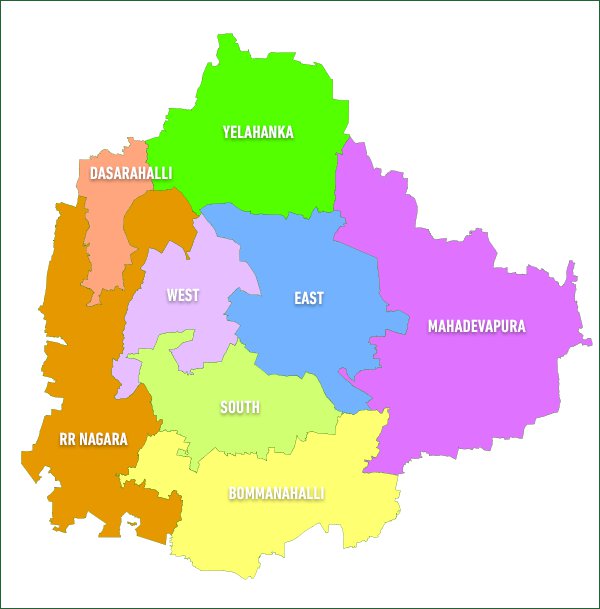
Women can make a difference!
Both Ashmira and Andrea look demure and soft-spoken. Yet their courage and determination defies their demeanour, and there’s no stopping them. The Pehel fellowship is to continue till the year 2015.
Women like Ashmira and Andria are a cut above their peers and despite the many challenges they face, the contribution they have made to the women of Bangalore prison is invaluable. It is the power and grit of these two young women that is inspiring and only goes to prove that together, women can bring about a world of difference!
Share this story on

5 Indian women ahead of their time
In the last 30 years, women in India have come a long way. So much has changed – this is largely due to the actions of a few inspiring women who didn’t let anything hold them back. Today we celebrate five such women who were, and still are, ahead of their times.

Harshini Kanhekar, India’s first firefighter woman

Harshini earned the title of India's first female firefighter nearly ten years ago. Ambitious from the start, Kanhekar applied to Nagpur's National Fire Service College (NFSC) fresh from university. Little did she know that this was an all-male college. Yet Kanhekar was determined to overcome the initial obstacle. She wasn't prepared to hear that ‘a girl cannot become a firefighter'. She went on to become the first and only woman in the college to graduate, initially receiving skepticism; later winning immense admiration. Her advice to all women is truly ahead of its time: 'to break all barriers and create history for the nation.'
Priya Jhingan, first woman in Indian Army

Priya Jhingan was the first woman to join the Indian Army. An aspiring police officer and later a law graduate, Jhingan’s dream was to join the army. In 1992, she wrote a letter to the Army Chief himself, asking him to let women in. A year later, he did, and Jhingan and the other 24 new female recruits began their journey. From this point onwards, they were referred to as 'Sirs' and thrown into the same bathrooms, swimming pools and training regimes as the men. At a time when sexual inequality was still highly prevalent in the working and domestic spheres, Jhingan's ambition to promote equality in the armed forces was certainly ahead of its time.
Surekha Yadav, Asia’s first female train driver

Surekha Yadav was India's and Asia's first female passenger train driver. She took the front seat in a busy Mumbai commuter train eleven years ago, and has since inspired fifty other Indian women to take control of trains in the country. Yadav is also an inspiration for women today because of her direct role in promoting female safety in public transport. After witnessing the daily eve-teasing and harassment of women, Yadav was instrumental in the introduction of female only trains in four Indian cities last year. Easing the journey of thousands of women in the city, Yadav drove Mumbai’s first “Ladies Special” train into the Victoria Terminus in Mumbai. She says her mother always said, "A girl child shouldn’t necessarily learn to cook. Studying is more important. You need to be bold." It is this never-failing courage that made Yadav truly ahead of her time.
Chetna Sinha, founder, first rural bank for women in India

Chetna Sinha, a farmer by profession, set up the first rural bank for women in India in 1997. Burdened with droughts and shortages, the women in Mhaswad, Maharashtra, wanted to save some of the money they earned, but there wasn’t a single secure place for it. When Sinha presented her idea to the Reserve Bank of India, they rejected it, on the grounds that “women were largely illiterate and incapable”. However, the women of her village did not take no for an answer. After three months of training in reading and writing, they returned to the Reserve Bank, shocking the men with their determination.
Despite 8 to 10 hours of load shedding almost daily, the bank has managed to introduce both computerised and door-to-door banking – to cater to almost two lakh women across nine districts in rural Maharashtra and Karnataka. Sinha’s advice to future generations is to always challenge the status quo. Her bank has also helped 6000 women gain property ownership: truly ahead of its time.
Urvashi Butalia, co-founder, India's first publishing house for women

Urvashi Butalia was one of the founders of India's first publishing house dedicated to promoting women's rights. In 1984, when Butalia set up Kali For Women, her aim was daring: to 'somehow make a dent in the way the world sees women.' The publishing house and its current imprint Zubaan Books have certainly done this. They have provided a great platform for female writers in South Asia and raised awareness for important issues such as sexual abuse and the dowry system. Butalia never married and never had children. Her response to everyone who has questioned her for being under the ‘curse of childlessness’ is that she has had ‘a happy, contented, fulfilled life.’ Butalia remains an inspiration to all Indian women, and was truly ahead of her time in both the professional and personal sense.
Share this story on
I am the Girl Child That Survived – Pooja Chopra Writes for Jaago Re
.jpg)
I am Pooja Chopra. I am a model, actress and a survivor.
I think my story has been told many times. How my father decided that he doesn’t want to have another daughter. How he asked my mother to choose between me and her marriage. How my mother was devastated that she was being forced to make such a choice and how she stood her ground. How my mother chose me, and independently moulded me into the woman I am today.
Yes, my story has been told many times before. And yet, I never tire of telling this story again and again. I never tire of reminding the world, what a remarkable woman my mother continues to be. How her strength, made me stronger. How she reminds me every day, of how lucky I am to be HER daughter.
I could have been a statistic. Many girls don’t get that chance. Many families don't make that choice. But I was given a chance. I moved onto bigger things. I worked hard, and earned fame and recognition. I am successful today. I have everything that I need. Almost.
And yet, I am still surviving. I think it wouldn’t be an exaggeration to say that from fighting the battle to stay alive, I now am fighting a different battle – to remain safe. I won’t be exaggerating when I say that me, ‘a celebrity’, also fears that I will be a target of rape. That my NO, will be taken as a YES. That my retaliation will be punished. That my rejection of a proposal will be rewarded with an acid attack. I am not exaggerating, because these fears are being replayed in every corner of the country. I have every reason to be scared. I have every reason to even be dramatic about it. Just because it is not happening to me right now, doesn’t mean I can rest easy.
Just because I am that girl child that survived, doesn't mean that the woman I have grown up to be is secure and happy.
No.
I escaped being a statistic, just to fight to not become another one.
Share this story on
.jpg" /></p>
<p class="art-para-power">
I am Pooja Chopra. I am a model, actress and a survivor.</p>
<p class="art...)
Well-behaved women rarely make history

For long women have been placed on a pedestal that perhaps even Goddesses will find unreal. A woman must be timid. She must speak less, she must sit only cross-legged, she shouldn't laugh too loud, or talk too loud. All these are mandatory, non-negotiable traits for the ideal "good women" we all may know, we all should ideally aspire to be.
Is it a surprise then, that in a recent gender sensitisation quiz posted on Jaago Re, over 50% both men and women think girls are "more prim and proper" than boys.
So it's basically taken for granted that a woman should, by default, be particularly, nitpickingly flawless – well-kept, like the pet we tend to pamper at home. The media unfortunately, has only elevated this idea – by overusing and promoting the "pretty princesses" our women groom themselves into. A lot of young girls buy into this stereotype from a very young age, when they would rather comb their doll's hair, then get their hair ruffled at a football or a cricket match. (Cricket? For girls? Sounds like a joke, right?)
Here's another result from the same quiz Jaago Re held on gender sensitisation:
Men tend to be more untidy than women
52% men incorrect
54% women incorrect
Yes, let's just face it: we all do expect women to be spic and span. And not just their personal appearance, we also expect them to look after the appearance of the house and the children. Grooming boys and girls isn't a father's job, it's a woman's job. Tending to the house and ensuring that every piece of furniture is sparkling clean is again, a woman's job.
Only it isn't! No matter how educated or "modern" we are, eventually many of us admire women who actually tend to these household, domestic "duties", whether we admit it or not.
A man may date or dream of dating a woman who breaks all the "rules", but will only take home the "well-behaved self-sacrificial dutiful bahu". This is a well-accepted practice, among a thousand other such ridiculously misogynistic practices our culture is guilty of.
So having an opinion is not a good thing. Questioning the status quo, rocking the boat and worse, defying these unspoken norms for a woman is a complete no-no. In so many ways, our society just injects these ideas – that a woman should remain silent, submissive, be pleasing, "keeps the peace"– be it the self-sacrificial woman from another block buster movie that hits our screens, or the gossip from the neighbourhood aunties.
She should learn to "behave". She should learn to "behave like a woman". Because being a woman means to be "prim and proper and tidy".
Well, how about we just let the girls be? Ruffle your hair. Loosen your belt. Ride wild like the wind. Do not behave. Scream, shout, laugh, love. Ask. Challenge. Push your boundaries. Be it at work, school or home. Do not let your daily affairs be dictated by how "pretty" you look.
Be concerned, and express it. Be sensitive, express it. Be opinionated, and please express it. Speak up when you need to, take a stand. Make yourself heard loud and clear.
Don't just break the traditional idea of what a woman should be, destroy it. Because you're not just smashing a perception, you're smashing patriarchy.
The very same patriarchy that results in women being "eve-teased" and harassed daily. The same patriarchy that is responsible today for women being raped, killed, beaten into submission. No, it's the woman's fault, it never is. It is the fault of the oppressor, and also the fault of those who defend it.
Break patriarchy and all the chains that grip you. Break free.
No, everyone will not support you. Yes people will tear you down, force you back into the regressive and constricted idea of how a woman should be. All you can do is smile and break free.
And tomorrow, make sure to turn back and say to them, "Well-behaved women rarely make history."
Are you Gender Sensitive? Play the Game and Find out Now!
Do you display sexist attitudes in your daily life or are you gender sensitive? Click on the game and play now to know your score on gender sensitivity.
Share this story on

An interview with Mrs.Deshmuk

It is not uncommon in the least to spot a fellow citizen question the workings of a local municipal body or complain about some kind of inconvenience faced due to a glitch in the ‘system’. Although it is in our right to voice a concern or point out something negative, we often forget that it is also in our capacity to initiate the improvement that we want to see.
Is your immediate thought, ‘easier said than done?’
Mrs Kanika Deshmuk* has been a resident of Nagpur for the past 24 years. She is a go-getter and believes that waiting around for someone to take charge is not an option, at least, not for her. Having noticed that several women in her neighborhood faced an inconvenience in paying electricity bills because of the lengthy queues and the elaborate procedures, she proposed an idea and saw it through.
In conversation with Mrs. Kanika Deshmuk.
Mrs. Deshmuk, how long have you been a resident of Nagpur?
I am quite proud to say that I have lived here for the past 24 years.
I am sure that as a homemaker, you have a tremendous amount of responsibilities. How packed would you say is your average day is?
I'm a housewife, so my schedule is very packed. I juggle quite a few things but I do seek help as and when I require it.
I understand that you are quite social. How many women do you interact with frequently?
I do have some very well-deserved social engagements when I can make time for the same. There are around 80 women in my neighborhood and it’s safe to say that we are all well acquainted.
Do you feel like you influence these women?
I would not say I am the ring leader but when a bunch of housewives come together, we have common issues that we have to deal with. More than often there is a unanimous decision or a solution to a particular problem we are facing.
Would you say that these women are satisfied with the services that the concerned municipal authorities in your area provide them with?
There can never be a macro solution to how the municipality helps a woman in doing her chores. Of course, some amenities like garbage disposal are the municipality's responsibility, so if your question is, ‘Is the municipality is up to the mark? Then, yes.’ But of course, there can instances where it overlooks certain needs but as responsible citizens, it is our right to point it out and amend the same.
I understand that you, along with a couple of women in your neighborhood faced some issues with paying the electricity bill. How often did you have to wait in queue to pay bills?
Yes, we did find it quite tiresome to stand in queue to pay our bills. We also found the process to be quite elaborate and faced some difficulty in getting this done.
Was there any particular reason you decided to approach your local office?
It was actually in a meeting of friends that on one of us joked that we should hire a guy to collect the money and do the same.
How many women in your locality were on board to see this through?
A housewife doesn’t need to leave her busy routine to go and pay a bill? Who wouldn’t want that?
When did you first approach the department?
We initially hired one of our house maid's husbands to collect the money and pay the same at the offices. They initially thought that he was a dalal i.e. a point man, like at the RTO. But soon found out that it was our initiative. They offered the same services within 3 months. Of course, we insisted that our man be given the job. Though now he earns a fixed amount instead of 50 Rupees for each household.
Are you pleased with their current services?
Yes, it was quite reassuring to see that they understood our problem, even though it was small, and did their part to resolve this inconvenience. We were quite pleased to see that they are quite approachable.
Does the man who was appointed by the office come regularly?
Yes, he is quite efficient and dependable.
Are you currently facing any issues that you would like to see resolved?
In fact, we are trying to resolve an issue that we are facing with the street lights outside our homes. We have already approached the concerned authorities and I am sure we will find a way to amend it.
Are you someone that believes that you can make positive changes in your civic environment if you take initiative?
Of course I am a believer, but even if it’s the government's duty to provide you with something, it’s the citizen's responsibility to ask for it and we have managed to build a very good rapport with our local municipality. We have faith that they take a genuine interest in meeting our needs.
Lastly, Mrs. Deshmuk, do you vote?
Yes, quite regularly I must say.
Do you think your vote matters?
It matters, but personally, I think that we need to make informed decisions. We need to understand who does what and how. I strongly feel like we need to be well aware of every decision being made and be quick in our response as well, to any change that our local government bodies prescribe. I speak for all of us when I say that my fellow neighbors are extremely involved and take responsibility in seeing that our government performs responsibly towards us.
Mrs. Deshmuk and her group of enthusiastic friends are just one example of how a collective and conscious effort can resolve an issue that can be neglected or brushed off as irrelevant. Her ability to realize that she has the potential to initiate a small and relevant change is a sheer example of the much ignored Power Of 49!
*Kanika Deshmuk is the alias being used for the lady in question as per her request.
She lives in Jaytala PO, Nagpur, Mahrashtra.
Share this story on

The Magic Number

The number 18 has a way of grabbing the spotlight, yes? It is exciting and new and brings with it so many promises. The legal age guarantees new experiences and the excitement that comes with is quite loud.
The number 18 has a way of grabbing the spotlight, yes? It is exciting and new and brings with it so many promises. The legal age guarantees new experiences and the excitement that comes with is quite loud.
It’s when every young woman starts to dream about her future and celebration that it will begin with. The elaborate birthday party sets the mood for her much anticipated adulthood and she eagerly awaits her driver’s license, her first day in college and all the adventure it promises. She waits to move out of her home, to make it on her own and to get started on building the future she imagined herself living in.
In an attempt to understand what the realistic expectations of a young woman turning 18 really are, we asked our 1 million strong Jaagore Facebook community what they considered to be of ‘priority’ at the age of 18. We gave them three options to choose from.
1- A bright career
2- A driver’s license.
3- Their first vote.
The poll results revealed that a larger percentage of the answers revolved around a career and a few seemed keen to drive around on their own. A vote however excited no one.
In a country like India where the youth make 50% of the population, we see so many bright, young and talented women stepping into their adulthood with dreams and expectations waiting to be fulfilled. We see them carefully plan out their future and take every measure to ensure their prosperity and happiness. What we don’t see is these charming young women give their right to vote any credit. Isn’t it about time that changed?
Share this story on

Excuses women make to stay in abusive relationships

"He cried, apologised and said he will never do it again."
In most cases of domestic violence, once a man hits a woman, it is likely that it will happen again. And again. It’s a vicious cycle.
"It's my fault. I pushed him too much."
People have a choice on how they wish to react in any situation. The abuser makes a conscious choice to resort to violence.
"He's going through a stressful time at work."
Does that justify using wives as punching bags? Women often work hard managing the house, kids and their work. How should they take their stress out?
"I love him, and he will change with 'my love'."
You should love and protect yourself instead. It’s always better to be with someone who can not only love you, but also respect you.
"I deserved it because I didn't keep him happy."
You should never blame yourself. It is not your fault, the fault lies with him.
There are often other reasons why women in marriages end up feeling trapped: children, financial restraints, dependency etc.
Behind closed doors
A recent Government survey (National Family Health Survey) stated that 40% women had faced domestic violence at home in India. Another survey conducted by Yugantar Education Society across five states revealed that 84% women had faced domestic violence. This obviously means that unreported cases are higher than we can imagine.
Push the Pin on domestic violence

We often don't realise how dangerous and precarious our own homes are.
It really is time to end violence against women. Take that step now. Push the Pin and make your voice heard. Use the Power of 49 to work towards making marriages and homes safer and respectful for women.
Share this story on
