What's the big deal about 33%?
Barely 11% women make it to Indian Politics in 2014. 33% is still a far fetched utopia women's rights have been fighting for since 18 years now.

62 out of 543 candidates in 2014 are women. Barely 11% of the India's governing body constitutes women. Isn't it shocking?
India achieved Independence over 60 years ago. The state of affairs for women, however, in many spheres of India is weak. While India grapples to develop and empower women, let's look at the political sphere. Elections 2014 have just concluded with a lot of pomp and show. How do women fare on the political front?
Numbers speak for itself.
Indian Elections - It's a Man's World?
Representation in General Elections 2014
- 639 women candidates contested out of 8197 candidates (as analysed by ADR and NEW).
- 8% contesting candidates were women.
- 62 women out of 543 won - 11% representation in the new Government.
This marks the highest number of female winners in Indian elections since 1957, although the representation is still poor.
Representation in General Elections 2009
- 556 women candidates contested out of 8070 candidates.
- 6.9% of candidates represented were women.
- 59 women, 10.9% won.
As against 59 women MPs in the last Lok Sabha, the 2014 Lok Sabha elections have seen only 62 women candidates win the polls.
It appears that men have all the advantage when it comes to India's highest governing authorities. Women are barely represented, and it's safe to say that India's ruling authorities are largely male-dominated.
Has there been an attempt in the last 60 years to address this concern?
The Women's Reservation Bill has tried to reverse this trend.
Let's look at some background.
What is the Magic Number 33?
The 1996 Women's Reservation Bill proposes to reserve 33% of seats in Indian politics for women.
The Government's Stance
It has been stalled by various political parties for more than 18 years now.
The Women's Reservation Bill was passed by the Upper House Rajya Sabha in March 2010.
As of February 2014, the Lower House Lok Sabha has not yet voted on the bill.
Why the Reservation on Women's Reservation?
Women's groups pushing for greater representation blame this on the entrenched patriarchal mindset of male politicians. Politicians have also been worried that fewer men from their parties would lose their chance to contest.
The Leading Contenders Promise on Women's Representation
Most leading political parties contesting Elections 2014 – have promised in their manifestos to pass the Women’s Reservation Bill if voted to power.
Will the current Government fulfill their promise?
India Lagging Behind the World on Women's Representation
- India, has a mere 11.4 % women in Parliament, compared to the world average of 21.8 %
- Afghanistan - 27.6 % women in Parliament
- Pakistan - 18.5 % women in Parliament.
(Source - 2014 data from the Geneva-based Inter-Parliamentary Union (IPU)).
What will 33% representation in Indian Politics Look Like?

Many men might argue against pushing for women's reservation. However, the fact remains that women's condition in India really needs to improve. A 50% reservation is almost asking for too much, hence 33% is the least possible number women's groups have asked for.
The question that India needs to answer is if 33% women's representation in Indian Parliament - is also asking for too much.
Source - ECI, ADR and India Spend.
Share this story on

How women contribute to gender biasing
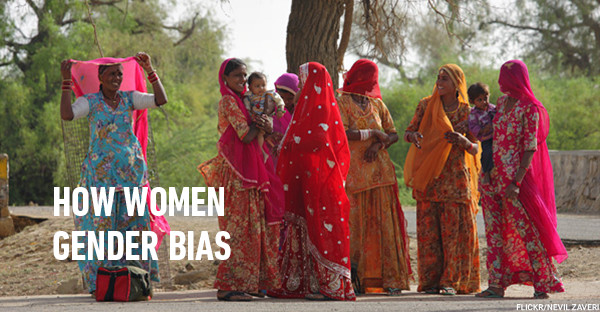
Gender biases have been deep rooted in our society. We tend to ‘put’ women in their place in society with phrases that are uttered consciously, or sometimes even unconsciously. More than usual, these phrases might be said by women to women they interact with. For example- we hear many mothers tell their daughters to ‘learn how to cook so they can find a good husband’ or ‘to not go out when it is dark.’ How can we function as a whole and accepting society that recognizes the need for equality between both its sexes when women themselves are not open to this idea?
In order to understand the role women play in gender biasing, we spoke to experts who could help us look into stereotypes that exist even today and why they are still unbroken. Amitabh Kumar, Head of Media and Communications for CSR and Namita Bhandare, a journalist from The Mint, who writes on gender and social issues, answered questions about the issue and how we can tackle it.
Here are some excerpts from the Twitter chat hosted on 29th August.
Understanding Gender Bias
Women and Reservation
How do women need to change their views?
Women have shown progress with increased participation in numerous fields, and such progress definitely helps tackle gender bias. However, we still have a long way to go to become wholly accepting of women as an equal sex - and this can be a reality only if women put in effort to treat each other and themselves as equals.
Women have shown progress with increased participation in numerous fields, and such progress definitely helps tackle gender bias. However, we still have a long way to go to become wholly accepting of women as an equal sex - and this can be a reality only if women put in effort to treat each other and themselves as equals.
If you have any comments please post below or write to us at jaagorein@gmail.com. You can follow the twitter chat on our twitter handle-@jaagoRe
About the Author:


Disclaimer:
Views expressed here are of the author alone and do not necessarily represent that of the brand.
Share this story on

Are you aware about the New Tax Filing Rules? (Part 2)
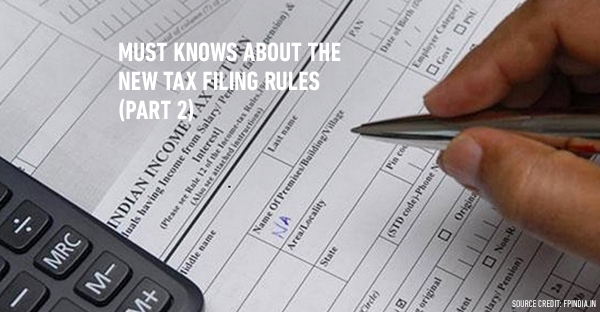
In continuation to our Tax Filing Series of articles, this article will help us understand the new Rules announced by the CBDT (Central Board of Direct Taxes) for filing tax returns for the previous financial year 2014-15. CBDT has declared the set of Income Tax Return (ITR) forms required for a taxpayer to use while filing his/her tax returns. This year, many changes have been made in order to simplify these ITR forms. In order to curb black money, the department had in its earlier notified ITR forms, asked taxpayers to furnish the details of all their foreign trips including the expenses incurred on those trips, which attracted a huge backlash and prompted the department to change the forms again.
Let us understand these changes we need to keep in mind before filing tax returns this year:-
1. Last date extended to 31st August: The deadline for filing returns for the last financial year has been extended to 31st August from the existing 31st July. But it is strongly recommended that you do not delay your return filing to the last minute, especially once all your documents like Form 16/16A and other income details are in place.
2. Furnishing All the Bank Account Details: You have to declare all your bank accounts while filing your tax returns. It means you have to submit each and every bank account as held by you jointly or as a single account holder. However, you do not need to disclose the details of your dormant accounts, which have not been operational for the last three years.
3. Foreign income: The details of any foreign income including the amount earned and the nature of income/source, country are required to be submitted.
4. New tax forms: CBDT has notified the following changes in the ITR Forms (Applicable Forms):-
| ITR-1 | ITR 2A | ITR 2 |
| Individuals With Income From: | Individuals & HUFs(Hindu Undivided Family) Income From: | Taxpayer & HUFs With Income From: |
| Salary or pension | Salary or pension | Salary or pension |
| One house property | More than One house property | More than One house property or brought forward losses |
| Interest on investments | other sources, including lottery and race horses | Capital gains |
| Other sources, including lottery and race horses |
| ITR - 3 | ITR - 4 | ITR – 4S (Sugam) |
| For Partners In Firm With Income From: | Taxpayers With Income From: | For Taxpayers With Income From: |
| Profit of Partnership firm | Proprietorship Business | Presumptive Business |
| Salary or Pension More than One house property | Professionals | Foreign Sources/income etc. |
| Capital gains | Commission/Brokerage | Commission/Brokerage |
| Other sources, including lottery and race horses | More than one house property | More than one house property |
| Agriculture income > Rs. 5000/- | Agriculture income > Rs.5000/- |
5. ITR-V copy to CPC: Unlike earlier, ITR-V copy is not required to be delivered at CPC (Central Processing Centre) office Bengaluru, provided a person submits his or her Aadhar Card No. or the 10-digit Electronic Verification Code (EVC). The new ITRs will also have a place for mentioning the Aadhaar card number, which is one of the four ways of verifying the identity of the taxpayer. Those who do not have an Aadhar Card or want to use the EVC can still send their ITR- V to the CPC by Post.
To know more about filing Income Tax returns and its benefits, read the first part of this series here.
More about the Author:

Share this story on
&body=<p class="art-para-power">
<img src="/sites/default/files/New-Tax.jpg" /></p>
<p class="art-para-power">
</p>
<p class="art-para-power">
In continuation to our Tax Filing Series of artic...)
Experts’ Take on the New Guidelines for Child Adoption in India
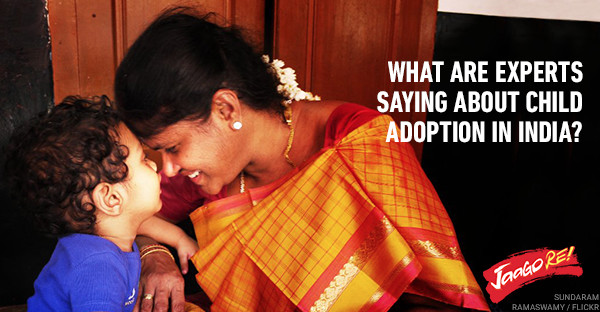
The new guidelines governing child adoption came into effect on August 1, 2015 and these guidelines are expected to change the way the process of child adoption functions in India. In spite of having a large number of children waiting to be adopted, adoption is neither a popular option, nor a favoured social phenomenon. One reason behind this could be people’s lack of awareness about adoption laws and existing biases against adoption.
To understand the provisions under the new guidelines and to clarify how adoption works in India, we invited experts CRY (Child Rights and You) and Mr. Sunil Kumar Arora (Executive Director, Bal Asha Trust) for a Twitter discussion.
Here are a few highlights from the discussion:
Eligibility to Adopt Child's Eligibility Adoption Laws in India Changes in Adoption Laws Processing Period Support Systems Illegal Adoption
Do you think these guidelines will affect a rise in the number of adoptions, and help the society get over stigmas against adoptions? Do you think we need more focused campaigns to address specific issues with respect to adoption in India? Share your views on child adoption in the comments section below.
More about the Experts:


Disclaimer:
Views expressed here are of the experts alone and do not necessarily represent that of the brand.
Share this story on

Do we need to change what we teach our kids?

Why do we gender stereotype? Why do we have biases against what men and women can or cannot do? Before we attempt to answer these questions, let’s understand how did we grow up to be a community that biases genders. The answer lies in our formative years, where gender structured roles become a part and parcel of our everyday. To become adults that understand gender equality, we need to start early, as children.
Introducing gender sensitization in schools has become the need of the hour. To delve further into introducing gender sensitization in school curriculum , we spoke to two experts from the field who gave us some interesting insights into how to enable the topic in schools and the kind of barriers it faces.
We spoke to Srini Swaminathan, a freelance teacher, and Iesha, a social venture for gender equality, about the merits and obstacles of introducing Gender Sensitization in schools. Here are snippets from the Twitter conversation:
Do we need Gender Sensitization in schools?
Hurdles in Gender Sensitization
Changes required for Gender Sensitization
There is a very thin line separating gender biases and gender sensitization. They don’t mean the same but are interlinked. Gender sensitization can stop gender biases that we see and face in society and gender sensitisation is not possible unless we recognise gender biases in the society. There needs to be a proactive outlook in understanding how children think and react. If they know and understand that all sexes are equal, they will be able to live that principle and help promote a healthy and safe society.
Power Of 49 Manifesto points out the need for gender sensitization to be made compulsory for boys and girls from Std. V to XII in order to counter eve-teasing. What are your views about this? Share your opinions in the comment section below:
Push the pin on issues that you think affect negatively now!
More about the Experts:


Disclaimer:
Views expressed here are of the experts alone and do not necessarily represent that of the brand.
Share this story on

Why Do We Need Sex Education in Schools?

Our schools teach our children everything they need to know to succeed – right? Intensive classes, exams to help them get into the best universities in India and abroad, and even extra out-of-school tuition so they can compete with their global peers.
What is the need to teach our kids sex education? If anything, it will distract them from their studies and put wrong ideas in their heads.
Well, actually, when we watch our children, what we see is a safe, simple world – our kids go to school, study, and do their extracurricular activities. In reality, there is a lot of turmoil going on inside the adolescent mind. Take an average adolescent girl in India – she gets little information on her menstrual cycle so feels confused and embarrassed every month on her period, regularly gets harassed on the street, and then goes to school and does not know if it’s ok or not ok to talk to the boy she likes in class. If she faces some sort of sexual abuse from her teacher, she’s scared that she will get blamed if she speaks up – and she does not even have the words to say what has happened to her.
It’s a similar situation for the average adolescent boy. In addition, he is usually consuming a lot of pornography, shaping his perceptions about girls and women. Adolescents these days are actually battling deep insecurities, facing challenging social situations with no easy answers, and getting a flood of vulgar, sexist, and misleading information from the media, which is usually their only source of information about how to interact with the world. All of these factors are having a deep effect on our kids, and shaping them into the adults they will be in the future.
How do we combat this to create young adults who are confident in who they are, understand how to interact with each other in healthy and respectful ways, and are staying safe? It’s hard to have these conversations with kids because we do not know exactly what they are facing or what to say to them.
Contrary to what people think, that is exactly what sex education is. It is not about teaching children how to have sex – it is about informing them about what is happening in their bodies and also teaching them to make safe, healthy choices as they grow up. It is also about helping them understand that the messages that they are getting from Bollywood or pornography are not realistic and can be harmful. Instead, it is about helping them come to their own conclusions about what it means to be a successful, interesting boy or girl.
Here are few ways that sex education can help your child grow up to be a healthier, happier adult:
- Girls and boys understand that the changes they are going through during puberty are normal and natural. One of the biggest sources of stress and even depression in teenagers stems from not understanding that the changes in their bodies and emotions are normal, and that things will balance out after a few years. They blame themselves for all of their mistakes and awkwardness without realizing that everyone is going through the same thing.
- Boys and girls know to speak up when they face sexual abuse and harrassment. 53% of Indian children have experienced sexual abuse – it is time that children know how to recognize and speak up against it immediately.
- Boys and girls know the risks involved in having sex, amid growing peer pressure to engage in it. Enough said.
- Girls and boys learn about the facts of life from an accurate, supportive source, instead of from pornography. Wouldn’t you rather they learned about the biology from a trusted source, rather than from street myths and easily downloadable mobile content?
- Most of all, boys and girls gain a lot of confidence by knowing the facts. Knowledge leads to confidence, and confident kids perform better in life. Knowledge is not the culprit that leads to bad behavior – in fact, knowledge coupled with a strong value system leads to healthy, well-adapted youth who know how and when to draw their own boundaries.
Isn’t it time we demanded sex ed in all of institutions? If your school does not offer adolescent education, another great place to start is at home. Open up safe, non-judgmental conversations with your children about what they think of the latest Bollywood item number, and if they feel there is anything wrong about how relationships are portrayed in the media. Or, ask your child if he or she has ever liked someone in his/her class and what emotional difficulties he/she might be facing. You will be surprised at kids open up when someone is genuinely interested in having these conversations with them.
And keep us updated how the experiment goes! Send us a Facebook on https://www.facebook.com/ieshaspeak or Twitter message on @ieshaspeak, or send us an email at hello@iesha.co to let us know what new conversations you had with your teen.
Disclaimer:
Views expressed here are of the author alone and do not necessarily represent that of the brand.
More about the Expert:
-sex-education.jpg)
Share this story on

5 Women Sarpanch Leaders Showing India the Way Forward
The mention of the word 'Sarpanch' generally brings to mind an image of an elderly grey haired man, probably with a turban and a big moustache, holding in his hands a stick and in his gaze the fear filled respect of an entire village. Rarely does the image of a woman ever come to mind.
Inspite of prejudice against women taking the onus of public administration, these five women sarpanches are rocking rural India and how. We bring to you stories from the heartland of five inspiring women sarpanch leaders.
Arati Devi

Former investment banker and MBA holder Arati Devi already made news a few months back when she was invited to speak at an International Leadership Programme in the US. She spoke about state government functions, government transparency and accountability.
She is the sarpanch at Ganjam district in Orissa, which is also her hometown.
She was also nominated for the Rajiv Gandhi Leadership Award 2014.
She has introduced the benefits of Public Distribution System to her village, which wasn’t known to most people. Now they avail wheat, kerosene and other items at subsidised prices.
She also started a major literacy campaign for women in the panchayat where only signatures would be recorded for official applications, instead of thumb impressions. She has been known to revive traditional folk art in Ganjam.
She has stated that she wishes to spend the rest of her life in service of the ruralfolk.
Meena Behen

Meena Behen, the first woman sarpanch from a village in Gujarat, seen here in pink saree.
In the small village in the district Vyara in Gujarat, Meena Behen is the first woman Sarpanch her village has seen. After 65 years, their village has their own Panchayat board, and that too an all-women Panchayat board.
In a patriarchal society, getting this far hasn't been easy. Women were never allowed outside their houses. They were not even allowed to talk in front of men or in their presence.
"Women are the tails in a society. They can never be leaders," was the reaction of many people in Meena's village.
"The saddest thing is that a lot of women too pointed fingers at us and constantly put us down," says Meena Behen. "But I guess that would always be there…that is what keept us going and challenged us to do better everytime," she says.
Meena and her friends attribute all their leadership skills to the self-help group (SHG) that World Vision India helped form. "All the meetings and programmes that World Vision India conducted gave us this much confidence to stand up as leaders in our village. Otherwise our homes were the only world we ever knew."
Being an all-woman Panchayat board, the issues that women and children face come out easily in the open now. "Women open up to us with their problems with more ease now."
Recently they built a road because the accessibility to the village was very bad. Pregnant women found it really difficult to go to the hospital and even the ambulance vehicle couldn’t come into the village because of this. Now the accessibility is much better.
Many were unaware of important government schemes. The all-women Panchayat took cognizance of that and ensured that Government schemes were utilized by people of the village. This year alone, under a Government scheme that provides housing for the poor, they have built over 30 houses in their village.
Next on their agenda is building a Government hospital in their village.
Chaavi Rajawat

Times of India has heralded her as the woman that is changing the face of rural Rajasthan. With innovative projects, she has brought better water, solar power, paved roads, toilets and a bank to her ancestral village named Soda. Not letting the bureaucracy come in her way, she has single-handedly enabled many projects in her village. She has also addressed a poverty conference at the United Nations in New York, US. The glamorous jeans-clad MBA sarpanch is an inspiration to many and is the face of the young and modern India yearning for change.
Sushma Bhadu

Sushma Bhadu, (in blue sweater, second from right) is a sarpanch from three villages in Harayana.
Sushma Bhadu has to her credit improving the dwindling education and sex ratio levels of her villages.
But she is more popular for the "unveiling" of her 'ghunghat'.
"With the backing of my mother-in-law and husband, I went against the grain and lifted my ghunghat amid 2,000 people from 25 neighbouring villages in June, 2012," Sushma said.
Fighting centuries old patriarchal and controlling norms of her society, she has earned the respect and admiration of her villages. She is elected sarpanch of three villages - Salam Khera, Chablamori and Dhani Miyan Khan.
The literacy rate stands at 69.10% in the 2011 census against 58% in 2001.
The sex ratio also now stands at 903 per 1,000 men in 2011 census as against 884 in 2001.
Defying the trend in the state, Dhani Miyan Khan has a zero dropout rate at the village's only school. She also makes sure that every child in the village attends school.
Taking a cue from Sushma, 30-year-old Kamla Devi, an anganwadi worker, not only gave up the ghunghat but also married off her two sons without taking dowry.
Shaking hands with women and folding them in front of men, the unveiled sarpanch has no objection to her daughters wearing western outfits, which she admits she is also fond of.
Radha Devi

Radha Devi (in yellow saree) is the lady sarpanch of a village in Rajasthan.
Despite the Right to Education Act, 1000s of children across Rajasthan do not make it to school. Women sarpanch leaders stepped in to ensure that this trend reverses and girls attend school.
Taking the help of local NGOs and self-help groups, Radha Devi confronted the school authorities in her village and persuaded parents into sending their kids back to schools.
*Source – WSF, Hindustan Times, Deccan Chronicle.
Share this story on
Media vs. Society: Who's to blame for objectification of women?

It's hard not to bring up the depiction of women in media when we speak of ending violence against women. The objectification of women in media has reduced them from human beings to mere objects of sexual interest. Provocative images of women, pouty lips, hypersexualised body language et all, are repeatedly being flashed in advertisements of products; that have nothing to do with attractive women.
More often than not, many movies on the big screen, including many "family movies" are guilty of our culture of objectifying women.
If that's not all, stereotypes that dictate what a "good" woman should or shouldn't be like set the standard for society to follow. It would be wrong to say that we do not get influenced by what we see on the screens – be it electronic, visual, digital or print.
Is media mirroring the society when it comes to banal treatment of women? Or is the society learning from and imbibing what the media shows us?
@JaagoRe: invited @genderlogindia, a crowd-sourced hub on gender to shed light on how and why women are projected the way they are in the media. It may be interesting to look at some of their insights:
Some pop culture references, specially Indian soaps, villainise women for being independent - why is that? @genderlogindia #JaagoRe
— Jaago Re (@JaagoRe) February 13, 2015
.@JaagoRe Independence is power. Free thinking, independent woman is the greatest nightmare for patriarchy. Direct threat to domination.
— Genderlog (@genderlogindia) February 13, 2015
We are used to seeing the 'independent, free-thinking' woman painted in a negative light. The "good woman" has to be the submissive, meek, domesticated, quiet woman. Basically a controlled woman is the "good woman". How many of us subconsciously subscribe to this notion? How many women have been forced to align with this train of thought?
That's when we explored how women are portrayed in media vis-à-vis the role of the audience
What kind of role do you think does media or pop culture play, in the depiction and portrayal of women? #JaagoRe @genderlogindia
— Jaago Re (@JaagoRe) February 13, 2015
.@JaagoRe Mass media working under a patriarchal construct mainly perpetuates gender stereotypes & maintains the status quo.
— Genderlog (@genderlogindia) February 13, 2015
.@JaagoRe The way subjects dealing with women are treated indicate to a great extent the prevailing attitude of the society towards women.
— Genderlog (@genderlogindia) February 13, 2015
Seen through the 'Male Gaze'
.@JaagoRe The sexuality of women was in patriarchal chains for a long time, but now it is being portrayed as seen through the male eyes.
— Genderlog (@genderlogindia) February 13, 2015
That actually explains why sexuality of women is being used, or "misused" in media to appeal to the male consumers. When we actually start creating quality content, products or services, the need to appeal to this crass and superficial impulses of the country will wane away. It's still a matter of time that the audience and media both come to terms with that.
Can media rise above the trap?
.@JaagoRe Media can and should not fall in the patriarchal trap but raise above it. It should be a liberator and not an oppressor. #JaagoRe
— Genderlog (@genderlogindia) February 13, 2015
Numerous studies link violence and objectification of women in media to real life cases of violence and abuse against women. The entire country cannot escape the constant bombardment of the media, then isn’t the onus on us to make media free of bias, bigotry and patrarichal farces? We should encourage media that promotes healthy stereotypes and images of women. It's certainly one step closer to ending violence against women.
.@JaagoRe We need to change the system. We need to create ideals for women defying patriarchal constructs, who stand up to the system.
— Genderlog (@genderlogindia) February 13, 2015
Whose fault is it anyway? And who takes the responsibility?
What would be your message to all? @genderlogindia #JaagoRe
— Jaago Re (@JaagoRe) February 13, 2015
.@JaagoRe Educate ourselves of this oppression. Speak against patriarchy wherever &whenever you can. Dont propagate the gender stereotypes
— Genderlog (@genderlogindia) February 13, 2015
The final call lies with us. We need to be aware of the misogynistic ideals that we breed – whether it's in daily life or through mass media. If we witness it, we can choose to call it out. Speaking out against patriarchy, whether it’s on dining table, classroom, or on social media are some of the ways we can start to detach ourselves from deep-rooted patriarchal values that have resulted in a society that we cannot call safe for women.
Let's work together towards a country free of misogyny, that has values that respect women and free them, instead of stifling them. Only then can we have a country where all women can walk free.
Join the conversation on @JaagoRe: and on www.facebook.com/jaagore and do share your opinions with us!
Disclaimer:
Views expressed here are of the individuals alone and do not necessarily represent that of the brand.
Share this story on

PowerOf49 Manifesto on Domestic Violence
Violence at home is an open secret in India. It is unreasonable to think that public spaces are unsafe for women, when we cannot even protect her in the cocoon of her own house. Marital rape, dowry harassment and physical abuse are common in many families in India. CNN IBN and Jaagore invited three experts to frame a Five-point Manifesto that we will present to authorities and consequently demand action.
Actor/Activist Shabana Azmi, lawyer/activist Flavia Agnes and author/survivor of domestic violence Rashmi Anand came forward and helped frame the PowerOf49 Manifesto on Violence in the Home.
1. Politicians with a clean record
Politicians must lead by example. Politicians shouldn’t practice dowry themselves. Zero tolerance for abusers of this rule among all parties.
2. Promote awareness of women’s rights on property and housing<
Educate displaced women about their rights on the residence.
3. Support system for survivors of domestic violence
Complete medical, psychological and legal support should be provided. Special family counselling centres, even in the Police quarters will help women.
4. Support system for sexually abused children
Government should make provisions for legal, medical, financial and emotional support systems for children facing sexual abuse within their homes.
5. Severe punishment for Female Foeticide
Any doctor found guilty should have their licenses suspended immediately and they should also face a lifetime ban. Female Foeticide must be treated as a non-bailable offence. Parents found guilty must also be strictly punished.
.jpg)
The Power of 49 has put forth their manifesto on domestic violence
Join the conversation on @JaagoRe on twitter next week as we discuss health and sanitation and create a #Powerof49 manifesto on CNN IBN on Friday, 7th March, 8.30 pm
To read the final 10-point #Powerof49 Manifesto that was presented to leading political parties, click here
Share this story on
How Our Society Justifies Rape
Recently, an interview with Mukesh Singh, one of the accused of the notorious Delhi gangrape and murder of 'Nirbhaya', has been fervently doing the rounds on social media. Perhaps it has something to do with the remorseless and grave nature of the quotes by the rapist, currently awaiting his death sentence in jail.

Let's take a look at some quotes he gave in prison:
"You can't clap with one hand - it takes two hands."
"A decent girl won't roam around at 9 o'clock at night."
"A girl is far more responsible for rape than a boy."
"Boy and girl are not equal. Housework and housekeeping is for girls, not roaming in discos and bars at night doing wrong things, wearing wrong clothes. About 20 % of girls are good."
"When being raped, she shouldn't fight back."
"She should just be silent and allow the rape. Then they'd have dropped her off after 'doing her', and only hit the boy."
"In our society, we never allow our girls to come out from the house after 6:30 or 7.30 or 8.30 in the evening with any unknown person."
"The death penalty will make things even more dangerous for girls," he says. "Before, they would rape and say, 'Leave her, she won't tell anyone.' Now when they rape, especially the criminal types, they will just kill the girl. Death."
"This is my stand. I still today stand on that reply."
What's more, the quotes by the lawyers defending Nirbhaya's accused are even more appalling:
"If my daughter or sister engaged in pre-marital activities and disgraced herself and allowed herself to lose face and character by doing such things, I would most certainly take this sort of sister or daughter to my farmhouse, and in front of my entire family, I would put petrol on her and set her alight."
Are we any different in our thinking than the rapist?
One of the key points that stand out as he speaks is the extent to which misogyny is 'normalised' in society. Often we blame a certain 'class' of people and say, those people think like that, not us. All at the same time propagating such views ourselves at homes, towards their female family members, in schools, among peers etc. We fail to see how we're not really that different in our thinking than even the most brutal and violent rapist. We fail to see how we're totally a part of the problem.
Sadly, such views and ideas are being propped up as "Indian culture and values" and are being used as "justifications" for violent crimes against women, and even children.
As this Indiaspend article shows:
* 44% of college students "agree" that women have no choice but to accept a certain degree of violence
* 51% college students believe women must mainly take care of the household and bring up children.
Unless we confront how misogynistic our daily attitudes are, we cannot curb crimes in India. This kind of regressive and patriarchal thinking is the cause of all crimes against women, of which several are vicious and extreme in nature. This kind of a gender bias manifests itself in assaults, sometimes severe, and at other times subtle forms of 'harassment' or control. Our culture, mindset and values have to go through a revolutionary transformation for us to start respecting women, from a young age. Only then, can we hope for a country free of such nasty and brutal crimes dotting every other lane in India.
Share this story on