Every Indian plays a crucial role in improving India's World Ranking in Sports

During every World championship, a lot of questions are asked following the disappointing overall performance of India, and rightfully so. Our teams often come back to an angry and disheartened audience and we tend to express our disappointment even at our diligent players.
Let’s take a quick look at our world rankings to see where we stand:
- The Indian Tennis Team ranks 23rd in the world.
- The Indian Men’s Volleyball Team ranks 34th out of 127 nations.
- The Indian Women’s Volleyball team ranks 100th out of 113 playing countries.
- The Indian Basketball team is ranked 61st out of the 85 nations.
- In the latest FIBA ranking report our Rugby team is at the 74th position out of 102 playing nations.
(Source: SportsKeeda)
While every citizen of India has a right to question, we also need to collectively shoulder the responsibility of our current standing in sports . It is up to us to build a culture of sports in India and to uplift the fledgling sporting scenario of India, and the first step towards this is to change our perception about sports.
Here are a few simple ways in which each and every one of us can help build a culture of sports in India:
Encourage children to participate in sports
It is not necessary that every child has to become great sportsperson. Yet this will go a long way in creating a positive impression about sport in their minds, and they also get an opportunity to figure out if at all they are genuinely interested in pursuing sports. This is how children can identify their passion for a particular sport and hone their talent. An additional benefit, needless to add, is children adopting a healthy lifestyle.
Make Local Sporting Events More Accessible and Commonplace
Often there are several local sporting events held in our own neighbourhood and we don’t hear of it. Keep an eye out for them through your local newspapers, or the governing bodies or sports clubs in your neighbourhood. In case there’s a lack of these events, people can get together and organise more of such events to give a chance to more people to participate.
Position sports stars as role models
Every child idolises a pop star, a movie star or any other celebrity. However, not every kid grows up idolising sports stars as their role models. Expose children to more success stories of sports athletes and inspire them with their talent, dedication and their success.
Perceive and respect sports as a rewarding career option
A child or a teenager will be automatically motivated to better one’s game if they are nurtured with such positive thoughts about sports.
The status of sports in India will not change overnight. However, small steps taken by each of us will take us to a point where we finally start to see improvement. The onus is on each citizen to start moving in this direction. Within the family itself we can begin to introduce sports. Playing together as a family will be a child’s initiation into sport, which can further be carried into his/her growing up years and finally, adulthood.
While these are a few steps to start a change at a personal level, to build a culture of sports we need to also affect a change at a national level. We as the citizens must make sure that we have a system that supports sports, and what better way to do that than by making sports a compulsory subject in schools?
We believe that only when sports becomes a part of our school curriculum, will the status of sports be elevated in our society. If children were to take part in sport daily in their formative years, we are raising a generation of youth conscious, aware and naturally inclined to sports.
To make this change possible we are petitioning the HRD Ministry to make sports education a compulsory subject in schools.
Join the movement and sign the petition to help make this possible:
Alarm Bajne Se Pehle Jaago Re!
Share this story on

Tata Tea Jaago Re ties up with Haiyya: Organise for Action to tackle gender bias at the grassroots

It has been estimated that about 2.5 lakh girls are killed each year in India because of their sex (World Bank 2012 report on ‘Gender Equality and Development’). This holds true for both rural and urban areas, and in every strata of our society with even a lot of educated adults practising and passing on their gender biases to their children. The treatment of girls in one’s households moulds children’s psyche, who internalise preferential treatment of boys. Changing the mindsets of people and bringing about gender equality requires massive and sustained effort. Tata Tea Jaago Re's 'Deepa ho ya Deepak, Ek Samman, Ek Sa Hak' initiative in association with Haiyya: Organise for Action aims to do just that at the grassroots
Encouraging parents and children to question traditional gender roles
Are we guilty of knowingly or unknowingly perpetuating gender bias on our children? Let’s look at a few general comments and practices:
Expecting only the girls to learn household chores like cooking and cleaning,Spending more money on education for boys rather than for girls,Bringing up girls with the philosophy that however educated they may be, their priority in life should always be to get married and raise a family,Pushing girls to take up gender-appropriate jobs, like teaching and nursing etc.,Comments like ‘Aap larkein hoke larki se haar gaye‘ or ‘Larkein larkiyon jaise nahin rote‘ even when they are made in jest.
These are just a few examples of how traditional gender roles are ingrained in young children. Helping people identify gender biases in their daily lives and making them realise as to why they need to change their beliefs and actions are the initial steps towards achieving a society where boys and girls are given equal opportunities, rights and freedom.
Thus, this initiative helps both children and adults identify various scenarios where boys and girls are treated differently by society. It also helps in setting the context as to why there is an urgent need to break free of these biases.
Engaging with the masses through interactive activities
Over the past three months, we have conducted several workshops spanning over both, urban and rural areas in Punjab, Haryana, Delhi and UP. They follow a strategic method of organizing community engagement activities in the neighbourhoods with both, parents and children by identifying influencers in the communities, distributing pamphlets and finally assembling at the pre-decided venue.
The use of forms of mass entertainment like Nukkad Natak (street play) to ensure that the message reaches the grassroots, and is understood by everyone has proven to be quite successful. The change in the approach and attitude towards a boy and a girl has to start from their homes and to aid the same, a simple toolkit with specific messages have been designed and are distributed to all parents.
Here’s how this initiative has been successful in influencing parents in changing their opinions.
Help build a society where girls face no gender discrimination
While it is encouraging to witness parents realise how a society free of gender bias will make their children’s lives better, this is just the beginning! The message has to reach far and wide and the onus to bring about the change lies in each and everyone of us. Together, when we pledge to practice and teach gender sensitisation, we can pave the way for a better future for India.
Join us in our quest to realise a safe, equal society for all.
Read more about the petition initiated by Jaago Re and signed by more than a million Indians to make gender sensitisation compulsory in schools here
Alarm Bajne Se Pehle #JaagoRe
Share this story on
Why is Sports a Great New Year Resolution for Indians?
.jpg "Why is Sports a Great New Year Resolution for Indians?")
As the world prepares for 2018, checklists and new year resolutions are resurfacing. Our resolutions are usually reactions to fix things that have gone out of hand, like resolution to keep fit, focus more on one aspect of our life or another, learn something new, etc. But, why do we wait for things to go wrong? Is it not possible to resolve issues before it gets too late?
Luckily, for most of our goals for the year 2018, there is an all-in-one solution - Sports. Most of us don’t realise that playing a sport has much more to offer than the evident health benefits. While we are raising our voice to make sports a compulsory subject in schools, here are 5 reasons why we as pre-active members of the society need to resolve to take sports more seriously:
Stay Physically fit
Fitness resolutions are quite popular, and playing a sport is one way to make it fun. Our children and youngsters lack fitness, and it’s time we got them to adopt playing as a regular and serious activity. Not only does sports help children grow healthy, it also helps older adults maintain a healthy work-life balance.
Better Mental Health
According to the Department of Sport and Recreation (Government of Western Australia), being physically active protects against mental health issues, decreases depression in older adults, and is as effective as medication for mild to moderate depression. Sports also help improve self-esteem and cognitive function in youngsters.
Holistic Development
According to Dr. Richard Bailey (writer and researcher on Education and Sports), children who engage in regular sporting activities have better self-esteem and confidence. Sports also help teach children social skills, discipline, and coping with setbacks or defeats. Research also shows that children who grow up playing sports are better professionals than those who don’t, because sports helps develop strategic thinking, analytical thinking, leadership skills, goal setting and risk taking etc., among other qualities.
Coming together as a community
We all know how powerful sports can be in bringing together a community, a nation, and even the world. The solidarity between England and France during the terror attacks in either countries (2017 attacks in Paris, and 2017 attacks in London) showed that sports helps people stand together. Closer home, we have seen examples of the Hockey Village in Rajasthan, Janwaar Castle in Madhya Pradesh, Yuwa in Jharkhand, and the likes that prove the point the sports has the power to unite people against all odds. A new year resolution to play together could be the best way to unite the Indian society.
Make India a sporting powerhouse
With over a billion people, India has the potential to become a sporting powerhouse. While we as a community have petitioned for a policy-level change to introduce sports as a compulsory part of education in schools, we need to change things at the grassroots too. However, it is not as difficult as it sounds. People love playing, and if we as individuals decide to take sports seriously and dedicate some time daily, the younger generations will get exposed to sports, understand its value, and eventually make way for a sporting culture in India.
These are just a few reasons why sports is a great new year resolution, and even if we do not engage with sports directly, if we resolve to encourage local sporting activities and motivate children to take up sports seriously, it will help in creating a better future for sports in India. To reach there, we must pre-act today. So, are you ready to take up sports as your New Year resolution?
Alarm Bajne Se Pehle #JaagoRe
Sources:
Mirror
Department of Sport and Recreation, Government of Australia
Novak Djokovic Foundation
Psychology Today
NCBI
Share this story on
Tata Tea ‘Suraksha’ – A step towards building a safer society

The most recent statistics from the National Crime Records Bureau show that crimes against women in India have increased by 34% in the past four years (Source: The Conversation). Additionally, a survey by ActionAid UK showed that four out of five women (79%) in the country have experienced some form of harassment or violence in public (Source: Indian Express).
We as a society have raised our voices every time there has been a disaster (we all remember the widespread protests after the Nirbhaya incident). However, our knee-jerk reactions have not succeeded in making our society safer, and nor have they addressed the real issues – the lack of gender sensitisation and lack of gender equality in our society. One way to make our society safer is to Pre-Act against these issues.
With our Tata Tea Alarm Bajne Se Pehle Jaago Re initiative, millions of Indians came together to lead the wave of Pre-Activism in India. Over 1.05 million people signed the ‘Alarm Bajne Se Pehle Jaago Re’ petition for compulsory gender sensitisation in schools, and the petition was submitted to the HRD Ministry earlier this year. Taking this movement forward, we launched ‘Suraksha’, an initiative to empower young girls across India to take their safety in their own hands.
Safety first with Tata Tea ‘Suraksha’
The initiative was carried across 328 schools in Delhi, Punjab, Haryana and Uttar Pradesh. A special self-defense training program was constructed and over 93,000 girls received self-defense training as part of the 'Suraksha' initiative.

A strong self-defense program was implemented for school girls between the age group of 10 years to 16 years. A special self-defense training module was prepared with the help of experts using elements from various martial arts such as Judo and Karate. The duration of the program was 4 days and each session was for 1.5 hours. A total of 6 hours were invested in each child during the program, making sure that the sessions were not only about physical strength but also about mental fitness. A variety of self-defense techniques were taught to the girls. The experts gave a live demo of various techniques such as elbow strike, chop attack, tiger grip, push kick and knife defense.

Pushing the limits!
This was later practiced by the girls who displayed immense dedication and enthusiasm during the entire learning process. Avinash Pandey, one of the trainers from Delhi said, "The Suraksha program has been devised in such a way that it will not only help the girls to defend themselves but at the same time boost their strength, stamina, agility and flexibility. It is extremely important for these girls to continue practicing what has been taught to them during the program. Practice holds the key to building confidence and to being ready to implement these techniques in real life situations."
Tata Tea 'Suraksha' helped Tata Consumer Products Limited to achieve its objective of connecting with the society and creating awareness on the importance of training girls to defend themselves before any unforeseen incidents occur. Let's ensure that we do our bit to help create a safer tomorrow by empowering our children today to ‘Pre-act’ and not ‘React’.
Share your suggestions on building a safer society on our Facebook and Twitter pages, or email us at jaagorein@gmail.com.
Alarm Bajne Se Pehle #JaagoRe
Sources: The Conversation, Indian Express
Share this story on
Fighting Road Rage by Rewarding Good Road Behaviour
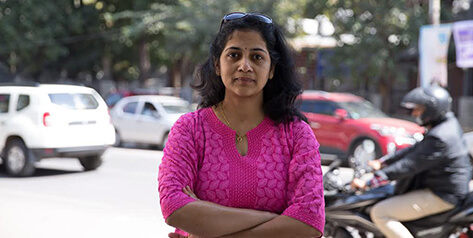
Many of us have either been a witness to, or perhaps have even participated in road rage, resulting from a variety of factors. One of them being traffic jam. It can get abusive and violent - sometimes verbal, sometimes physical. Nonetheless, we carry on with our daily commute knowing fully well that anyone can exhibit it. And that we are at the risk of being victims of road rage.
One person decided to step up and do something about it.
Here's how she's effectively working on providing solutions for the road rage menace in her city.
Stepping up to the ground - Birthing a movement for road safety
Anusha Jaishankar returned to India from California after several years and couldn’t help but see the changes. The traffic on the roads, the driver’s rage and the roadkill she witnessed were disconcerting for her. On a mission to bring about a change, she launched Positive Strokes, a community based set-up that rewards and promotes good road behaviour.
The beginnings of Positive Strokes
"Years ago, I had been in a seminar at work that talked about the Canadian police using positive reinforcement - to help redirect energies of the troubled youth from crime ridden communities.
That got me thinking. Back in India, I wanted a way to influence road behaviour by positively reinforcing good road behaviour. But there had to be a proper mechanism to do it. Perhaps one that didn’t involve standing in traffic.
A visit to the Traffic Management Centre (TMC) in my city provided me a way to address this issue. The TMC captures wrong doers using CCTV cameras placed all over the city at traffic junctions.
Positive Strokes used live feed from the cameras to identify and note down the license plate numbers of those vehicles that were seen following traffic rules and/or doing something right on the road.
For instance, some drivers stopped and waited for pedestrians to cross.
We reached out to these drivers and rewarded them with badges on 'good road behaviour', certificates etc. This method not only influenced the pleasantly surprised reward winners, but also the people at traffic management centres who were watching the traffic flow capturing good behaviour. It helped drivers know that their 'good behaviour' was appreciated.
It also gave the ones watching the behaviour on-screen a sense of the enormity of the traffic problem, along with a strong sense that they themselves should not add to the problem."
Not a smooth ride: On Overcoming Challenges
"Back in 2012, rewarding positive road behaviour was practically unheard of. Penalty and shaming were considered more popular to keep road behaviour in check.
Pushing back on and criticising an untested idea is far easier than putting oneself on the line and supporting it. It took a lot of time and effort to come up with a systematic methodology.
Armed with this, after close to two years of convincing and negotiating to get the essential people and organisations on board, Positive Strokes was launched with the first public event in 2014.
What's the road ahead like in terms of road safety in India?
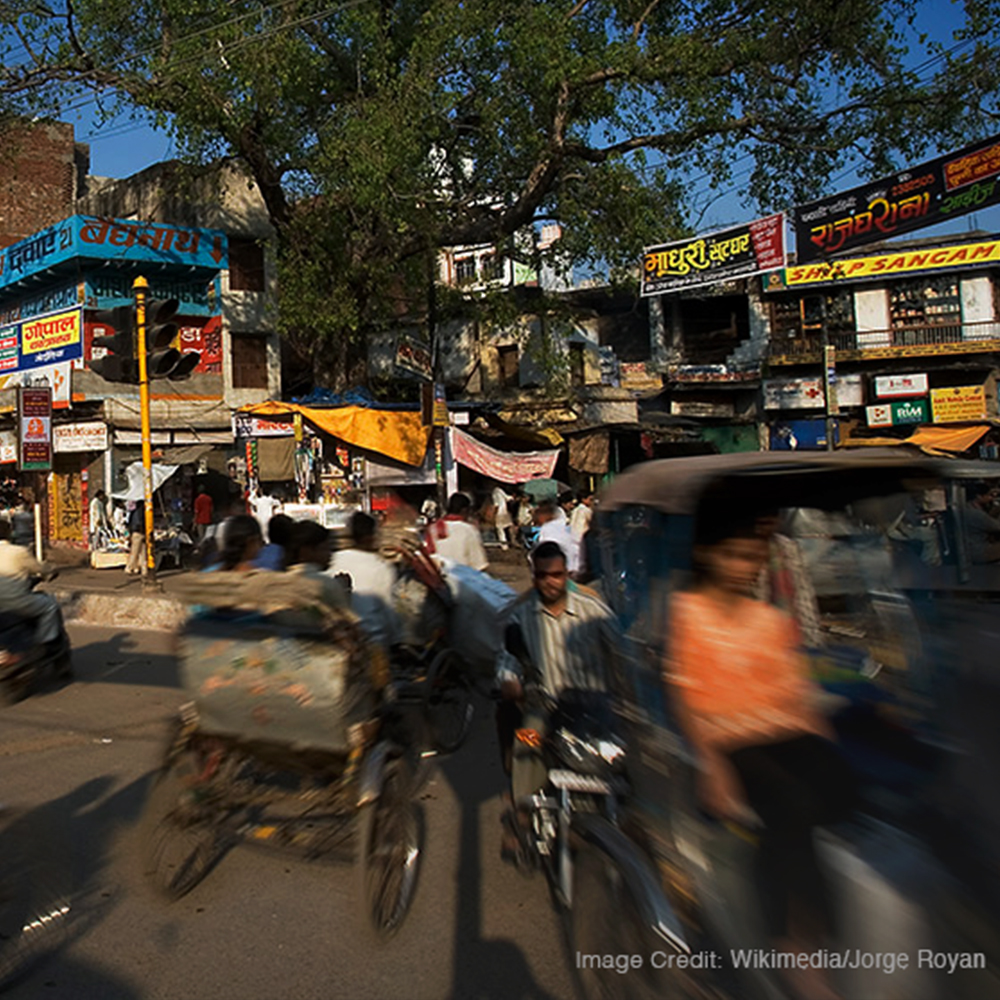
With no stop in the number of vehicles being registered and the grossly inadequate road infrastructure, our cities are bursting at the seams. It plays out as a bad road experience for all road users.
On the bright side, over the last couple of years, many organisations and communities have come together to contribute to solving issues by raising awareness, taking on activist roles and by being socially conscious.
Organisations like the Bangalore Traffic Police have the basic essential technology setup and raw data about road situations over the last several years. Based on this, it is possible to make massive changes. In a city of over one crore people and half as many vehicles, technology must and will play an increasingly important role in decision/policy making and implementation. It is a long, tiring road ahead but with more people thinking about various ways to alleviate the traffic and the road safety situation, there is hope.
If she can do it, why can’t we?
“We’re all in this together.”
If we expect the right to use the road, we should also exercise the responsibility to maintain discipline, decorum and decency on the road towards all the other road users. The aim should be on being a problem solver! The fewer complainers we have and the more doers, the better our society will be. Wake up before the unruly road behaviour and road rage results in more accidents, violence and deaths.
Alarm Bajne Se Pehle Jaago Re!
Share this story on
Five Infrastructural Issues India cannot ignore any more
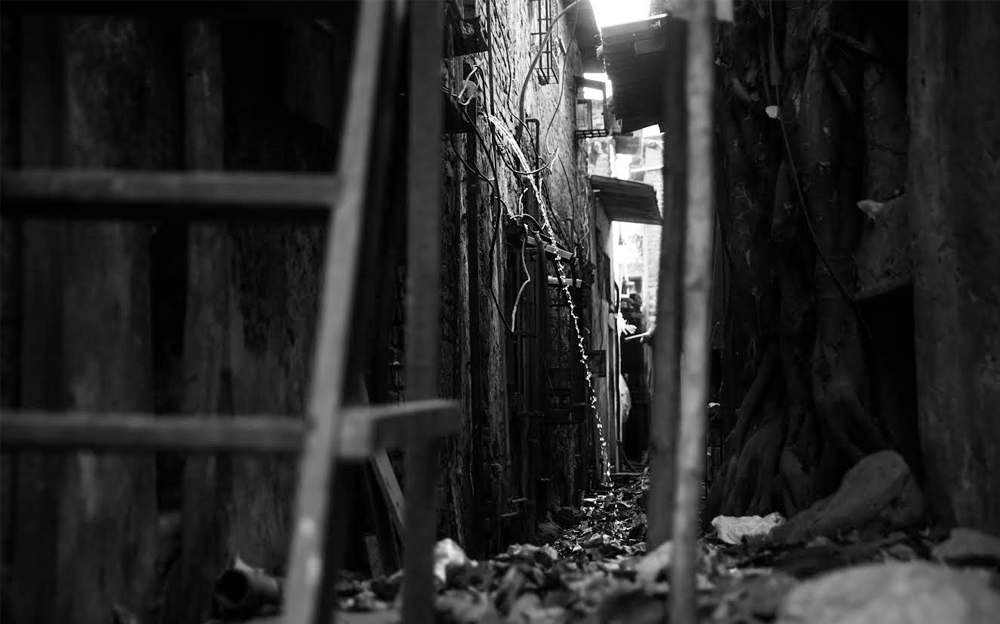
India’s mounting garbage problem
India generates 150 million tonnes of waste in a day. With no environmental friendly processing for the waste, the garbage is extremely hazardous, heaped together at landfills usually in the city’s outskirts, with scavengers often including young children working in unsafe conditions to segregate it.
Drinking water that’s bad for you
Over 46 million Indians are exposed to contaminated water. In fact, India has the highest number of people in the world without access to safe water, and are forced to live with contaminated water. Many children in impoverished villages and even in ‘developed’ cities like Mumbai grow up living with impure water.
India has more mobile phones than toilets
Around 60 % Indians do not have access to safe and private toilets. A report by Water Aid states that “If all 774 million people in India waiting for household toilets were made to stand in a line, the queue would stretch from Earth to the moon and beyond.”
Roads that kill
Over 10,000 people were killed in India in 2015 because of accidents by potholes or damaged roads. On an average, 400 people are dying on India’s roads daily. Potholes, damaged roads and hazardous driving conditions are now a way of life in India.
Living in the dark
Of the world’s 1.3 billion people who live without access to power, a quarter — about 300 million are Indians. Another problem is erratic or unstable power supply, particularly in India’s villages, where several Indians continue to live in the dark.
The alarm has been ringing far too long – Why are we ignoring it?
We have waited for a complete downfall of our city structures, and been very casual about the collapsing infrastructures. When are we going to be take things seriously, take action and stop being indifferent and stop ‘adjusting’. Wake up, the warning signs are all around us.
Alarm Bajne Se Pehle Jaago Re!
Sources:
Share this story on
Saving water is not that hard - here's how
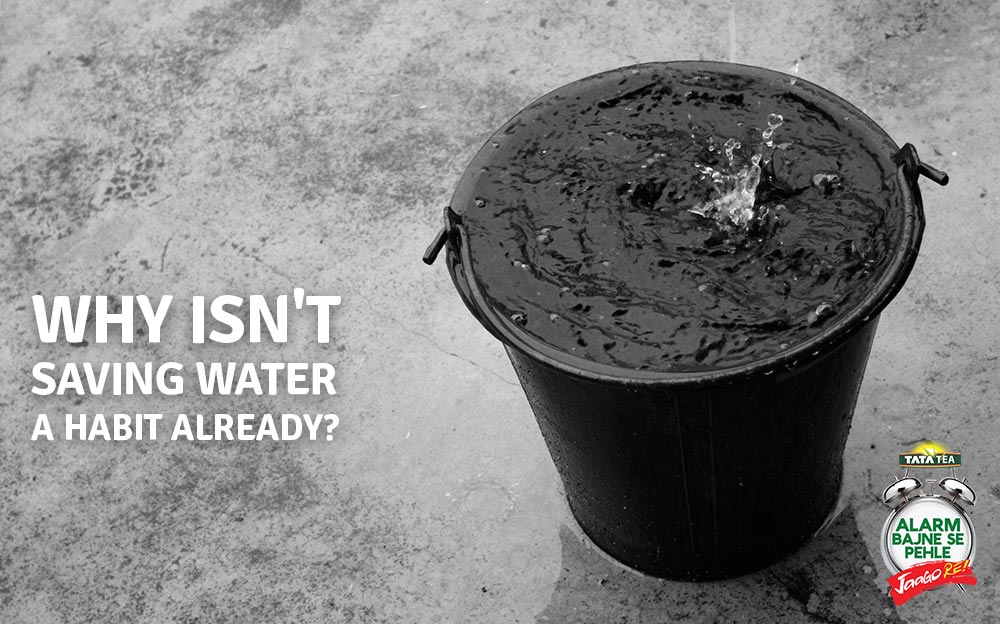
India is undergoing severe water scarcity, which is expected to worsen as the population of the country increases. Nearly 77 million of the nation have no access to safe water. 22 out of India’s 32 big cities are having to face water shortage on a daily basis (according to a 2013 report).
The situation is getting drearer by the day and it is upto each one of us to make amends, as water scarcity can impact every sphere of life. The need of the hour for all of us is to find ways to save water in every day activities, which all adds value to the larger cause of conservation of water.
For example, here’s an ingenious way to save water:
Sources:
https://thewaterproject.org/
www.sustainabilityoutlook.in
Share this story on
Citizen speak on solutions for India's water crisis
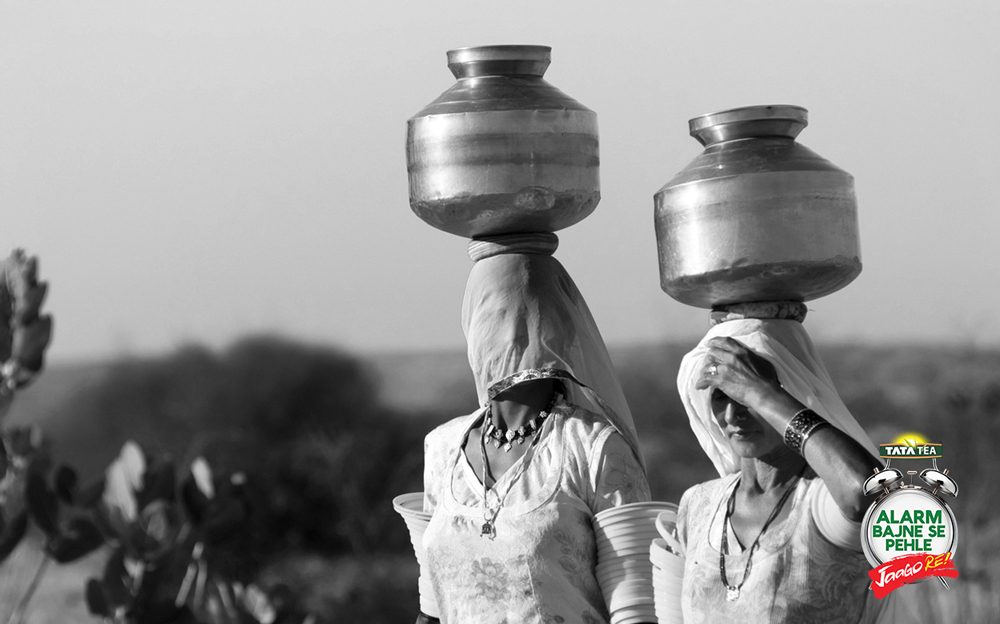
"70% of Earth is water. Are you telling me we are going to run out of water?"
"Enough water is recycled everyday. We don’t have to worry!"
These are some of the statements often made when the conversation of water conservation is on the table. We call water the elixir of life, but how often do we really give it much thought before we go about wasting water on a day to day basis?
Especially now, with the increasing scarcity of water everywhere and more and more areas struggling with droughts in the country, keeping a check on our water usage is more important than ever.
While it is your call to cut back on the number of showers you take daily or how you wash your dishes, your small actions on a daily basis amount to a lot. Your simple call to turn the faucet off while brushing can save up to 2.5 gallons of water per minute.
There are a million ways to cut down on water wastage, but they all start with the will to do it. On the account of World Water Day on 22nd March, several citizens from all around the country came forward to talk about the burning issue that water crisis is as they shared their thoughts during our Twitter chat with experts @indiawater and @WaterAidIndia.
Here are some of the highlights:
Realising the problem
Taking actionable steps
Disclaimer:
Views expressed here are of the individuals alone and do not necessarily represent that of the brand.
Share this story on
Statistics that should scare every Indian today
The staggering number of farmers' suicides
More than 100,000 farmers have taken their lives since 1997.
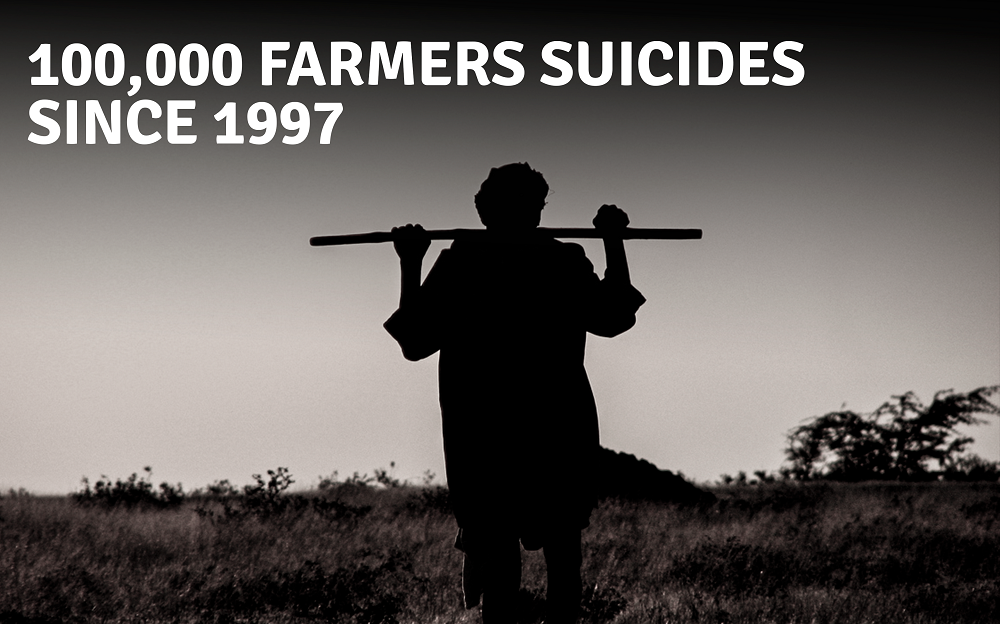
Source: UN
We’re not bringing home the Gold
India has won only 28 medals in total since it first competed in the Olympics in 1920.
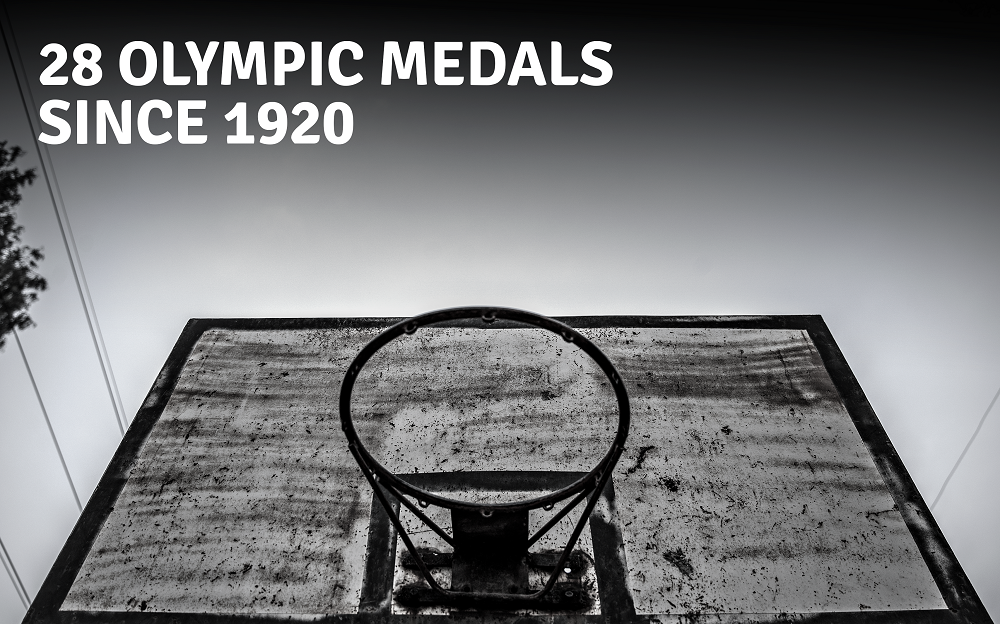
Source – Indian Olympic Association
The Sun don't shine here
Some 400 million Indians have zero access to electricity.
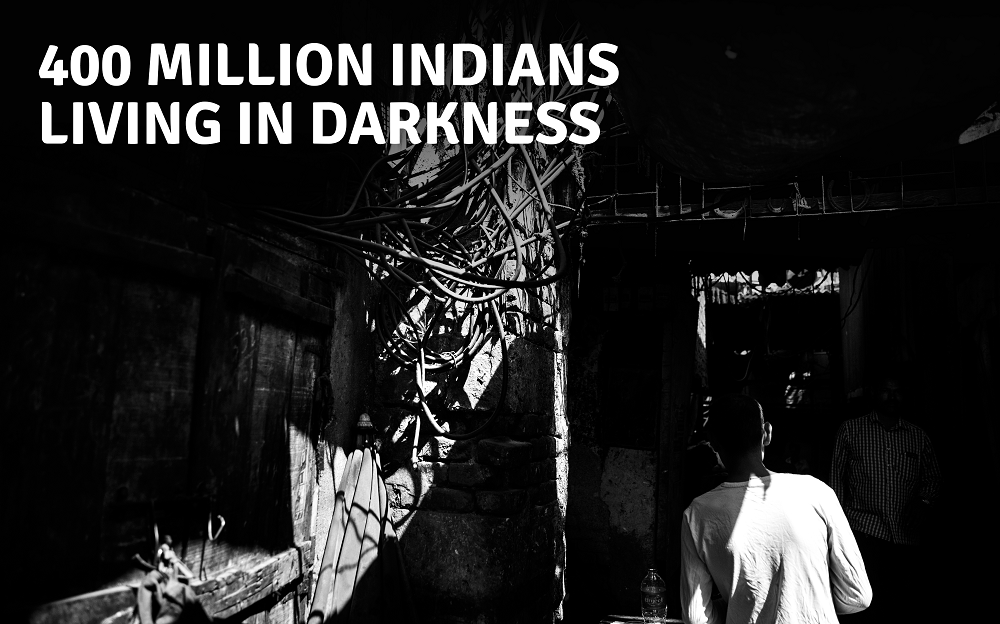
Source – Economic Times
India's deadly drink
Nearly 50% of India's groundwater is poisonous
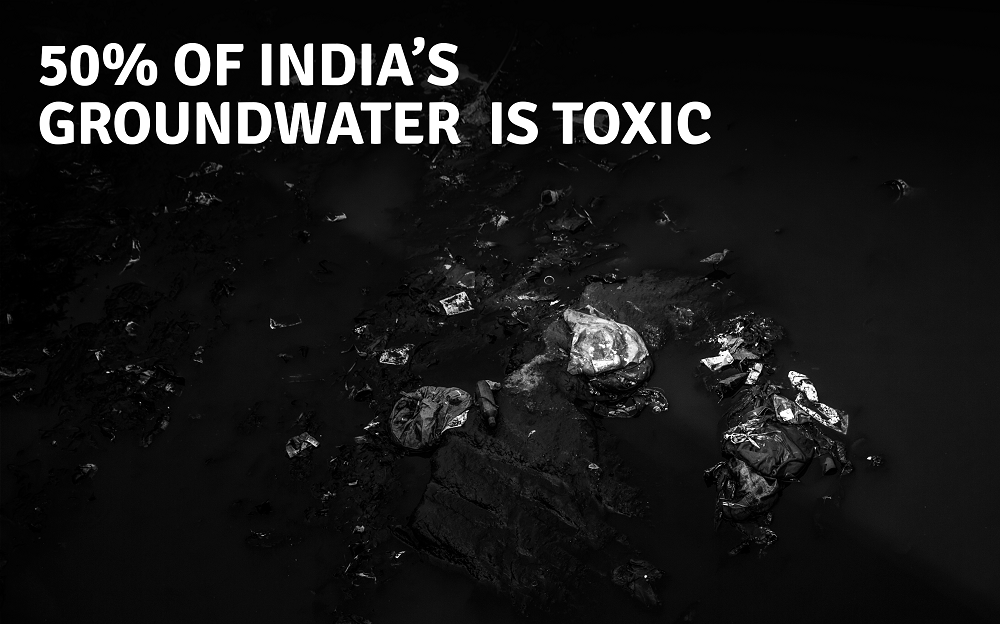
Source – DailyMail
Where breathing can kill you
India's air ranks as the most polluted in the world
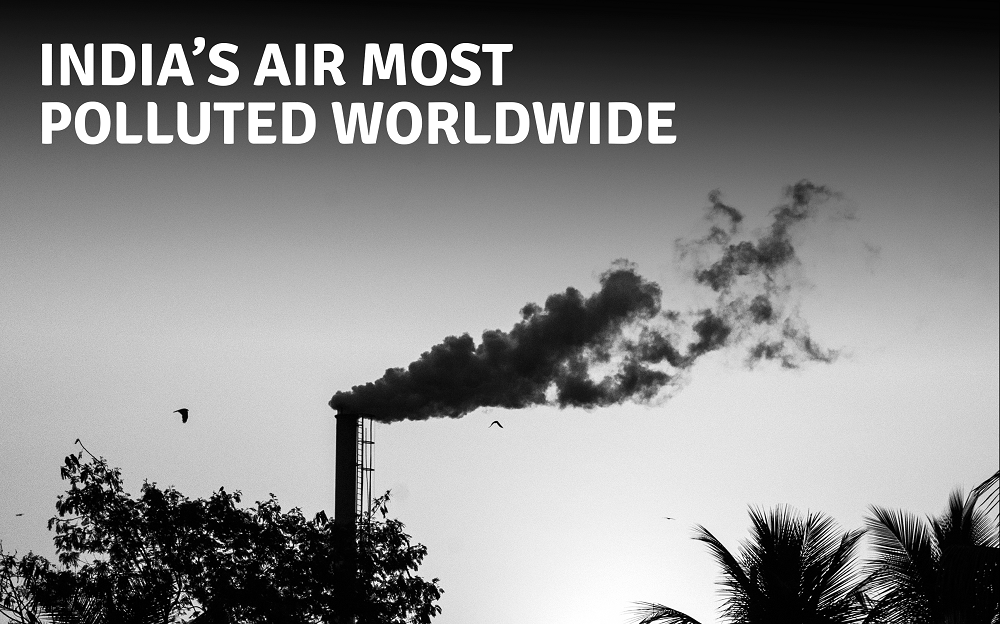
Source – Yale Centre
Being a woman in India could mean you're a fatal statistic
848 Indian women are harassed, raped, killed everyday
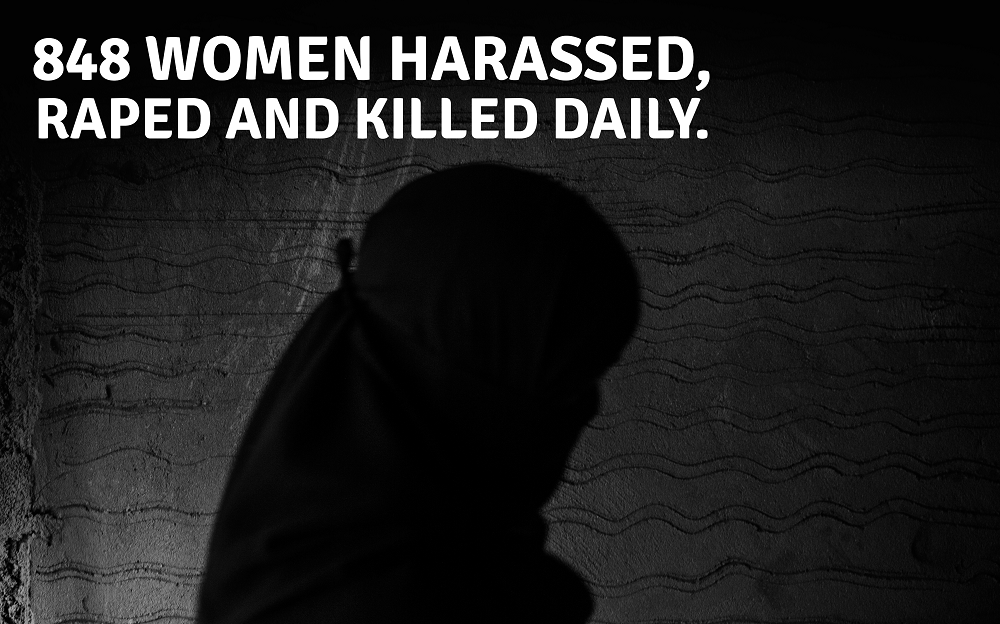
Source – NCRB (National Crime Records Bureau)
How many more alarming statistics will it take for us to wake up?
These horrifying numbers speak louder than words. Yet the numbers have reduced us to a stupor. These numbers have been screaming for our attention. It's high time we look at the issues, the faces and the people behind the numbers. It's time we become more about human and sensitive to the real issues we face today, before either one of us become a statistic.
Alarm bajne se pehle Jaago Re!
Share this story on
Experts' take on solutions to India's water crisis
At the risk of stating the obvious, water is precious. Potable water, more so. Water, which presumably should ideally be a human birthright is becoming dearer in that like anything else in the economy, the demand is rising, the supply is falling and the price is skyrocketing. Do we understand the gravity of the situation? Is there a real reason to be concerned or are we just being a little paranoid. Are we victims or perpetrators? or perhaps hopefully we are both. That just mean it is up to us to make the change.
So we turned to twitter to ask experts what they think. Following is what ensued.
Experts are of the opinion that water is sourced mainly from the ground and it is most used in the area of agriculture. We know that the groundwater levels are diminishing and agricultural demands are increasing as our population flourishes.
Surely, there are some stats that will validate the information so that we don’t go by mere hunch.
While the outcome is one, the causes seem to indicate that the problem is really systemic. Depleting water sources, pollution, rising demand, poor management, and pathogens make water inaccessible.
There are infrastructural and governance factors that contributes to this problem.
If we are able to narrow it down to infrastructural intervention, the next step is to identify what can be done.
While these are macro level solutions, there has to be some way that individuals can contribute to the cause.
The very basics of reducing and optimising water usage by knowing when to keep taps running, at what level and when to turn if off goes a long way. So does reusing rainwater and fixing leaky pipes.
Can the language we use change help change perception of what we have to deal with?
Wastewater has a connotation of being unusable or even untreatable.
What does a water conserving community look like?
In the simplest terms, it's all about empowering the individual to serve the community. Everyone has to be made a part of the decision making process.
Naturally synthesising the individuals, communities, and systems would cause a cultural change. We asked how we could build a culture that believes in, and practices water conservation.
Awareness campaigns, access to technology and tax benefits ties everything together.
Water conservation is an urgent concern and requires individual ownership and participatory efforts to fix. The fact is that we have put ourselves in this situation of water crisis, and only we can take steps to make sure we don’t run out water. It’s time to start conserving water, before it gets too late.
Alarm Bajne Se Pehle #JaagoRe
Disclaimer:
The views expressed by the experts belong to the experts alone, and do not necessarily reflect that of the brand.
Share this story on