6 questions we need to ask before financial planning
.jpg)
What is the best way to ensure financial stability? The answer is simple - by planning. A few financial resolutions and goals can help sort out a person’s financial year, and one’s life. As we begin a new financial year, here are some important questions to ask, and some tips and tricks to set your financial figures right.
Q1. What is the purpose of financial planning?
There should be only one purpose to plan your finances - to achieve ultimate “Financial Freedom”. It means attaining that situation in life wherein one can do whatever one wants to do. For e.g. what will you do if you get Rs. 100 crores in your bank account today? Will you still do the same work what you are doing today? Probably Not! Then what will you do, help you set the foundation for real financial planning.
Also, in case a person is no longer able to earn and support the family, like in case of ill-health, accidents, or untimely deaths, planning will ensure that financial settling with family members and dependants is sorted.
Find out the highlights of India’s Budget 2016-17 HERE.
Q2. Why should I invest?
This is a basic but very important question that people fail to ask. One needs to decide if the planning is for retirement, or for children’s education or house or a Car, etcetera. This will help in setting targets.
Q.3 What will happen if I lose my job?
It is essential to have a contingency tentative plan for what to do if suddenly there is no steady income & job. One needs to take steps to improve your financial situation and build on cash reserves while still investing for achieving other goals. This cash reserves should be easily accessible whenever the need arises, as withdrawing money out of other funds like PF/FDs/MFs would be detrimental to overall financial life.
Q4. When do I want to retire and how do I plan to spend my retirement years?
One’s plan should not just be about earning till retirement, but also about how one wants to spend life after retirement. This is key to setting goals and planning one’s finances.
Q5. Which Financial Products should I invest in?
You need to plan your investments carefully amongst the numerous financial products available in the market ranging from Mutual Funds/Equities/ PPF/ FDs/ Bonds/Gold/Silver/Real Estate and a term insurance for securing your life.
Q6. How was my financial performance in the previous financial year?
It is good to do some self-appraisal by asking the following questions:-
Did I accomplish my financial objectives last year?
What was my income & Total Expenses both expected & unexpected?
Did I pay my EMIs/Dues in time or any Late payments; if any?
How much returns I made on my investments; did I exceed my target?
Did I have any surplus money which was lying dead in account only?
Did I touch my emergency fund or didn’t even create the one?
Did I borrow any money and if yes then for what purpose?
Doing this self-examination will open up the ways to set new year targets for accomplishing Financial objectives.
Savings and smart investments are simple steps to create long term wealth & assets for securing your future so make your yearly finance plan today and be stress free & welcome financial year 2016.
If you have any queries about financial reforms and planning, you can ask expert Rishabh Parakh by commenting on our Facebook and Twitter pages.
More about the Experts:

Share this story on

49 की शक्ति - सही उम्मीदवार के पीछे
.png)
पिछले आम चुनाव जो वर्ष 2009 में हुए, एक अनुमान के अनुसार चुनाव में खड़े 150 सांसदों के खिलाफ आपराधिक आरोप थे। 14 वीं लोकसभा के चुनावों (2004 में) में आपराधिक रिकॉर्ड वाले 128 उम्मीदवार थे, उनके मुकाबले इस बार आपराधिक रिकॉर्ड वाले सांसदों में 17.2% वृद्धि हुई। 2004 के चुनावों से 2009 में गंभीर अपराधों के आरोप वाले सांसदों की संख्या में 30.9% की वृद्धि भी हुई थी।
यदि आप गणित की बात करते हैं, तो इसका मतलब हुआ कि 15 वीं लोकसभा के चुनाव में हर चार कानून निर्माताओं में से एक ऐसे को चुना गया जिसने खुद कानून तोड़ा है।
लोकसभा में दागी सांसदों की अधिकतम संख्या भेजने का उत्तर प्रदेश ने रिकॉर्ड बनाया। उनके 80 सांसदों में से 31 के खिलाफ आपराधिक मामले लंबित थे। उन 31 में से 22 पर गंभीर अपराधों के, दस पर जघन्य अपराधों के आरोप थे। महाराष्ट्र दूसरे स्थान पर रहा, जिसके 23 सांसदों के खिलाफ आपराधिक मामले हैं, उनमें से नौ पर गंभीर अपराधिक मामले हैं।
इन ढेर सारे आरोपों में से बलात्कार और महिलाओं के खिलाफ अपराधों से जुड़े हैं। कुछ सांसद जो इस समय सत्ता में हैं, उनके आरोप पत्र में अपहरण, हमले और इनमें सबसे जघन्य मामलों में हत्या के आरोप भी हैं। ये वे लोग हैं जो कानून और नीतियां बना रहे हैं जिनके हिसाब से हमें रहना और जिनका पालन करना होगा। सही में यह विडंबना ही है?
तो भीइसकी कोई जवाबदेही नहीं डाल रहा, हम ही हैं जिन्होंने अपने वोट के द्वारा इन्हें सत्ता में लाएं हैं मतदान नहीं किया तो यह और भी बदतर है क्योंकि इसका मतलब हुआ कि आप शांत बैठे रहे और ऐसे नेताओं को लोकसभा में बैठने दिया।
2014 में दुनिया के सबसे बड़े लोकतंत्र के 16वें आम चुनाव होंगे और कौन इसे चलाएगा यह शक्ति हमारे हाथ में है। सही उम्मीदवार को हर एक वोट मायने रखता है और यही समय है बड़े मतदाता समूह को एकजुट करने का, जिसे नजरअंदाज कर दिया गया है। भारत में सभी पंजीकृत मतदाताओं में 49% महिलाएं हैं। अभी शुरू करें, हमारी मां, बहनों, पत्नियों, बेटियों, चाची-बुआ, महिला मित्रों, सहयोगियों एवं हमारे परिवारों और सामाजिक दायरे के भीतर प्रत्येक अन्य महिला को सही उम्मीदवार का चयन करने और वोट के लिए घर से निकलने के लिए शिक्षित करना हममें से हर एक की व्यक्तिगत जिम्मेदारी है।
Share this story on
.png" /></p>
<p class="art-para-power">पिछले आम चुनाव जो वर्ष 2009 में हुए, एक अनुमान के अनुसार ...)
Cleaning up India: The Ugly Indian
What do you call a group of anonymous citizens who come together in a city and clean up dirty streets by themselves?
They are called The Ugly Indians.
"Want to change the world? Start with your own street," believe The Ugly Indians.

Who is the Ugly Indian
They are a group of people who believe that together, they can make their city a cleaner place – and they set out to achieve just that.
Footpaths with litter strewn on them, open dumpyards, etc. are literally washed clean with the help of citizens and municipality staff; at times, even passersbys join in to help. The result - clean streets with manicured lawns make way for what was previously a heap of filth. Hand-painted walls with pretty designs replace the foul stench of the past. People, both young and old, literally lend a hand in these clean-up drives.
The group refuses to depend and blame civic bodies and maintain that people need to take responsibility for the cleanliness and maintenance of their localities.
Watch how they transformed a locale in Bangalore with their motto: "Kaam Chalu – Mooh Bandh!"
How The Ugly Indians came together
Their clean up drives are an inspiration to many, and TUI is an offshoot of Whitefield rising, We Care for Malleswaram etc. and other such local civic communities engaged in cleaning up their neighbourhood. Based on the success of TUI in Bangalore, Ludhiana and Bhopal have also begun their own citizen's clean up drives, as can be seen on The Ugly Indian Facebook page. They have already cleaned up well over a 100 spots in Bangalore.
- 1.It sustains in the public street for at least 90 days.
- 2.Is accomplished without supervision.
- 3.Is low-cost (or involves no expenditure), easy to implement and replicate.
- 4.Positively impacts the behaviour and attitudes of all concerned.
- 5.Creates minimal change in the daily actions of everyone concerned (nobody should lose a job, lose a source of income, or get seriously inconvenienced – because it takes only one Ugly Indian to undo the good work of a hundred others).
Power of the Common Man
If a voluntary group of citizens can come together and help beautify and clean cities, imagine what the Power of 49 can do - 49% of the country’s voter base can get together and help clean up the system!
Get together. Get aware. Make an informed choice.
Push the Pin
Come forward and do your bit - Push the Pin on bad roads, unclean public toilets and other sanitation and infrastructural concerns in your neighbourhoods here.

Share this story on
Excuses women make to stay in abusive relationships

"He cried, apologised and said he will never do it again."
In most cases of domestic violence, once a man hits a woman, it is likely that it will happen again. And again. It’s a vicious cycle.
"It's my fault. I pushed him too much."
People have a choice on how they wish to react in any situation. The abuser makes a conscious choice to resort to violence.
"He's going through a stressful time at work."
Does that justify using wives as punching bags? Women often work hard managing the house, kids and their work. How should they take their stress out?
"I love him, and he will change with 'my love'."
You should love and protect yourself instead. It’s always better to be with someone who can not only love you, but also respect you.
"I deserved it because I didn't keep him happy."
You should never blame yourself. It is not your fault, the fault lies with him.
There are often other reasons why women in marriages end up feeling trapped: children, financial restraints, dependency etc.
Behind closed doors
A recent Government survey (National Family Health Survey) stated that 40% women had faced domestic violence at home in India. Another survey conducted by Yugantar Education Society across five states revealed that 84% women had faced domestic violence. This obviously means that unreported cases are higher than we can imagine.
Push the Pin on domestic violence

We often don't realise how dangerous and precarious our own homes are.
It really is time to end violence against women. Take that step now. Push the Pin and make your voice heard. Use the Power of 49 to work towards making marriages and homes safer and respectful for women.
Share this story on

PowerOf49 Manifesto on Women's Safety
Politicians are gearing up for the big electoral fight in 2014. India’s citizens are demanding their rights from the leaders. CNN-IBN and Jaagore invited three resilient women to have an in-depth discussion of what Indian women need. Laxmi Saa, acid attack survivor, Ruchira Gupta, anti-trafficking activist, and Sonali Khan, from Breakthrough have helped frame the CNN-IBN Jaagore five point-action plan for women's safety in public spaces.
1. Woman specific agenda in the politician’s manifestos
Each political rally must begin with politicians taking oath to address women’s issues. More amendments in favour of women are a must. Representation of women in police force must rise from the current 5 % figure. Representation of women in politics in the upcoming elections should also rise, up to as much 50%.
2. Nirbhaya fund allocation
Each political party must give a concrete list of how they will utilise the 1000cr allocated to the Nirbhaya fund. There must be a clear direction of how this money will be used for addressing safety issues.
3. City-wise Report Cards on Women’s safety
The government must come out with a periodic report card based on how every state/city ranks in terms of women’s safety, especially with regards to public spaces and public transport. Police should have a women’s safety and sensitisation drive. It must be introduced urgently and progress should be monitored through the report card.
4. Acid Attack Survivor's Rehabilitation
Acid attack should be incorporated as an integral issue, worthy of the strictest punishment. The guilty must be punished within 3 months of the crime. Free treatments for plastic surgeries and sufficient compensation for the survivor is also essential.
5. Set up a nationwide women’s tribunal
Parties should set up a nationwide women's tribunal. It must examine all the laws governing women's safety and parties must also encourage women to go to the tribunal and raise issues important to them.

The Power of 49 has put forth their manifesto on women and public safety.
Join the conversation on @JaagoRe on twitter next week as we discuss domestic violence and create a #Powerof49 manifesto on CNN IBN on Friday, 28 February, 8.30 pm
To read the final 10-point #Powerof49 Manifesto that was presented to leading political parties, click here
Share this story on
How Bangalore is tackling gender bias, one school at a time
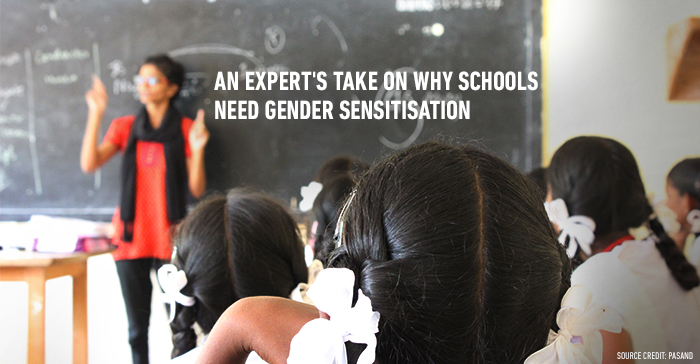
“Girls shouldn’t wear short skirts and boys shouldn’t be weak.”
What do you think is wrong with this statement? Or do you think there is nothing wrong at all?
We have come to a stage where two year old girls are being raped and more than 42% girls are abused before they turn 19.* It’s not only girls who are facing these unfortunate and horrific cases; one in two boys in India is a victim of sexual abuse.* We are clearly failing to protect our children, to educate them about how to stay safe. Moreover, it should not be the responsibility of victims to prevent abuse, but rather of the communities to stop it from happening. Many schools have realised this problem, and to help combat it, they have introduced gender sensitization workshops with the help of different organizations that help bring awareness of body safety rules and abuse in age appropriate levels.
We spoke to Sharmada Shastry who works for one such social enterprise based in Bangalore, Pasand, and conducts regular workshops for schools, and here’s what she shared with us:
Why do you think Gender Sensitisation is important?
We aren’t told about some very important things from a young age. For example: your mother would tell you not to go out or you will get raped, but she will never tell you what rape really is. Parents will ask where their daughters are going but not think to question their sons. This leads to many children not understanding the gravity of something like abuse, or rape. Children are curious and if they are shamed by adults for their questions, they look it up on the internet, making them even more vulnerable. It’s important for someone with proper knowledge and an approachable attitude to inform children about their rights, body changes, and how to stay safe. This is where Gender Sensitization workshops step in to help.
What reactions do you usually get from the children?
Reactions vary from school to school, especially depending on the socio-economic background of the children. At first, the children giggle, and are shy or uncomfortable. However, once we get into the session their curiosity takes over any shyness. They ask many questions and understand that it is a serious topic for their own benefit. No one has ever spoken to them about sex or anything related to it before, whatever they know is usually from the media or internet. When children learn that their body changes are normal and natural, but that everybody is different, their reaction is a big sigh of relief and a smile.
Since it’s a sensitive topic how do you make children feel more comfortable?
To make them feel comfortable we use ice-breakers, as well as personal stories and humour from the facilitators. In one ice-breaker we integrate gender norms and ask children to pick a classmate with “good qualities.” You will be surprised that girls choose other girls who are shy or fair and don’t speak much, whereas the boys are picked because they are strong and intelligent. It’s easy to see how harmful gender biases start from a young age.
How do you approach schools and what feedback do you get from them?
Sometimes schools approach us and sometimes we go to them. We start by explaining the need for the programme given the rate of abuse as well as the fear and shame students experience going through puberty. For example 90-95% of our female students do not have much knowledge about their private parts.
60% of our male students do not know boys can be victims of sexual abuse. When we share our own research, schools understand that it’s important to empower kids to make choices for their own health and safety. Most schools agree but some ask us to change or omit some information. Sometimes we oblige, but most of the time we take them through the curriculum, with detailed examples of what happens when certain things are left out, and explain why it’s important. In spite of disagreements on what can be taught and what cannot, we always receive good feedback. More and more schools have started taking up the programme including government schools.
What is the kind of feedback you have received from parents and students?
We have seen a great response from students. We also conduct a pre and post survey to track how much they have learnt. Apart from thanking us, they tell us that they have found more clarity on a particular topic. Just to give you an example: When we start off, girls don’t know much about menstruation so once we tell them about the different taboos and give them information, they understand that it is not shameful but a normal process of their body. With the boys we tell them how much pain their mother went through while giving birth, this in-turn leads them to respect women and see them as equals. One of our 8th standard boys, Praveen told us that “the programme taught [him] that both boys and girls should get education and both should work, before and after marriage.” We use games and activities to get students to make their own conclusions and discoveries including the fact that gender equality is good for both men and women. Making a change in attitudes and information is the first step towards behaviour change.
Reactions from parents is more of a mixed bag. Recently, a mother came up to me and told me that we had gone too much in detail about rape by giving students the legal definition. We explained to her that we cannot teach about rape to the older students without giving an accurate (and legal) definition. This isn’t done to scare students but rather to empower them with their legal rights. Most topics on sexual health and assault awareness are inter-related, and our program makes sure to build slowly to more intense topics. After talking with the parents we often realize they themselves are lacking critical information. Engaging parents (esp. mothers) more effectively is part of the latest program we are piloting in two communities in Bangalore.
Gender Sensitization is a small but necessary step to the gradual eradication of gender biases and to reduce the abuse and harassment across the country (while increasing reporting). Through collective efforts of people, organizations, and with the cooperation of schools and parents, we can hope to keep our children safe by keeping them informed.
What are your views on the same? Write to us at jaagorein@gmail.com or tweet to us at JaagoRe.
Power of 49 Manifesto
The Power of 49 Manifesto points out the need for gender sensitization to be made compulsory for boys and girls from Std. V to XII in order to counter eve-teasing. But there are a many objections for implementing the same. Comment with your views below.
Push the pin
Push the pin on gender issues that you think affect issues related to gender sensitization.
Sources:
UNICEF
The New Indian Express
More about the Experts:

Share this story on

What is the story behind menstrual myths?
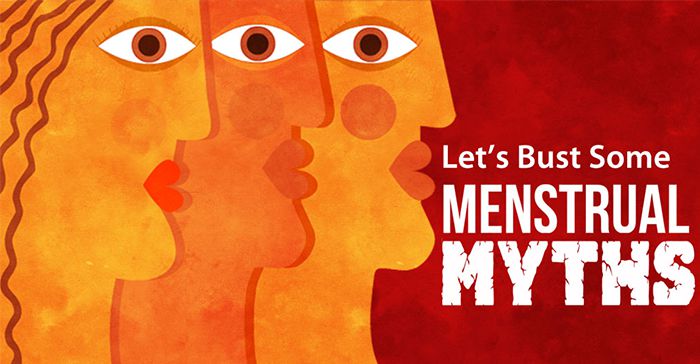
Shock and shame – this is how most women in south Asia remember the onset of their menstrual cycle, and it changes their world entirely. The greatest irony is that menstruation is absolutely essential for survival and perpetuation of humankind, but most societies don’t want to deal with the fact that women bleed every month.
It wasn’t until the mid-18th century that menstruation was known to be related to ovulation. Scientific experiments to test the factor of “impurity” in menstrual blood were not undertaken until 1920s. It is then understandable that some of the myths our ancestors lived by came to be because of the lack of information regarding what exactly was going on inside our bodies.
But, despite having known that menstrual fluid is nothing but a harmless mixture of blood, tissues and small amounts of hormones for about a century now, the culture of silence around the subject keeps menstrual myths unquestioned and inviolable.
Origin of Menstrual Myths
We aren’t supposed to talk about it in the open, nor are we supposed to question the restrictions and rules that follow this natural, not to mention essential, biological process. The clouds of myth and superstition that surround menstruation are affecting millions of women every day and more importantly, shaping how young girls and women look at themselves, their bodies and their roles in our society. Where did this cycle of internalized shame and ignorance begin?
.jpg)
Popular Myths that lead to menstrual taboo
Now that we know how menstrual myths originated, let’s look at some of the most popular myths believed to be true in a lot of communities, especially in South Asia, along with logical/scientific explanations debunking these myths.
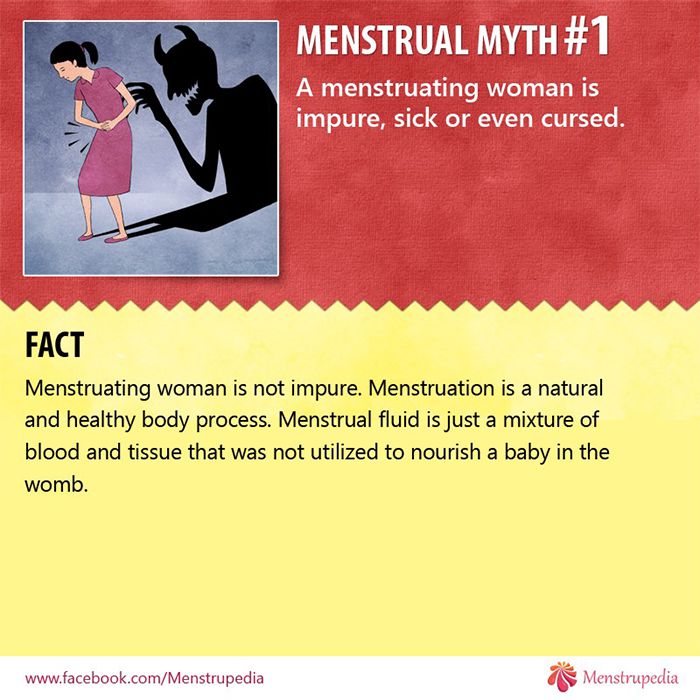
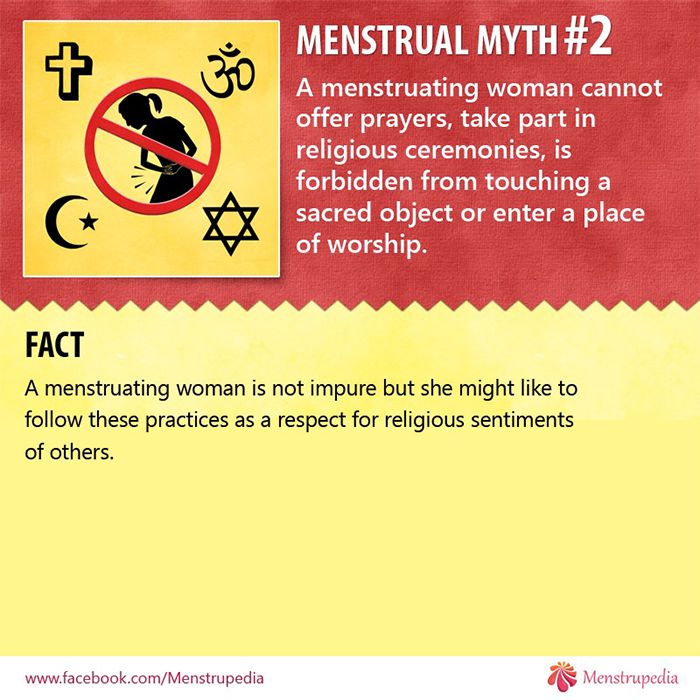
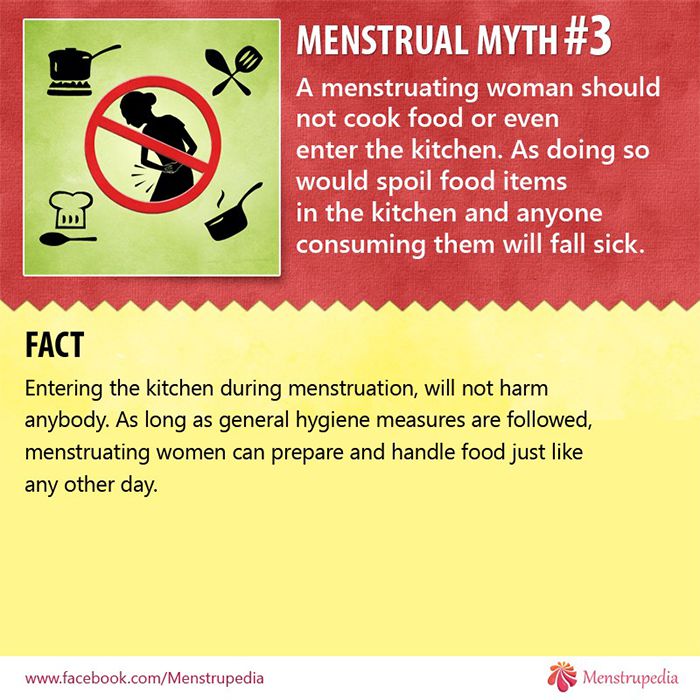
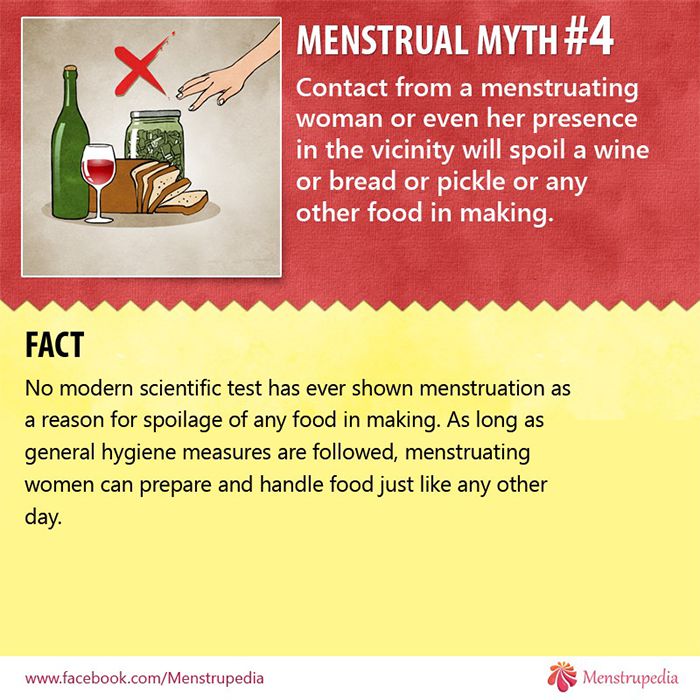
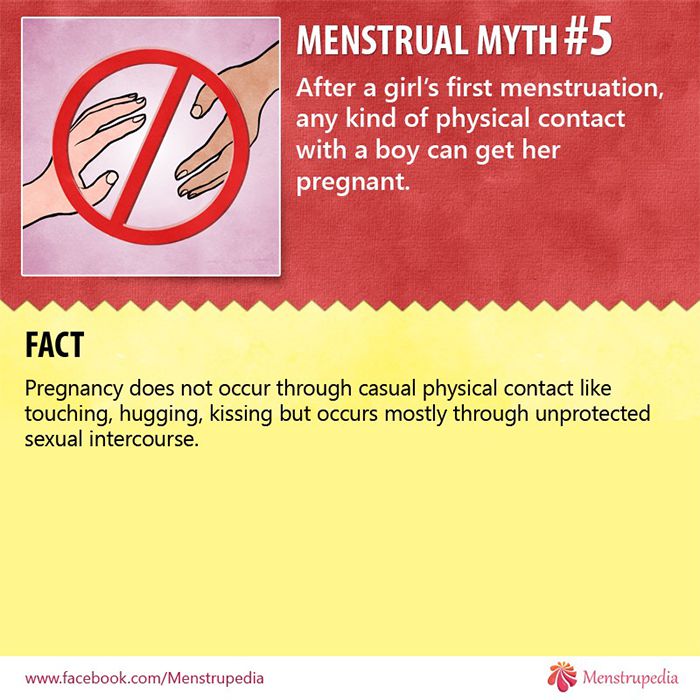
Menstrual myths have a long history rooted in our lack of understanding of the human body and our habit of deductive reasoning based on symptoms. But our beliefs and practices must change with time and with scientific advancement. It's also important to know the context in which some practices were suggested once upon a time, so as to debunk myths with a logical and nuanced explanation. It is a long road ahead for emancipation of women from the stigma of menstruation, but like any other hundred foot journey, this too needs to begin with the small step of our breaking free from the taboo and shame and encouraging others to do the same by using the power of reason.
Disclaimer:
Views expressed here are of the author alone and do not necessarily represent that of the brand.
About the Author:

Share this story on

Fight Dowry, not 498A

One woman dies every hour due to dowry harassment in India. *
The anti-dowry harassment law (498A) has helped women gain confidence to come and report domestic abuse, but there has been an increasing anger towards it. As the debate continues on the use and misuse of it, we decided to ask Namita Bhandare, a journalist and gender editor at Mint, a few questions about the way society has changed in terms of perceiving gender violence like harassment for dowry, and how this law grants or denies justice. Here’s what she said:
1. We have been seeing a backlash of 498A due to its misuse. How can this be prevented?
I am frequently amazed at the vigilantism against 498A. If only we were equally vigilant about all the other laws being misused.
To answer your question, is 498A misused? Yes. Undeniably. It is misused just as every other law is misused. Taxation laws are misused. Criminal laws are flouted. Our anti-terror laws frequently err in arresting innocent people for years. Yet, I don’t hear anyone suggest that we scrap our anti-terror laws.
2. The government has proposed to amend the law (498A). Do you think this will help?
Continuing with my earlier response, I think we need to understand who is misusing 498A and why.
(i) Litigants have no idea about legal provisions. It is lawyers who frequently advise clients to file cases under 498A. They do this for a variety of reasons, but most often they do this because they believe that 498A will give women their only leverage in cases of maintenance and custody. So any talk of reforming the law or changing it, must take into account reform in the maintenance and custody procedures too, making these fairer and more transparent for women.
(ii) Any talk of reforming or amending this section, must also make the process of divorce easier and simpler, particularly in cases of mutual consent. Yes, courts can play a mediatory role but ultimately they need to understand that when two adults no longer wish to continue with the marriage, they should not attempt to prolong or protract it in any way.
(iii) The constituency that misuses 498A is the constituency that is liable to misuse most laws anyway. But the majority of women in this country do not have access to courts and lawyers. They suffer domestic violence and dowry harassment in silence. By removing or watering down 498A, you will be removing the only protection they have in law, even if it is a protection they do not or cannot avail of.
(iv) Today we have forgotten the horror of dowry deaths that were dismissed as ‘kitchen accidents’ that played out prominently in media through the 1980s. Yet, dowry deaths and harassment as per NCRB data is up.
(v) We need to once again bring back anti-dowry campaigns. We should have done away with dowry altogether by now, yet marriages have become more ostentatious, with the brides’ family still paying huge amounts of dowry. We have an existing Beti Bachao Beti Padhao campaign: why not use this campaign to send out an anti-dowry message?
(vi) Finally, there are provisions in our statute books against the filing of false complaints that lead to arrests. If men’s rights groups are concerned about false cases, then they must invoke these sections and seek the protections they already have under the law.
3. Some people believe that the 498A and anti-rape law are against men? What are your views on this?
Against men, no. Against criminals, yes. If the perpetrators of rape and dowry harassment are men, then these laws are against them. But I don’t see how they are against men as a group. Let’s not forget that we have many, many men who are supporters and enablers of women’s aspirations. Why tar them with the same brush as men who commit crimes?
4. What differences do you see in the laws for women in India and other countries?
I am not a lawyer or even a legal expert so I am not really qualified to answer this question. But as a journalist I do see a fair amount of progressive legislation in our country.
while on one hand the anti-dowry harassment law (498A) has provided justice to many women who were victims of domestic violence, on the other, many women have misused the law. Do you think this warrants for it to amended or scrapped? Write to us with your views and opinions to jaagorein@gmail.com or tweet to us at @JaagoRe.
Disclaimer:
Views expressed here are of the author alone and do not necessarily represent that of the brand.
Namita Bhandare is gender editor, Mint. The views expressed here are her own and do not necessarily reflect those of her newspaper.
About the author:

Sources
*The Telegraph
Share this story on

Is the fate of the girl child in India changing?
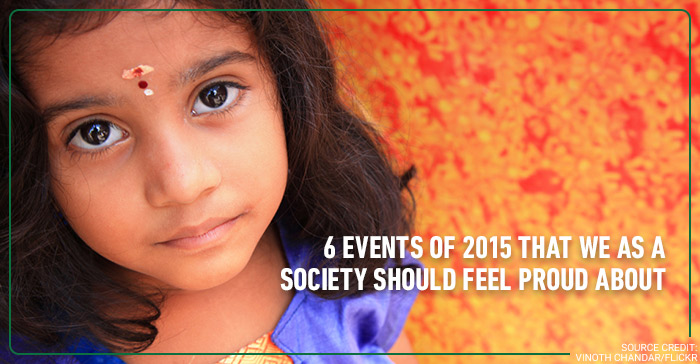
In a country where, child sex ratio has declined from 945 in 1991 to 914 in 2011, the significance of the National Girl Child Day, observed and commemorated on 24th of January every year, cannot be overemphasised. Subsequently, the observance of this day, earmarked for raising awareness about the inequalities and injustices perpetuated against the girl child, and also for educating people about the rights of a girl child, was extended to a weeklong (24th-30th January) commemoration in the form of National Girl Child week.
This National Girl Child week, let’s look back at six events of 2015 that have made a positive impact for the Indian girl child:
Mhonbeni Ezung, an eight year old girl from Nagaland, became the youngest National Bravery award recipient in 2015, for rescuing her drowning grandmother. Her 78 year old grandmother had taken her fishing and had fallen into the river after suffering from sudden cramps, followed by a stroke. Little Mhonbeni ran all the way to a village 4-5 kms away, all alone and brought help in time, to rescue her drowning grandmother.
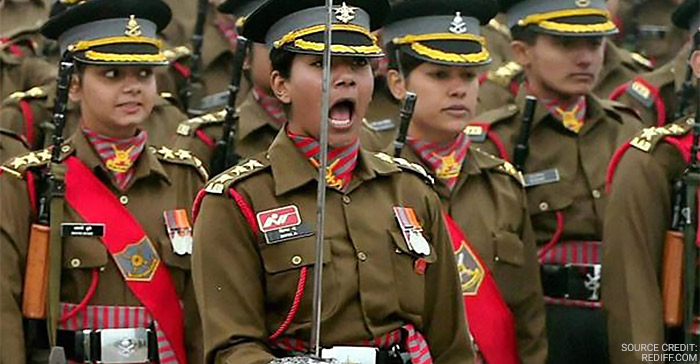
Captain Divya Ajith Kumar led the first all women’s contingent of the Indian Army for the Republic Day parade on January 26th, 2015. Twenty-five year old Captain Divya Ajith is also the first woman cadet in the history of Indian army, to have been awarded the prestigious ‘Sword of Honour’ in 2010.
Government of India launched the ‘Beti Bachao Beti Padhao’ campaign in January 2015, with the aim of creating awareness and to ensure survival, protection and empowerment of the girl child.

Indian tennis player Sania Mirza, became the first Indian woman to be World no.1 in women’s doubles. She, along with her partner, Martina Hingis, won 9 titles including the Wimbledon, US Open, and the year-ending WTA finals. They continued their winning stint in 2016, and broke a 22 year old world record by winning 29 matches in a row. In many interviews, following her victories, Sania Mirza has spoken about her desire to inspire girls in the sub-continent to take up sports, especially tennis.
2015 saw Indian women receive global appreciation with 7 of them making it to the BBC’s list of 100 most aspirational women. These extraordinary seven women -farmer Rimmppi Kumari, entrepreneurs Smriti Nagpal and Kanika Tekriwal, campaigner Mumtaz Sheikh, singer Asha Bhonsle, Tennis star Sania Mirza, and veteran actress Kamini Kaushal - have made their distinctive mark in their chosen fields.

In April 2015, the Malik twins – 23 year olds Nungshi and Tashi Malik – completed the Explorers’ Grand Slam by skiing to the North Pole. The sisters join the rare club of 44 achievers to have completed the Explorers’ Grand Slam, which is a challenge to reach the North Pole, the South Pole, and to climb the highest peak of each continent – the Seven Summits. In 2014, they had already achieved the distinction of being the first ever siblings to scale the seven tallest peaks in seven continents, which they had dedicated to the cause of Indian Girl Child.
These are some of the achievers who serve as inspiration for the Indian girl child and as a lesson for the society which considers her existence as a burden. But, in a country where children, especially girls, are deprived of the right to live, to basic education and nutrition, all the girls who survive, make it school, and strive each day are achievers in their own right.
What are your views on the article? Write to us on our Facebook and Twitter pages, or email us at jaagorein@gmail.com.
Disclaimer:
The views expressed in the article belong to the author alone, and do not necessarily represent that of the brand.
More about the Author:

Share this story on

“You Are A Sex Worker, How Can You Be Raped?”
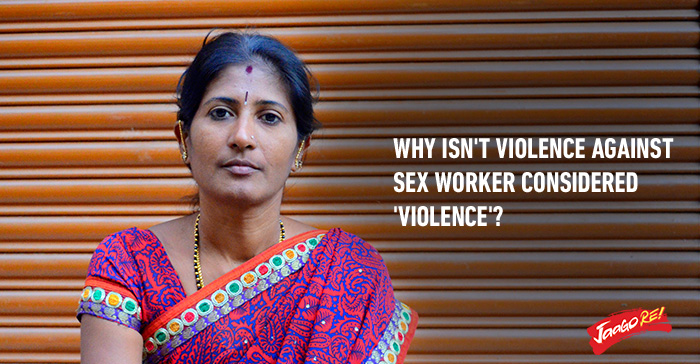
December 17th marks the renewment of support to end violence against sex workers worldwide. It is a global movement that brings together allies and advocates from around the world in recognizing the human rights of sex workers. In a survey conducted by the World Health Organisation, it was surveyed that an estimate of around 70% of sex workers in India reported experiencing violence and sexual harassment from society and police.
To understand what sex workers go through when they report incidents of violence, Jaago Re met with a sex worker. Here’s what she had to say.
“I was married when I was quite young, when I was 15. I didn’t have a chance to complete school and I was forced to quit when I was in class 5. The man I married had HIV and I didn’t know about it until I had two sons. As soon as I found out, I ended things with him. My family wasn’t the least bit supportive of my decision, so I left the house leaving the kids behind. That was the first time I came to the city to look for a job and I decided that I would be a sex worker. I went to a brothel and registered myself by paying Rs. 250/- and went to one of the popular bus stands to look for a client. That’s how I began working as a sex worker.
One night, after making a deal with my client I took him in a car and we were headed to his place. Once we were at his place, I noticed that there were a bunch four other men there, all drunk out of their minds. I had started to protest but by then it was too late, I was physically beaten and gang raped by five of them despite telling them that I had HIV. They taunted me saying that I was lying and were in a hurry to go between my legs. Once the ordeal was over, I escaped by hiding myself in a truck and went to the nearest police station. I had shown the bruises I had on my body and private parts, and asked for the help. Their reaction was, “You are a sex worker, how does this classify as rape when you are whoring around town for money?” My case was never registered and investigated. The men were never convicted and they’re probably out infecting HIV to other women. I now work closely with NGOs and lawyers to help other sex workers like myself. Society doesn’t take our rights seriously and doesn’t understand that we too have the rights for ourselves, that it is possible to be a sex worker and be sexually harassed. The concept of consent doesn’t exist in our world because society sees us as sex workers.”
Her story is just one among the 70% of sex workers in India who go through violence, some even lose their lives in the process. It is time to renew our commitment to the on-going struggle for empowerment, visibility, and rights for all sex workers.
Final thoughts:
What are your opinions about human rights for sex workers? Do you think that we as a society must be sensitive to their needs? How best can we support a minority community like theirs? Share your thoughts with us in the comments section below and continue tweeting to us on Twitter. You can also write to us at jaagorein@gmail.com and on our Facebook page.
Source for Sex Workers Survey:
World Health Organisation
Share this story on